Sprouting & microgreen seed · from origin

Alfalfa sprouting seeds for commercial growers and distributors

Untreated · Sortex-cleaned · ISTA-tested · COA per lot · 25 kg bags · MOQ 1 MT

Alfalfa is the sprout the whole category is measured against, and the seed behind it decides whether a sprout house runs smoothly or fights its trays every week. Kohenoor supplies food-grade Medicago sativa sprouting lots grown, cleaned and tested at origin in Pakistan — purity around 99%, germination 90% and above, zero dodder — with the documents your importer and your food-safety auditor will ask for.

Get a quote in 24h

English · Deutsch · Nederlands · Italiano · Polski · 日本語 · 한국어 · 中文

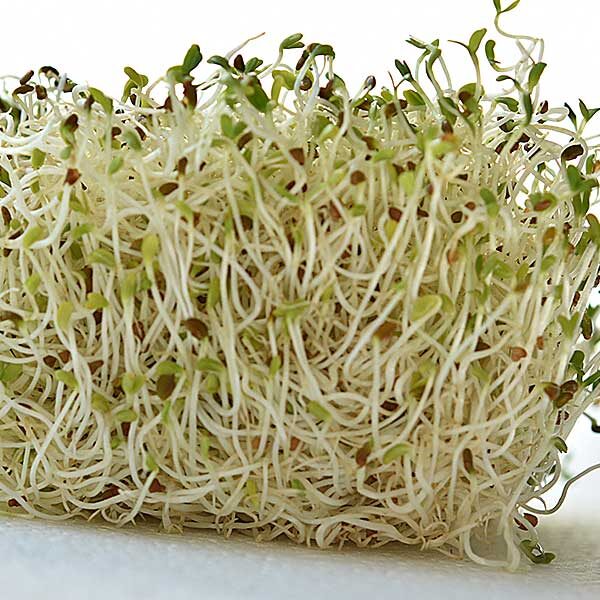
Fresh alfalfa sprouts grown from Kohenoor untreated alfalfa sprouting seed
In short: Alfalfa sprouting seed is untreated, food-grade Medicago sativa seed selected for high germination and clean, uniform sprouts. Kohenoor supplies KN92-grade sprouting lots that are Sortex optical-cleaned and ISTA-tested per lot (purity ~99%, germination 90%+, 0% dodder), with a COA within 24 hours, third-party Salmonella and E. coli testing on request and lot-tagged 25 kg bags shipped FOB Karachi to growers and distributors in 70+ countries.
Untreated — no coatingSortex optical-cleanedISTA-tested per lotCOA within 24 hThird-party microbial testingLot-tagged traceabilitySince 1957Reply within 24 h
Botanical nameMedicago sativa
Sprout time4–6 days (typical)
FlavourMild, fresh, slightly nutty
Germination90%+ · purity ~99% · 0% dodder
MOQ1 MT
Packaging25 kg lot-tagged bags

What alfalfa sprouts are and who eats them

Alfalfa sprouts are the young, fully germinated seedlings of Medicago sativa, harvested four to six days after the seed first takes water. At that stage each sprout is a slender white hypocotyl a few centimetres long with two small green cotyledons and the remains of the seed coat, and a tray of them has the fresh, mild, slightly nutty taste that made alfalfa the original "health sprout" of the 1970s salad bar. Nothing in the sprouting world is sold in the same volume across as many channels: supermarket clamshells, sandwich-shop fillings, salad kits, juice-bar wheatgrass-and-sprout shots, and the garnish on a Japanese or Korean lunch set.

The market is broad and mature. In the United States alfalfa remains the single most recognised sprout, sold in 4 oz and 8 oz clamshells and by the kilo to food-service. In the European Union — Germany, the Netherlands, France, Scandinavia — it is the backbone of mixed "salad sprout" punnets and is grown by licensed sprout producers under the post-2011 hygiene rules. Japan and Korea have long-established sprout industries that buy alfalfa alongside radish and broccoli for convenience retail. The Gulf states import finished sprouts by air and increasingly grow them locally in cooled sprout rooms, which has created new demand for reliable seed in Dubai, Riyadh and Doha. Australia, Taiwan, Singapore and Hong Kong round out the regular buyers.

What all these buyers share is a dependence on the seed. Alfalfa is sprouted raw and eaten raw, often by people who have chosen it specifically because it is a fresh, minimally processed food. That is exactly why the professional buyer's questions go straight to origin, treatment, cleaning and testing — and why Kohenoor built its sprouting programme around those four things rather than around slogans.

Nutrition: why consumers keep coming back to alfalfa

Alfalfa sprouts are typically very low in calories and carry a useful amount of vitamin K, vitamin C, folate and a range of minerals for the little energy they contribute. Like other legume sprouts, they contain protein from the seed's storage reserves — commonly quoted at roughly 4% of fresh weight — and the germination process is known for converting part of that into free amino acids while breaking down some of the compounds that make raw legumes hard to digest. They also contain plant compounds such as saponins and isoflavones that are the subject of continuing research interest; we mention these only as the reason health-food shoppers ask for alfalfa by name, not as any health claim.

From a retailer's point of view the appeal is simple. A clamshell of alfalfa sprouts is a fresh, raw, crunchy vegetable with a short, clean ingredient list — seed and water — that fits plant-based, low-calorie and "eat the rainbow" messaging without any processing story to explain. Microgreen farms and salad packers like it for the same reason, and because its mild flavour lets it carry hotter partners such as radish and mustard in a blend without dominating the mix.

Consumers also notice texture. Alfalfa sprouts from good seed are crisp and uniform, with slender stems and tight cotyledons; sprouts from a poor lot are stringy, uneven and go slimy in the pack within a day or two. Nutrition sells the first purchase; texture and shelf life sell the second, and both start with the seed.

One more point that experienced buyers raise: hull content. Alfalfa sprouts sold at retail are usually "de-hulled" by flotation at harvest, and the proportion of hulls that come away cleanly depends on the seed. Seed that is uniform in size and fully mature sheds its coat evenly as the cotyledons expand; immature or mixed-size seed leaves hulls clinging to the sprout, which look untidy in a clear pack and shorten its shelf life. It is one of the quieter reasons a well-cleaned lot pays for itself.

How alfalfa is sprouted commercially

The commercial process is well understood and fairly forgiving when the seed is right. Typical practice in a sprout house or microgreen farm runs along these lines, with the figures given as the ranges most growers report rather than a fixed recipe:

Every one of those steps is sensitive to germination percentage. A lot that tests at 90% or better fills the tray evenly, which matters because empty patches hold water, warm up and become the places where problems start. Uniform seed size, which Sortex cleaning gives you, means the whole tray takes up water at the same speed, germinates on the same day and reaches harvest length together. A sprout house that has run both kinds of seed will tell you the difference shows up in labour, rinse water and rejects long before it shows up in the cost of each kilo of finished sprouts.

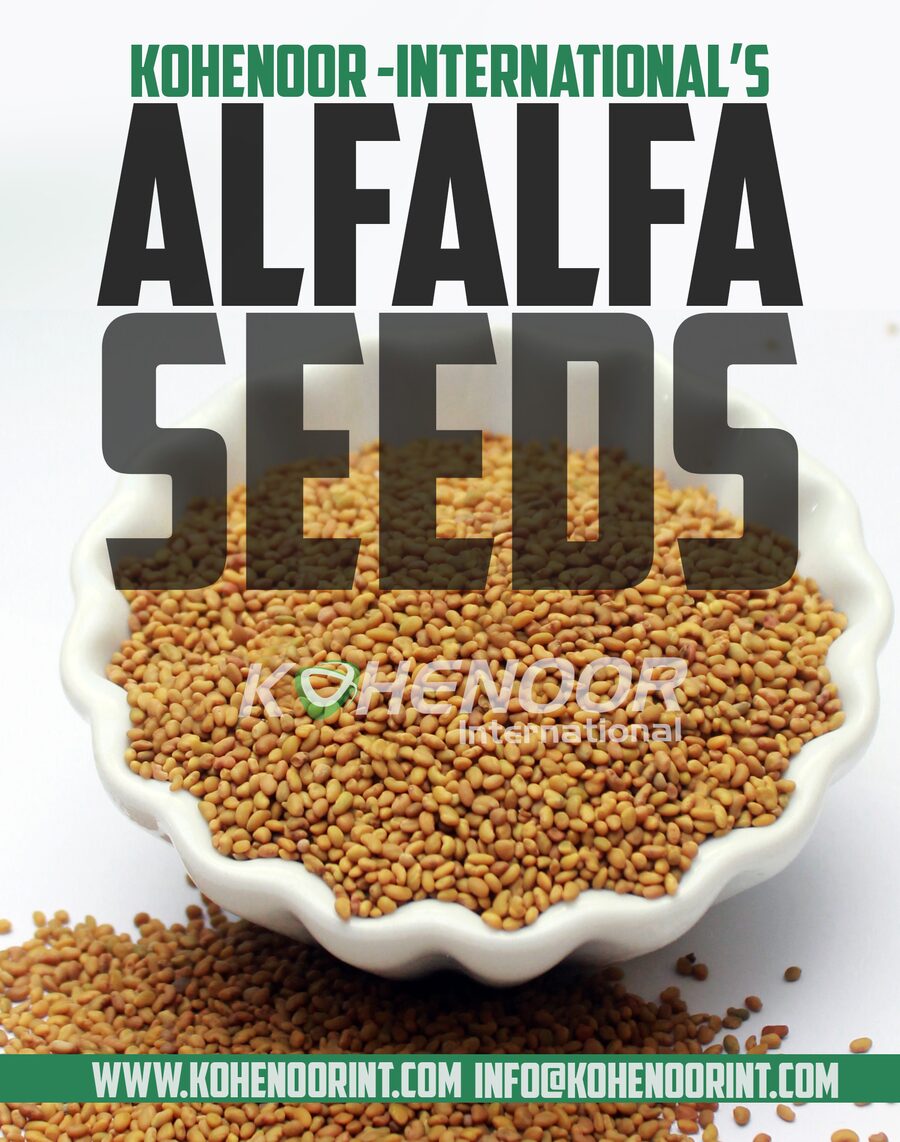
Close-up of cleaned Kohenoor alfalfa seed showing uniform size and colour

Storage matters too. Alfalfa sprouting seed holds its germination well — typically 18–24 months in cool, dry storage — so a grower can buy a container, store it correctly and draw from the same lot all year, with a consistent sprout every week. We print the test date and lot ID on every bag tag so that is easy to manage.

What a professional buyer should specify

Experienced buyers write a short seed specification into their purchase order and ask the supplier to confirm it against the lot documents before shipment. For alfalfa sprouting seed the specification normally covers the points below, and our standard lots meet or exceed them.

ParameterWhat to ask forKohenoor alfalfa sprouting lots
GerminationMinimum %, ISTA method, with test date90%+ (ISTA Orange Certificate per lot)
Physical purityMinimum % pure seed~99%
Other crop and weed seedMaximum count or %, dodder explicitly nil0% dodder; weed seed removed by Sortex
Inert matter / foreign materialMaximum %, no stones, soil or glassWithin purity figure; optical and gravity cleaned
MoistureMaximum % for safe storage and shippingStated on COA per lot
Treatment statusUntreated, no coating, declared in writingUntreated — written on COA and tag
MicrobiologySalmonella and E. coli/STEC by accredited third-party labPer lot on request, report supplied
TraceabilityLot ID on every bag, field-to-bag recordSealed lot tags, field→bag→warehouse

Two points deserve emphasis. First, insist that germination is reported from an accredited test on the actual shipping lot, not from a "typical" figure or a test run on an earlier harvest. Second, ask for the moisture figure. Seed that leaves at a safe moisture content, in poly-lined bags, arrives in condition; seed that is a point or two too wet can heat in a container crossing the equator and lose germination you paid for.

If your own quality system has further requirements — pesticide residue screening, heavy metals, a GMO declaration — tell us at enquiry stage. Alfalfa for sprouting is conventional, non-GMO seed, and additional analyses can usually be arranged with the lot sample.

Why origin and cleaning matter so much for alfalfa

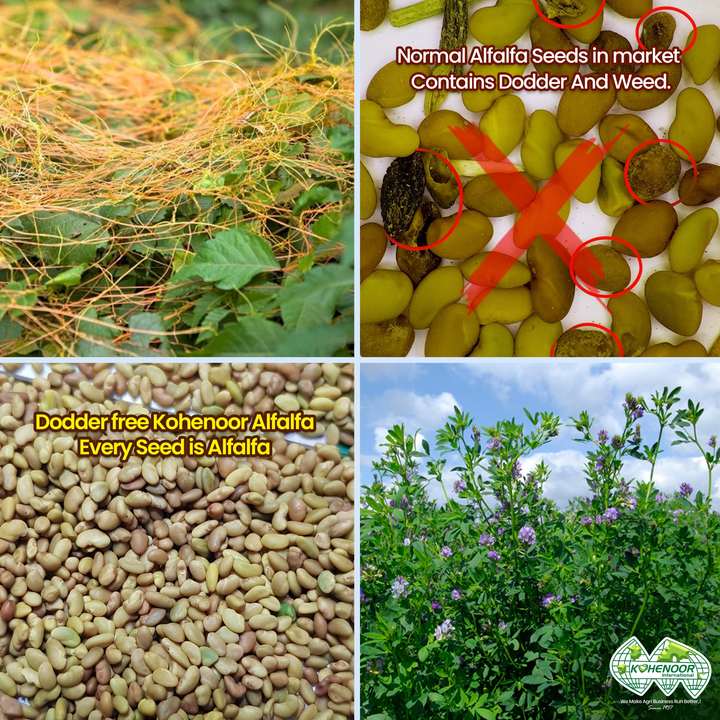
Alfalfa is a small seed, around 2 mm, and it grows in fields that also host other small-seeded plants. The weed that keeps seed traders awake is dodder (Cuscuta), a parasitic vine whose seed is almost the same size and weight as alfalfa and which is a quarantine pest in many importing countries. In a sprouting lot dodder is a double problem: it can fail the phytosanitary inspection at the port, and it germinates in the tray as a thin yellow thread that has no place in a food product. Our forage-seed heritage is relevant here — Kohenoor has guaranteed 0% dodder in writing for its agricultural alfalfa for decades, and the same cleaning line and the same inspection discipline produce the sprouting lots.

Dodder seed compared with alfalfa seed — the contaminant Kohenoor removes to zero in sprouting lots

Cleaning is a sequence, not a single machine. Harvested seed first passes air-screen cleaners that remove chaff, stems and light or broken seed by size and aspiration. Gravity tables then separate by density, which takes out immature seed and small stones. The final pass is through Sortex optical sorters, which look at each seed individually by colour and reject anything that is off-colour, discoloured by weather, insect-damaged or simply not alfalfa. The result is the uniform, bright, olive-to-amber seed you see in the photographs — and, in the tray, a stand that germinates together.

Origin matters for reasons beyond weeds. Alfalfa grown for seed in a dry, sunny climate ripens evenly and is harvested at low moisture, which is good for both germination and microbial load; wet harvests are where mould counts and sprouting problems begin. Sindh gives us a long, hot, dry ripening season. It also matters that the seed grower, the cleaner and the exporter are the same company, so that there is a single record from the field to the bag and a single person who answers for it.

Food safety and documents for alfalfa sprouting seed

Seeds for sprouting are regulated as a food ingredient in the major markets, and alfalfa is the species those rules were written around. Our export desk prepares the document set your importer will need; here is what it contains and why.

Kohenoor is ISO 9001 and HACCP certified, and the HACCP plan covers the sprouting-seed line specifically: separation from treated agricultural seed, cleaning-line hygiene, sampling and retained samples. For a fuller description of the testing programme see our food safety and testing page.

Kohenoor's quality process, from plot to bag tag

The company has been breeding and exporting alfalfa since 1957, and the sprouting line borrows everything useful from that history. The alfalfa used for sprouting lots is our KN92 line, selected over many seasons on our own research plots for seed vigour and uniformity. Vigour is the trait that separates a sprouting seed from a merely viable one: a vigorous lot germinates fast and together, which is precisely what a sprout house needs.

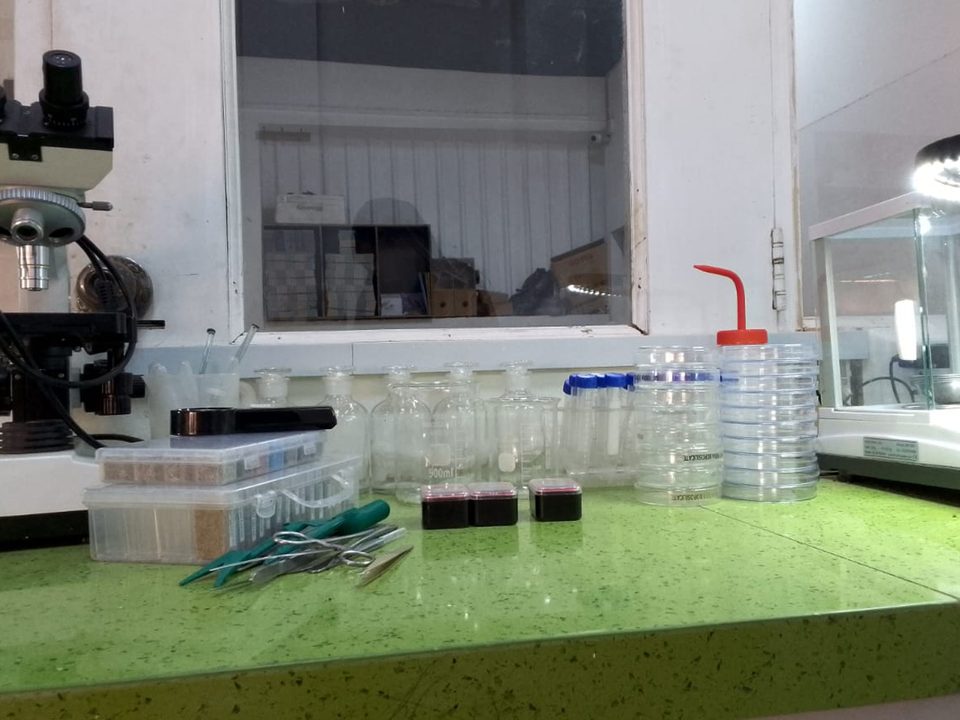
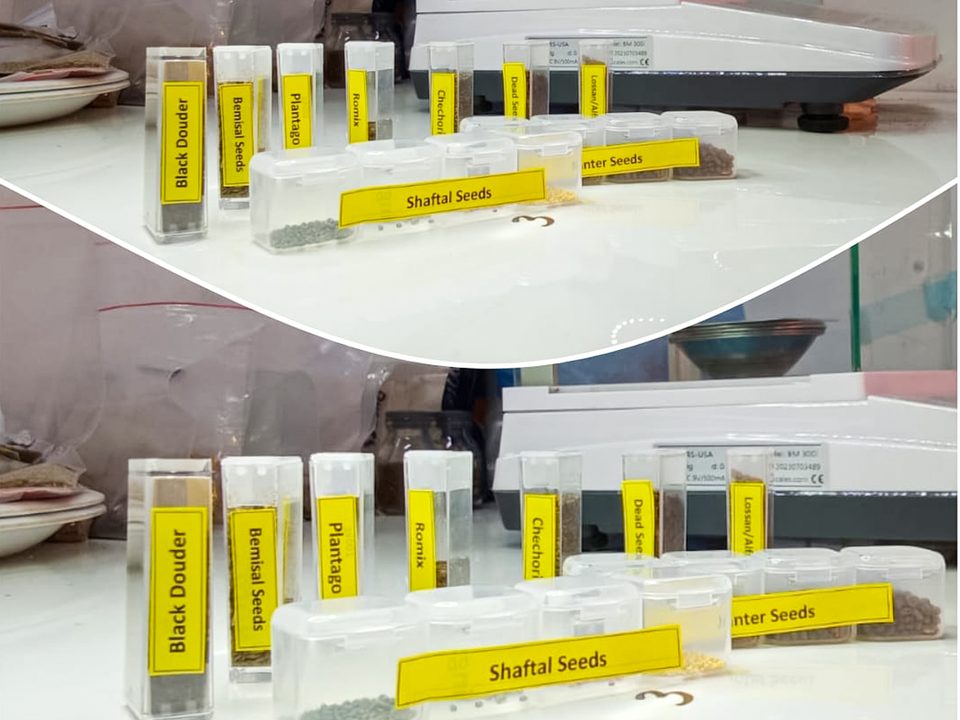
Seed testing laboratory where Kohenoor runs germination and purity tests on each alfalfa sprouting lot

Every lot that is accepted onto the sprouting line is sampled according to ISTA rules and tested in our own laboratory for germination, purity and moisture before it is released, and then sent for the ISTA Orange Certificate that travels with the shipment. Germination is checked again before dispatch if a lot has been in store for some months. Retained samples from every lot are kept so that any question from a customer can be answered against the same seed that was shipped.

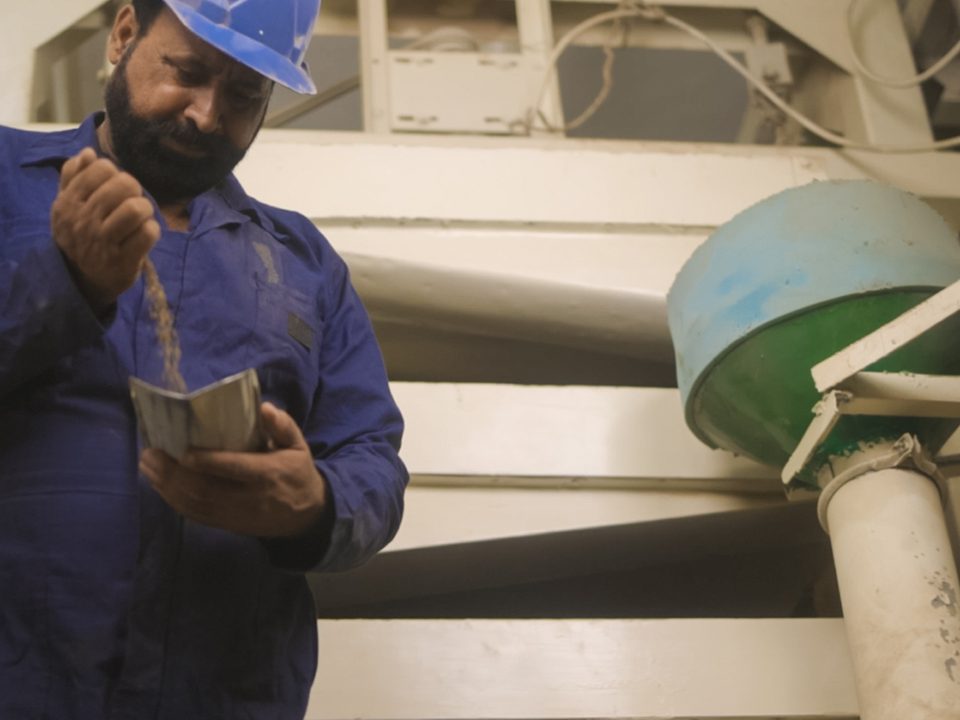
The cleaning plant runs air-screen cleaners, gravity separators and Sortex optical sorters in sequence, with a documented clean-down between lots so that nothing from an agricultural lot can carry into a food-grade one. Bags are filled on the line, weighed, sealed and tagged with the lot ID, species, test date and net weight. From that moment the lot ID is the key to everything: the field record, the cleaning record, the laboratory results and the microbiology report. If you ever need to trace a bag back, one number does it.

The export desk closes the loop. A real person — in Pakistan, Dubai or Australia — answers within 24 hours, sends current lot certificates with the quotation, and stays with the order until the container is unloaded. That is the part of the quality process no machine does.

Packaging, minimum order, lead time and payment

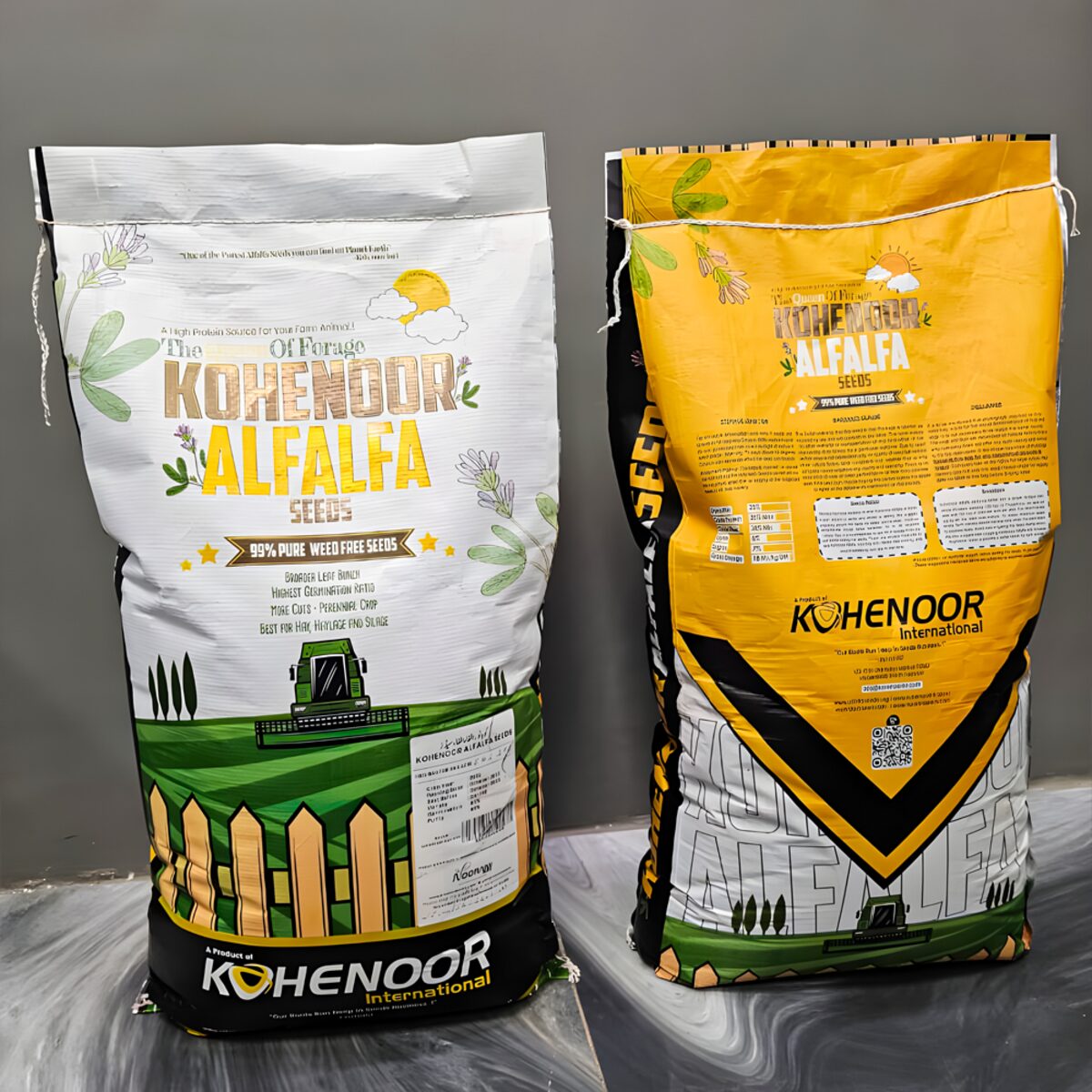
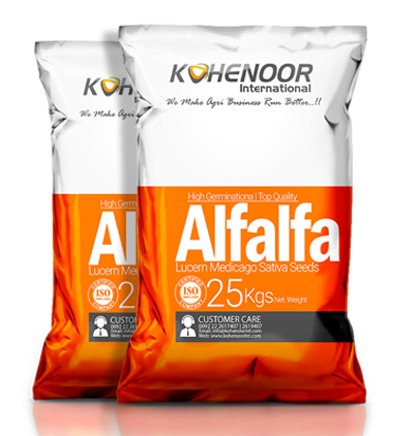
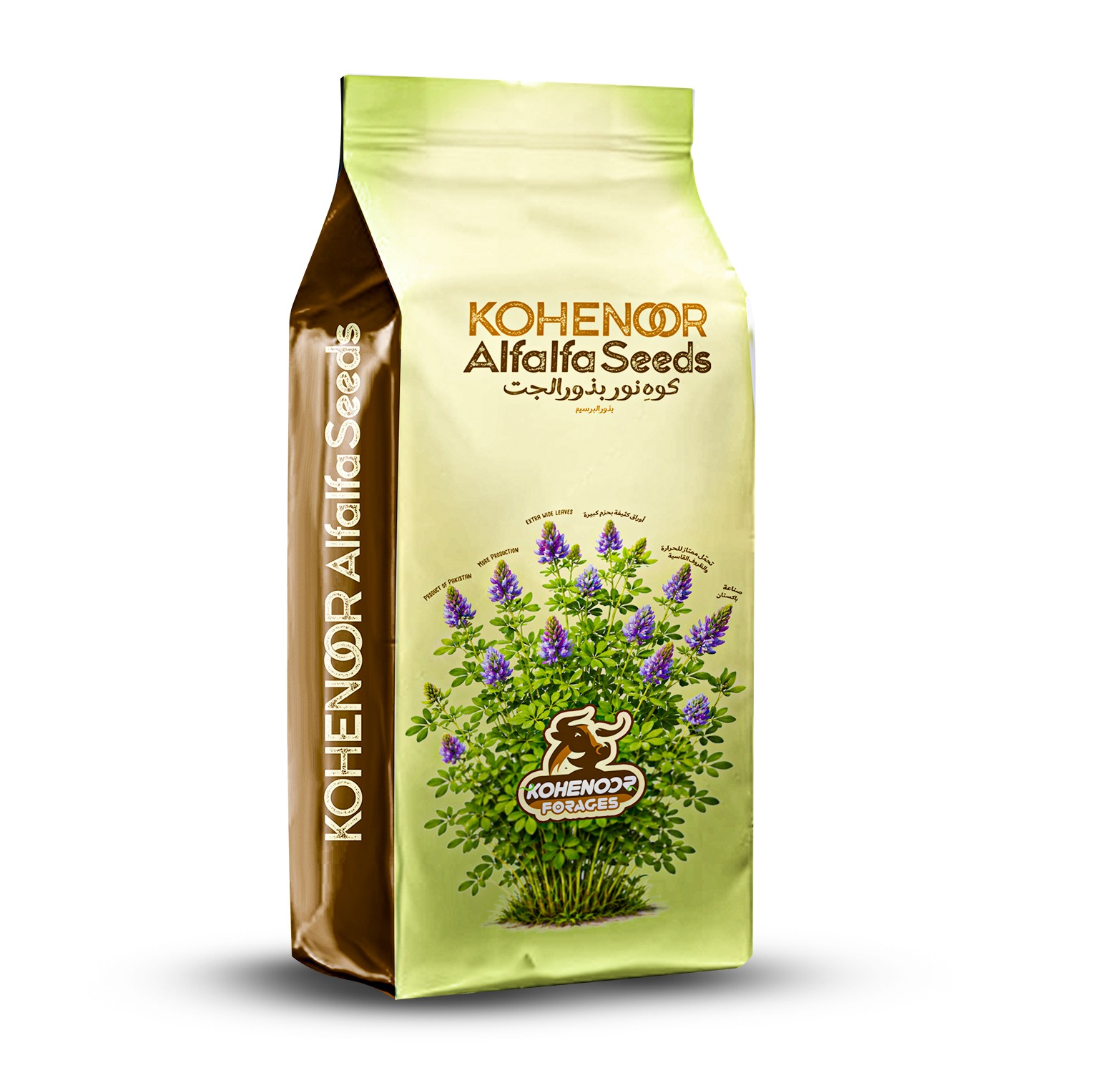
Packaging. Standard packing is 25 kg net in poly-lined polypropylene woven bags, with a sealed tag carrying the lot ID. The liner keeps moisture out through sea transit; the woven outer stands up to handling and stacking. Bags are palletised or loaded loose depending on your preference and the container. Private-label and OEM bags are available, as are retail-ready pouches, clamshells and sleeves if you want finished consumer packs produced at origin.

Minimum order. For alfalfa sprouting lots the minimum is 1 MT (40 bags). Most customers buy by the 20-foot container, which carries roughly 18–20 MT of bagged seed depending on palletisation, or combine alfalfa with clover, radish, mung bean and other species in one mixed container.

Lead time. In-stock lots are ready for FOB Karachi vessel loading within 7–12 days of order confirmation. Lots requiring a fresh microbiology report or special packaging may add a few days; we will tell you at quotation.

Terms and payment. Prices are quoted FOB Karachi, with CFR or CIF to your port on request. Payment is 100% by telegraphic transfer against the bill of lading copy, or by irrevocable letter of credit at sight. Repeat buyers are offered easier terms as the relationship develops.
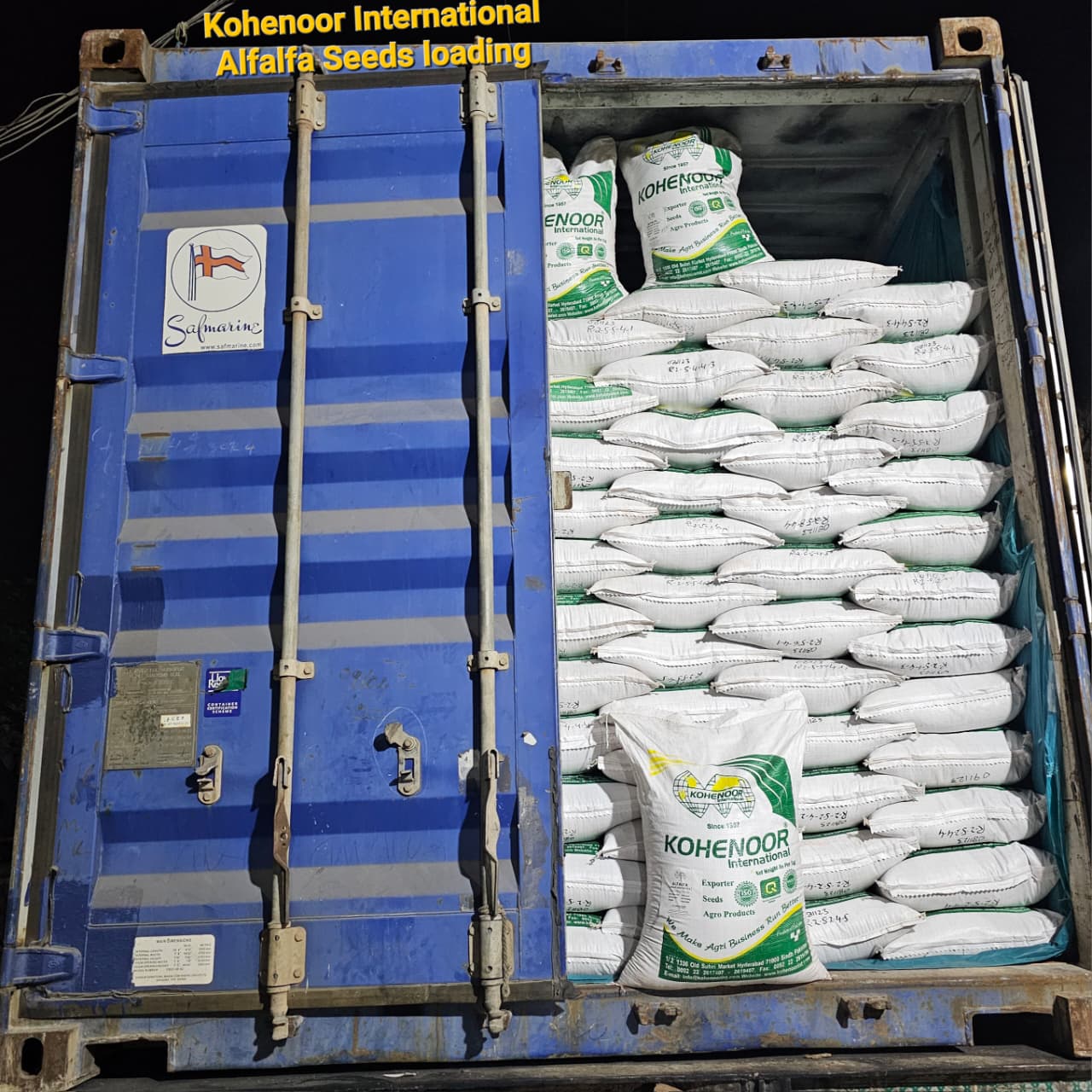
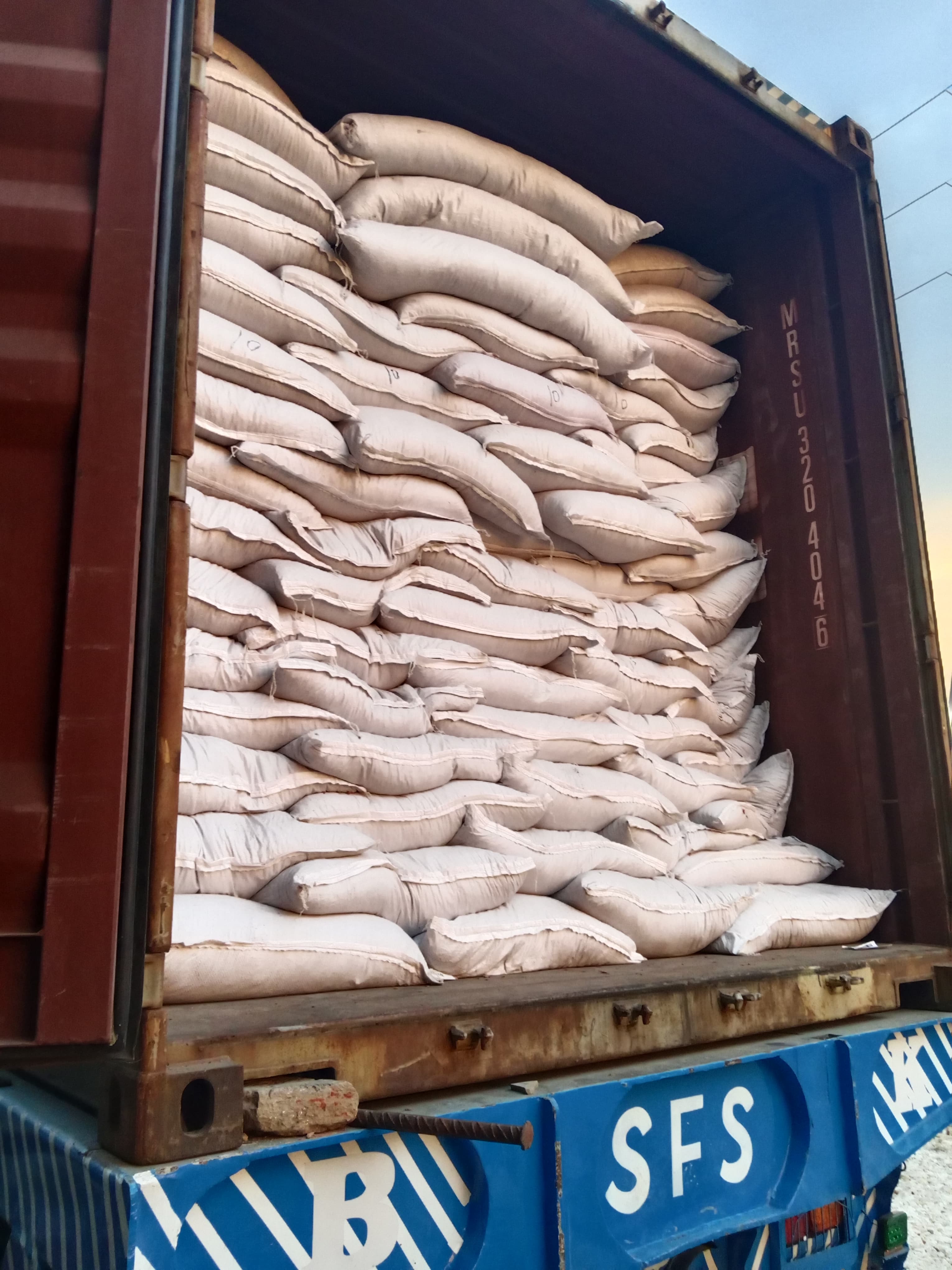
Kohenoor seed bags being loaded into an export container at Karachi

Destinations. We ship regularly to the USA, the EU and UK, Japan, Korea, Taiwan, Singapore, Hong Kong, the GCC, Australia and more. If you have not imported seed for sprouting before, the desk will walk you through the import requirements for your market before you commit.
Who buys alfalfa sprouting seed from Kohenoor

Commercial sprout growers are our largest group of alfalfa buyers: licensed sprout houses running drums or racks that need a full year's supply of one consistent lot and a supplier who understands why germination and microbiology documents are not optional. See our page for commercial sprout growers.

Microgreen farms use alfalfa less often as a stand-alone tray crop and more as the mild base in salad blends. For them the uniformity of the seed and the predictability of the germination date matter most. See for microgreen farms.

Health-food distributors and seed re-packers buy in 25 kg bags and repack into consumer sprouting-seed pouches and jars for home sprouters. Alfalfa is almost always the first product in such a range. They need clean, bright seed that looks good through a window pack and a COA they can quote on the label. See for health-food distributors.

Private-label brands have us pack under their own name at origin, either in bulk bags for their distribution centre or in finished retail units. See for private-label brands.

Importers and agents who consolidate several species for a regional market find that our range — 20 and more sprouting varieties, one document set, one container — simplifies their buying. Alfalfa is usually the anchor line.

Blends and the rest of the sprouting range

Few sprout producers run alfalfa alone. The classic retail "salad sprout" blend is alfalfa with a little radish and clover; the "spicy" blend adds mustard and more radish; and the microgreen farm will pair alfalfa with cress, mustard and fennel for colour and flavour contrast. Because we grow or source the whole range, you can build a blend from lots that all come with the same documents and ship in the same container.

The full range, with a comparison of sprouting times and flavours, is on the sprouting seeds hub. If you want a custom blend packed at origin, tell us the proportions and we will test-sprout it in our laboratory before you commit to a container.

Typical blend (by seed weight)AlfalfaPartnersCharacter
Mild salad sproutabout 70%clover 20%, radish 10%Fresh, crisp, a touch of colour
Spicy sproutabout 50%radish 35%, mustard 15%Peppery, for sandwiches
Gourmet microgreenabout 40%cress 25%, radish 20%, fennel 15%Aromatic, varied texture

These proportions are starting points that producers commonly use, not a formula; the right mix depends on your market's taste for heat and on the sprouting time of each partner, which is why we recommend a laboratory trial before committing a container.

How to order alfalfa sprouting seed in three steps

1. Send your requirement. WhatsApp +92 310 4929292 or email export@kohenoorint.com with the quantity, destination port, any specification your quality system needs (germination minimum, microbiology, organic, packaging) and whether you want a sample first. Samples of current lots are available.

2. Receive the quotation and lot documents. Within 24 hours you will have a quotation FOB Karachi (or CFR/CIF), the COA and ISTA certificate for the lot we propose, and a shipping schedule. Ask any question you like at this stage; we would rather answer it now than at the port.

3. Confirm and ship. On your purchase order and payment arrangement we book the vessel, complete the phytosanitary and origin certificates, and load within 7–12 days for in-stock lots. You receive the full document set by email before the vessel arrives, and the export desk stays in contact until the container is cleared.

Alfalfa is also covered in more depth on our alfalfa sprouting seed exporter page, which includes the background to the KN92 line and the comparison with forage grades.

See the seed, the lab and the loading

Other sprouting seeds we export

Clover sprouting seed
Clover sprouting seedRed and crimson clover — sweet, fine-stemmed, the natural partner to alfalfa.
View seed →
Fenugreek sprouting seed
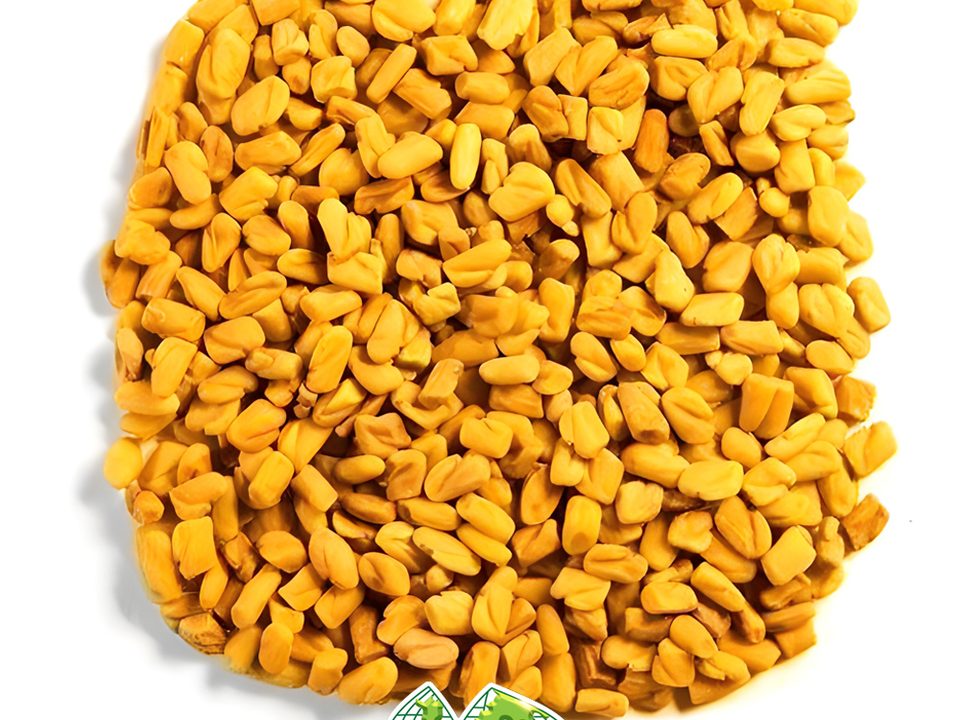
Fenugreek sprouting seedMethi sprouts with a gentle bitter note — strong in Asian and Gulf markets.
View seed →
Radish sprouting seed
Radish sprouting seedDaikon and rose radish — peppery, fast, the workhorse of spicy blends.
View seed →
Mung bean sprouting seed
Mung bean sprouting seedThe world's highest-volume sprout — thick, juicy, kitchen-ready in days.
View seed →

Talk to a real person — quote within 24 hours

Send your product, quantity and destination port. The export desk replies personally with a quotation, current lot certificates and a shipping schedule — no bots, no obligation.

export@kohenoorint.com

Frequently asked questions

Is it untreated?

Yes. Every alfalfa sprouting lot we ship is natural, untreated seed: no fungicide, no insecticide, no coating or pelleting of any kind. Treated seed is never food-grade and we keep sprouting lots physically and administratively separate from our agricultural seed. The untreated status is written on the COA and on the lot tag.

Do you test for Salmonella and E. coli?

On request, each lot is sampled and sent to an independent third-party laboratory for Salmonella and E. coli/STEC testing, and the report travels with the lot documents. Many buyers also run their own incoming-quality checks, and we encourage that; we will supply retained samples and the sampling record so your laboratory can correlate results with ours.

Can you supply organic?

Yes. Organic-certified alfalfa lots (USDA NOP, EU Organic or JAS) are available subject to a 5 MT minimum and a 60–90 day lead time, because organic lots are grown and cleaned to order under certified handling. Tell us which certification your market needs and we will confirm the programme for the season.

What are the MOQ and lead time?

The minimum order for alfalfa sprouting seed is 1 MT. In-stock lots ship within 7–12 days to FOB Karachi vessel loading. Transit time then depends on the destination port; your forwarder or ours will give you the sailing schedule when we confirm the order.

Do you do private label?

Yes. Beyond our standard 25 kg poly-lined PP woven bags with sealed lot tags, we offer private-label and OEM packaging, and retail-ready pouches, clamshells and sleeves on request. Send your artwork and pack sizes and we will quote the packaging alongside the seed.

Which countries do you ship to?

We ship FOB Karachi (CFR/CIF on request) to the USA, EU and UK, Japan, Korea, Taiwan, Singapore, Hong Kong, the GCC states, Australia and many other destinations. Kohenoor serves buyers in 70+ countries and has offices in Pakistan, Dubai and Australia, so there is usually someone in or near your time zone.

What germination do you guarantee for alfalfa sprouting seed?

Our alfalfa sprouting lots test at 90% germination or better by ISTA method, with purity around 99% and 0% dodder, and those figures are on the ISTA Orange Certificate and the COA for the specific lot you receive. Under cool, dry storage alfalfa typically holds germination for 18–24 months, so a container can be drawn down over a season without losing performance.

What is the difference between sprouting-grade and forage-grade alfalfa seed?

Forage alfalfa is sold to be sown in a field; it may be treated or coated, and a few percent of inert matter or hard seed does not matter in a pasture. Sprouting-grade alfalfa is a food ingredient: it must be untreated, cleaned to near-100% purity, tested for human pathogens and traceable to the bag. We keep the two lines completely separate, and only lots that meet the food-grade specification are tagged as sprouting seed.

Related pages

WA