Sprouting & microgreen seed · from origin

Basil sprouting seeds for microgreen farms and the gourmet trade

Untreated · Sortex-cleaned · ISTA-tested · COA per lot · 25 kg bags · MOQ 500 kg

Basil microgreens are the most fragrant thing a microgreen farm can grow — tiny, intensely aromatic seedlings that carry the whole flavour of the herb in a single leaf and command a premium in every restaurant market from Milan to Melbourne. Kohenoor supplies untreated, food-grade Ocimum basilicum sprouting lots, Sortex-cleaned and ISTA-tested at origin with lot-specific purity and germination on the COA and the full export document set.

Get a quote in 24h
Kohenoor food-grade basil seed for sprouting and microgreens
In short: Basil sprouting seed is untreated, food-grade Ocimum basilicum seed cleaned and tested for growing fragrant basil microgreens for the restaurant and gourmet trade. Kohenoor supplies it from origin: Sortex optical-cleaned, ISTA-tested per lot with purity and germination on the COA, third-party Salmonella and E. coli testing on request, sealed lot-tagged 25 kg bags, 500 kg minimum, FOB Karachi to microgreen farms and distributors in 70+ countries.
Untreated — no coatingSortex optical-cleanedISTA-tested per lotCOA within 24 hThird-party microbial testingLot-tagged traceabilitySince 1957Reply within 24 h
Botanical nameOcimum basilicum
Sprout time10–16 days microgreen (typical)
FlavourSweet, aromatic, intensely basil
GerminationLot-specific on COA
MOQ500 kg
Packaging25 kg lot-tagged bags

What basil microgreens are and who eats them

Basil microgreens are the young seedlings of Ocimum basilicum, sweet basil, grown under light for ten to sixteen days until they have a short stem, two rounded cotyledons and, often, the first pair of true leaves. At that size each seedling carries the full aroma of the mature herb — the sweet, clove-and-anise scent of Genovese basil, or the spicier, more liquorice-like note of Thai and other types — in a form that can be scattered over a plate without chopping. A punnet of basil microgreens perfumes the room when it is opened, and that is its selling point.

The market is the restaurant and gourmet trade, worldwide. Italian and Mediterranean kitchens across Europe — Italy, France, Spain, the UK, Germany — use basil microgreens on tomato dishes, pasta, pizza, burrata, fish and desserts. North American and Australian restaurant-supply microgreen farms count it among their top premium lines. The Gulf's hotel sector, supplied by the region's new indoor farms, uses it heavily. Japan's food-service microgreen suppliers grow it for Western and fusion restaurants, and Singapore, Hong Kong and Taiwan buy it as part of a gourmet range. Premium salad packers include it in "Italian" and "herb" microgreen mixes for upmarket retail. Several types are grown — Genovese sweet basil for the classic flavour, Thai basil for South-East Asian kitchens, and dark-leaved and lemon types for colour and variety — and we can advise on which our current lots suit.

Who eats them? Restaurant diners, above all; the retail customer of premium microgreen mixes; and the home grower who buys basil microgreen seed because the scent of a tray on the kitchen counter is reason enough. For the microgreen farm, basil is a slower and more sensitive crop than the brassicas, with a higher value per tray and a shorter shelf life after cutting, which makes seed quality and local, timely production the keys to the line.

Formats are those of the premium microgreen trade. Basil microgreens are sold cut in small punnets of 25–50 g to restaurants and upmarket retail, living in trays to food-service customers and grocery, and as the aromatic lead in Italian and herb microgreen mixes. Home-growing ranges list it in small pouches for the flavour-led customer. Demand follows the restaurant calendar, with a lift in the tomato season, and is steadiest where there is a strong Mediterranean-style dining sector; farms buy basil seed for the season rather than the year, to keep the lot fresh for a slow crop.
Nutrition and flavour: why basil microgreens command a premium

Basil seedlings are typically low in calories and contribute vitamin K, vitamin A precursors, vitamin C and a range of minerals for their small weight, and microgreens in general are known for concentrating certain vitamins and plant compounds relative to the mature plant. Basil itself is known for its aromatic essential oils — linalool, eugenol, estragole and others depending on type — which are present in the seedling and are the entire reason the microgreen exists. We make no claims about any of it; basil sells on aroma and flavour, and that is how we describe it.

The flavour argument is as strong as any in the microgreen world. Basil is one of the most loved culinary herbs on earth, and the microgreen gives a kitchen that flavour in a delicate, decorative, no-preparation form at a stage when the leaf is at its most tender. It bridges the savoury and the sweet in a way few garnishes do — equally at home on a tomato salad and a strawberry dessert. In a mixed microgreen punnet a small proportion of basil dominates the aroma and lifts the whole mix.

Quality depends on the seed and on the growing environment, and basil is less forgiving of both than radish or mustard. A current-season, high-germination, uniform lot sown at the right density in a warm, bright, airy room gives a dense, even, fragrant tray; a weak lot, or a cold or damp room, gives a thin, uneven stand with damped-off patches and two weeks of tray time lost. With basil, as with fennel and onion, the slow cycle makes the seed's quality the decisive economic factor.

How basil is grown commercially as a microgreen

Basil is a warm-season herb and behaves like one in the tray: it wants warmth, light and air, and dislikes cold and wet. The ranges below are those growers typically report.

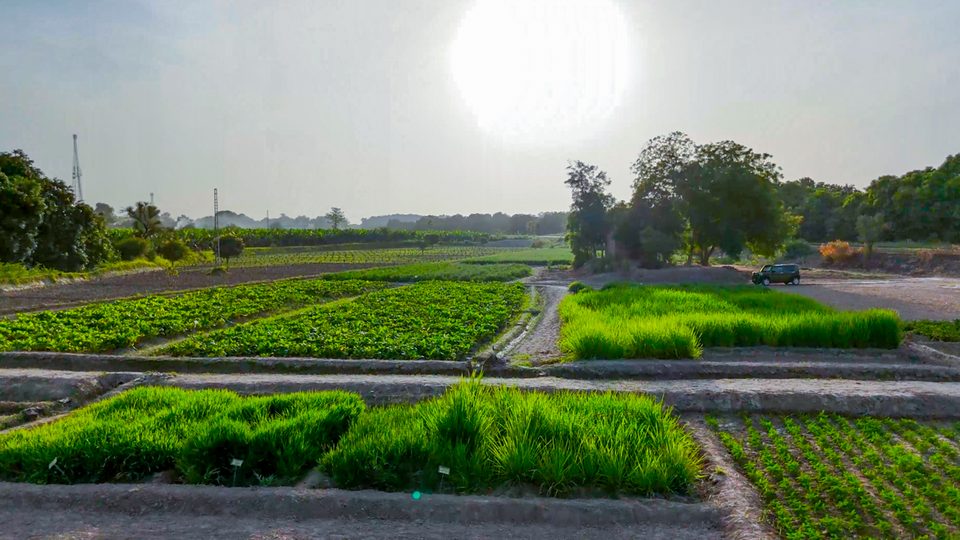
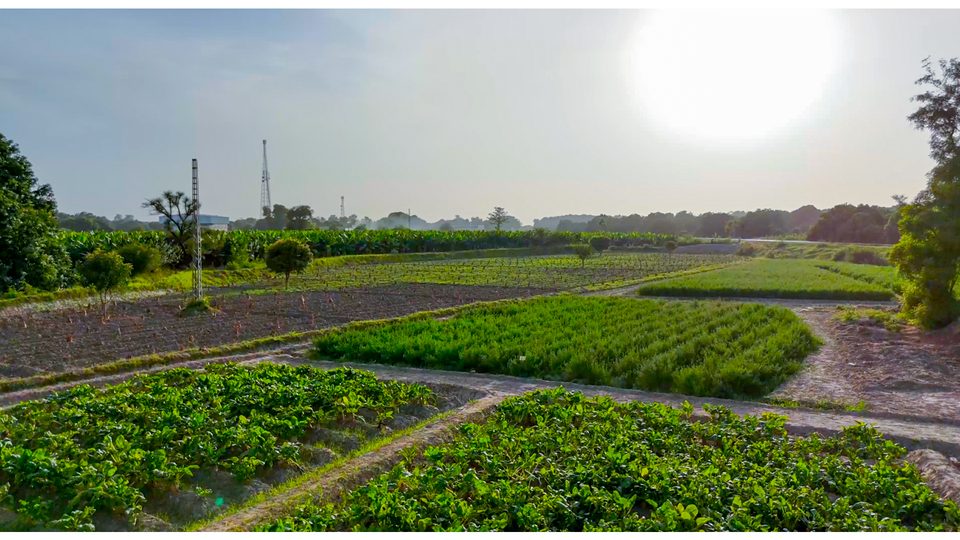
Kohenoor research plots where basil and other sprouting-seed lines are evaluated

Three practical notes. Warmth is the first requirement: a tray at 18 °C will germinate slowly and unevenly where one at 24 °C comes up together. Air movement is the second: the mucilage and the dense sowing hold moisture at the surface, and a fan is the cheapest insurance against damping-off. And light should be bright once the stand is up; basil in weak light stretches, pales and loses aroma.

Basil is not usually sprouted short in the dark; the microgreen is the commercial product. The seed is also sold for the sweet basil-seed drinks of South and South-East Asia, where the swollen mucilage coat is the point — a separate market for the same seed, and one that, like the spice trade, does not need the seed to germinate.

The common faults a grower meets with basil follow from its warm-season nature. Slow, uneven emergence points to a cold tray or an old lot; raise the temperature and insist on a current-season test. Damped-off patches point to a surface kept cold and wet with too little air; a fan and a warmer room settle it. Pale, stretched seedlings with little aroma point to weak light. Blackened leaves after harvest point to rough handling or chilling too hard; basil microgreens want gentle hands and a cool, not cold, chain. And a stand with off-type seedlings points to mixed basil types in the lot — the reason the type is declared on our tag.

What a professional buyer should specify

Basil seed is traded both as vegetable and herb seed for field and greenhouse production — frequently fungicide-treated or pelleted — and as a food seed for basil-seed drinks, which is often old and may be fumigated. Neither is sprouting seed. Your purchase specification should make the sprouting grade explicit. Our lots are documented against the following.

ParameterWhat to ask forKohenoor basil sprouting lots
TypeSweet/Genovese, Thai or other, declaredDeclared on tag and COA
GerminationMinimum %, ISTA method, current-season testLot-specific on ISTA certificate and COA
Physical purityMinimum % pure seedLot-specific on COA
Other crop / weed seedMaximum count; other Ocimum types and small weedsRemoved by screen, gravity and optical sorting
Inert matterMaximum %, no calyx fragments, stems, soilWithin purity figure
MoistureMaximum % for safe storageStated on COA
Treatment statusUntreated, unfumigated, no fungicide, no pellet or film coat — in writingUntreated — on COA and tag
MicrobiologySalmonella, E. coli/STEC, third-party laboratoryPer lot on request
TraceabilityLot ID on every bagSealed lot tags, field→bag→warehouse

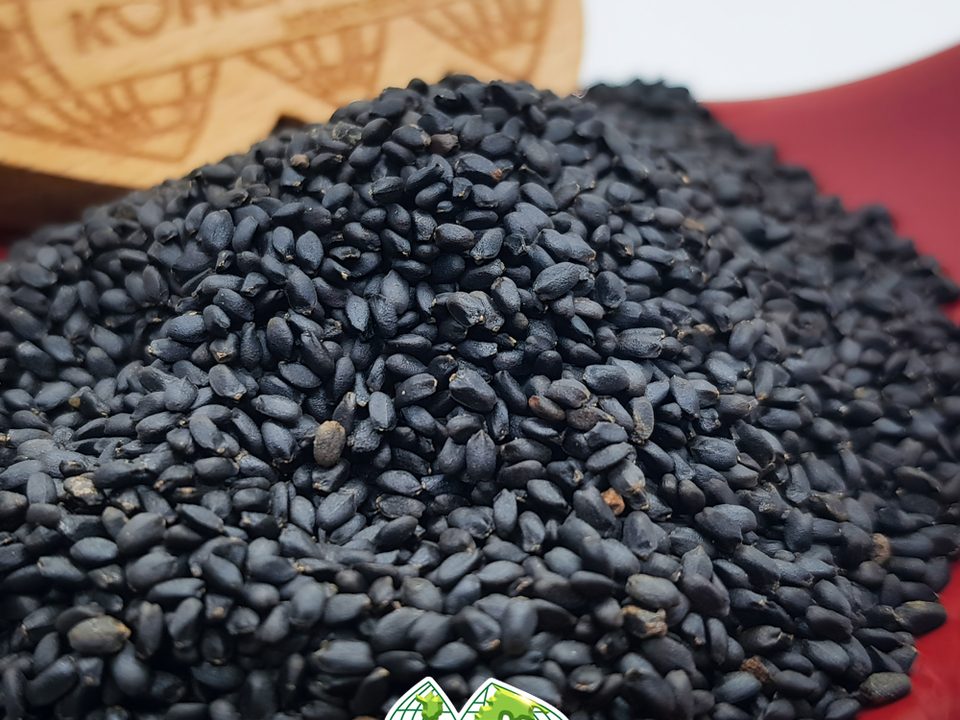
Treatment deserves the most attention. Greenhouse basil seed is very commonly fungicide-treated and sometimes pelleted, and a dressing on small black seed is easy to miss. Natural basil seed is matte black, small and oval, and turns grey-blue with mucilage when wetted; anything tinted, glossy or coated should be questioned. Ours is untreated and the statement is on the documents.

Insist on a current-season germination test — basil seed keeps moderately well but, as a slow crop, any weakness costs two weeks of tray time — and specify the type you want, since Genovese, Thai and other basils differ in flavour, colour and growing rate. If your quality system also needs pesticide-residue screening, tell us at enquiry and we will arrange it on the lot sample.

Incoming-quality checks take about a week with basil. On arrival, draw a sample from several bags, count out four lots of one hundred seeds and sow them dry on moist paper at around 24 °C; count normal seedlings at seven to ten days and compare with the COA, noting the spread of emergence. Wet a pinch in a glass to confirm the mucilage forms — a sign of natural, uncoated seed — and look over a handful with a hand lens for tinted or coated seed and calyx fragments. Photograph anything that does not match the documents and send us the lot ID the same day.

Why origin and cleaning matter for basil

Basil seed is harvested from the dried flower spikes of a crop that ripens unevenly along the spike, and the raw lot carries calyx fragments, stem pieces, chaff, immature pale seed, soil and sometimes the seed of small weeds. Calyx fragments are close enough to seed size to need careful screening, and immature seed — paler and lighter than ripe seed — is the main reason a poorly cleaned basil lot germinates unevenly. Our sequence is air-screen cleaning for calyx and chaff, gravity separation for immature light seed and soil, and Sortex optical sorting as the final pass, which rejects pale, shrivelled and off-type seed one at a time. The result is a lot of plump, uniform, matte-black seed that sows evenly and emerges as one stand.

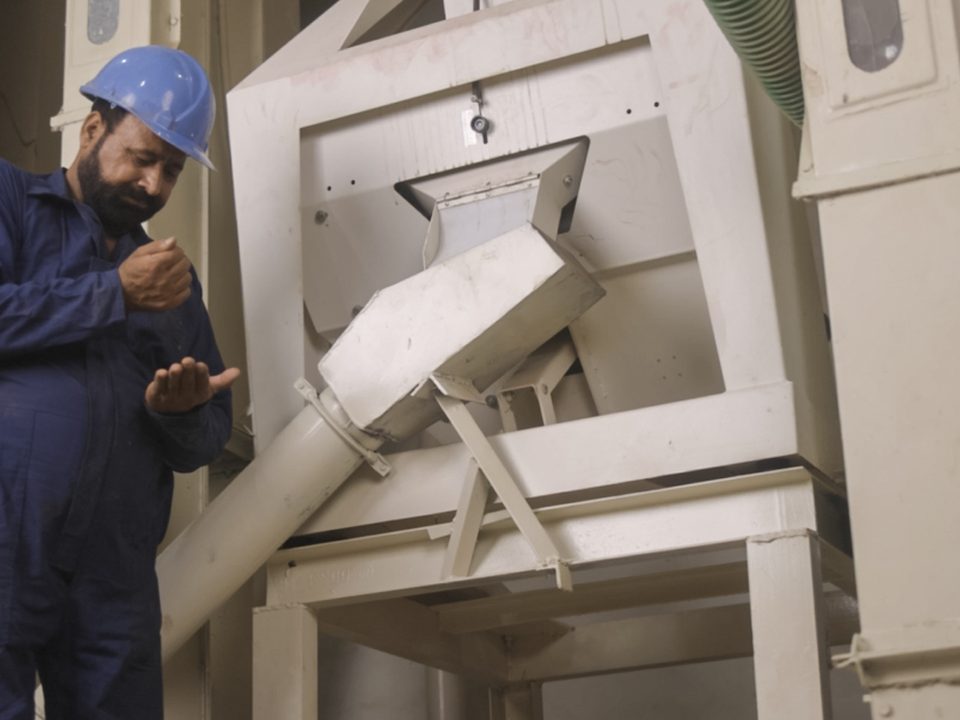
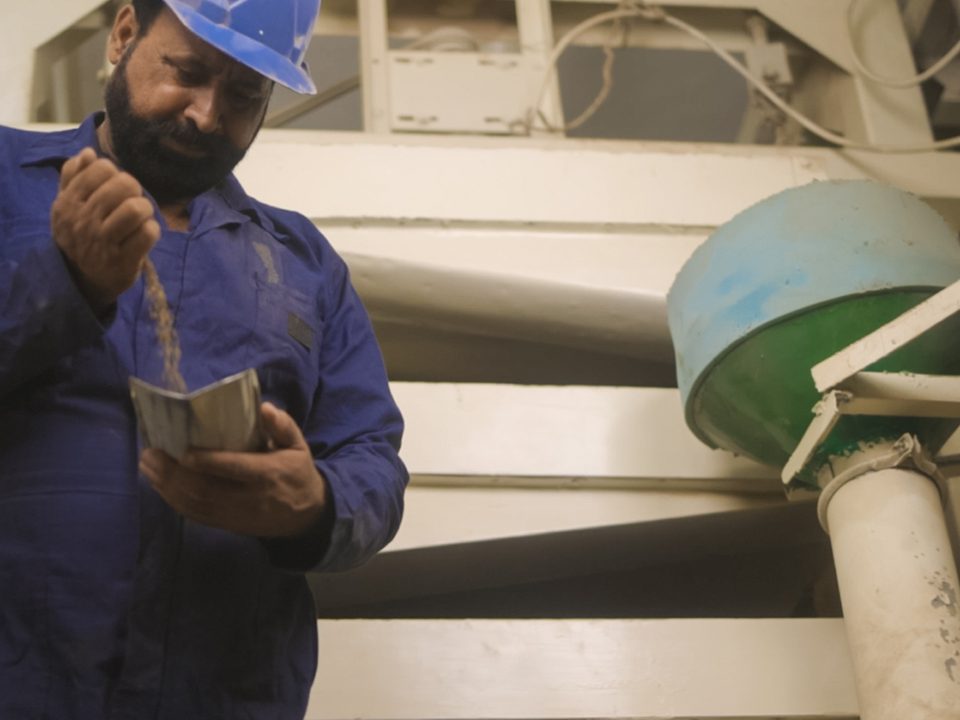
Optical sorting line used for Kohenoor basil sprouting lots

Origin matters for basil in the usual ways and one more. A warm-season crop ripened in a long, hot, dry season is harvested at low moisture with high vigour and low mould counts; and basil seed grown and cleaned as sprouting seed — rather than bought from the basil-seed-drink trade — has not been stored for years or fumigated. Sindh gives us the ripening season, and growing, cleaning and exporting under one roof gives the lot one continuous record under one lot ID.

Basil is not a dodder crop and off-type contamination is uncommon; the cleaning challenge is calyx fragments and immature seed, and the screen, gravity and optical stages are where that is solved.

Food safety and documents for basil sprouting seed

Basil seed intended for microgreen production is a food ingredient under the rules of every major importing market, and fresh basil products have their own history of attention from food-safety authorities, so microgreen growers' auditors expect seed documentation to be in order. The export desk prepares the full set for each consignment.

Microgreen growers whose product is cut above the substrate or sold living in the tray are generally within general produce-safety law rather than the sprout-specific rules; the same seed documentation serves them. Kohenoor is ISO 9001 and HACCP certified, and the food safety and testing page sets out the programme.

Kohenoor's quality process for basil lots

Basil lots for the sprouting programme are drawn from the current harvest and brought straight onto the food-grade cleaning run, never through the food-seed trade. Each lot is sampled under ISTA rules and tested in our laboratory for germination, purity and moisture before release, then sent for the ISTA Orange Certificate that travels with the shipment.

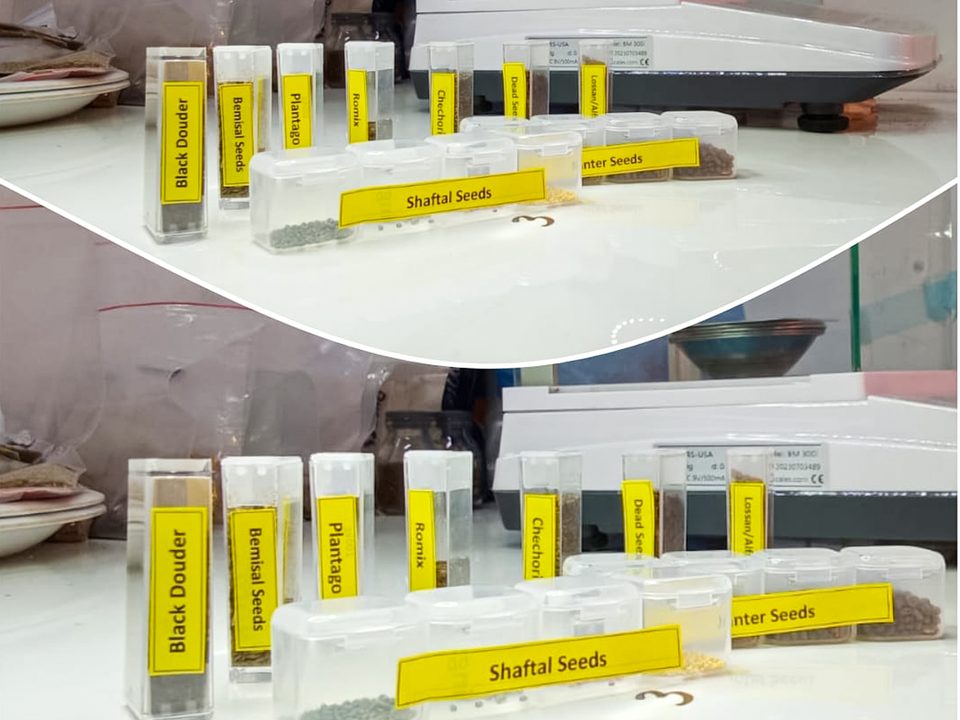
Kohenoor seed laboratory — germination testing and tray trials of basil sprouting seed

We also run a full tray trial on every basil lot — sown dry on a moist pad, held warm in the dark, grown under light for fourteen days — to see what the count cannot show: the evenness and density of the stand, any tendency to damp off, and the colour and aroma at harvest. A lot that comes up thin or patchy is diverted to agricultural use whatever its germination percentage. Only lots that pass both the laboratory test and the tray trial are tagged as sprouting seed.

The cleaning line runs air-screen, gravity and Sortex stages with a documented clean-down between lots, and the food-grade sprouting run is kept apart from any vegetable, herb or food-seed stock. Bags are filled, weighed, sealed and tagged with lot ID, type, test date and net weight; retained samples are held from every lot. The lot ID ties together field record, cleaning record, laboratory results, tray trial and microbiology report.

A person on the export desk — Pakistan, Dubai or Australia — answers within 24 hours in English, Arabic, Spanish or French, sends current lot documents with the quotation and stays with the order through to clearance at your port.

Packaging, minimum order, lead time and payment

Packaging. 25 kg net in poly-lined polypropylene woven bags with a sealed lot tag; the liner keeps moisture away from a seed that gels on contact with it. Private-label and OEM bags and retail-ready pouches are available on request for the home-growing and gourmet trade.

Minimum order. 500 kg (20 bags) per type. Basil is a lower-volume line and is almost always ordered as part of a mixed container with radish, mustard, cress, fennel and onion; the minimum applies per species.

Lead time. In-stock lots ready for FOB Karachi vessel loading within 7–12 days of order confirmation. A fresh microbiology report or special packaging may add a few days.

Terms and payment. FOB Karachi, CFR or CIF on request. Payment 100% TT against bill of lading copy or irrevocable letter of credit at sight; easier terms for repeat buyers.

Destinations. USA, EU and UK, Japan, Korea, Taiwan, Singapore, Hong Kong, GCC, Australia and more. Store basil seed cool, dry and sealed on arrival — above all dry, given the mucilage — and plan to use a lot within the season.

For container planning, 25 kg bags palletise at roughly 40 bags to the tonne, and a 20-foot container carries on the order of 18–20 MT of bagged seed. Basil is almost never shipped alone; restaurant-supply microgreen farms take it with radish, mustard, cress, fennel and onion, in quantities sized to the season. Each species and type is tagged and documented separately so every lot keeps its identity through customs and into your traceability records, and the test date on the tag lets you rotate stock so the oldest lot is sown first.

Who buys basil sprouting seed from Kohenoor

Restaurant-supply microgreen farms in Europe, North America, East Asia, Australia and the Gulf are the main basil buyers; it is one of the two or three most requested premium microgreens in every market. See for microgreen farms.

Premium salad and microgreen packers include basil in Italian and herb microgreen mixes for upmarket retail and sell living trays through grocery.

Health-food distributors and re-packers list basil in home-growing microgreen ranges for the flavour-led customer. See for health-food distributors.

Private-label brands have us pack under their own name at origin. See for private-label brands.

Commercial sprout growers expanding into microgreens for the food-service trade add basil as a premium line. See for commercial sprout growers.

Blends and the rest of the sprouting range

Basil is the aromatic lead in a microgreen blend. The chef's "Italian mix" is basil with a little radish for colour and heat; the premium retail "herb" punnet pairs basil with fennel and onion; and a small proportion of basil in a mild mix of alfalfa, clover and cress transforms its aroma. Everything below ships with the same documents in the same container.

The whole range is compared on the sprouting seeds hub. Custom blends are mixed and packed at origin after a laboratory tray trial.

Typical blend (by seed weight)BasilPartnersCharacter
Italian chef's mixabout 70%radish 30%Fragrant with colour and heat
Premium herb punnetabout 25%fennel 25%, onion 25%, radish 25%Aroma, savour and colour
Aromatic chef's mixabout 40%fennel 40%, cress 20%Perfumed, delicate

Basil, fennel and onion grow on similar two-week timetables and can be sown together; radish and cress are far faster and are grown separately and combined at packing. These proportions are common starting points rather than a formula; a laboratory tray trial shows you the punnet before you commit a container.

How to order basil sprouting seed in three steps

1. Send your requirement. WhatsApp +92 310 4929292 or email export@kohenoorint.com with type (Genovese, Thai or other), quantity, destination port, any specification your quality system needs and whether you want a sample first. Samples of current lots are available; for a slow, sensitive crop like basil we recommend a sample tray before the first container.

2. Receive the quotation and lot documents. Within 24 hours: quotation FOB Karachi (or CFR/CIF), COA and ISTA certificate for the proposed lot, and a shipping schedule.

3. Confirm and ship. On your purchase order and payment arrangement we book the vessel, complete the phytosanitary and origin certificates and load within 7–12 days for stock lots. The document set reaches you by email before the vessel arrives.

See the seed, the lab and the loading

Other sprouting seeds we export

Alfalfa sprouting seed
Alfalfa sprouting seedThe benchmark sprout — mild and crisp, 90%+ germination, 0% dodder.
View seed →
Clover sprouting seed
Clover sprouting seedRed and crimson clover — sweet, fine-stemmed, the natural partner to alfalfa.
View seed →
Fenugreek sprouting seed
Fenugreek sprouting seedMethi sprouts with a gentle bitter note — strong in Asian and Gulf markets.
View seed →
Radish sprouting seed
Radish sprouting seedDaikon and rose radish — peppery, fast, the workhorse of spicy blends.
View seed →

Talk to a real person — quote within 24 hours

Send your product, quantity and destination port. The export desk replies personally with a quotation, current lot certificates and a shipping schedule — no bots, no obligation.

export@kohenoorint.com

Frequently asked questions

Is it untreated?

Yes. Every basil sprouting lot we ship is natural, untreated seed: no fungicide, no insecticide, no coating or pelleting of any kind. Treated seed is never food-grade and we keep sprouting lots physically and administratively separate from our agricultural seed. The untreated status is written on the COA and on the lot tag.

Do you test for Salmonella and E. coli?

On request, each lot is sampled and sent to an independent third-party laboratory for Salmonella and E. coli/STEC testing, and the report travels with the lot documents. Many buyers also run their own incoming-quality checks, and we encourage that; we will supply retained samples and the sampling record so your laboratory can correlate results with ours.

Can you supply organic?

Yes. Organic-certified basil lots (USDA NOP, EU Organic or JAS) are available subject to a 5 MT minimum and a 60–90 day lead time, because organic lots are grown and cleaned to order under certified handling. Tell us which certification your market needs and we will confirm the programme for the season.

What are the MOQ and lead time?

The minimum order for basil sprouting seed is 500 kg. In-stock lots ship within 7–12 days to FOB Karachi vessel loading. Transit time then depends on the destination port; your forwarder or ours will give you the sailing schedule when we confirm the order.

Do you do private label?

Yes. Beyond our standard 25 kg poly-lined PP woven bags with sealed lot tags, we offer private-label and OEM packaging, and retail-ready pouches, clamshells and sleeves on request. Send your artwork and pack sizes and we will quote the packaging alongside the seed.

Which countries do you ship to?

We ship FOB Karachi (CFR/CIF on request) to the USA, EU and UK, Japan, Korea, Taiwan, Singapore, Hong Kong, the GCC states, Australia and many other destinations. Kohenoor serves buyers in 70+ countries and has offices in Pakistan, Dubai and Australia, so there is usually someone in or near your time zone.

Why does basil seed turn into a gel when wetted, and should I soak it?

Basil seed produces a thick natural mucilage within minutes of contact with water — the same property that makes basil-seed drinks possible. It is harmless, but it makes soaking impractical and holds moisture at the surface of the tray. Sow the dry seed evenly on a moist substrate, mist, and keep air moving. Uniform seed size, which Sortex cleaning gives, helps a seeder spread it evenly.

Which basil type is best for microgreens?

Genovese sweet basil gives the classic Mediterranean flavour and a bright green seedling, and is the usual choice for restaurant supply. Thai basil gives a spicier, anise-like note and often a purple-tinged stem, for South-East Asian kitchens. Dark-leaved and lemon types add colour and variety to a range. Tell us your market and we will advise which of our current lots suits; samples of each are available with their COAs.

Related pages

WA