Sprouting & microgreen seed · from origin

Clover sprouting seeds — red and crimson clover for sprout growers

Untreated · Sortex-cleaned · ISTA-tested · COA per lot · 25 kg bags · MOQ 500 kg

Clover sprouts are the sweeter, finer-stemmed cousin of alfalfa and the second seed most sprout houses add to the drum. Kohenoor supplies untreated, food-grade red clover (Trifolium pratense) and crimson clover (Trifolium incarnatum) sprouting lots, Sortex-cleaned and ISTA-tested at origin, with lot-specific purity and germination on the COA and the full document set for EU, US and Asian importers.

Get a quote in 24h
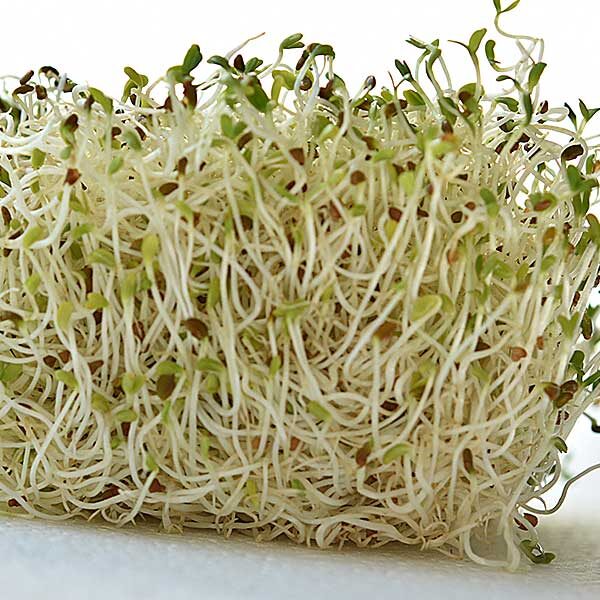
Fresh legume sprouts of the type grown from Kohenoor clover and alfalfa sprouting seed
In short: Clover sprouting seed is untreated, food-grade red or crimson clover seed cleaned and tested for growing fresh sprouts. Kohenoor supplies both species from its own cleaning line in Pakistan: Sortex optical-cleaned, ISTA-tested per lot with purity and germination stated on the COA, third-party Salmonella and E. coli testing on request, and sealed lot-tagged 25 kg bags shipped FOB Karachi from a 500 kg minimum.
Untreated — no coatingSortex optical-cleanedISTA-tested per lotCOA within 24 hThird-party microbial testingLot-tagged traceabilitySince 1957Reply within 24 h
Botanical nameTrifolium pratense (red) · T. incarnatum (crimson)
Sprout time4–6 days (typical)
FlavourMild, sweet, grassy
GerminationLot-specific on COA
MOQ500 kg
Packaging25 kg lot-tagged bags

What clover sprouts are and who eats them

Clover sprouts are the germinated seedlings of small-seeded clovers — in the sprouting trade almost always red clover (Trifolium pratense) and, for a slightly larger seed and a more robust sprout, crimson clover (Trifolium incarnatum). Harvested at four to six days they look very like alfalfa sprouts but finer: a thin white stem, two small round cotyledons, and a flavour that is milder and distinctly sweeter, without alfalfa's faint nuttiness. In a mixed clamshell they are the sprout that softens the blend.

Clover is a volume product in exactly the markets where alfalfa is: the United States, where "clover sprouts" appear as a stand-alone retail item alongside alfalfa; Germany, the Netherlands, the UK and Scandinavia, where mixed salad sprouts dominate; Japan and Korea, where it is used in convenience retail and food-service garnishes; and the Gulf, where cooled sprout rooms in the UAE and Saudi Arabia now grow sprouts locally rather than air-freighting them from Europe. Australia and the East Asian city markets buy it as part of a standard multi-species seed order.

Who eats it? Largely the same consumer who eats alfalfa, and often from the same pack: salad-bar customers, sandwich-shop regulars, people buying a "sprout mix" for a healthier lunch. Some buyers prefer clover on its own because the sweetness suits children and because red clover has a long reputation in herbal traditions that gives it a place in the health-food aisle. For the sprout producer the attraction is simpler: clover sprouts on the same schedule as alfalfa, in the same equipment, with the same rinse regime, so adding it costs almost nothing in process change and gives the range a second line.

In retail the product appears in three forms. The stand-alone "clover sprouts" clamshell is a North American speciality, usually 4 oz. The mixed "salad sprouts" pack — alfalfa, clover, radish — is the European and Australian norm and the largest volume outlet for clover seed. And the home-sprouting pouch, sold by health-food distributors with a jar or tray, lists red clover as a named variety alongside alfalfa and radish. Demand is steady through the year, with a lift in the northern spring and summer salad season, and producers generally contract their seed for twelve months at a time so the sprout on the shelf does not change from week to week.

Nutrition: why consumers ask for clover sprouts

Nutritionally clover sprouts sit close to alfalfa. They are typically very low in calories, contribute vitamin C, vitamin K and folate, and bring plant protein from the seed's reserves — commonly quoted at a few percent of fresh weight — along with fibre and a spread of minerals. Germination is known for mobilising the seed's storage compounds into simpler, more available forms and for reducing the compounds that make raw legumes less digestible, which is one reason sprouts have such a long-standing place in whole-food diets.

Red clover in particular is known for its isoflavone content, the group of plant compounds that has given the plant its place in herbal traditions. We make no health claims about them; we mention them because they are the reason a certain kind of shopper looks specifically for "red clover sprouts" and will pay for a clearly labelled pack. Health-food distributors who re-pack our seed for home sprouting tell us the clover line sells steadily to that customer year-round.

The other reason consumers come back is eating quality. Clover sprouts from good, uniformly sized seed are tender, sweet and clean-tasting; the stems are finer than alfalfa, so a clamshell feels lighter and less fibrous. Poor seed gives you the opposite — uneven lengths, ungerminated hard seed that crunches unpleasantly, and a pack that collapses early. The texture and the shelf life both trace straight back to the germination percentage and the uniformity of the lot.

How clover is sprouted commercially

Clover follows the alfalfa protocol closely enough that most sprout houses run the two on the same rack with the same timetable. The ranges below are those growers commonly report; your own validated process will fine-tune them.

Crimson clover behaves a little differently. The seed is noticeably larger and rounder, germinates vigorously and gives a slightly stouter sprout, which some growers prefer for mixed packs because it holds its shape. Many producers sprout the two together, or alternate them depending on which lot is available, and we can supply either or both.

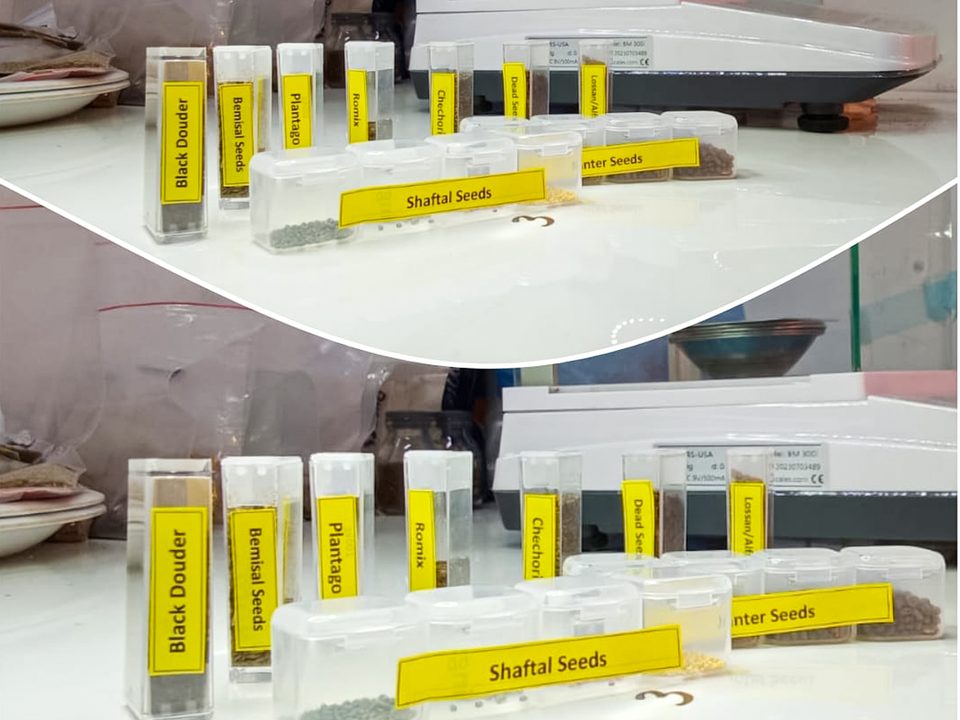
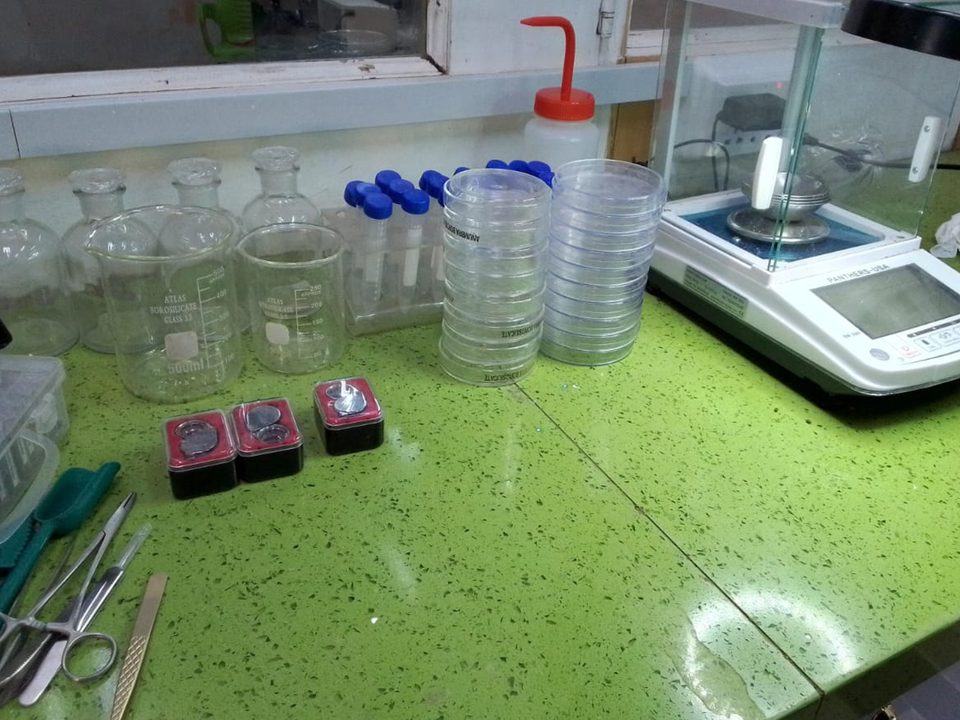
Kohenoor seed laboratory where clover sprouting lots are tested for germination and purity

As with every legume sprout, the enemy is an uneven stand. Hard seed — seed with an impermeable coat that does not take up water on schedule — is natural in clovers, and a lot with a high hard-seed fraction will sprout in two waves, leaving ungerminated seed in the finished pack. Our laboratory reports hard seed separately within the germination test, and our sprouting lots are selected for a low hard-seed fraction. That is a detail worth asking any clover supplier about.

The common faults a grower sees with clover are easy to trace. Patchy trays with ungerminated seed point to a high hard-seed fraction or an old lot; the cure is a lot with a current germination test and a low hard-seed figure. Thin, pale, stretched sprouts point to a room that is too warm; clover likes it cool. Souring in the first day points to over-soaking or poor drainage of the fine seed mass; shorten the soak and rinse more thoroughly. And a tray that smells of anything but fresh greenery is a tray to discard, not to rescue — one of the reasons seed microbiology and your own treatment step matter so much.

What a professional buyer should specify

A clover sprouting-seed specification looks much like the alfalfa one, with two additions: the species must be named (red or crimson, since the two sprout differently) and hard seed should be reported. Our lots are tested and documented against the following.

ParameterWhat to ask forKohenoor clover sprouting lots
SpeciesRed (T. pratense) or crimson (T. incarnatum), declaredDeclared on tag and COA
GerminationMinimum %, ISTA method, hard seed shown separatelyLot-specific on ISTA certificate and COA
Physical purityMinimum % pure seedLot-specific on COA
Other crop / weed seedMaximum, dodder explicitly nilDodder screened to nil; weed seed removed by Sortex
Inert matterMaximum %, no stones or soilGravity and optical cleaned
MoistureMaximum % for safe transitStated on COA
Treatment statusUntreated, no coating, in writingUntreated — on COA and tag
MicrobiologySalmonella, E. coli/STEC, third-party labPer lot on request
TraceabilityLot ID on every bagSealed lot tags, field→bag→warehouse

Clover seed is sometimes sold in the agricultural trade pre-inoculated or coated with lime and rhizobia to help it establish in pasture. That product is useless and unacceptable for sprouting, and the coating is not always obvious to the eye once it has worn. Ask every supplier to state in writing that the seed is uncoated and untreated; ours is, and the statement is on the documents.

Because purity and germination for clover are lot-specific rather than a single standing figure, we send the actual COA with every quotation rather than a typical specification. If your minimum is higher than the lot we propose, we will offer another lot or tell you honestly that we cannot meet it this season.

Incoming-quality checks are simple and we encourage them. On arrival, draw a sample from several bags, count out four lots of one hundred seeds, and germinate them on moist paper at around 20 °C for seven days, recording normal seedlings, hard seed and dead seed; compare the result with the COA. Weigh a known volume to check for foreign matter and look over the sample with a hand lens for weed seed, coated seed or discolouration. If anything you find does not match the documents, send us a photograph and the lot ID the same day; retained samples let us compare against the seed that left our warehouse.

Why origin and cleaning matter for clover

Clover seed is small — red clover around 2 mm, crimson slightly more — and like alfalfa it grows in fields where dodder (Cuscuta) is a constant risk. Dodder seed is close to clover in size and weight, is a quarantine pest in many importing countries, and in a sprouting tray appears as a thin yellow parasitic thread that no customer wants to find. Kohenoor's forage business has sold dodder-free clovers — berseem and Persian clover — for decades, and the same gravity-and-optical cleaning line, with the same inspection discipline, produces the sprouting lots.

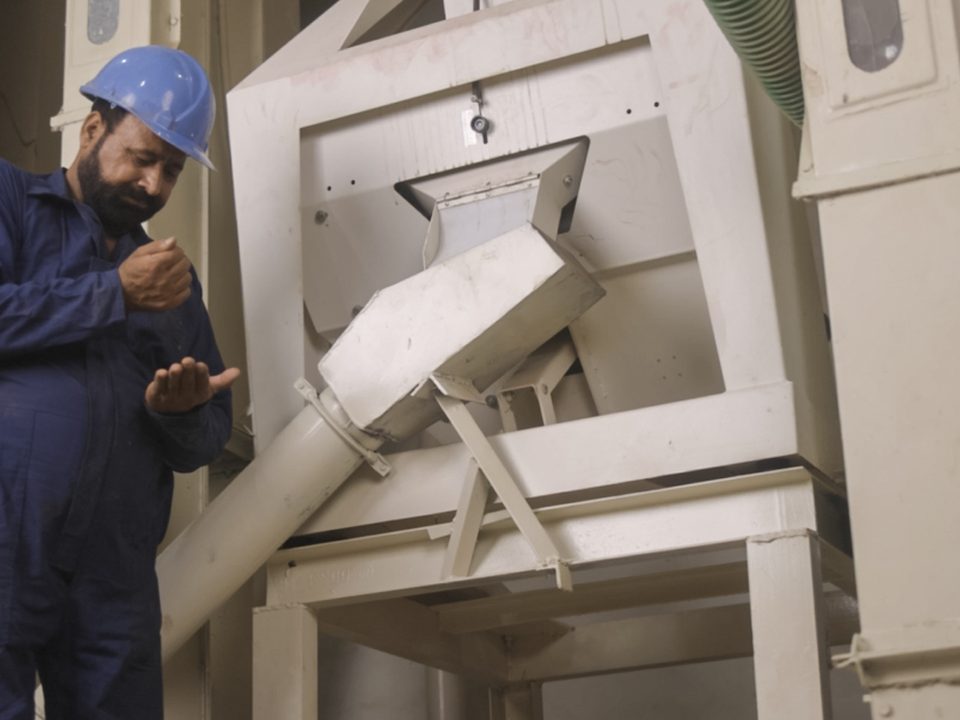
Seed cleaning and optical sorting line used for Kohenoor clover sprouting lots

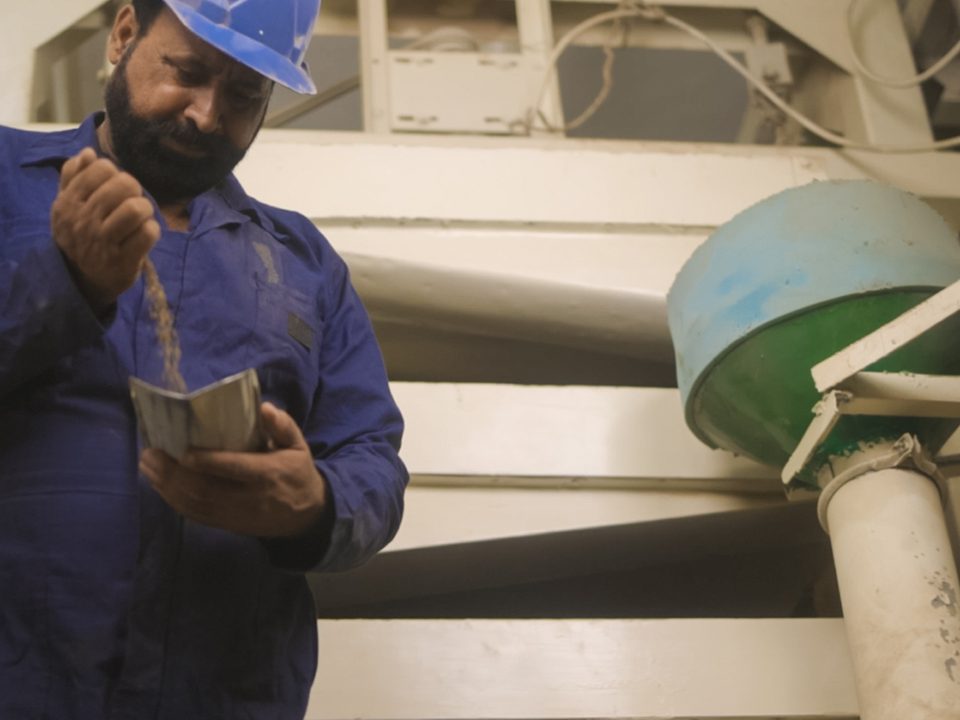
The cleaning sequence is the same one we use for alfalfa: air-screen cleaners for chaff and light seed, gravity tables for immature seed and small stones, and finally Sortex optical sorting, which looks at each seed by colour and rejects the discoloured, the weathered, the insect-marked and anything that is not clover. Red clover seed is naturally variable in colour — yellow through purple — so the optical sorter is set to remove damaged seed rather than to force colour uniformity; what you receive is bright, plump and free of the dull, shrunken seed that will not germinate.

Origin and harvest conditions are the other half of the story. Clover for seed ripens best in a hot, dry season and comes off the field at low moisture, which protects germination and keeps mould counts low — the starting point for a clean microbiology result. A wet harvest somewhere else in the world is how a clover lot arrives with a high mould count and a disappointing germination test. Growing, cleaning and exporting under one roof means there is one record for the lot and one company accountable for it.

Food safety and documents for clover sprouting seed

Clover seed destined for sprouting is treated as a food ingredient in all the major importing markets, and the paperwork is the same as for alfalfa. Our export desk prepares the full set.

The company is ISO 9001 and HACCP certified, with the HACCP plan covering the segregation of food-grade sprouting lots from agricultural clover, cleaning-line hygiene and retained samples. More detail is on the food safety and testing page.

Kohenoor's quality process for clover lots

Kohenoor has grown and exported clovers since the company's early years — berseem and Persian clover are core forage lines — and it knows clover seed in the hand and under the microscope. For the sprouting programme, lots are selected from fields with clean weed histories, harvested dry and brought onto the dedicated food-grade cleaning run.

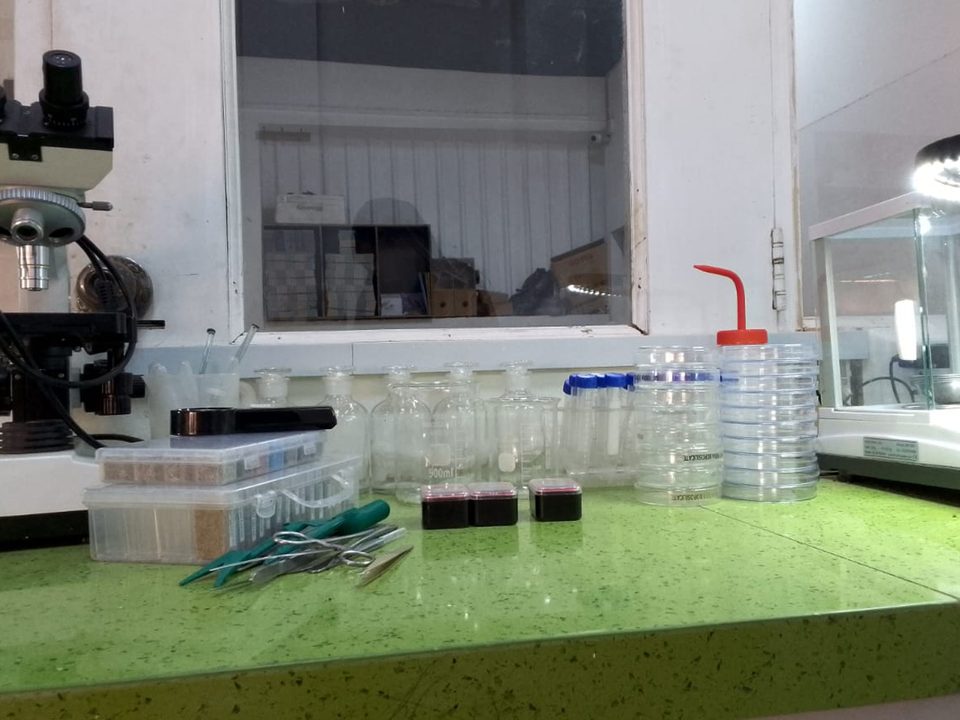
Germination test trays in the Kohenoor laboratory used for clover sprouting seed

Each lot is sampled by ISTA rules and tested in our laboratory for germination (with hard seed reported), purity and moisture before release, then sent for the ISTA Orange Certificate. We also run a small sprouting trial on every clover lot, because a germination test on paper and a tray of sprouts are not quite the same thing: the trial shows us uniformity of emergence, stem quality and whether the lot has any tendency to sprout in two waves. Lots that pass both are tagged for sprouting.

Cleaning runs through air-screen, gravity and Sortex stages with a documented clean-down between lots. Bags are filled, weighed, sealed and tagged with the lot ID, species, test date and net weight. The lot ID connects the field record, cleaning record, laboratory results, sprouting trial and microbiology report; one number recovers the whole history. Retained samples from every lot are kept so that any later question can be answered against the seed that was actually shipped.

And then a person answers your message. The export desk replies within 24 hours, in English, Arabic, Spanish or French, with the lot documents attached, and stays with the order until the container is cleared at your port.

Packaging, minimum order, lead time and payment

Packaging. 25 kg net in poly-lined polypropylene woven bags with a sealed lot tag. Private-label and OEM bags, and retail-ready pouches, clamshells and sleeves, are available on request — clover is a common second item in a branded home-sprouting range, and we can pack it for you at origin.

Minimum order. 500 kg (20 bags) for clover. Most buyers combine clover with alfalfa, radish and other species in a mixed container rather than shipping it alone, and the minimum applies per species within the mix.

Lead time. In-stock lots are ready for FOB Karachi vessel loading in 7–12 days from order confirmation. A lot that needs a fresh third-party microbiology report or special packaging may need a few more days, which we state at quotation.

Terms and payment. FOB Karachi, with CFR or CIF to your port on request. Payment is 100% TT against the bill of lading copy or an irrevocable letter of credit at sight; repeat buyers are offered easier terms.
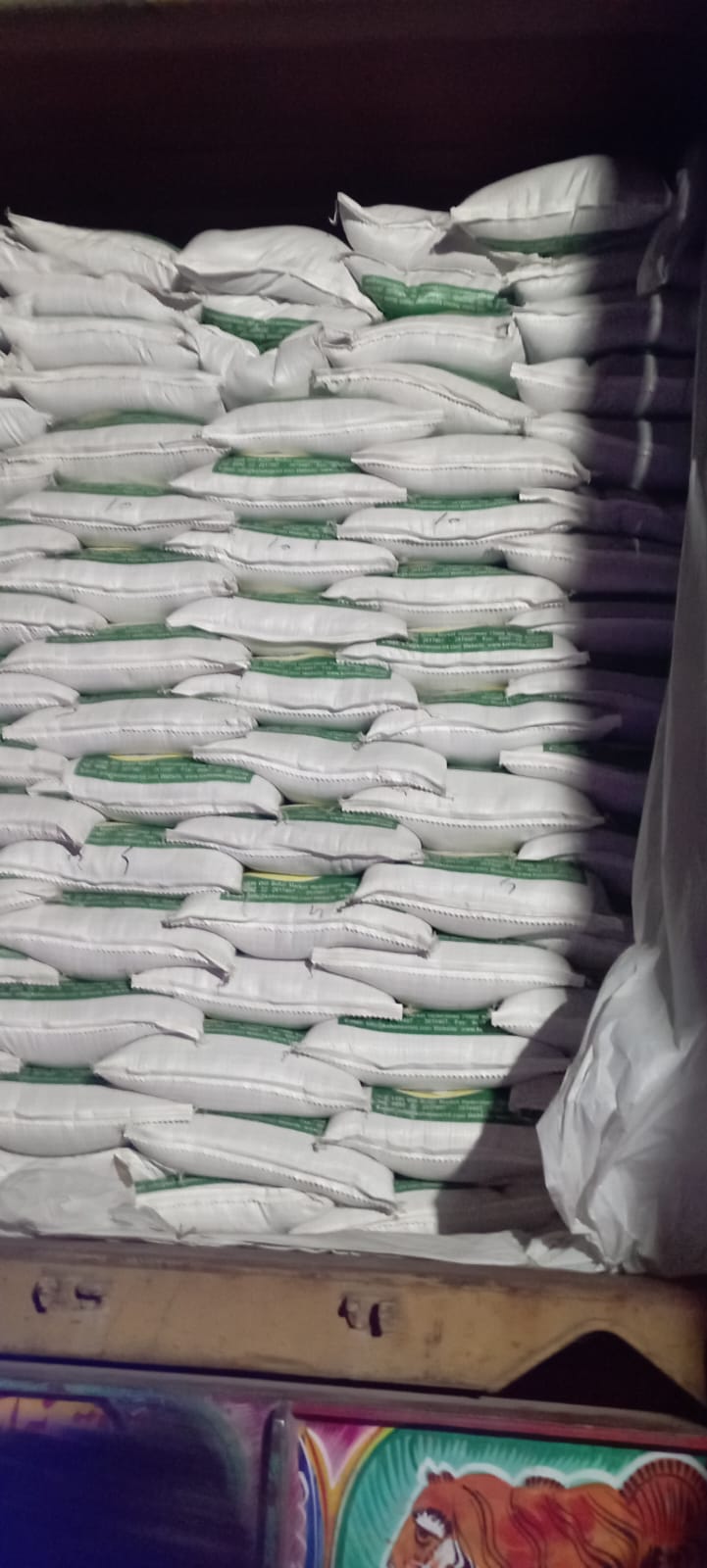
Export container of Kohenoor seed being loaded at Karachi port

Destinations. USA, EU and UK, Japan, Korea, Taiwan, Singapore, Hong Kong, GCC, Australia and more. First-time importers of seed for sprouting receive a walk-through of their market's requirements before they commit.

For container planning, 25 kg bags of clover palletise at roughly 40 bags (1 MT) per pallet depending on your pallet standard, and a 20-foot container carries on the order of 18–20 MT of mixed bagged seed. A typical first order from a European sprout house is a mixed container of alfalfa, clover and radish in proportions that match the retail mix, with a small quantity of mustard or fenugreek for a spicy line; the species are tagged separately and listed separately on the invoice, packing list and certificates, so each lot keeps its own identity through customs and into your traceability records.
Who buys clover sprouting seed from Kohenoor

Commercial sprout growers add clover as the second legume sprout in the drum, either as a stand-alone retail line or as the sweet component in a mixed pack. They value that it runs on the alfalfa timetable and that the documents match. See for commercial sprout growers.

Microgreen farms use clover sparingly as a tray crop but regularly in blends, where its fine stem and mild taste balance hotter species. See for microgreen farms.

Health-food distributors and re-packers list red clover as a named product in home-sprouting ranges, often with a "red clover" label that appeals to the herbal-tradition shopper. They need bright, clean seed and a COA they can reference. See for health-food distributors.

Private-label brands have us pack clover under their name at origin, in bulk or in consumer units. See for private-label brands.

Regional importers consolidating a multi-species sprouting order treat clover as a standard line next to alfalfa and radish, and appreciate having it from the same origin with the same document set.

Blends and the rest of the sprouting range

Clover is a blending seed by nature. The common retail mixes are alfalfa-clover-radish for a mild salad sprout, and clover with mustard and radish for a spicier pack where clover's sweetness tempers the heat. In microgreen trays it pairs well with cress and fennel for contrast. Everything below ships with the same documents in the same container.

The whole range is compared on the sprouting seeds hub. Custom blends can be mixed and packed at origin; we test-sprout the blend in our laboratory first so you see what the tray will look like.

Typical blend (by seed weight)CloverPartnersCharacter
Mild salad sproutabout 20%alfalfa 70%, radish 10%Fresh, sweet, light colour
Sweet-and-hot sproutabout 40%radish 40%, mustard 20%Clover tempers the heat
Clover-forward retail packabout 60%alfalfa 40%Fine, tender, sweet

These proportions are common starting points rather than a formula. Clover and alfalfa sprout on the same timetable, so they can be mixed before soaking; radish and mustard are faster and are usually sprouted separately and combined at packing. A laboratory trial settles the question before you commit a container.

How to order clover sprouting seed in three steps

1. Send your requirement. WhatsApp +92 310 4929292 or email export@kohenoorint.com with species (red, crimson or both), quantity, destination port, any specification your quality system needs and whether you want a sample. Samples of current lots are available.

2. Receive the quotation and lot documents. Within 24 hours you receive a quotation FOB Karachi (or CFR/CIF), the COA and ISTA certificate for the proposed lot, and a shipping schedule.

3. Confirm and ship. On your purchase order and payment arrangement we book the vessel, complete the phytosanitary and origin certificates and load within 7–12 days for in-stock lots. The full document set reaches you by email before the vessel arrives.

See the seed, the lab and the loading

Other sprouting seeds we export

Fenugreek sprouting seed
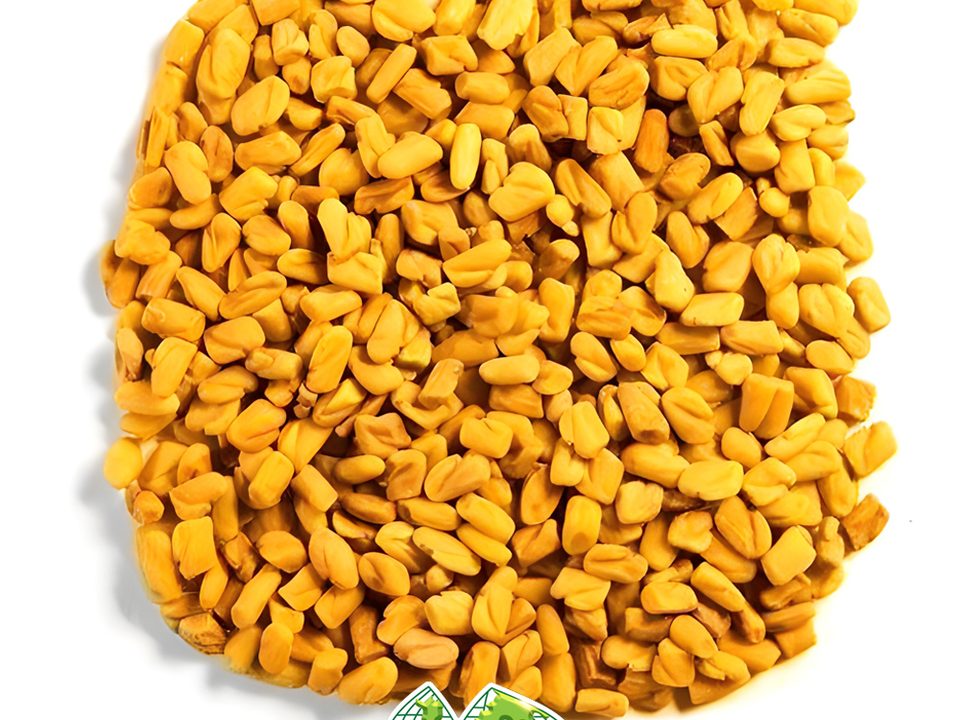
Fenugreek sprouting seedMethi sprouts with a gentle bitter note — strong in Asian and Gulf markets.
View seed →
Radish sprouting seed
Radish sprouting seedDaikon and rose radish — peppery, fast, the workhorse of spicy blends.
View seed →
Mung bean sprouting seed
Mung bean sprouting seedThe world's highest-volume sprout — thick, juicy, kitchen-ready in days.
View seed →
Chickpea sprouting seed
Chickpea sprouting seedNutty, protein-dense short sprouts for salads, hummus and snack makers.
View seed →

Talk to a real person — quote within 24 hours

Send your product, quantity and destination port. The export desk replies personally with a quotation, current lot certificates and a shipping schedule — no bots, no obligation.

export@kohenoorint.com

Frequently asked questions

Is it untreated?

Yes. Every clover sprouting lot we ship is natural, untreated seed: no fungicide, no insecticide, no coating or pelleting of any kind. Treated seed is never food-grade and we keep sprouting lots physically and administratively separate from our agricultural seed. The untreated status is written on the COA and on the lot tag.

Do you test for Salmonella and E. coli?

On request, each lot is sampled and sent to an independent third-party laboratory for Salmonella and E. coli/STEC testing, and the report travels with the lot documents. Many buyers also run their own incoming-quality checks, and we encourage that; we will supply retained samples and the sampling record so your laboratory can correlate results with ours.

Can you supply organic?

Yes. Organic-certified clover lots (USDA NOP, EU Organic or JAS) are available subject to a 5 MT minimum and a 60–90 day lead time, because organic lots are grown and cleaned to order under certified handling. Tell us which certification your market needs and we will confirm the programme for the season.

What are the MOQ and lead time?

The minimum order for clover sprouting seed is 500 kg. In-stock lots ship within 7–12 days to FOB Karachi vessel loading. Transit time then depends on the destination port; your forwarder or ours will give you the sailing schedule when we confirm the order.

Do you do private label?

Yes. Beyond our standard 25 kg poly-lined PP woven bags with sealed lot tags, we offer private-label and OEM packaging, and retail-ready pouches, clamshells and sleeves on request. Send your artwork and pack sizes and we will quote the packaging alongside the seed.

Which countries do you ship to?

We ship FOB Karachi (CFR/CIF on request) to the USA, EU and UK, Japan, Korea, Taiwan, Singapore, Hong Kong, the GCC states, Australia and many other destinations. Kohenoor serves buyers in 70+ countries and has offices in Pakistan, Dubai and Australia, so there is usually someone in or near your time zone.

Red or crimson clover — which should I order for sprouting?

Red clover (Trifolium pratense) is the standard sprouting clover: small seed, fine sweet sprout, ideal for retail mixes. Crimson clover (Trifolium incarnatum) has a larger seed and a slightly stouter sprout that holds its shape well in a pack. Many growers use both. If you are unsure, order a sample of each and run them side by side; we will send both with their COAs.

Why does hard seed matter in clover sprouting seed?

Clovers naturally produce a fraction of hard seed whose coat does not take up water on schedule. In a sprouting tray that seed either germinates late or not at all, so the pack contains ungerminated seed. Our laboratory reports hard seed separately in the germination test and our sprouting lots are selected for a low hard-seed fraction; the figure is on the COA.

Related pages

WA