Sprouting & microgreen seed · from origin

Radish sprouting seeds — daikon and rose radish for sprouts and microgreens

Untreated · Sortex-cleaned · ISTA-tested · COA per lot · 25 kg bags · MOQ 500 kg

Radish is the seed that gives a sprout blend its bite and a microgreen tray its colour, and it is the fastest-selling brassica in the sprouting trade. Kohenoor supplies untreated, food-grade Raphanus sativus sprouting lots in two types — white daikon and rose (China Rose) — Sortex-cleaned and ISTA-tested at origin, with lot-specific purity and germination on the COA and the full export document set.

Get a quote in 24h

English · Deutsch · Nederlands · Italiano · Polski · 日本語 · 한국어 · 中文

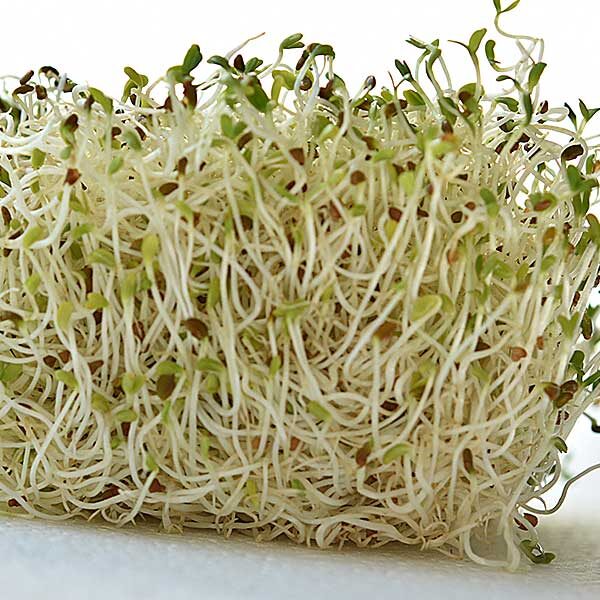
Fresh sprouts of the type grown from Kohenoor radish and alfalfa sprouting seed
In short: Radish sprouting seed is untreated, food-grade Raphanus sativus seed — daikon for a white-stemmed, hot sprout, rose for a pink-stemmed, milder one — cleaned and tested for commercial sprout and microgreen production. Kohenoor supplies both types Sortex optical-cleaned and ISTA-tested per lot, with purity and germination on the COA, third-party Salmonella and E. coli testing on request, sealed lot-tagged 25 kg bags and a 500 kg minimum, FOB Karachi.
Untreated — no coatingSortex optical-cleanedISTA-tested per lotCOA within 24 hThird-party microbial testingLot-tagged traceabilitySince 1957Reply within 24 h
Botanical nameRaphanus sativus (daikon · rose)
Sprout time3–5 days sprouts · 7–12 days microgreens
FlavourPeppery, hot, crisp
GerminationLot-specific on COA
MOQ500 kg
Packaging25 kg lot-tagged bags

What radish sprouts and microgreens are, and who eats them

Radish sprouts are the germinated seedlings of Raphanus sativus, the same species as the salad radish and the long white daikon of East Asian cooking. Sprouted for three to five days they give a thick, crisp stem — white from daikon seed, pink to red from rose types — topped by two heart-shaped green cotyledons, and a flavour that is unmistakably radish: peppery, hot, clean. Grown on in a tray for seven to twelve days with light they become one of the two or three most important microgreens in the world, sold to chefs and salad packers as a garnish with colour and heat.

Japan is the historic home of the radish sprout. Kaiware daikon — daikon sprouts grown long and white in cooled sprout rooms — has been a supermarket staple there for decades and remains one of the highest-volume sprout products anywhere. Korea and Taiwan have parallel traditions. In the United States and Europe radish is the "spicy" component of mixed sprout clamshells and the colour component of microgreen punnets; a microgreen farm supplying restaurants will almost always grow radish because it is fast, reliable and visually striking. The Gulf's new sprout rooms grow it for the same reasons, and Australia, Singapore and Hong Kong buy it as a standard line.

Who eats it? In East Asia, everyone — kaiware is as ordinary as lettuce. In the West, salad-bar and sandwich customers who want some heat in their sprouts, restaurant diners who meet it as a garnish, and the home-sprouting customer who buys radish seed in a pouch because it is the easiest and quickest seed to succeed with. For the producer, radish is the brassica that makes the whole range look alive.

Formats differ by market. In Japan and Korea, kaiware daikon is sold as a living bundle with roots in a small plastic sleeve, and in cut form in food-service packs. In Europe and North America radish appears as a component of mixed sprout clamshells, as a stand-alone "spicy radish sprouts" pack from specialist houses, and above all as a microgreen — cut and packed in punnets for retail, or sold living in trays to restaurants. Home-sprouting ranges list radish as the beginner's seed. Demand runs through the year with a lift in the salad season, and microgreen farms in particular contract their radish seed for twelve months so the tray on the shelf does not change.

Nutrition: why consumers want radish sprouts

Radish sprouts are typically low in calories and supply vitamin C, folate and a range of minerals, and like other brassica sprouts they are known for their glucosinolates — the sulphur compounds that give radish its heat and that are the subject of considerable research interest across the cabbage family. We make no claims about those compounds; we note them because the "brassica sprout" category, led by broccoli and radish, has a strong following in the health-food press and that following buys radish sprouts by name.

For most consumers the appeal is more immediate: radish sprouts taste of something. A clamshell of alfalfa is pleasant and mild; add a handful of radish and it has flavour and colour. Chefs use radish microgreens because the pink-and-green of a rose radish or the clean white stem of a daikon lifts a plate, and because the heat holds up against rich food. The crisp texture also survives dressing and a few hours on a buffet better than most leafy garnishes.

Texture and appearance are entirely seed-dependent. A radish lot with high, uniform germination gives a tray of straight, even stems of the same length and colour; a poor lot gives a patchy tray with weak, bent stems and a quarter of the seed sitting ungerminated on the medium. In a microgreen tray that is sold whole, patchiness is a rejected tray. The seed is the single largest controllable variable in radish microgreen quality.

Shelf life follows the same logic. A radish sprout cut from a dense, even stand of thick stems keeps its crispness in the cold chain for several days longer than one from a thin, stretched tray, because sturdy stems lose water more slowly. For a retailer the difference is a punnet that still looks fresh on the second day of display, and for the grower it is fewer returns.

How radish is sprouted and grown commercially

Radish is probably the most forgiving seed a commercial grower can run, which is why it is often the first species a new microgreen farm succeeds with. The ranges below are those producers typically report.

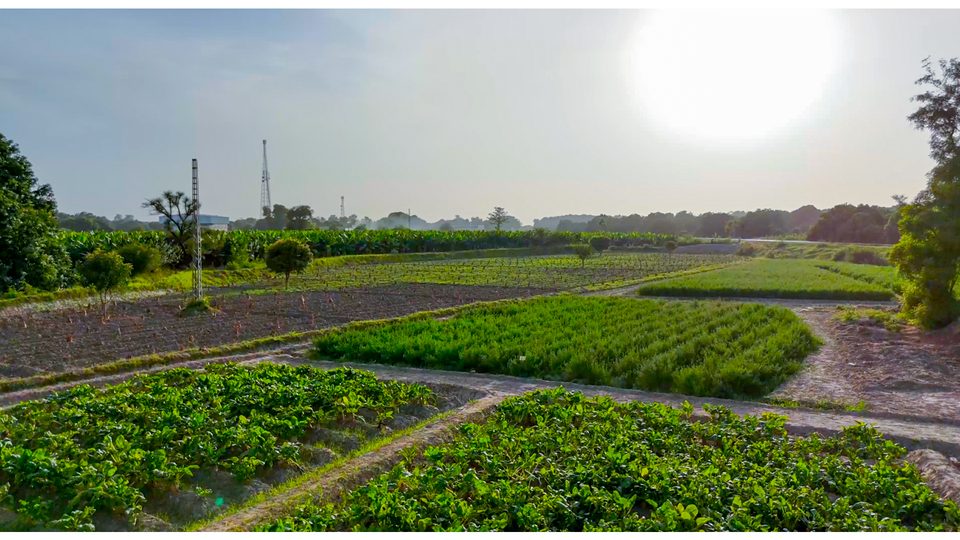
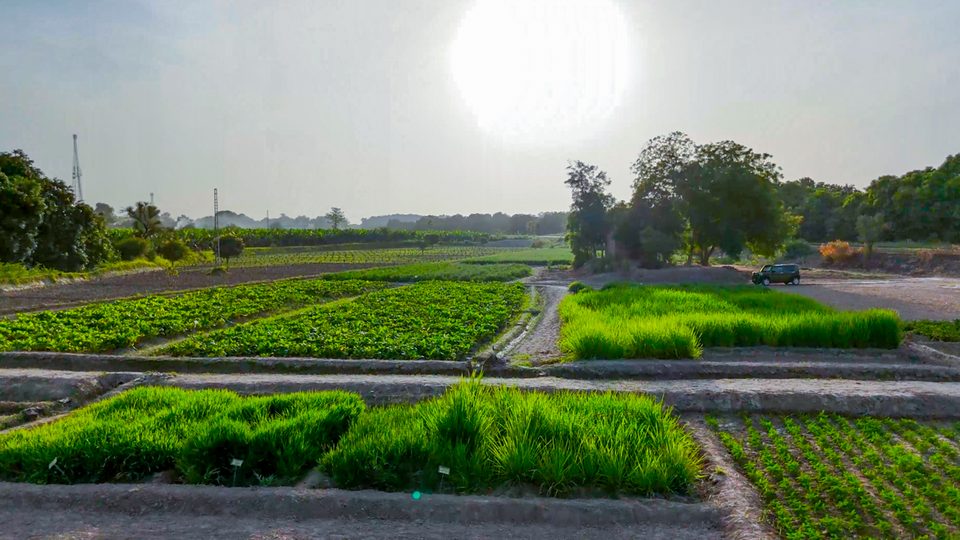
Research plots at Kohenoor where radish and other sprouting-seed lines are trialled

Two practical notes. Radish is a vigorous rooter and the fine root hairs that appear in the first days are often mistaken for mould; good growers know to look and smell before worrying. And radish is temperature-sensitive at the top end — above about 25 °C stems stretch and weaken — so a cool, well-ventilated room gives a better product than a warm one. Daikon and rose types behave the same way; rose is slightly milder in flavour and gives the pink stem, daikon is hotter and white.

The common faults a grower meets with radish are easy to trace. Fuzzy white growth on the roots in the first days is almost always root hairs, not mould — smell the tray; healthy radish smells fresh and peppery. Long, thin, falling stems point to a room that is too warm or too dark for too long. A patchy tray with ungerminated seed points to an old lot or treated seed; insist on a current test and an untreated declaration. And yellow cotyledons at harvest mean the tray needed another day of light.

What a professional buyer should specify

Radish seed is traded in large quantities for field vegetable production, and vegetable-grade seed is often treated, sometimes pelleted and never tested for human pathogens. Your specification should make the sprouting grade explicit. Our lots are documented against the following.

ParameterWhat to ask forKohenoor radish sprouting lots
TypeDaikon (white) or rose (pink), declaredDeclared on tag and COA
GerminationMinimum %, ISTA method, test dateLot-specific on ISTA certificate and COA
Physical purityMinimum % pure seedLot-specific on COA
Other crop / weed seedMaximum count; other brassicas especiallyRemoved by screen, gravity and optical sorting
Inert matterMaximum %, no stones, soil, pod fragmentsWithin purity figure
MoistureMaximum % for safe transitStated on COA
Treatment statusUntreated, no fungicide, no pellet or film coat — in writingUntreated — on COA and tag
MicrobiologySalmonella, E. coli/STEC, third-party laboratoryPer lot on request
TraceabilityLot ID on every bagSealed lot tags, field→bag→warehouse

Pay particular attention to the treatment line. Film-coated or fungicide-dressed radish seed is common in the vegetable trade, and a coloured dressing is sometimes mistaken for natural seed colour by buyers unfamiliar with the species. Natural radish seed is a matte reddish-brown; anything bright, glossy or uniform in a way nature is not should be questioned. Ours is untreated and the statement is on the documents.

Radish seed loses germination faster in warm, humid storage than alfalfa does, so the test date matters; ask for a current-season test and store the seed cool and dry on arrival. We re-test lots before dispatch when they have been in store for some months, and the test date is on the tag.

Incoming-quality checks are quick with radish because it germinates so fast. On arrival, draw a sample from several bags, count out four lots of one hundred seeds and germinate them on moist paper at around 20 °C; count normal seedlings at four to five days and compare with the COA. Look over a handful with a hand lens for coated or tinted seed, pod fragments and off-type seed — wild brassica seed is usually smaller, rounder and darker than radish. Photograph anything that does not match the documents and send us the lot ID the same day.

Why origin and cleaning matter for radish

Radish seed is a brassica, and the cleaning problems are different from those of the legumes. The harvested seed carries pod fragments, which are close to seed size and must be removed by screen and air; immature light seed that will not germinate; and, in a field with a weed problem, the seed of wild brassicas such as wild mustard and charlock, which are near enough in size and shape to be a genuine cleaning challenge. A radish lot contaminated with wild brassica will sprout — the contaminant germinates fine — and give you a tray with off-type seedlings in it. Clean fields and good cleaning are the only answer.

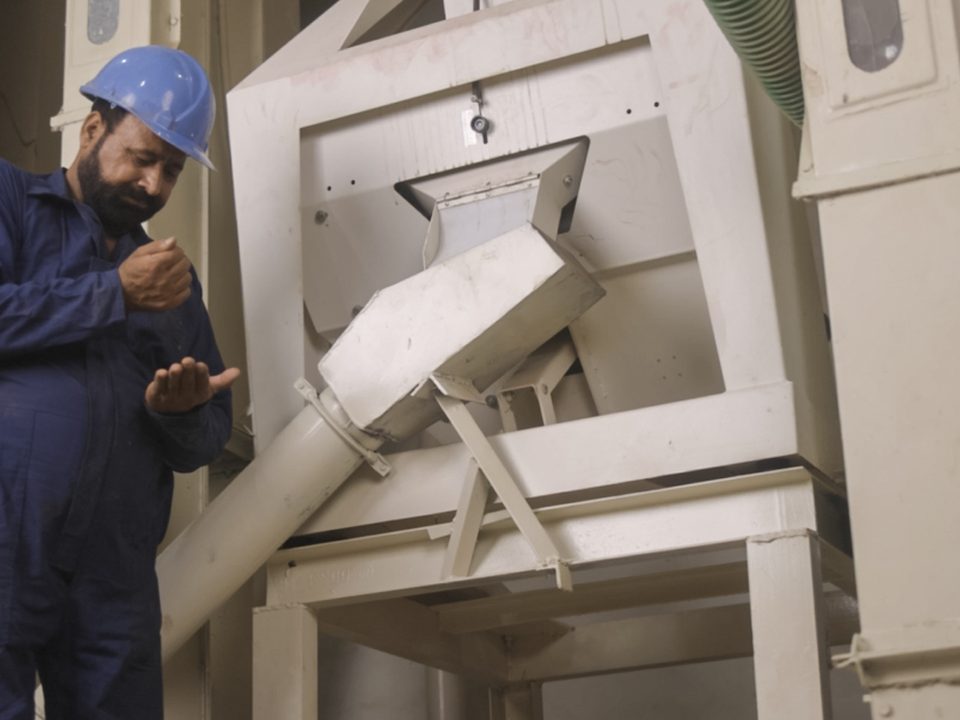
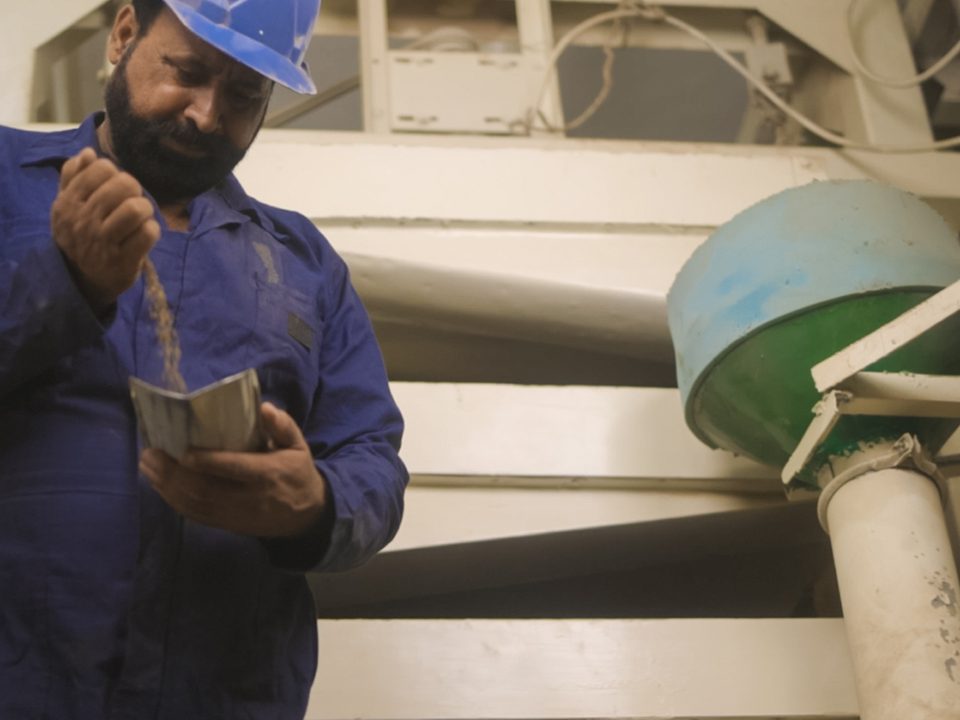
Optical sorting line used to clean Kohenoor radish sprouting seed

Our sequence is air-screen cleaning for pod fragments and light seed, gravity separation for the immature fraction and any small stones, and Sortex optical sorting as the final pass. The optical sorter earns its keep on radish: it picks out the pale, shrivelled seed that a screen cannot, rejects seed with insect marks or weathering, and removes off-type seed by colour and shape. What remains is a lot of uniform, plump, matte brown seed that germinates together.

Origin counts for the same reasons as elsewhere. A seed crop ripened in a long dry season and harvested at low moisture has high vigour and low mould counts; one harvested wet does not. And buying from a grower-cleaner-exporter means the lot has one history under one lot ID, rather than passing through two or three hands with no record between them.

Food safety and documents for radish sprouting seed

Radish seed intended for sprouting is a food ingredient under the rules of every major importing market, and the document set is the same as for our other sprouting species. The export desk prepares it for each consignment.

Microgreen growers whose product is sold with roots or on the growing medium are usually outside the sprout-specific rules but inside general produce safety law; the same seed documentation serves them. Kohenoor is ISO 9001 and HACCP certified, and the food safety and testing page sets out the programme.

Kohenoor's quality process for radish lots

Radish lots for sprouting are sourced from fields with clean brassica-weed histories and harvested dry. Each lot is sampled under ISTA rules and tested in our laboratory for germination, purity and moisture before release, then sent for the ISTA Orange Certificate. Because radish is so often grown as a microgreen, we also run a tray trial on each lot under light, which shows us stem uniformity and colour — the things a microgreen buyer is actually paying for — in a way the germination count alone cannot.

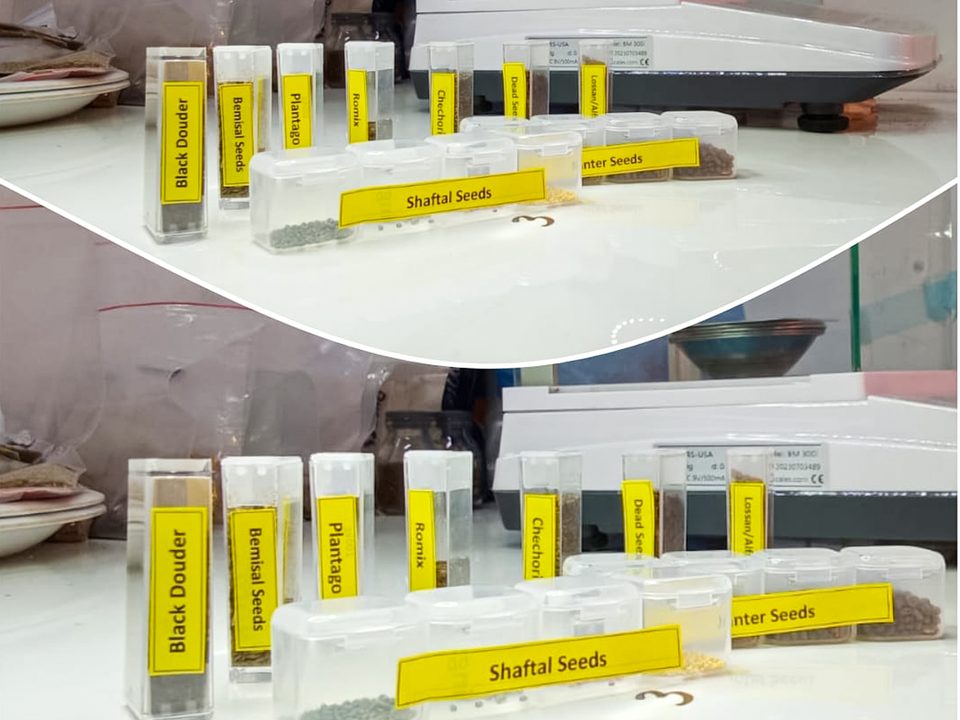
Germination and tray trials in the Kohenoor seed laboratory

The cleaning line runs air-screen, gravity and Sortex stages with a documented clean-down between lots, and the food-grade sprouting run is kept apart from any vegetable or agricultural seed. Bags are filled on the line, weighed, sealed and tagged with the lot ID, type, test date and net weight. Retained samples are held from every lot, so a question from your quality team can be answered against the seed you received. The lot ID ties together field record, cleaning record, laboratory results, tray trial and microbiology report.

A real person on the export desk — Pakistan, Dubai or Australia — answers within 24 hours, sends current lot documents with the quotation and stays with the order through to clearance at your port.

Packaging, minimum order, lead time and payment

Packaging. 25 kg net in poly-lined polypropylene woven bags with a sealed lot tag. Private-label and OEM bags and retail-ready pouches, clamshells and sleeves are available. Radish is the best-selling single seed in home-sprouting ranges because it is the easiest to grow, so many of our re-packer customers take it in consumer pouches packed at origin.

Minimum order. 500 kg (20 bags) per type. Daikon and rose can be combined to reach a container with alfalfa, clover, mustard and other species.

Lead time. In-stock lots ready for FOB Karachi vessel loading within 7–12 days of order confirmation; a few more days if a fresh microbiology report or special packaging is required.

Terms and payment. FOB Karachi, with CFR or CIF on request. Payment 100% TT against bill of lading copy or irrevocable letter of credit at sight; easier terms for repeat buyers.

Destinations. USA, EU and UK, Japan, Korea, Taiwan, Singapore, Hong Kong, GCC, Australia and more. Radish seed stores less well than alfalfa in heat and humidity, so we advise cool, dry warehousing on arrival and shipping in quantities you will use within the season.

For container planning, 25 kg bags palletise at roughly 40 bags to the tonne, and a 20-foot container carries on the order of 18–20 MT of mixed bagged seed. Microgreen farms commonly build a container around radish, mustard and cress with smaller quantities of fennel, basil and onion; sprout houses build theirs around alfalfa with radish as the second or third line. Each species and type is tagged and documented separately so that every lot keeps its identity through customs and into your traceability records.
Who buys radish sprouting seed from Kohenoor

Commercial sprout growers run radish as the spicy line and as a component of mixed packs; East Asian producers run daikon as a kaiware volume product. See for commercial sprout growers.

Microgreen farms are the fastest-growing group of radish buyers. Radish is their colour-and-heat microgreen and often their highest-volume tray crop; they need uniform, high-germination seed above all. See for microgreen farms.

Health-food distributors and re-packers list radish as the beginner's seed in home-sprouting ranges and sell it steadily. See for health-food distributors.

Private-label brands have us pack radish under their own name at origin. See for private-label brands.

Importers for East Asian and Gulf markets order daikon radish in volume alongside alfalfa and mung bean, often as a repeat container programme.

The questions these buyers ask us first are consistent. Is the seed untreated — yes, no fungicide, no film coat, declared in writing. Daikon or rose, and can we have both — yes, as separate tagged lots. Is the germination test current — yes, the ISTA certificate on the actual lot comes with the quotation, and lots in store for some months are re-tested before dispatch. Can you supply a microbiology report — yes, independent laboratory, per lot on request. Will the seed run through our seeder — it is screen-sized and optically sorted, and a sample will show you. And can it travel in one container with our mustard, cress and alfalfa — yes, each species documented separately.

Blends and the rest of the sprouting range

Radish is the universal blending seed. The classic "spicy sprout" mix is radish with alfalfa and a little mustard; the "salad sprout" mix uses radish for colour at a lower proportion with alfalfa and clover; and the standard restaurant microgreen mix is radish, mustard and cress, sometimes with fennel or basil for aroma. Everything below ships with the same documents in the same container.

The whole range is compared on the sprouting seeds hub. Custom blends are mixed and packed at origin after a laboratory sprouting trial.

Typical blend (by seed weight)RadishPartnersCharacter
Spicy sproutabout 35%alfalfa 50%, mustard 15%Hot, crisp, colourful
Mild salad sproutabout 10%alfalfa 70%, clover 20%Colour without much heat
Spicy microgreen punnetabout 40%mustard 30%, cress 30%The standard restaurant mix

These are common starting points rather than a formula. Radish and mustard sprout on a similar timetable and can be sown together; alfalfa and clover are slower and are usually sprouted separately and combined at packing. A laboratory trial shows you the tray before you commit a container.

How to order radish sprouting seed in three steps

1. Send your requirement. WhatsApp +92 310 4929292 or email export@kohenoorint.com with type (daikon, rose or both), quantity, destination port, any specification your quality system needs and whether you want a sample first. Samples of current lots are available.

2. Receive the quotation and lot documents. Within 24 hours: quotation FOB Karachi (or CFR/CIF), COA and ISTA certificate for the proposed lot, and a shipping schedule.

3. Confirm and ship. On your purchase order and payment arrangement we book the vessel, complete the phytosanitary and origin certificates and load within 7–12 days for stock lots. The document set reaches you by email before the vessel arrives.

See the seed, the lab and the loading

Other sprouting seeds we export

Mung bean sprouting seed
Mung bean sprouting seedThe world's highest-volume sprout — thick, juicy, kitchen-ready in days.
View seed →
Chickpea sprouting seed
Chickpea sprouting seedNutty, protein-dense short sprouts for salads, hummus and snack makers.
View seed →
Sesame sprouting seed
Sesame sprouting seedWhite and black sesame for short sprouts and sprouted-seed butters.
View seed →
Mustard sprouting seed
Mustard sprouting seedHot, fast and reliable — the classic microgreen for spicy mixes.
View seed →

Talk to a real person — quote within 24 hours

Send your product, quantity and destination port. The export desk replies personally with a quotation, current lot certificates and a shipping schedule — no bots, no obligation.

export@kohenoorint.com

Frequently asked questions

Is it untreated?

Yes. Every radish sprouting lot we ship is natural, untreated seed: no fungicide, no insecticide, no coating or pelleting of any kind. Treated seed is never food-grade and we keep sprouting lots physically and administratively separate from our agricultural seed. The untreated status is written on the COA and on the lot tag.

Do you test for Salmonella and E. coli?

On request, each lot is sampled and sent to an independent third-party laboratory for Salmonella and E. coli/STEC testing, and the report travels with the lot documents. Many buyers also run their own incoming-quality checks, and we encourage that; we will supply retained samples and the sampling record so your laboratory can correlate results with ours.

Can you supply organic?

Yes. Organic-certified radish lots (USDA NOP, EU Organic or JAS) are available subject to a 5 MT minimum and a 60–90 day lead time, because organic lots are grown and cleaned to order under certified handling. Tell us which certification your market needs and we will confirm the programme for the season.

What are the MOQ and lead time?

The minimum order for radish sprouting seed is 500 kg. In-stock lots ship within 7–12 days to FOB Karachi vessel loading. Transit time then depends on the destination port; your forwarder or ours will give you the sailing schedule when we confirm the order.

Do you do private label?

Yes. Beyond our standard 25 kg poly-lined PP woven bags with sealed lot tags, we offer private-label and OEM packaging, and retail-ready pouches, clamshells and sleeves on request. Send your artwork and pack sizes and we will quote the packaging alongside the seed.

Which countries do you ship to?

We ship FOB Karachi (CFR/CIF on request) to the USA, EU and UK, Japan, Korea, Taiwan, Singapore, Hong Kong, the GCC states, Australia and many other destinations. Kohenoor serves buyers in 70+ countries and has offices in Pakistan, Dubai and Australia, so there is usually someone in or near your time zone.

Daikon or rose radish — which should I order?

Daikon gives a white-stemmed, hotter sprout and is the type used for Japanese-style kaiware and for most spicy sprout mixes. Rose (China Rose type) gives a pink-to-red stem with a slightly milder flavour and is the one microgreen farms grow for colour. Many producers run both. Order a sample of each with its COA and trial them side by side in your own system.

Can the same radish seed be used for sprouts and for microgreens?

Yes. The seed is identical; the difference is the growing method. For sprouts, soak and grow in the dark for 3–5 days and harvest the hypocotyl. For microgreens, sow on a medium, keep dark for 2–3 days, then grow under light to 7–12 days and cut above the medium. High, uniform germination matters for both, and most for microgreens, where a patchy tray cannot be sold.

Related pages

WA