Alfalfa · Rhodes grass · Ryegrass · Sorghum & millet silage · Berseem & Persian clover · Protein Grass · Super Napier · Sesbania
A high-yield dairy herd is only as good as the forage in front of it. Kohenoor International has bred, cleaned and exported research forage seed from Pakistan since 1957, and today supplies the complete forage programme for corporate dairies, cooperatives and integrated farms in 70+ countries: TAIZTAR and KN92 alfalfa as the protein backbone, perennial Rhodes grass and Super Napier, winter ryegrass and clovers, summer sorghum and millet for silage, every lot ISTA-tested and 0% dodder in writing.
WhatsApp +92 310 4929292 Get a quote in 24h
Every dairy manager we meet, whether they milk 300 cows in Oman or 5,000 in Kazakhstan, eventually says the same thing: concentrate is easy to buy, forage is hard to buy well. Grain and protein meals arrive in a container with a specification sheet. Forage arrives as a bale or a silage face, and its quality was decided months earlier by the seed, the stand, the cutting date and the weather. Once it is in the barn, there is very little a nutritionist can do to fix it.
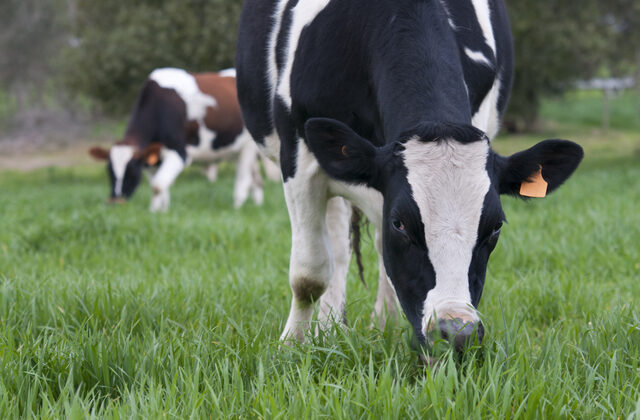
That is why the herds that produce consistently are the ones that grow their own forage, on their own land, from seed they chose. In a total mixed ration, forage typically supplies half or more of the dry matter a lactating cow eats in a day. If that forage is low in protein, high in indigestible fibre, or simply unpalatable, the cow eats less, the rumen slows, and the only way to hold milk is to push more purchased concentrate through the ration. In well-managed herds the opposite happens: excellent forage lets the nutritionist cut concentrate, protect rumen health and still hold peak yield.
Forage also carries the biggest hidden risk on a dairy. A poor silage season, a weed-infested hay field or an alfalfa stand that fails in its second year does not show up as one bad invoice. It shows up as months of lower intake, more metabolic problems and a feed bill that quietly climbs. It is the pattern that follows buying the cheapest seed available, and it takes years rather than months to correct.
Our family has been a research forage seeds company since 1957. We do not run dairies, but we have spent three generations standing in fields with the people who do, and we have learned that the conversation always comes back to three things: how much protein the forage carries, how digestible its fibre is, and whether the cow will eat enough of it. The rest of this page is built around those three questions, and around the seed that answers them.
Nutritionists use a long list of laboratory values, but for a procurement or agronomy head, three of them explain most of what matters.
Crude protein (CP). This is the first number every buyer looks at, and rightly so. Good alfalfa hay typically tests around 18 to 22 percent crude protein on a dry-matter basis once it has been cut, dried and baled; the standing crop at bud stage is higher, and Kohenoor's TAIZTAR and KN92 alfalfa carry 22 to 24 percent crude protein in the plant. Grass hays sit far lower. Rhodes grass hay typically runs 12 to 14 percent. The gap between those two figures is the amount of soybean meal or other protein concentrate a dairy must buy to make up the difference, every day, for every cow.
Fibre and digestibility. Fibre is measured as neutral detergent fibre (NDF) and acid detergent fibre (ADF). More fibre means the cow fills up faster and digests less. Relative feed value (RFV) is an index built from those two numbers; higher is better, and premium dairy alfalfa is generally the forage that scores highest. The agronomic lesson is simple: fibre climbs quickly after bud stage, so cutting on time matters as much as the variety. Our alfalfa carries crude fibre of up to 28 percent in the plant, and a multi-cut stand harvested every few weeks keeps the fibre young and digestible.
Dry-matter intake (DMI). A lactating cow in peak production will typically eat something in the region of 3 to 4 percent of her bodyweight in dry matter each day, if the ration lets her. Palatable, leafy, mould-free forage drives intake up; stemmy, dusty or weedy forage drives it down. Intake is the lever that connects seed quality to the milk tank, because a cow that eats more good forage produces more milk from the same concentrate.
| Forage from Kohenoor seed | Typical protein | Main role in the ration |
|---|---|---|
| TAIZTAR / KN92 alfalfa (lucerne) | 22–24% CP in the plant; hay typically 18–22% | Protein and calcium backbone, hay or silage |
| Protein Grass (Safa) blend | Up to 38% CP in the blend | High-protein green-chop, cut every 20–25 days |
| Ryegrass | Up to 38% protein in young growth | Winter green-chop and silage, 5–8 cuts a season |
| Berseem and Persian clover | High-protein winter legume | Winter green-chop, soil nitrogen |
| Super Napier / Baymisaal | About 16% CP, up to 22% | Bulk perennial fodder, 7–9 cuts a year |
| Rhodes grass | 12–14% hay protein | Effective-fibre grass hay, perennial |
| Hybrid sorghum, pearl millet | Energy forage | Summer multi-cut silage |
Figures for crude protein and fibre in hay are typical ranges from general dairy nutrition practice and vary with cutting stage, curing and storage. The variety figures are the values we test and publish for our own seed. Your own laboratory will give you the exact numbers for your stand, and we are happy to read them with your nutritionist.
The same seed can feed a cow three different ways, and the choice shapes the whole programme.
Hay is the simplest to store and trade. Alfalfa hay cut at bud stage, cured quickly and baled at the right moisture is the highest-value forage on most dairies, and Rhodes grass hay is its natural companion for effective fibre. Hay suits dry climates with reliable curing weather, which is why the Gulf, North Africa and Central Asia are hay regions by nature. The risk with hay is leaf loss during curing and rain damage on the windrow.
Silage preserves forage by fermentation and removes the weather risk from harvest. Hybrid sorghum and pearl millet are summer silage crops that tolerate heat and limited water better than maize in many hot regions, and both are multi-cut from Kohenoor seed. Alfalfa can also be ensiled as haylage, and ryegrass makes an excellent winter silage. Silage needs a pit or bunker, a chopper and discipline about compaction and sealing, but on a large herd it gives the most stable ration year-round.
Green-chop is forage cut and fed fresh the same day. It is the traditional system across South Asia and much of Africa and the Middle East, and it remains the most efficient use of high-protein crops such as Protein Grass, ryegrass and berseem, where every day of wilting costs protein. Super Napier and Baymisaal are built for this: soft six-to-nine-foot fodder cut seven to nine times a year from a stand that lasts twelve to fifteen years from a single planting.
Most large dairies run all three. A typical arrangement is alfalfa and Rhodes grass as hay, sorghum or millet in the bunker for summer and autumn, and ryegrass or clover green-chopped or ensiled through the winter. The point of buying seed from one research company is that every one of those crops arrives at the same time, in one shipment, with one document set, and with one agronomist on the other end of the phone who knows how they fit together.
Below is the programme we put in front of a dairy's procurement and agronomy team. It is not a catalogue. It is a working set of crops chosen so that something high in protein is always growing, something bulky is always available for the bunker, and the soil gets a legume in the rotation.
| Crop | Variety / product | Season | What the facts say |
|---|---|---|---|
| Alfalfa (lucerne) | TAIZTAR (FD 10) or KN92 (FD 9) | Perennial, multi-cut | 22–24% CP, 7+ cuts a year, ≥98% purity, ≥85% germination, 0% dodder in writing, 25–30 kg/ha |
| Rhodes grass | Australian Rhodes grass | Perennial, 3–5 years | Drought, heat and saline tolerant, hay protein 12–14%, up to 175 maund per acre per cut, improves soil |
| Ryegrass | Winter ryegrass | Sow Oct–Dec | Protein up to 38%, 5–8 cuts a season, milk +2 kg/day reported |
| Summer silage | Hybrid sorghum, hybrid pearl millet | Summer, multi-cut | Heat-tolerant energy forage for the bunker |
| Winter legumes | Safa berseem, Persian clover | Winter annual | Early-maturing, broad-leaf, disease-resistant, dodder-free berseem; high-protein Persian clover |
| High-protein green-chop | Protein Grass (Safa) blend | Cut every 20–25 days | CP up to 38% in the blend, 8+ cuts a year, 250–300 maund per acre per cut, milk +2–5 kg/day reported |
| Perennial bulk fodder | Super Napier / Baymisaal (Mott-type) | 12–15 years from one planting | 7–9 cuts a year, 6–9 ft soft fodder, CP about 16% (up to 22%), drought, heat and saline tolerant |
| Soil builder | Sesbania / Janter | 40–45 days | Nitrogen-fixing green manure, tolerates saline and poor soil |
A maund is the traditional South Asian unit of 40 kg, so 250 to 300 maund per acre is roughly 10 to 12 tonnes of fresh forage per acre per cut. We quote in those units because they are how our research plots have been measured for decades; the export desk will convert to tonnes per hectare for your planning sheet.
The programme also includes panicum (Guinea grass), brachiaria, Johnson grass and a milk and meat grass blend for farms that want a wider grass base. Across the sprouting and forage ranges we carry more than 60 seed products, but for a dairy the eight crops above do most of the work.
Every crop in the table ships from the same warehouse, under the same ISO 9001 and HACCP system, and is tested lot by lot under ISTA rules. That is what we mean when we say one supplier for the whole programme.
The alfalfa-and-Rhodes programme above is written for the hot-arid and Mediterranean dairy belts. A dairy in Kenya, Uganda, Tanzania, Vietnam, the Philippines, Brazil or Colombia works in a different climate, with rain, humidity, acid or low-fertility soils and a grazing culture, and it needs a different base under the alfalfa. Kohenoor supplies that base as well.
Panicum (Guinea grass, Panicum maximum) is the tall, tufted perennial that East African, South-East Asian and Latin American dairies plant as their cut-and-carry base. It grows fast in heat and humidity, tolerates partial shade under trees and along bunds, and regrows quickly after each cut. Young regrowth taken every four to six weeks is leafy and palatable; stands left to go to seed turn stemmy and lose feed value, so it is managed on a cutting calendar like any other high-yield grass. On well-drained, fertile soil it is one of the highest-tonnage grasses available to a tropical farm.
Brachiaria (signal grass, Urochloa / Brachiaria species) is the grazing and sward grass for ground that panicum does not like: acid soils, low-fertility soils and, with the right species, land that waterlogs in the rains. It forms a dense, creeping mat that carries grazing animals, smothers weeds and holds soil on slopes, and it is the backbone of improved pasture across tropical Latin America and much of Africa. Dairies use it for the grazing block and the heifer paddocks while panicum, Super Napier and alfalfa supply the cut forage. The species and lot specification for the brachiaria we offer are stated on the certificate of analysis for that lot.
Sesbania (janter, Sesbania species) is the crop that does two jobs. As a fodder it is the soft, tender-leaved legume that sheep and goats take readily, giving two to three cuttings and around 150 to 200 maund per acre in 40 to 45 days. As a cover crop and green manure it is a nitrogen-fixing legume that grows on poor and saline land where little else will: sown between main crops or after a tired alfalfa stand is broken, and ploughed in at six to eight weeks before it flowers, it returns nitrogen and organic matter to the soil, improves structure on heavy or salt-affected ground and sets the field up for the alfalfa, panicum or Rhodes grass that follows. Farms reclaiming saline land often start with sesbania precisely because it establishes where the first attempt at alfalfa would fail.
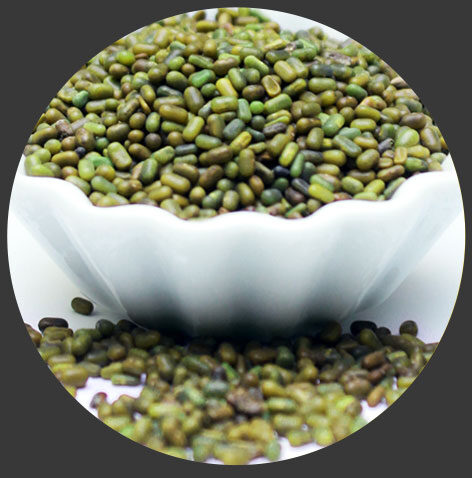
These three sit alongside the Rhodes grass, ryegrass, berseem and Persian clover already in the programme, and they ship in the same mixed container under the same ISTA-tested, phytosanitary-certified document set. Tell the export desk your soil type, rainfall and whether the field is for cutting or grazing, and they will say which of the three belongs where.
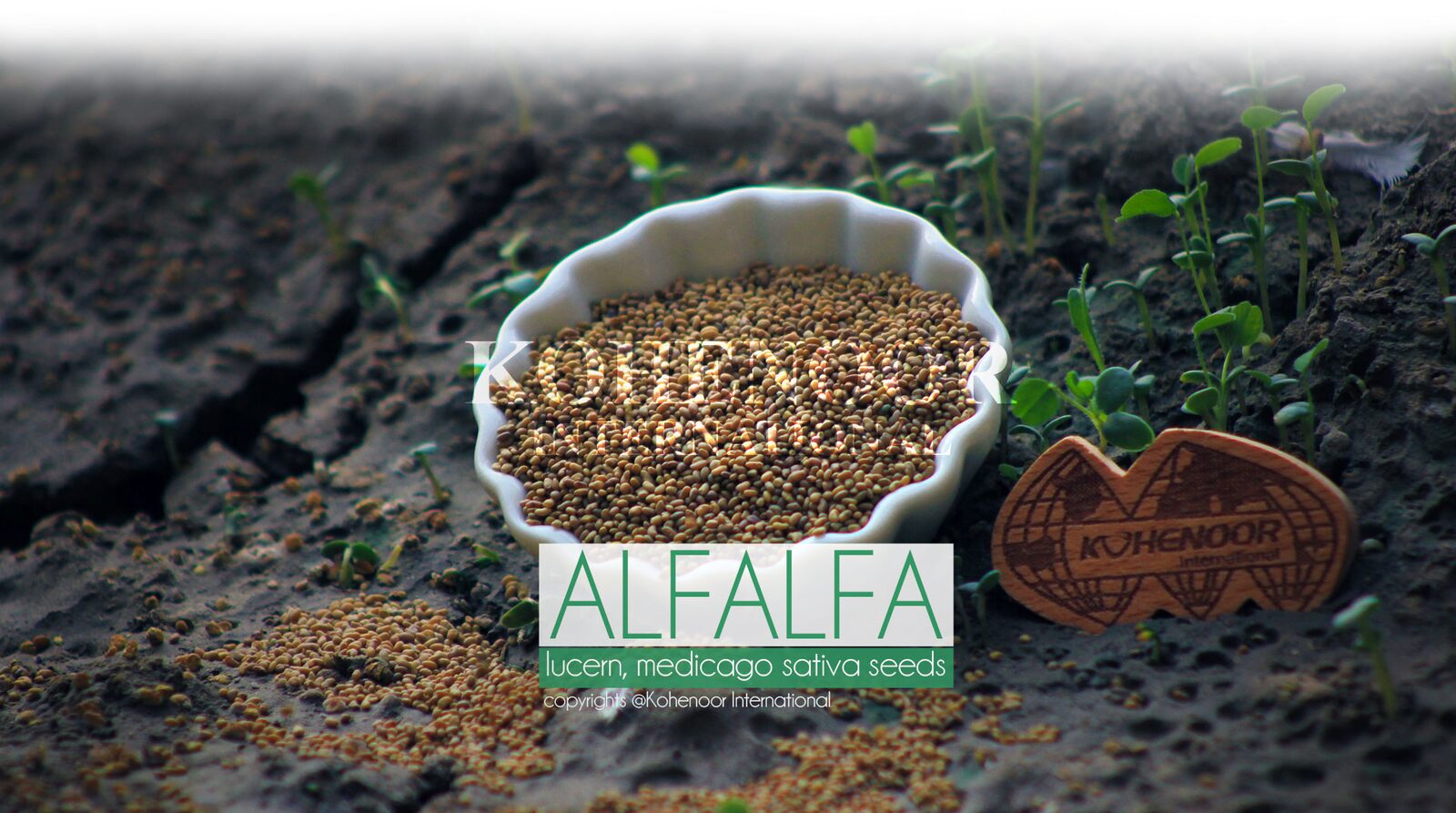
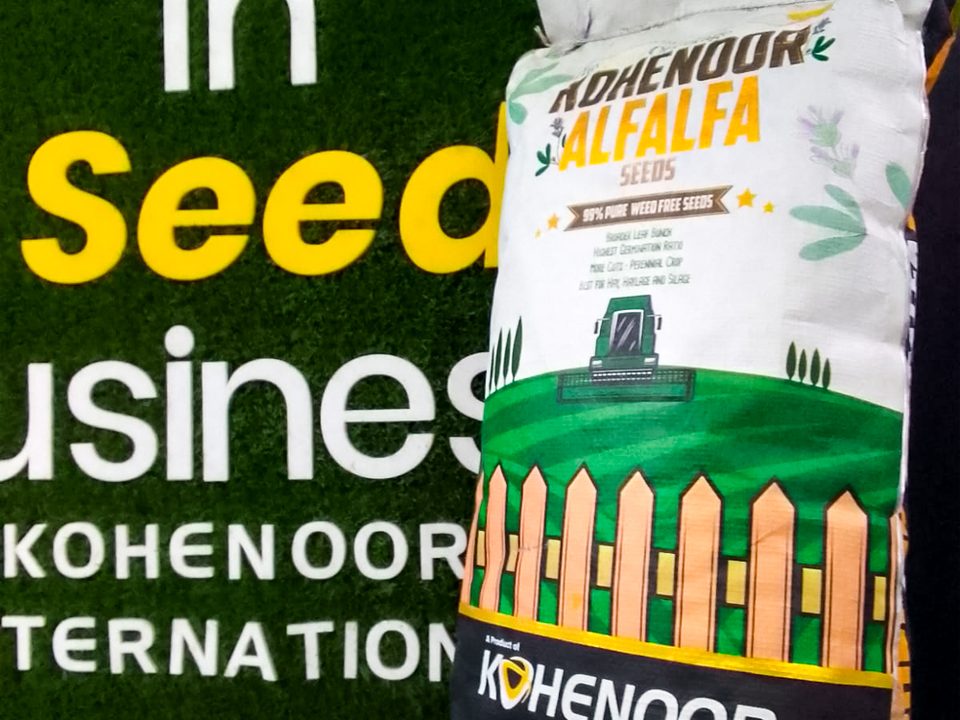
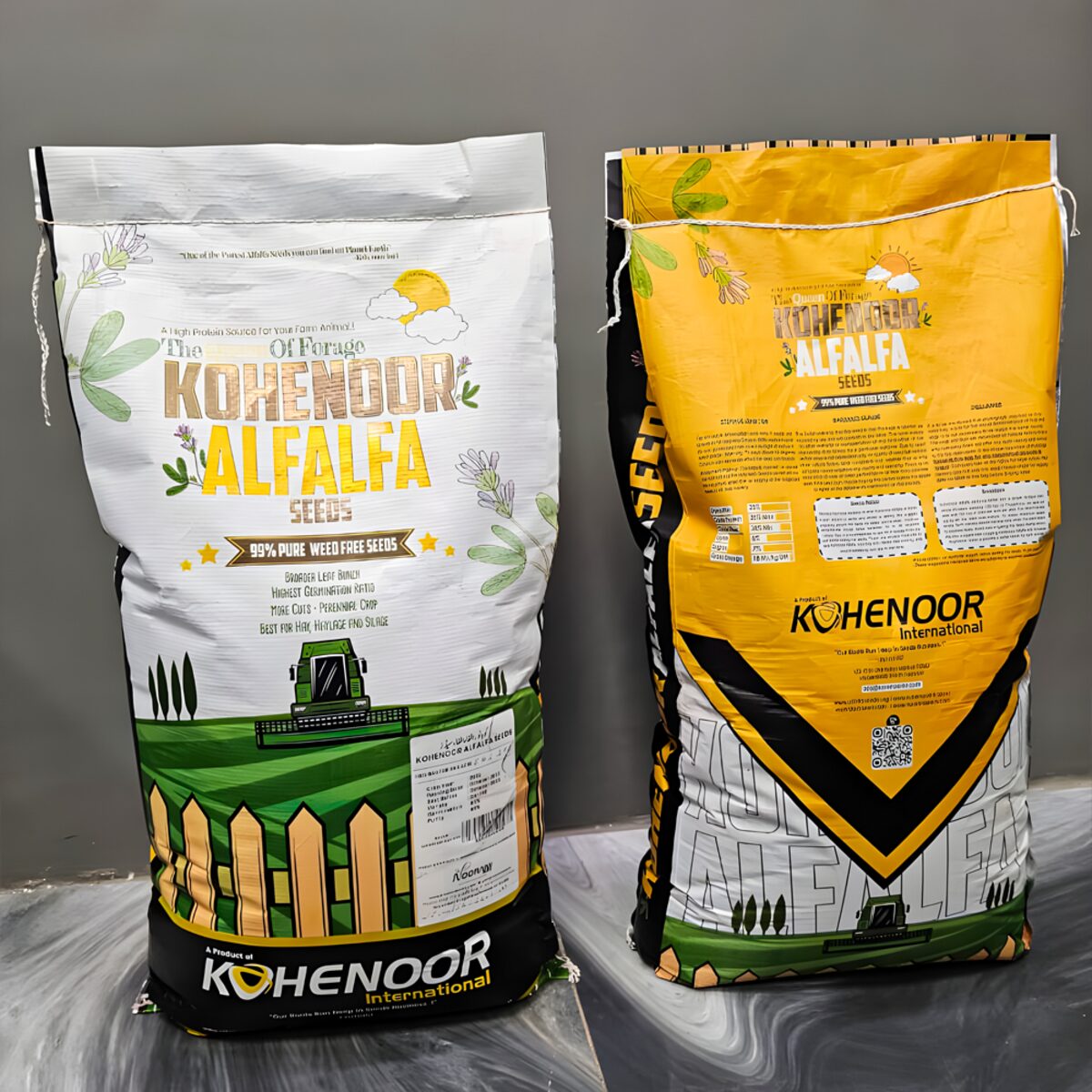
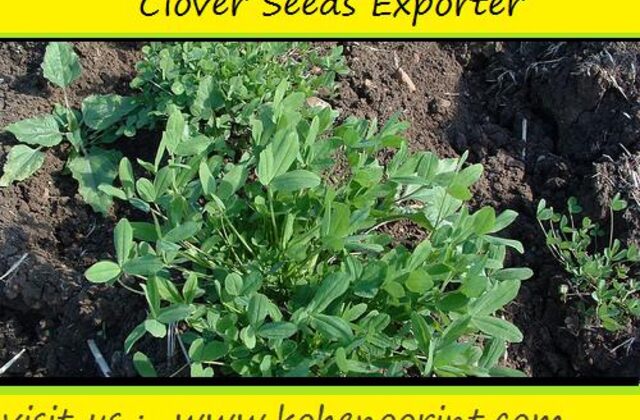
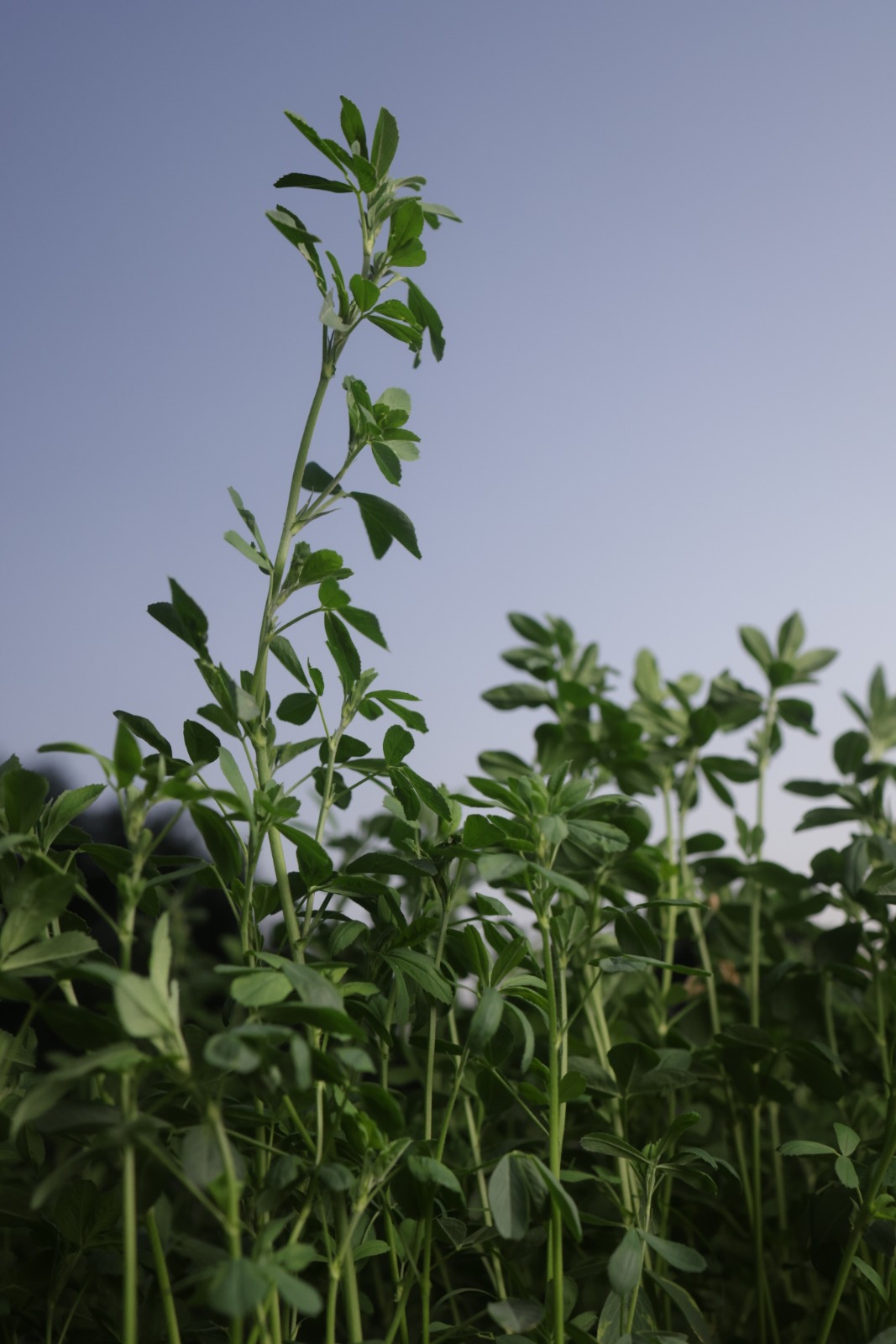
If a dairy grows only one forage crop from our seed, it is alfalfa. Lucerne is the highest-protein perennial forage a farm can grow, it fixes its own nitrogen, and a well-established stand gives seven or more cuts a year in warm irrigated regions. Kohenoor offers two research varieties, and choosing between them is mostly a question of climate.
TAIZTAR is our fall-dormancy 10, non-dormant alfalfa, bred on modern genetics for heat and salinity tolerance. It is the variety we recommend for the Gulf, the Horn of Africa, North Africa, the Sahel irrigation schemes, Sindh and the hot plains of South Asia: anywhere summers are long and brutal, irrigation water carries salt and the farm wants the plant to keep growing through winter rather than shutting down. Many of these regions were planted for decades with CUF-101, a variety released in the late 1970s. TAIZTAR was bred as its superior replacement, and on our own research plots the difference shows in stand persistence under salt and in how quickly the plant recovers after each cut.
KN92 is our fall-dormancy 9, cold-tolerant alfalfa. It is the choice for temperate and continental farms: Central Asia, Turkey's Anatolian plateau, the Caucasus, Eastern Europe, highland East Africa and the cooler parts of the Americas. It goes dormant when frost arrives and comes back strongly in spring, and it carries the same 22 to 24 percent crude protein and the same purity, germination and dodder guarantees as TAIZTAR.
| Your climate | Recommended alfalfa | Why |
|---|---|---|
| Hot-arid, saline irrigation (Gulf, Egypt, Sudan, Sahel, Sindh) | TAIZTAR, FD 10 | Non-dormant, heat and salinity tolerant, grows through winter, 7+ cuts |
| Mediterranean and subtropical (Morocco, Jordan, southern Spain, Brazil, northern Australia) | TAIZTAR, or KN92 in cooler districts | Long warm season, mild winters; the export desk advises by site |
| Temperate and continental (Kazakhstan, Uzbekistan, Turkey plateau, Eastern Europe) | KN92, FD 9 | Cold-tolerant, winter dormant, strong spring regrowth |
| Highland tropics (Ethiopia, Kenya highlands) | KN92 above frost line, TAIZTAR below | Altitude decides; send us your elevation and we will advise |
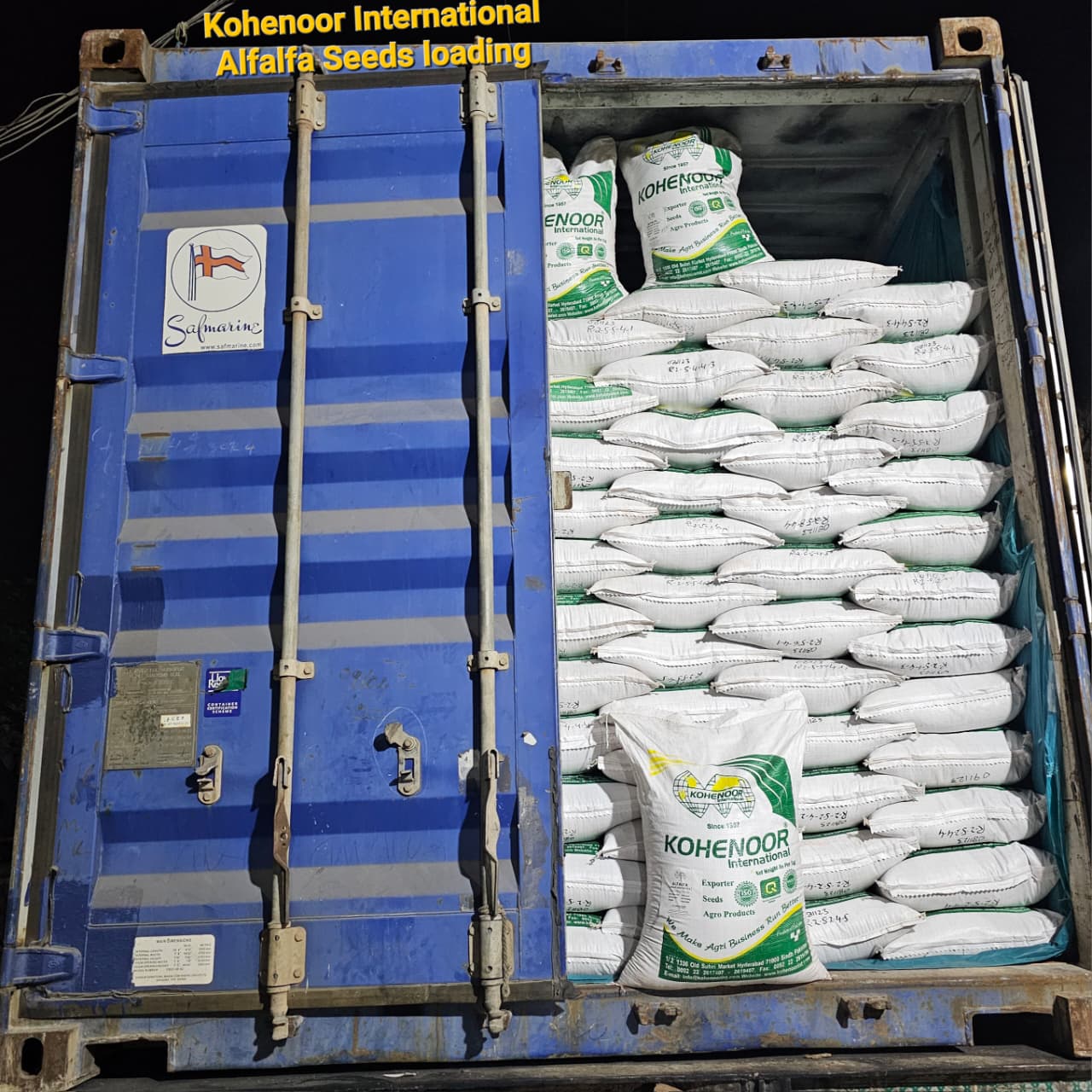
Both varieties are sown at 10 to 12 kg per acre, which is 25 to 30 kg per hectare, into a fine, firm, well-drained seedbed with the salinity and pH of the field known in advance. Both are supplied at a minimum of 98 percent purity and 85 percent germination, with a written 0 percent dodder guarantee and an ISTA Orange Certificate for the lot you receive. The minimum order is 5 MT, and we accept 1 MT trial lots so that your agronomist can see the stand before the farm commits to its full hectares.
Alfalfa alone does not make a ration. A cow needs effective fibre to keep the rumen working, the farm needs bulk for the bunker, and there is a winter gap in most climates when alfalfa slows. The rest of the programme fills those roles.
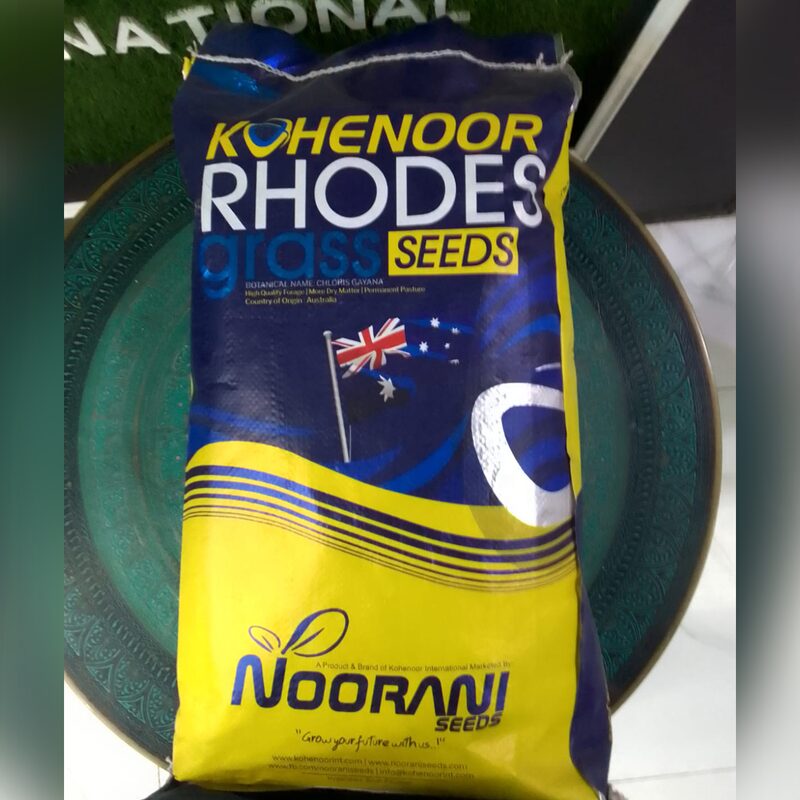
Rhodes grass is the grass-hay partner to alfalfa across the hot-arid world. Our Australian Rhodes grass is a perennial that stands three to five years, tolerates drought, heat and saline soil, and makes a clean hay of 12 to 14 percent protein with yields of up to 175 maund per acre per cut. Dairies use it to balance alfalfa in the TMR, to feed dry cows and heifers, and to improve soil structure on fields coming out of other crops.
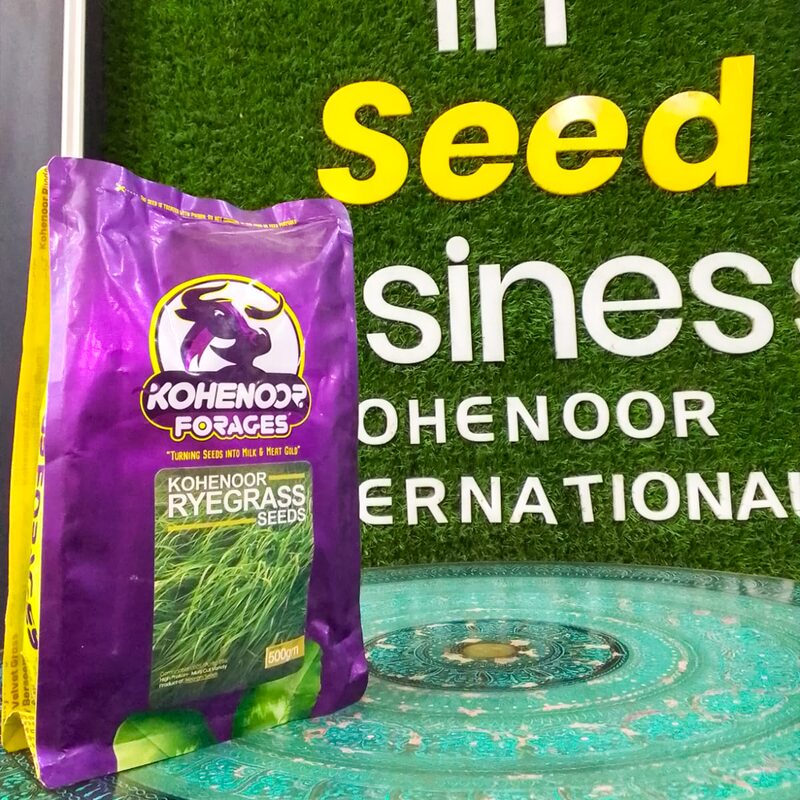
Ryegrass is the winter workhorse. Sown from October to December, it gives five to eight cuts in a season of young, leafy growth with protein of up to 38 percent, and farms feeding it fresh have reported milk gains of around 2 kg per cow per day. It can be green-chopped, grazed or ensiled.
Berseem and Persian clover are the winter legumes. Safa berseem is an early-maturing, broad-leaf, disease-resistant Egyptian clover supplied dodder-free; Persian clover is a high-protein winter annual. Both feed the herd through the cool months and leave nitrogen in the soil for the summer crop that follows.
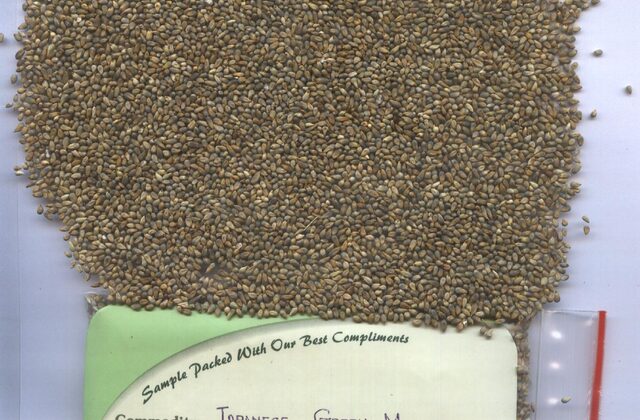
Hybrid sorghum and hybrid pearl millet are the summer silage crops. Both handle heat and limited water, both are multi-cut from our hybrids, and both fill the bunker in the months when a temperate dairy would be relying on maize. For farms in the Gulf and Africa they are often the difference between a stable summer ration and a summer of buying in feed.
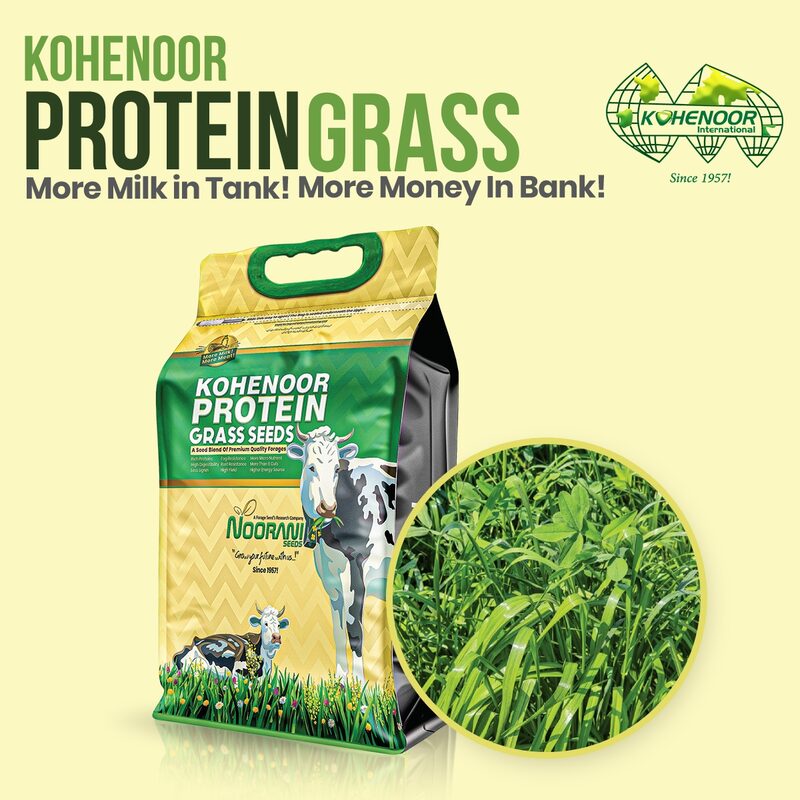
Protein Grass, our Safa complete-ration blend, is for farms that green-chop daily. Cut every 20 to 25 days for eight or more cuts a year, it yields 250 to 300 maund per acre per cut with crude protein of up to 38 percent in the blend, and farms using it have reported milk gains of 2 to 5 kg per cow per day.
Super Napier (Baymisaal) is the long-term bulk fodder: plant once, cut seven to nine times a year for twelve to fifteen years, with soft six-to-nine-foot growth at roughly 16 percent protein and tolerance to drought, heat and salt. Sesbania (Janter) rounds out the rotation as a 40-to-45-day nitrogen-fixing green manure that also tolerates saline and poor soil.
Dodder (Cuscuta) is a parasitic vine with no roots and no leaves of its own. Its seed is almost the same size and weight as alfalfa and clover seed, which is exactly why it travels in cheap, poorly cleaned forage seed. Once the seedling finds an alfalfa stem it wraps around it, pushes feeding structures into the plant and lives on the lucerne's sugars. A patch the size of a dinner plate in the first year becomes a stand-wide problem by the second, and dodder seed can survive in the soil for many years, so the field is compromised for the crops that follow as well.
For a dairy the arithmetic is brutal. An alfalfa stand is planted to last several years. If it is lost to dodder in year two, the farm has paid for seedbed preparation, seed, irrigation and establishment once, and must pay for all of it again, while buying in hay to cover the gap. Herbicide options inside a legume stand are limited and expensive, and in many importing countries dodder is a quarantine weed, so a contaminated shipment can be rejected or destroyed at the port.
This is why our dodder guarantee is written into the sale, not mentioned in passing. Every alfalfa lot we export is Sortex optical-cleaned, tested under ISTA rules by lot and certified at 0 percent dodder, with purity of at least 98 percent. Our Safa berseem is supplied dodder-free in the same way. The ISTA Orange Certificate for your lot states the purity analysis and the other-seed count, so your agronomist can read it before the container is loaded rather than discovering the problem in the field.
We have been cleaning alfalfa seed in Hyderabad, Sindh, since 1957. Our grandfather built the business on the simple promise that what left the warehouse was clean, and three generations later the promise is the same, only now it is backed by ISO 9001, HACCP and an ISTA certificate for every lot. If you have ever lost a stand to dodder, you already know why this matters. If you have not, the written guarantee is how you make sure you never do.
We do not publish prices, and we would ask you to be cautious of anyone who does without knowing your destination, volume and season. But the economic logic of a forage seed programme is worth setting out plainly, because it is the reason large dairies buy research seed rather than the cheapest bag available.
Seed is a small fraction of the cost of a forage stand. Land preparation, irrigation, fertiliser, labour and harvesting machinery dwarf it. Yet seed decides almost everything that follows: how many plants establish, how many cuts the stand gives, how much protein each cut carries, how many years the stand lasts and whether a parasitic weed arrives with it. Saving a little on seed and losing a year of stand life, or a few points of protein, is the most expensive economy a dairy can make.
When a dairy's procurement head sends us their hectares, climate and herd size, the export desk replies with a quotation for the full programme, the current lot certificates and a shipping schedule. The farm's own nutritionist and accountant can then run the seed-to-milk numbers with real figures. That is the right way to do it, and we are glad to supply whatever data they need.
A large dairy that sources forage seed crop by crop ends up with five or six suppliers in three or four countries, each with its own certificates, its own shipping line, its own payment terms and its own idea of what a phytosanitary certificate should say. Procurement teams tell us the paperwork alone costs weeks every season. Kohenoor exists to remove that problem.
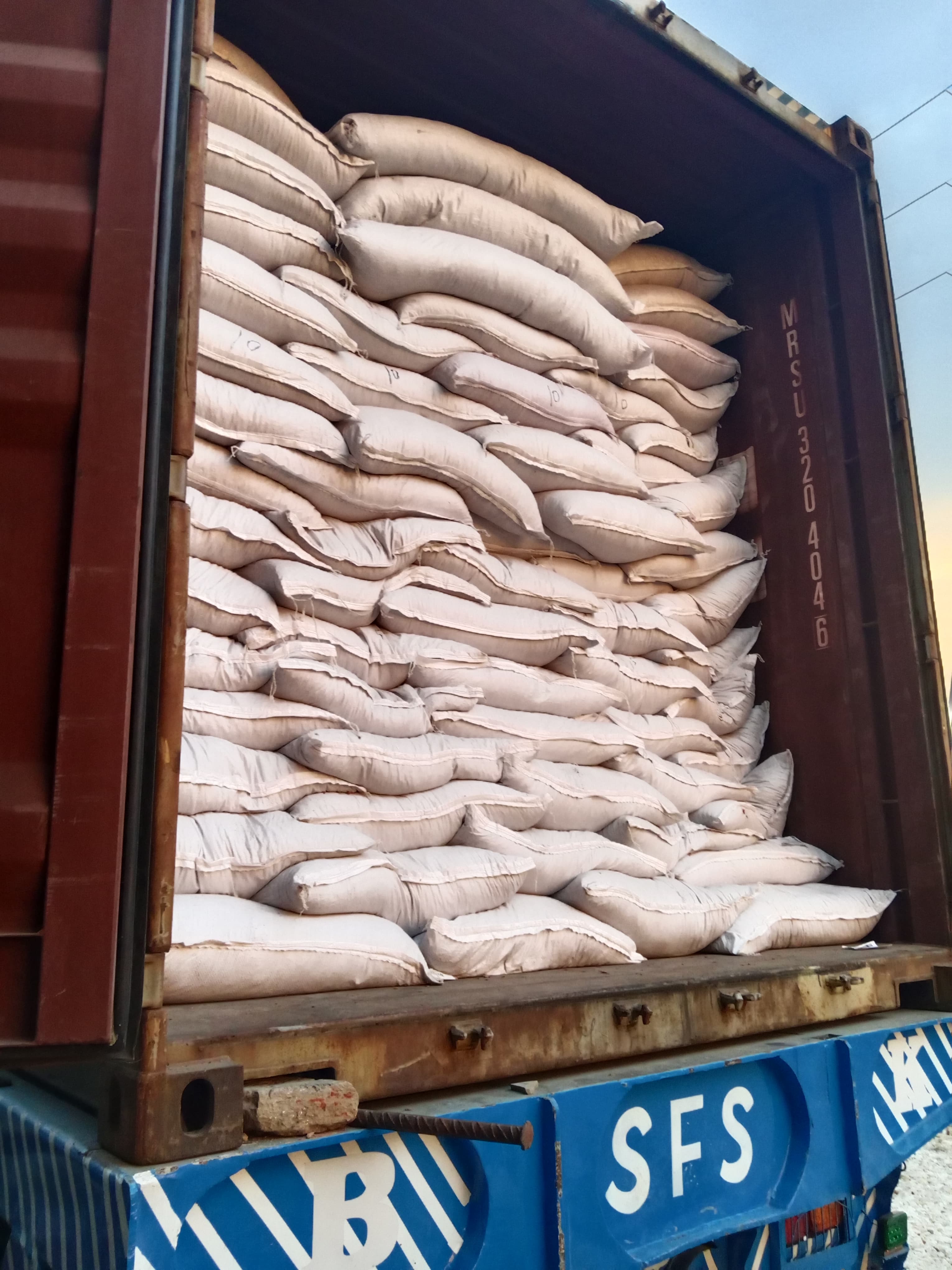
From our head office in Hyderabad, Sindh, and our offices in Dubai and Australia, we supply every crop on this page from one warehouse under one quality system. One order covers alfalfa, Rhodes grass, ryegrass, sorghum, millet, clover, Protein Grass, Super Napier and sesbania. One document set covers all of it:
One contact handles it. The export desk answers on WhatsApp at +92 310 4929292 and by email at export@kohenoorint.com, in English, Arabic, Spanish or French, within 24 hours. The same person who quotes your programme follows your container, sends your documents and takes your agronomist's questions after the seed is in the ground. We are ISO 9001 and HACCP certified, a member of the Australian Seed Federation, and we have shipped to more than 70 countries, so your import agent will not be the first in their country to clear a Kohenoor container.
For farms with Gulf connections, our Dubai office is a short flight from every GCC dairy and is the natural place to meet, review certificates and plan a season face to face.
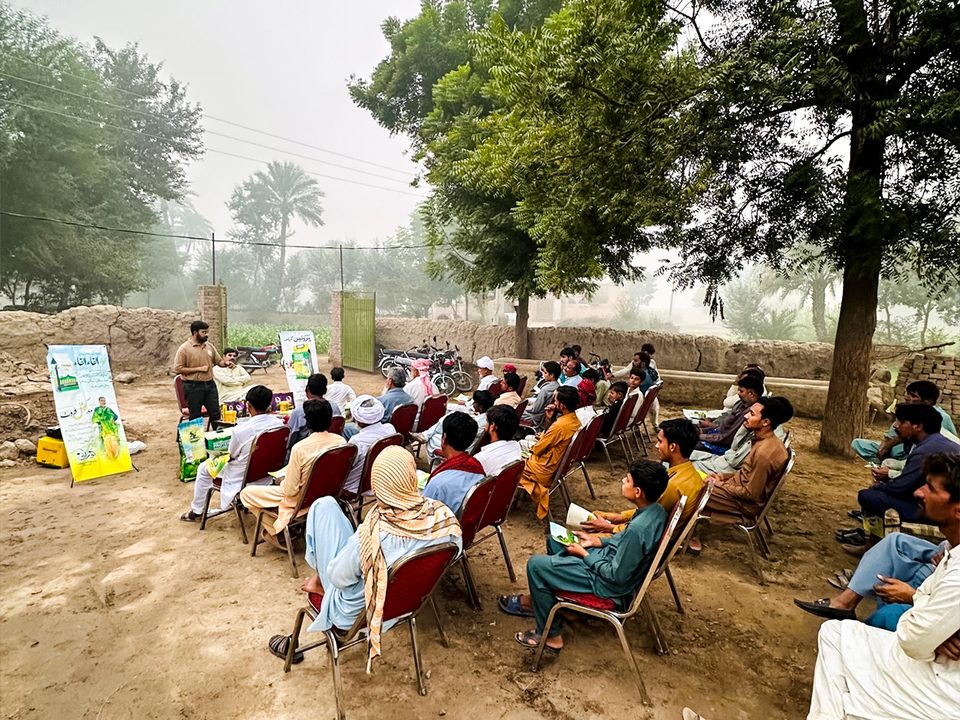
No sensible agronomy head commits a thousand hectares to a variety they have not grown. We do not ask them to. The onboarding path we use with new dairies is deliberately simple and it starts small.
Payment terms for a first order are usually 100 percent telegraphic transfer against the bill of lading copy, or an irrevocable letter of credit at sight; repeat buyers are offered easier terms. Alfalfa seed held in cool, dry storage typically keeps its germination for 18 to 24 months, so a farm can order a season ahead and hold stock without worry.
This path is the same for a family farm and a corporate dairy: the trial lot answers the agronomist's questions, and the second order is the full programme.
The farms that work with us share one characteristic: they are large enough that forage quality is a board-level cost, and serious enough to grow it themselves rather than gamble on the hay market every season.
What they receive is the same in every case: research varieties selected on our own plots, Sortex-cleaned seed, ISTA-tested lots, a written dodder guarantee, IPPC phytosanitary documentation and a human being at the export desk who has done this before. If you run forage procurement for a dairy and you are tired of chasing five suppliers for one season's seed, send us your hectares and your climate. We will show you what one programme from one research company looks like, and we will start with a trial lot so the stand speaks before the contract does.
The pages linked below take the same programme into horse farms, camel and small-ruminant operations, large irrigation projects and a month-by-month planting calendar for each climate. Each is written for the people who actually have to grow the forage.


Send your product, quantity and destination port. The export desk replies personally with a quotation, current lot certificates and a shipping schedule — no bots, no obligation.
WhatsApp +92 310 4929292 export@kohenoorint.comYes. Alfalfa (TAIZTAR or KN92), Rhodes grass, ryegrass, berseem and Persian clover, hybrid sorghum, hybrid pearl millet, Protein Grass, Super Napier, sesbania, panicum (Guinea grass) and brachiaria all ship from the same warehouse under one quality system, with one document set and one contact at the export desk.
TAIZTAR, our fall-dormancy 10, non-dormant alfalfa bred on modern genetics for heat and salinity tolerance. It was developed as the superior replacement for CUF-101 and gives 7 or more cuts a year in warm irrigated regions, with 22–24% crude protein.
KN92, our fall-dormancy 9, cold-tolerant alfalfa. It goes dormant under frost and regrows strongly in spring, with the same 22–24% crude protein, ≥98% purity, ≥85% germination and written 0% dodder guarantee as TAIZTAR.
Yes. Sesbania (janter) is the nitrogen-fixing legume in the Kohenoor range that works as both a cover crop and a green manure: sown between main crops or on saline and exhausted land, it is ploughed in at six to eight weeks to return nitrogen and organic matter before alfalfa, panicum or Rhodes grass is sown. It doubles as a soft fodder for sheep and goats. Panicum (Guinea grass) and brachiaria complete the tropical pasture base. All ship in the same container with the same ISTA and phytosanitary documents as the rest of the order.
10 to 12 kg per acre, which is 25 to 30 kg per hectare, into a fine, firm, well-drained seedbed. Seed rates for the companion crops are confirmed on the quotation and the bag tag for the lot you receive.
Every alfalfa lot is Sortex optical-cleaned and ISTA-tested by lot. The ISTA Orange Certificate shows the purity analysis and other-seed count, and the 0% dodder guarantee is written into the sale. Safa berseem is supplied dodder-free in the same way.
The alfalfa minimum is 5 MT, and we accept 1 MT trial lots so your agronomist can see the stand first. Companion crops can be added to the same shipment so the trial covers the whole programme.
ISTA Orange Certificate per lot, IPPC phytosanitary certificate for your country, certificate of origin, commercial invoice with alfalfa under HS 1209.21, packing list by lot with sealed bag tags, and the bill of lading FOB Karachi (CFR or CIF on request).
Send your hectares, climate, irrigation water quality, herd size and destination port by WhatsApp to +92 310 4929292 or email export@kohenoorint.com. The export desk replies within 24 hours in English, Arabic, Spanish or French with a programme, certificates and a shipping schedule. We never publish prices.