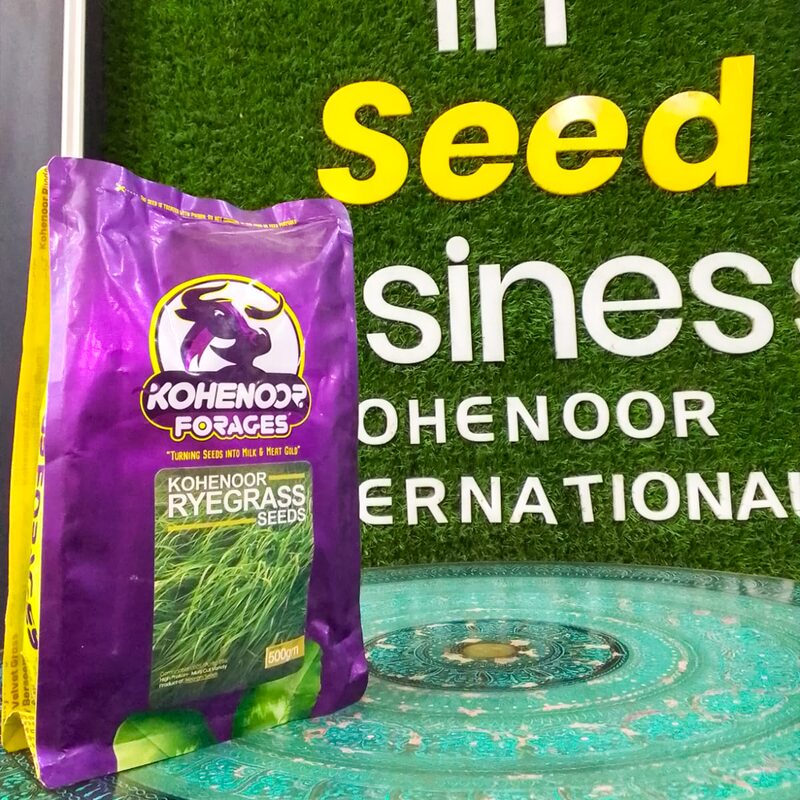
Forage seed programmes for farms · since 1957

Forage Seed for Large-Scale Projects: 500 to 10,000 Hectares, One Research Supplier

Agri-investors · Sovereign and corporate food-security schemes · Centre-pivot irrigation in the Gulf, Africa and Central Asia

A forage project measured in thousands of hectares fails or succeeds on decisions made before the first pivot turns: which varieties will survive the heat and the salt, how many tonnes of seed the phased plan needs, whether the documentation will clear customs on schedule, and who will answer the agronomist's questions in year two. Kohenoor International has supplied research forage seed from Pakistan since 1957 to projects in more than 70 countries, and this page sets out how we work with large schemes from variety selection to the last container.

Get a quote in 24h
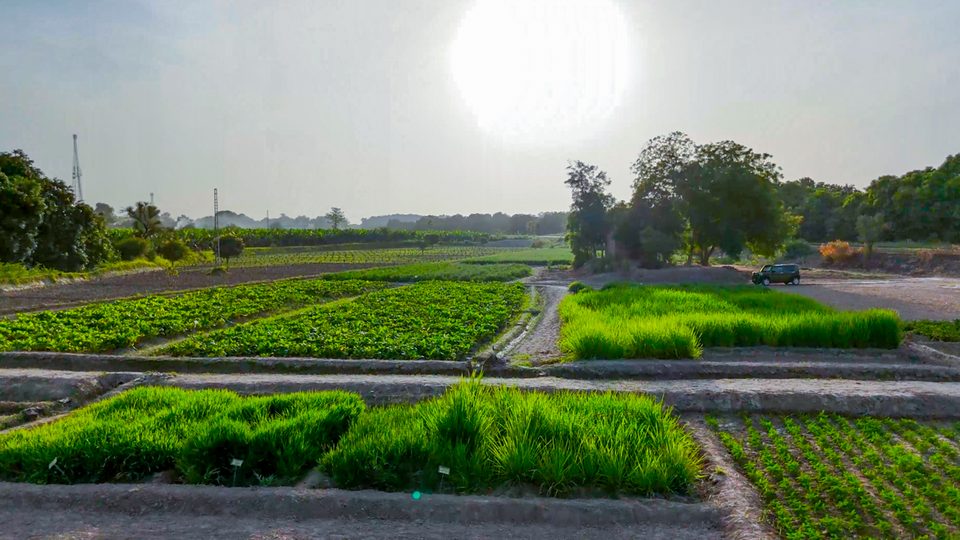
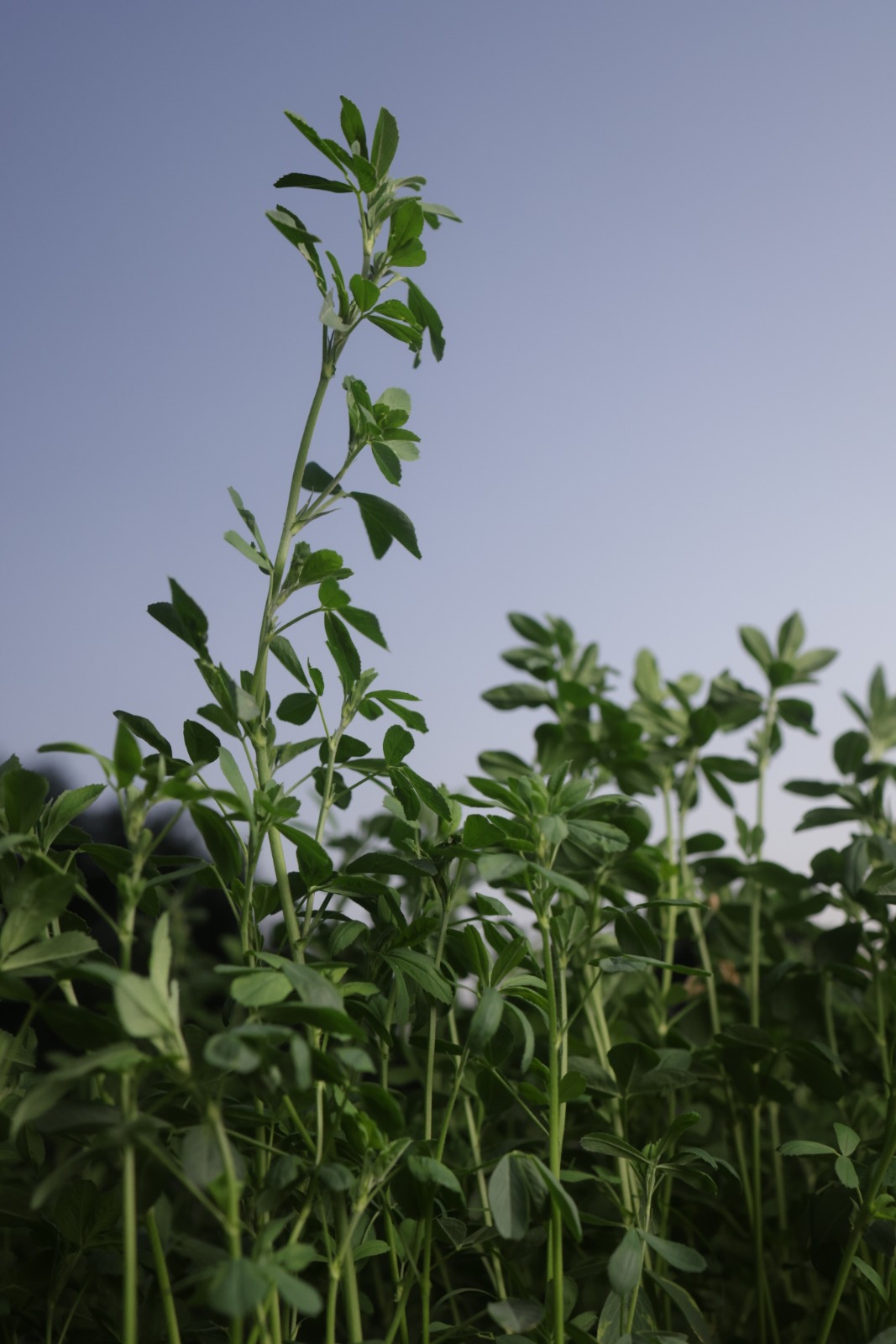
Large irrigated alfalfa block under open sky, the scale at which food-security forage projects are built
In short: For large forage schemes Kohenoor supplies TAIZTAR alfalfa (non-dormant, heat and salinity tolerant) or KN92 (cold tolerant) at 25–30 kg per hectare, with Rhodes grass, hybrid sorghum, pearl millet, ryegrass, clovers and Super Napier in the same programme. We plan seed volumes by phase, ship FOB Karachi in full containers with ISTA Orange Certificates per lot, IPPC phytosanitary certificates and origin documents under HS 1209.21, and support the project's agronomy team from our export desk and research plots.
0% dodder — in writingISTA Orange Certificate per lotOne supplier, whole programmeTAIZTAR heat & salinity geneticsResearch plots since 1957Trial lot 1 MTReply within 24 hPakistan · Dubai · Australia offices
25–30 kg/haAlfalfa seed rate for volume planning
25–30 MTAlfalfa seed per 1,000 ha
FD 10TAIZTAR, non-dormant, heat and salinity tolerant
HS 1209.21Alfalfa seed tariff line
70+Countries served
1957Research forage seed company founded

What a forage project at scale actually needs from its seed supplier

Whether a project director is planning 500 hectares of pivots in the Sahel or a sovereign fund is planning 10,000 hectares in the Gulf, the questions we hear are remarkably similar. They are not, at first, about seed. They are about risk. Will the stand survive the water we have? How much seed do we really need, and when? Will the paperwork hold up the containers? Who do we call when something in the field does not look right? Can we start small and scale without changing supplier halfway?

A good seed supplier for a project of this size is therefore not a trader with a price list. It is a research company that has selected its varieties for exactly these conditions, that can commit volumes across a multi-year phasing plan, that ships with documentation an import authority will accept the first time, and that has agronomists who will look at photographs of a thinning stand and tell the truth about what they see.

Kohenoor International has been that kind of company since our grandfather founded it in Hyderabad, Sindh, in 1957. We describe ourselves as a research forage seeds company because the research came first and the export business grew out of it. Our sister research company, Noorani Seeds, carries the research and selection work; our plots in Sindh test varieties under heat and salinity that would finish most alfalfa; and our export desk, with offices in Pakistan, Dubai and Australia, has shipped to more than 70 countries under ISO 9001 and HACCP certification.

Kohenoor research and development plots in Sindh where forage varieties are tested under heat and saline irrigation

This page walks through the six things a large project needs from us: variety selection for heat and salinity, seed volume planning, phased establishment, documentation, container logistics and agronomy support, with a section on risk management at the end. It is written for the project's procurement lead and its head of agronomy, who in our experience are the two people who decide whether a forage scheme works.

Variety selection for heat, salinity and water: TAIZTAR first

Most large forage projects of the last two decades have been built in hot places with difficult water: the Arabian Peninsula, Egypt's new lands, Sudan, the Sahel irrigation schemes, Ethiopia's lowlands, the Horn of Africa, and the irrigated steppe of Central Asia. The variety decision in these places is not about yield in a good year. It is about persistence under heat and salt.

TAIZTAR is our answer for the hot zone. It is a fall-dormancy 10, non-dormant alfalfa bred on modern genetics for heat and salinity tolerance. It was developed as the superior replacement for CUF-101, the late-1970s variety that most Gulf and African projects were originally planted with and that many still use by habit. TAIZTAR keeps growing through mild winters rather than shutting down, gives seven or more cuts a year under irrigation, carries 22 to 24 percent crude protein and crude fibre of up to 28 percent, and holds its stand under saline groundwater where older genetics thin out.

KN92 is our fall-dormancy 9, cold-tolerant alfalfa for the continental projects of Kazakhstan, Uzbekistan, the Anatolian plateau and the highlands, where winter frost makes a non-dormant variety the wrong choice. It carries the same protein and the same guarantees and goes properly dormant.

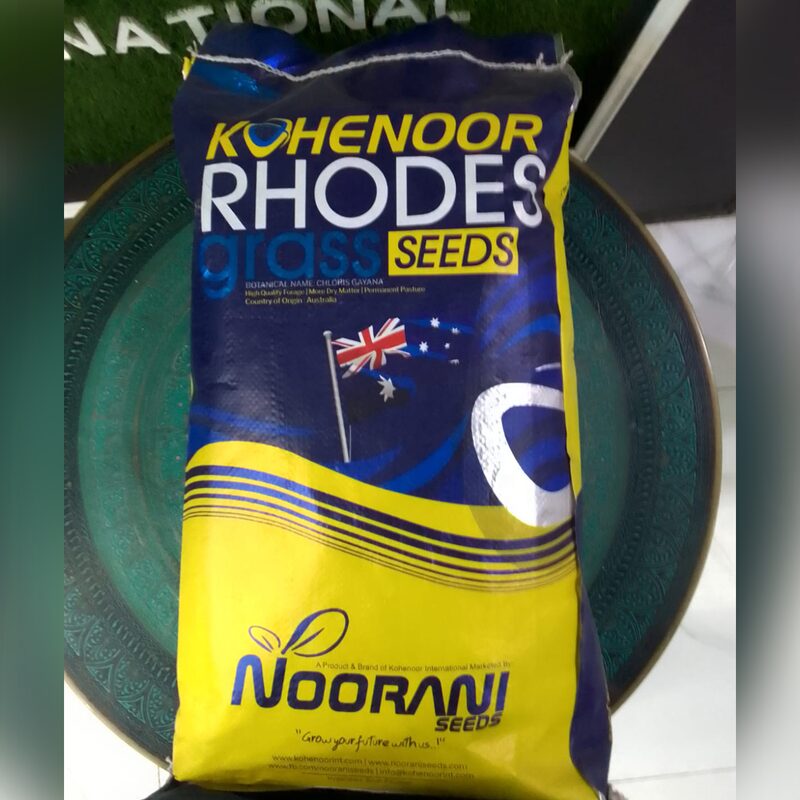
Around the alfalfa, the perennial grasses matter just as much at scale. Rhodes grass, our Australian perennial, tolerates drought, heat and saline soil, stands three to five years and makes a 12 to 14 percent protein hay at up to 175 maund per acre per cut; it is the crop for the pivots with the worst water. Super Napier (Baymisaal) is planted once and cut seven to nine times a year for twelve to fifteen years, tolerating drought, heat and salt. Hybrid sorghum and pearl millet handle summer heat with less water than maize and are multi-cut for silage. Ryegrass, berseem and Persian clover cover the cool season, and sesbania rebuilds saline, exhausted soil in 40 to 45 days.

Project environmentAlfalfaPerennial grassSummer silageWinter
Gulf and Red Sea coast, saline groundwaterTAIZTARRhodes grass, Super NapierSorghum, pearl milletRyegrass, berseem
Nile valley and new lands, Sudan, SahelTAIZTARRhodes grass, Super NapierSorghum, pearl milletBerseem, ryegrass, Persian clover
East African lowlandsTAIZTARRhodes grass, Super Napier, brachiariaSorghum, pearl milletBerseem
Central Asian steppe, continentalKN92Alfalfa itself (grasses frost-limited)Sorghum, pearl milletRyegrass

Every alfalfa lot ships at a minimum of 98 percent purity and 85 percent germination with a written 0 percent dodder guarantee. Send us the project's water analysis, soil tests and climate data and the export desk will confirm the variety set in writing before a single tonne is ordered.

Seed volume planning: rate multiplied by area, phase by phase

Seed volume for a large scheme is simple arithmetic once the land plan exists, and getting it right early avoids both shortfalls at sowing and seed sitting in a warehouse past its best. The alfalfa rate is firm at 10 to 12 kg per acre, which is 25 to 30 kg per hectare.

Alfalfa areaSeed at 25 kg/haSeed at 30 kg/ha
100 ha2.5 MT3 MT
500 ha12.5 MT15 MT
1,000 ha25 MT30 MT
2,500 ha62.5 MT75 MT
5,000 ha125 MT150 MT
10,000 ha250 MT300 MT

The higher rate is used on rough seedbeds, saline fields and where broadcast sowing rather than drilling is planned. For Rhodes grass, ryegrass, sorghum, pearl millet, clovers, Protein Grass and sesbania, rates depend on the lot and the sowing method, so we specify them on the quotation and the bag tag rather than publish a single number; the same multiplication then applies.

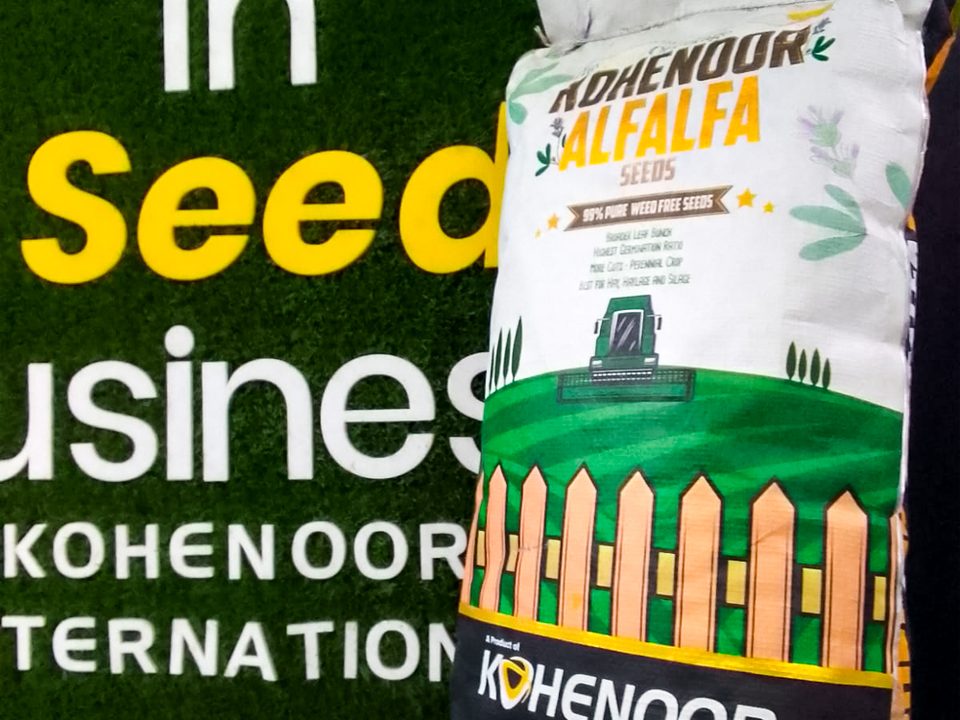
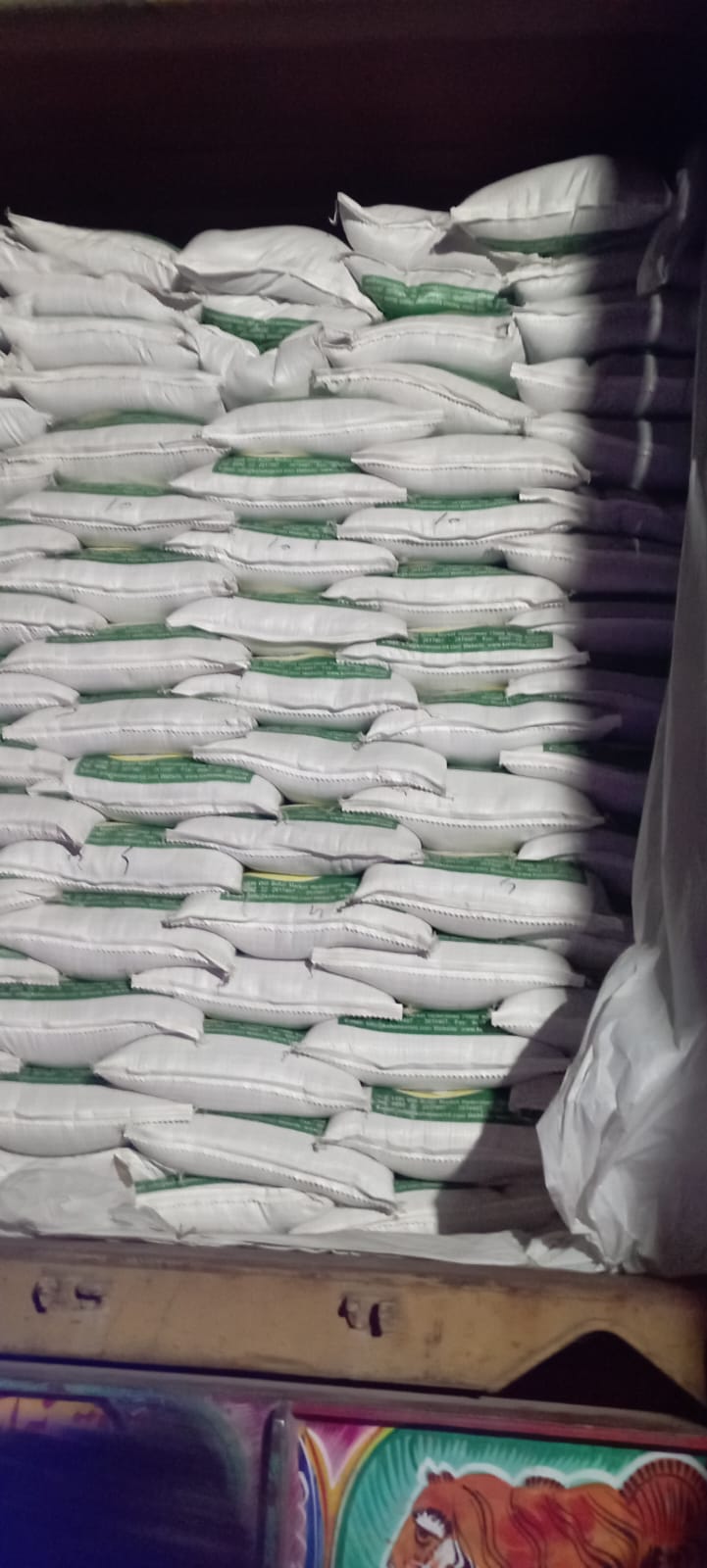
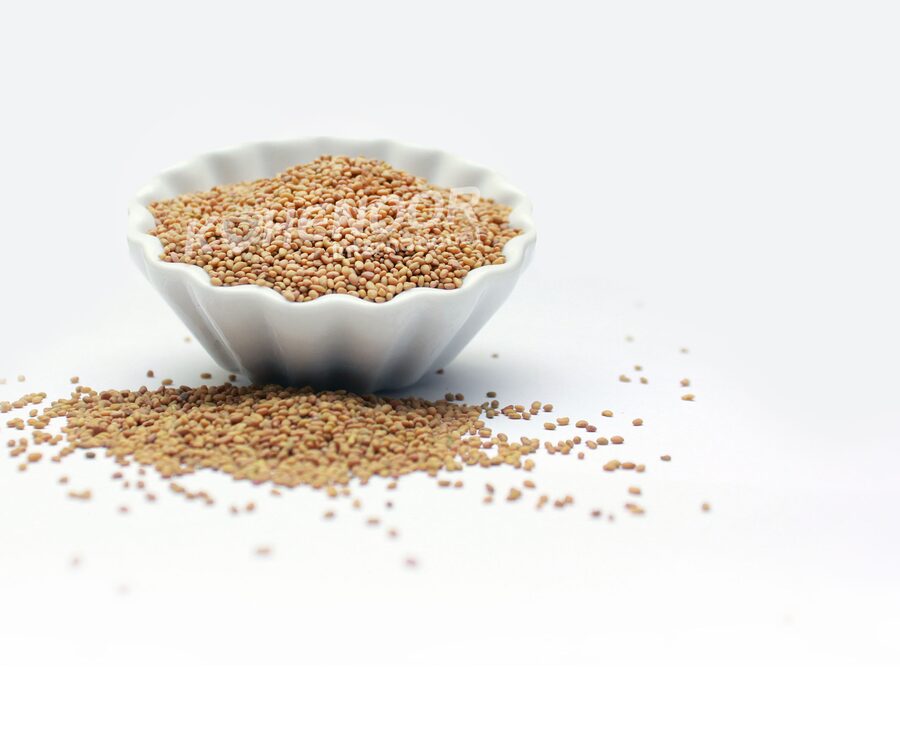
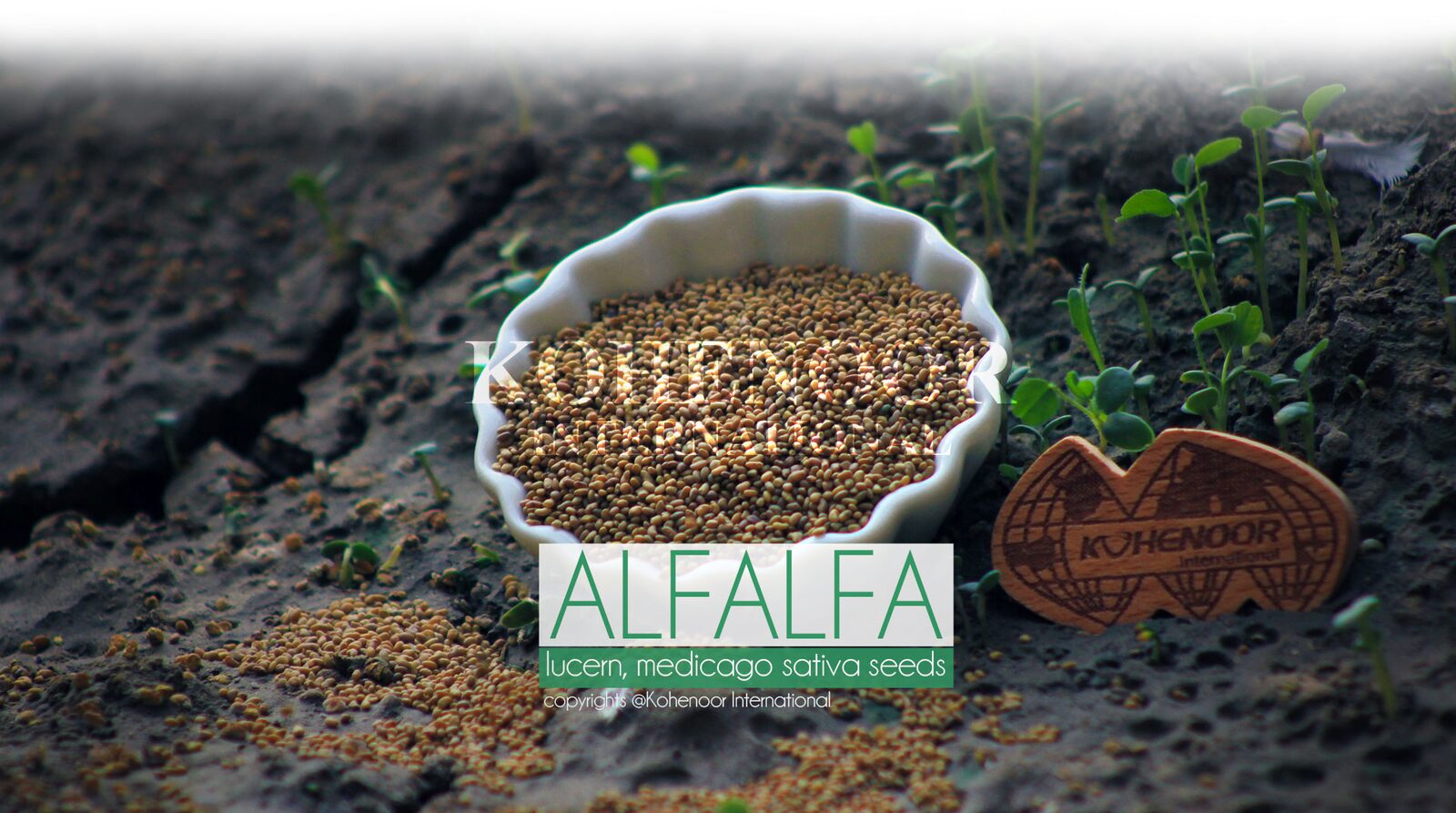
Kohenoor alfalfa seed bags stacked for a multi-container project shipment

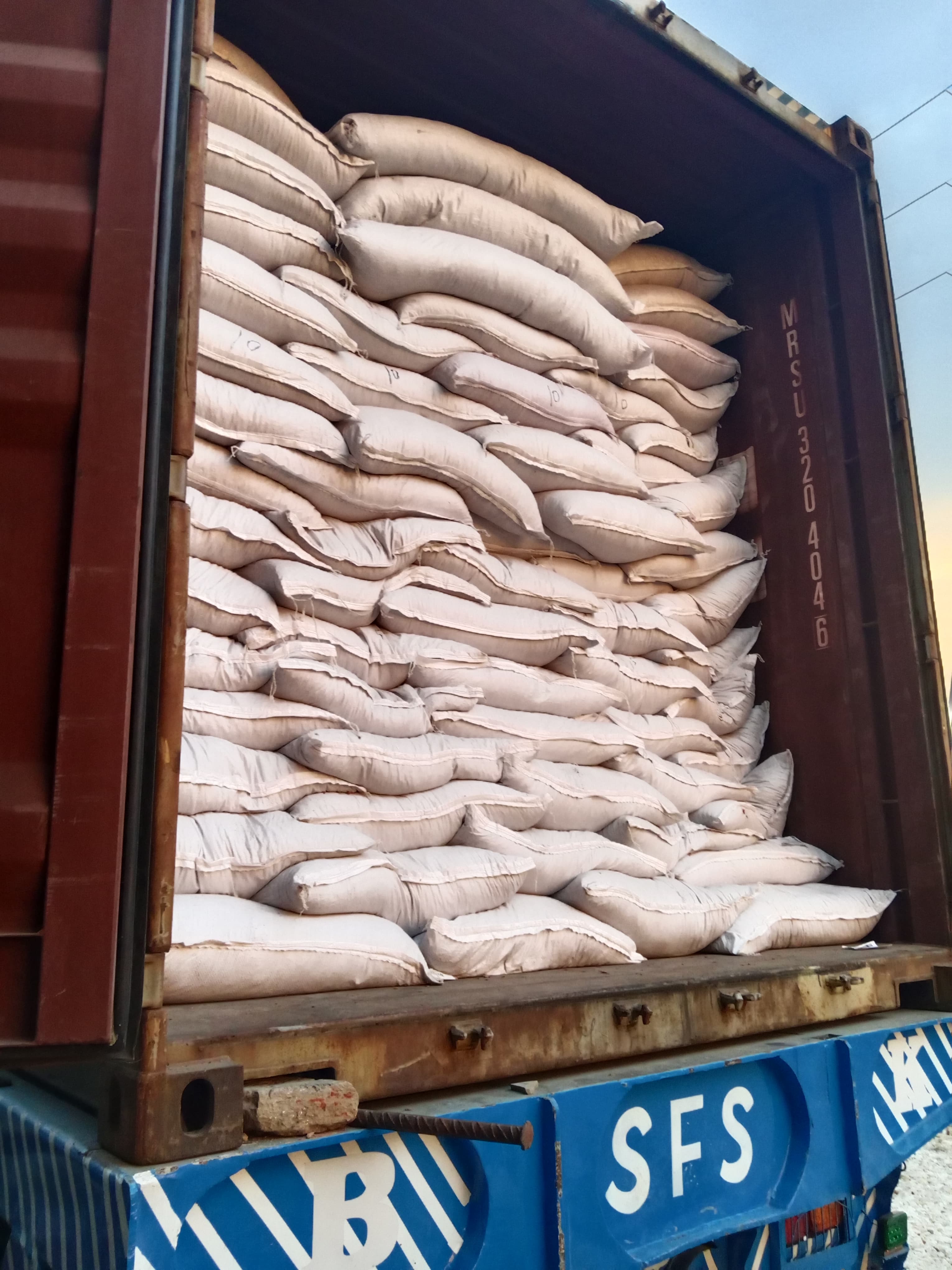
Our standard alfalfa minimum is 5 MT and we accept 1 MT trial lots, but a project at this scale is normally working in full containers. A single 20-foot container typically carries in the region of 20 MT of bagged seed, subject to packing and weight limits, so a 1,000 hectare alfalfa phase is roughly one to two containers of alfalfa plus the companion species. The export desk converts the land plan into a container schedule as part of the quotation.

Phased establishment: how large schemes are brought into production

No project we have worked with sows ten thousand hectares in one season, and none should. Water infrastructure, machinery, labour and management all arrive in phases, and so should the forage. A phased plan also lets the first blocks teach the later ones.

  1. Trial and demonstration blocks. Before the first full pivot, the agronomy team sows trial blocks of each candidate variety, usually from 1 MT trial lots, under the project's own water and soil. The first cuts are sampled and tested. This is where TAIZTAR earns its place against whatever the project used before, and where the companion grasses are matched to the worst and best fields.
  2. Phase one: the core. The first production phase, typically a few hundred to a thousand hectares, goes in on the best-prepared land with the most reliable water. Alfalfa and a perennial grass are established first, because they take longest to reach full yield and last longest once there. Summer silage and winter annuals follow on the remaining land in their windows.
  3. Phase two onwards: replicate and adjust. Each subsequent phase repeats the proven set, with changes informed by phase one: a different grass on saline blocks, a longer ryegrass season, more sorghum if the pit ran short. Seed for each phase ships ahead of its sowing window from the same lots or their successors, so varieties and quality stay constant across the whole scheme.
  4. Renewal cycles. Rhodes grass stands three to five years and Super Napier twelve to fifteen; alfalfa stands several years depending on management. A mature scheme is therefore always re-sowing some share of its land, and the annual seed order settles into a steady rhythm that we can forecast and hold stock against.
Kohenoor demonstration plots used to test varieties before a project commits its full hectares

Phasing is also where supplier continuity pays off. A project that changes seed source between phases changes genetics, cleaning standard and documentation at the same time, and often discovers the difference in the field. Working with one research company from trial block to final phase keeps every pivot on the same footing.

The export desk will sit with the project team, on site or at our Dubai office, to map phases to sowing windows and seed volumes. The method does not change with the hectares.

Beyond the pivots: panicum, brachiaria and sesbania for tropical schemes and soil reclamation

Not every large forage project is a centre-pivot alfalfa scheme in the desert. Ranch developments in Brazil, Colombia and Paraguay, dairy estates in East Africa and integrated farms in South-East Asia establish hundreds of hectares of tropical pasture, and reclamation projects on saline or exhausted land need a crop that can go in first. The same export desk, document set and container logistics described on this page apply to those seed lines.

Panicum (Guinea grass, Panicum maximum) is the tall, tufted perennial that East African, South-East Asian and Latin American dairies plant as their cut-and-carry base. It grows fast in heat and humidity, tolerates partial shade under trees and along bunds, and regrows quickly after each cut. Young regrowth taken every four to six weeks is leafy and palatable; stands left to go to seed turn stemmy and lose feed value, so it is managed on a cutting calendar like any other high-yield grass. On well-drained, fertile soil it is one of the highest-tonnage grasses available to a tropical farm.

Brachiaria (signal grass, Urochloa / Brachiaria species) is the grazing and sward grass for ground that panicum does not like: acid soils, low-fertility soils and, with the right species, land that waterlogs in the rains. It forms a dense, creeping mat that carries grazing animals, smothers weeds and holds soil on slopes, and it is the backbone of improved pasture across tropical Latin America and much of Africa. Dairies use it for the grazing block and the heifer paddocks while panicum, Super Napier and alfalfa supply the cut forage. The species and lot specification for the brachiaria we offer are stated on the certificate of analysis for that lot.
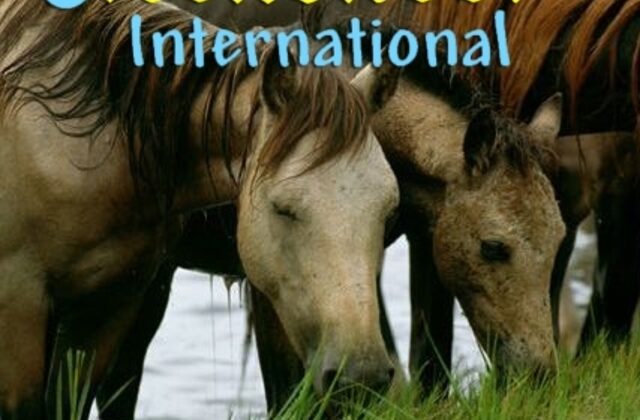
Kohenoor tropical grass seed bag for pasture establishment

Sesbania (janter, Sesbania species) is the crop that does two jobs. As a fodder it is the soft, tender-leaved legume that sheep and goats take readily, giving two to three cuttings and around 150 to 200 maund per acre in 40 to 45 days. As a cover crop and green manure it is a nitrogen-fixing legume that grows on poor and saline land where little else will: sown between main crops or after a tired alfalfa stand is broken, and ploughed in at six to eight weeks before it flowers, it returns nitrogen and organic matter to the soil, improves structure on heavy or salt-affected ground and sets the field up for the alfalfa, panicum or Rhodes grass that follows. Farms reclaiming saline land often start with sesbania precisely because it establishes where the first attempt at alfalfa would fail.
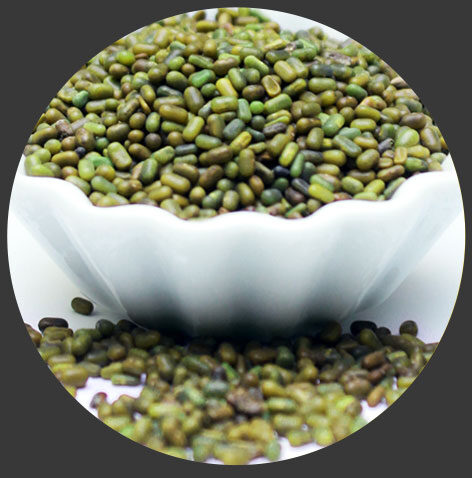
Kohenoor sesbania (janter) seed bag — nitrogen-fixing green manure and goat and sheep fodder

These three sit alongside the Rhodes grass, ryegrass, berseem and Persian clover already in the programme, and they ship in the same mixed container under the same ISTA-tested, phytosanitary-certified document set. Tell the export desk your soil type, rainfall and whether the field is for cutting or grazing, and they will say which of the three belongs where.

At project scale the sequencing matters: on new or reclaimed land, a sesbania green-manure cycle before the first pasture or alfalfa sowing is cheap insurance against a poor first stand on the largest, most visible fields. Seed volumes for panicum, brachiaria and sesbania are planned the same way as the alfalfa volumes above, rate multiplied by area and phase, and can ship in the same containers.
Documentation: ISTA Orange, phytosanitary, origin and HS 1209.21

At the scale of a national or corporate food-security project, documentation is not administration. It is the difference between seed sown in the window and seed sitting at the port while the window closes. We treat it accordingly.

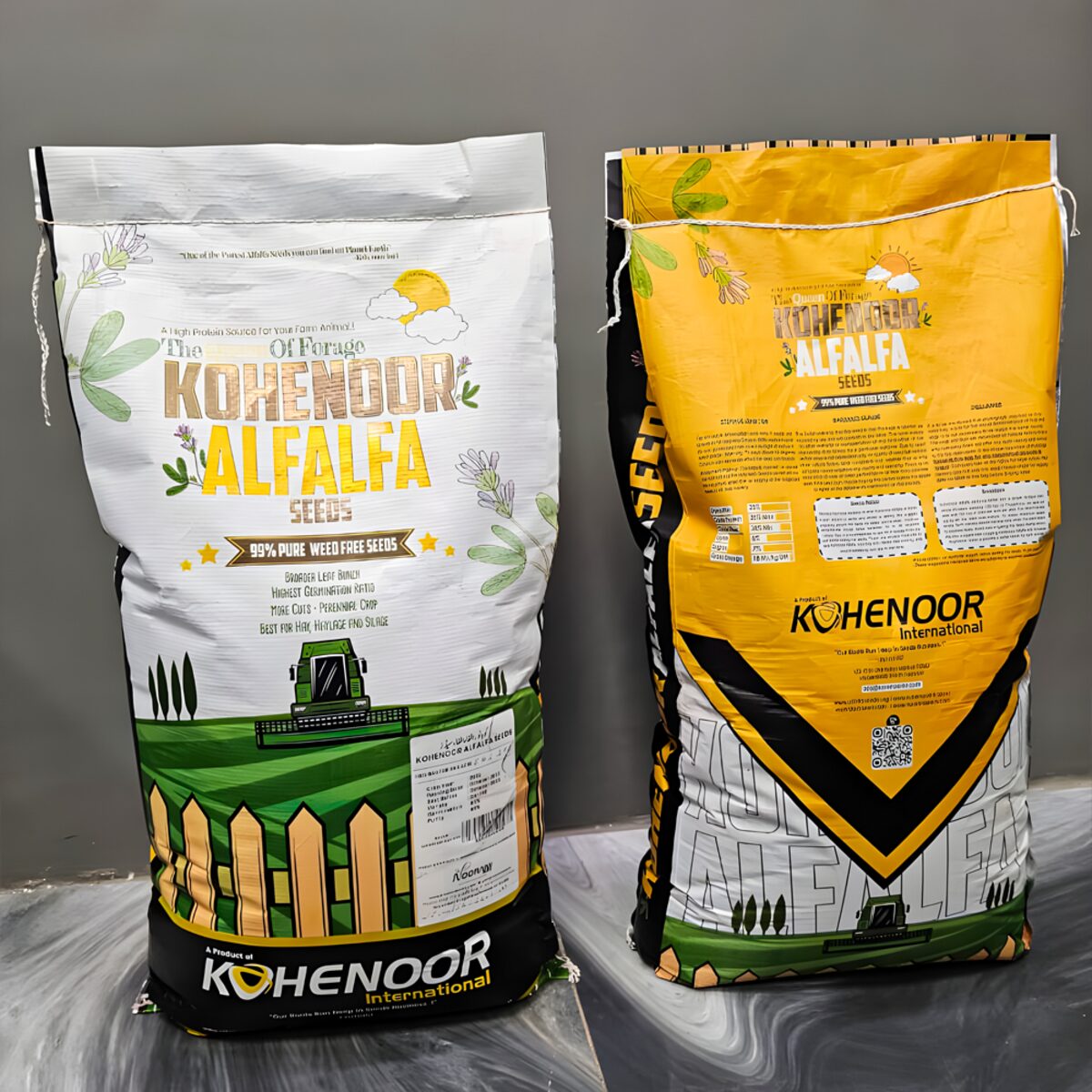
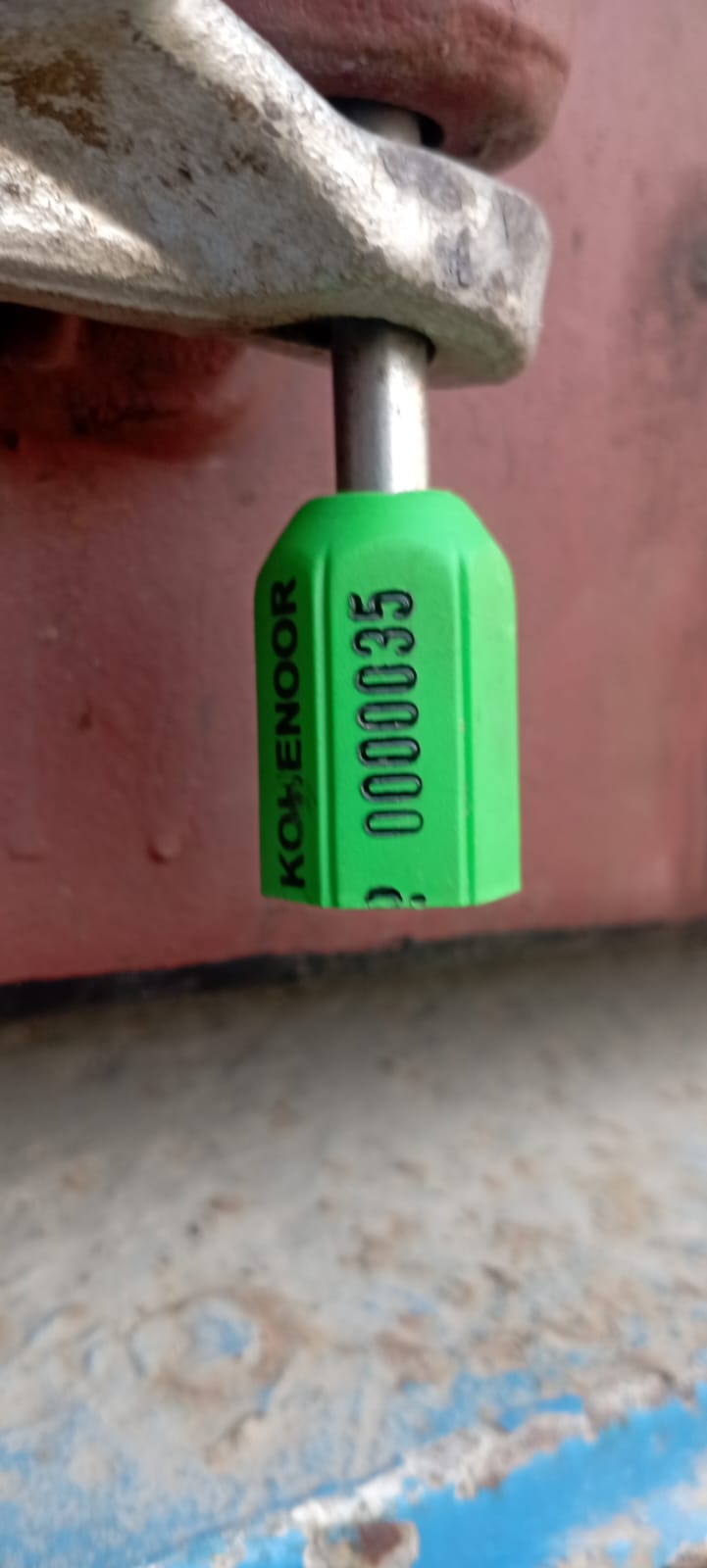
Sealed Kohenoor alfalfa seed bag tag linking the bag to its ISTA Orange Certificate and lot number

Every bag carries a sealed lot tag traceable from field to bag to warehouse, so an inspector at the destination can match any bag in the container to the certificate in the file. For tenders we provide draft document sets in advance so the project's compliance team can confirm that what will arrive matches what the tender requires.

Kohenoor seed has shipped to more than 70 countries across the Gulf, Africa, Asia, Europe, the Americas and Australia, and the export desk knows which authorities ask for what. If the project has a customs broker, we work directly with them; if it does not yet, we can describe what a competent one in the destination country will need from us.

Container logistics FOB Karachi: moving hundreds of tonnes on schedule

Karachi is one of the busiest ports on the Arabian Sea with frequent sailings to Jebel Ali, Dammam, Sohar, Jeddah, Port Sudan, Djibouti, Mombasa and onward connections to Europe, the Americas and Australia, and overland and rail links toward Central Asia. For a project in the Gulf or East Africa, the transit from Karachi is short, which is a practical advantage when a sowing window is fixed.

Our standard terms are FOB Karachi, with CFR or CIF to the destination port quoted on request. Seed is packed in export bags with sealed lot tags, palletised or stacked to the shipping line's requirements, and loaded into containers at Karachi under our supervision. For project volumes we schedule multiple containers across the sowing calendar rather than one large consignment, so that each phase's seed arrives a few weeks before it is needed and the project's warehouse is never holding more than it must.

Containers of Kohenoor forage seed being loaded at Karachi port for a large project consignment

Our Dubai office is the natural coordination point for Gulf and African projects, close to Jebel Ali and a short flight from every GCC capital; our Australian office keeps us connected to the standards and research of the Australian seed industry; and the Hyderabad head office is where the seed is cleaned, tested and bagged. One export desk, reachable on WhatsApp at +92 310 4929292 and at export@kohenoorint.com in English, Arabic, Spanish or French, coordinates all three.

Agronomy support from the export desk and the research plots

A seed company that disappears after the bill of lading is of no use to a project in its second season. The people at our export desk are not only salespeople. They work alongside the agronomists who run our research plots, and when a project sends photographs, soil tests or laboratory results, those are the people who read them.

What that support looks like in practice:

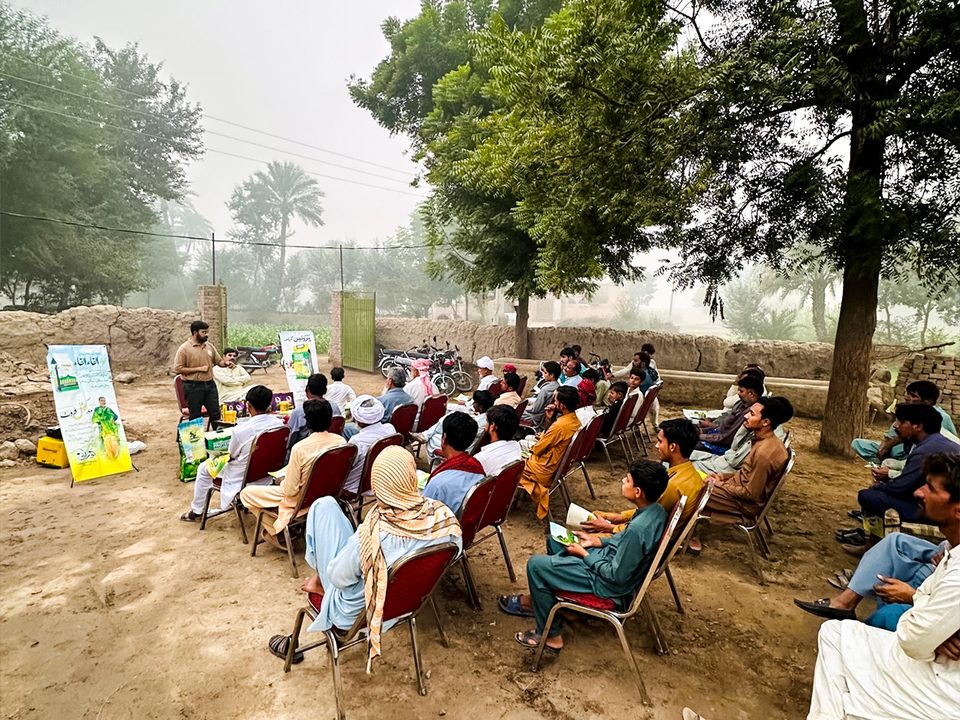
Kohenoor agronomists meeting a project's farm management team to review stands and plan the next phase

Our research plots in Sindh test alfalfa, grasses and clovers under heat and saline irrigation that resemble the conditions of most large projects more closely than any temperate research station could. Project agronomists are welcome to visit them, and to see the Sortex cleaning lines and the seed-testing laboratory that stand behind every certificate. For Gulf projects, a meeting at our Dubai office with the agronomy and procurement teams together is usually the most productive way to start.

We do not pretend to replace the project's own agronomy staff or the local extension service. What we add is three generations of experience with these specific varieties in these specific environments, and a willingness to say plainly when something is going wrong and what we would do about it.

Trial plots before the pivots: how to de-risk the variety decision

The cheapest insurance a large project can buy is a season of trial plots. Before committing thousands of hectares and millions in irrigation to a variety, the agronomy team sows a few hectares of each candidate under the project's own water, soil and management, and lets the plants argue the case.

We supply 1 MT trial lots of alfalfa for exactly this, and smaller quantities of the companion species in the same shipment. A well-designed trial has a few features:

TAIZTAR alfalfa plant in a trial block, assessed for vigour, bud stage and stand density

A trial season answers most of the questions a procurement committee will ask, and it answers them with the project's own data rather than a supplier's brochure. It also gives the agronomy team a year of experience with the species, the cutting intervals and the machinery before the full phase is sown. Projects that skip this step and sow large areas on the strength of a catalogue are the ones that end up asking in year two why the stand is thinning.

Our own plots have been running this kind of comparison since 1957, under the heat of Sindh and the salt of its groundwater. That is how TAIZTAR came to replace CUF-101 in our range. We would rather a project saw the same result in its own field before it ordered three hundred tonnes.

Risk management: dodder, salinity and water

Three risks account for most forage project failures. Each can be managed, and each is cheaper to manage before sowing than after.

Dodder. Cuscuta is a parasitic vine whose seed is nearly identical in size and weight to alfalfa and clover seed, which is why it travels in poorly cleaned lots and why it is a quarantine weed in many importing countries. On a large scheme a dodder introduction is catastrophic: it spreads through irrigation water and machinery from pivot to pivot, it cannot be controlled economically inside a legume stand, and it persists in soil for years. The only reliable defence is seed that does not contain it. Every Kohenoor alfalfa lot is Sortex optical-cleaned, ISTA-tested by lot and guaranteed 0 percent dodder in writing, and our Safa berseem is supplied dodder-free. A project that specifies this in its tender has removed its largest biological risk at the seed stage.

Salinity. Groundwater and recycled water in most project regions carry salt, and pivots on sandy soil accumulate it. The management response is variety choice first (TAIZTAR for alfalfa, Rhodes grass and Super Napier for the grasses, sesbania for soil rehabilitation), then leaching irrigation, drainage and soil monitoring. A project that knows its water analysis before it chooses varieties has done the most important thing.

Water. Alfalfa is a thirsty crop, and a scheme's water budget must be honest about how many hectares it can irrigate through the hottest months. Where water is the binding constraint, the land plan shifts toward Rhodes grass, Super Napier, sorghum and pearl millet, all of which tolerate drought better, and alfalfa is concentrated on the best-watered pivots. Phasing lets the project test its real water delivery before committing the full area.

RiskManaged at seed stage byManaged in the field by
Dodder and weed seedSortex cleaning, ISTA certificate per lot, written 0% dodder guaranteeField hygiene, machinery cleaning, early scouting
SalinityTAIZTAR, Rhodes grass, Super Napier, sesbaniaLeaching, drainage, soil monitoring
Water shortfallSpecies mix weighted to drought-tolerant cropsPhased area, pivot scheduling, honest water budget
Documentation delayDraft document set reviewed before loadingEarly import permit, experienced broker
Variety failureTrial lots and demonstration blocksReplicated trials under project water before scaling
Healthy, uniform alfalfa stand established from clean, dodder-free Kohenoor seed

None of these risks is a reason not to build a forage project. They are the reasons to build it with a supplier who has seen them before and has designed its seed, its documentation and its support around them.

Who we work with on large schemes

The projects that come to Kohenoor for forage seed at scale fall into a few recognisable groups, and each has its own procurement culture that we have learned to work within.

Kohenoor export containers at Karachi port bound for a large forage project overseas

In every case what we bring is the same: research varieties selected on our own plots for heat and salinity, Sortex-cleaned seed, ISTA-tested lots with a written dodder guarantee, IPPC phytosanitary documentation, FOB Karachi logistics scheduled to the project's phases, and an export desk that has done this before and answers within 24 hours. We never publish prices; a project quotation is built from the land plan, the phasing and the destination, and it arrives with the lot certificates attached.

If you are planning or procuring for a forage scheme of 500 hectares or more, send the export desk your location, water analysis, target area and phasing by WhatsApp at +92 310 4929292 or email export@kohenoorint.com. We will reply with a variety recommendation, seed volumes by phase, a draft document set and a container schedule, and we will propose a trial season first. The companion pages on this site cover the dairy programme, horse farms, camel, sheep and goat operations and a season-by-season planting calendar for each climate.

See the seed, the lab and the loading

Forage programmes for every operation

Forage seeds for dairy farms
Forage seeds for dairy farmsAlfalfa, Rhodes grass, ryegrass, sorghum, clover and Super Napier seed for high-yield herds — one programme, one supplier.
Read more →
Forage seeds for horse farms
Forage seeds for horse farmsClean lucerne, Rhodes grass and ryegrass seed for studs, racing yards and endurance stables that grow their own hay.
Read more →
Year-round forage programme
Year-round forage programmeSeason-by-season planting calendars for hot-arid, Mediterranean and temperate farms so the forage gap never opens.
Read more →
Forage seeds for camel, sheep & goat farms
Forage seeds for camel, sheep & goat farmsRhodes grass, alfalfa, sesbania, Baymisaal and sorghum seed for camel dairies, racing camels and small-ruminant operations.
Read more →

Talk to a real person — quote within 24 hours

Send your product, quantity and destination port. The export desk replies personally with a quotation, current lot certificates and a shipping schedule — no bots, no obligation.

export@kohenoorint.com

Frequently asked questions

How much alfalfa seed does a 1,000 hectare scheme need?

At the standard rate of 25–30 kg per hectare, 1,000 hectares needs 25 to 30 MT of alfalfa seed, plus a margin of around ten percent for re-sowing and trial blocks. A 5,000 hectare scheme phased over five years therefore needs roughly 25–30 MT a year, which we ship ahead of each sowing window.

Which alfalfa variety suits a Gulf or African centre-pivot project?

TAIZTAR, our fall-dormancy 10, non-dormant alfalfa bred on modern genetics for heat and salinity tolerance, developed as the superior replacement for CUF-101. It gives 7 or more cuts a year under irrigation with 22–24% crude protein and holds its stand under saline groundwater.

What documents accompany a project consignment?

ISTA Orange Certificate for every lot, IPPC phytosanitary certificate to the destination country's conditions, certificate of origin, commercial invoice and packing list with alfalfa under HS 1209.21, and the bill of lading FOB Karachi. ISO 9001, HACCP and Australian Seed Federation certificates are supplied for tender files.

Do you supply cover-crop and green-manure seed as well as fodder seed?

Yes. Sesbania (janter) is the nitrogen-fixing legume in the Kohenoor range that works as both a cover crop and a green manure: sown between main crops or on saline and exhausted land, it is ploughed in at six to eight weeks to return nitrogen and organic matter before alfalfa, panicum or Rhodes grass is sown. It doubles as a soft fodder for sheep and goats. Panicum (Guinea grass) and brachiaria complete the tropical pasture base. All ship in the same container with the same ISTA and phytosanitary documents as the rest of the order.

Can Kohenoor commit volumes across a multi-year phasing plan?

Yes. We plan seed volumes phase by phase, hold stock against the agreed schedule and ship each phase's containers a few weeks before its sowing window, keeping varieties and quality constant across the whole scheme.

Should a project run trial plots first?

We strongly recommend it. 1 MT trial lots of alfalfa and smaller quantities of companion species allow replicated blocks under the project's own water, with a control of the previous variety. A trial season answers the procurement committee's questions with the project's own data.

How is dodder risk eliminated on a large scheme?

At the seed stage. Every Kohenoor alfalfa lot is Sortex optical-cleaned, ISTA-tested and guaranteed 0% dodder in writing; Safa berseem is supplied dodder-free. Specifying this in the tender removes the project's largest biological risk before sowing.

What are the payment and delivery terms?

FOB Karachi as standard, CFR or CIF on request. A first order is normally 100% telegraphic transfer against the bill of lading copy or an irrevocable letter of credit at sight, with easier terms for repeat buyers. Lead time and sailing schedule are confirmed with each quotation.

Does Kohenoor provide agronomy support after delivery?

Yes. The export desk works with the agronomists who run our research plots and supports the project from water and soil review through establishment, cutting schedules, forage analysis and stand-health assessment, by WhatsApp, email, at our Dubai office or on site.

Related pages

WA