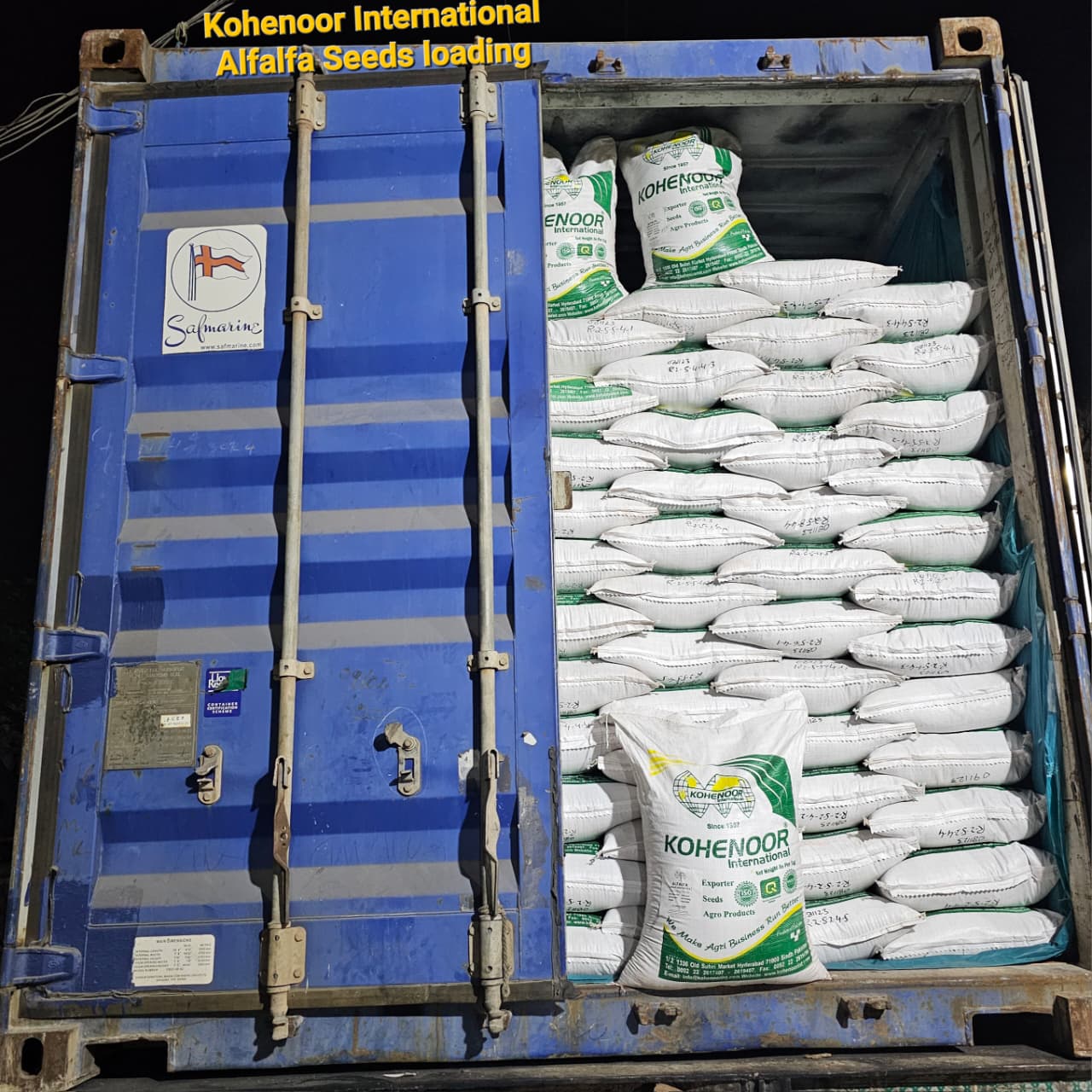
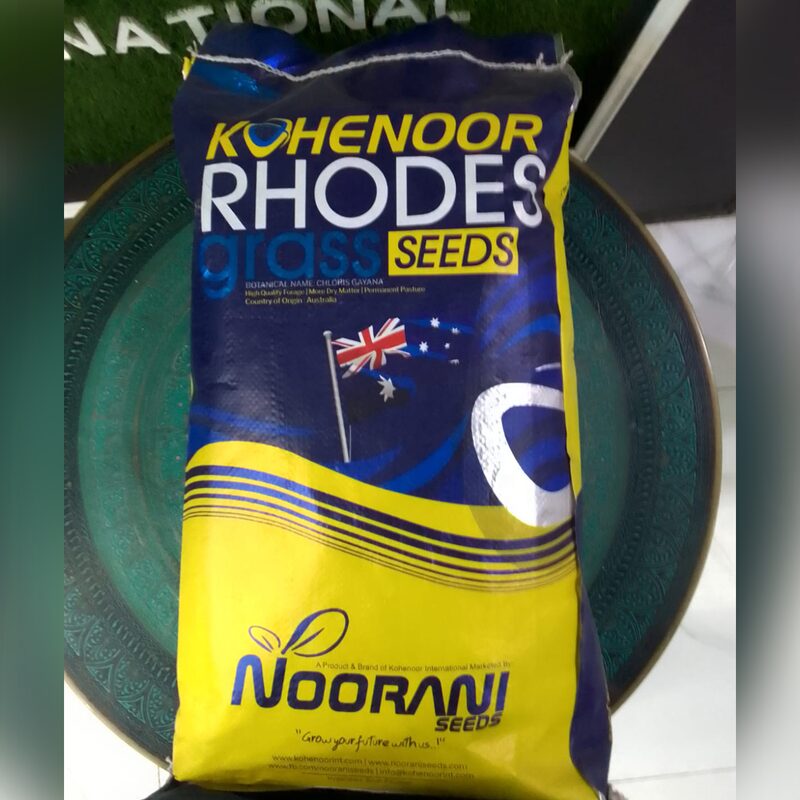
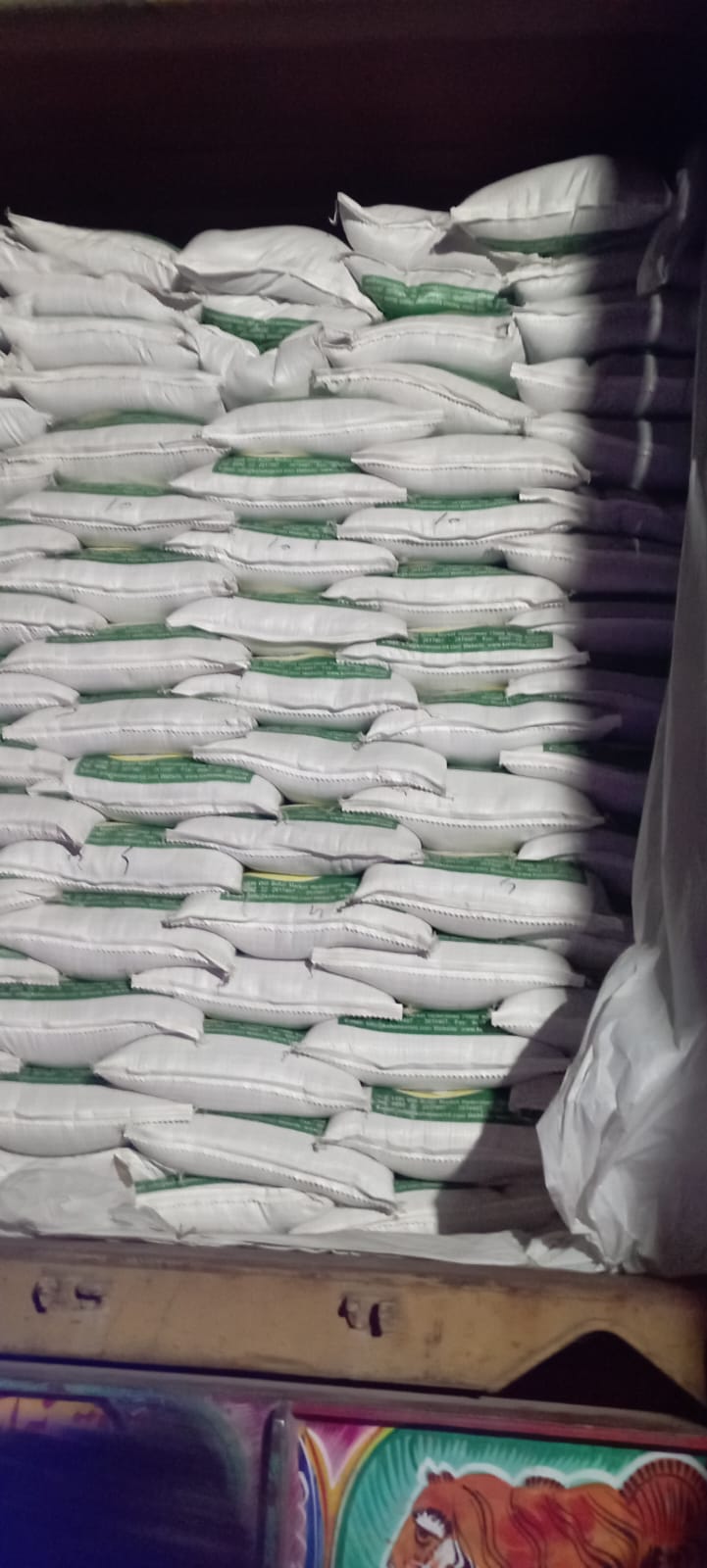
Alfalfa for hot climates · fall dormancy 10 · since 1957

Heat resistant alfalfa seed: TAIZTAR FD10 non-dormant alfalfa for hot, dry and saline farms

Fall dormancy 10 · heat and salinity tolerant · modern genetics replacing CUF-101 · 0% dodder in writing · ≥98% purity · ≥85% germination · MOQ 5 MT (1 MT trial)

Alfalfa is the highest-protein forage a farm in a hot climate can grow, but only if the variety was bred to keep growing when the thermometer passes 40 °C, the irrigation water carries salt and the soil never sees a frost. Kohenoor's TAIZTAR is a fall dormancy 10 non-dormant alfalfa bred on modern genetics for exactly those conditions — the heat tolerant, drought tolerant, salt tolerant alfalfa seed that replaces the late-1970s CUF-101 still planted across the Gulf, the Middle East, the Sahel and other hot regions.

Get a quote in 24h
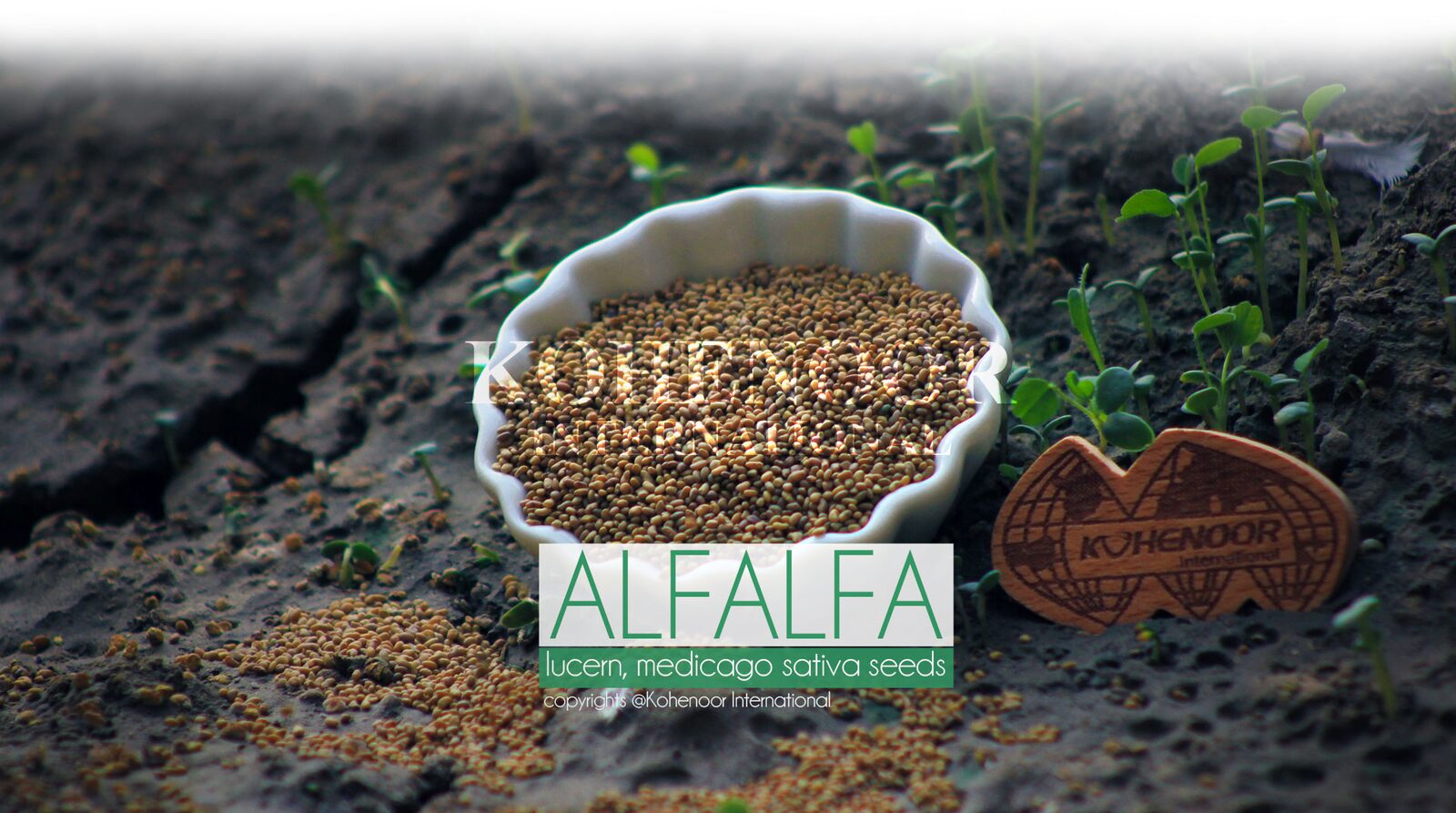
Irrigated alfalfa field under a hot clear sky, the environment TAIZTAR non-dormant alfalfa is bred for
In short: Heat resistant alfalfa is a non-dormant variety — fall dormancy class 9 to 11 — that keeps growing as days shorten and through hot months, so it suits frost-free, hot and arid farms. Kohenoor's TAIZTAR is a fall dormancy 10 alfalfa with heat and salinity tolerance bred on modern genetics, the superior replacement for CUF-101, supplied at ≥98% purity, ≥85% germination and 0% dodder in writing; KN92 (FD9, cold-tolerant) suits frost-prone farms.
TAIZTAR FD10 non-dormantHeat & salinity tolerantReplaces CUF-1010% dodder in writing≥98% purity · ≥85% germinationISTA-tested per lotSince 1957 · 70+ countriesReply within 24 h
VarietyTAIZTAR (Medicago sativa)
Fall dormancyFD 10 — non-dormant
Crude protein22–24%
Purity / germination≥98% / ≥85% (ISTA, per lot)
Dodder0%, guaranteed in writing
Seed rate25–30 kg/ha (10–12 kg/acre)

What is heat resistant alfalfa, and why does ordinary alfalfa fail in hot climates?

Alfalfa (Medicago sativa, called lucerne in much of the world) is a temperate legume by origin, and most of the varieties sold internationally were bred for farms that have a real winter. Those varieties carry a built-in instruction: when the days shorten and nights cool in autumn, stop putting energy into leaf and stem, store it in the crown and root, and wait for spring. On a farm in Wisconsin or northern France that instruction is what keeps the plant alive through frozen ground. On a farm in the Gulf, the Nile valley, the Sahel or the irrigated plains of northern Australia it is a liability: the plant sits half-asleep through the mildest, most productive months of the year, then meets a summer it was never bred for.

A heat resistant alfalfa — more accurately a heat tolerant, non-dormant alfalfa — is a variety whose breeding has removed most of that autumn shut-down and selected, generation after generation, for plants that keep photosynthesising, regrowing after each cut and holding a dense stand when daytime temperatures run between 38 °C and 48 °C for weeks at a time. Heat itself is only part of the challenge. Hot-climate farms almost always irrigate, so the variety must also make efficient use of water and tolerate the salts that irrigation water and arid soils accumulate. The combination that a buyer in a hot country is really looking for is therefore three traits in one plant: non-dormancy, heat tolerance and salinity tolerance. TAIZTAR was bred for that combination.

The simplest way to know whether an alfalfa variety will work in a hot climate is its fall dormancy rating, explained in the next section. A variety rated FD 3 or FD 4 will not die on a hot farm in its first season, but it will underperform badly, thin out quickly and often fail by the second or third year. A variety rated FD 9 to FD 11 is built for the job. The difference in annual yield between the two on the same irrigated hot-climate field is typically very large, which is why dormancy class — not seed colour, bag weight or brand name — should be the first question a farmer in a hot country asks.

Alfalfa fall dormancy classes 1 to 11 explained

Fall dormancy (FD) is the standard scale alfalfa breeders use to describe how strongly a variety slows its growth in autumn. It is measured by cutting plots in late summer and recording how much regrowth each variety produces as days shorten; varieties that regrow little are rated low (dormant), varieties that keep growing are rated high (non-dormant). The scale runs from 1 to 11, and each class is defined against a set of named check varieties, so an FD 10 from one breeder means roughly the same thing as an FD 10 from another. Class descriptions vary a little between seed associations, but the general picture as of 2026 is this.

Fall dormancy classDescriptionTypical climate fit
FD 1–2Very dormantNorthern continental farms with long, hard winters and deep frost
FD 3–4DormantCold temperate regions; the classic hay-belt varieties
FD 5–6Moderately dormantMild temperate regions with some frost
FD 7–8Semi-dormant to moderately non-dormantWarm temperate and Mediterranean farms; light winters
FD 9Non-dormant, cold-tolerantSubtropical farms with occasional frost — Kohenoor KN92
FD 10–11Very non-dormantHot arid and tropical farms with little or no frost — Kohenoor TAIZTAR (FD 10)

Two points about the scale matter to a buyer. First, fall dormancy and winter hardiness are related but not identical: a non-dormant variety is almost always less winter-hardy, because the same genetics that keep it growing in November stop it from protecting its crown against freezing. That is the trade-off that makes an FD 10 the wrong choice for a farm at altitude or in a continental climate, and the right one for a farm that never freezes. Second, fall dormancy says nothing by itself about heat tolerance, salinity tolerance, pest resistance or seed quality. Two FD 10 varieties can behave very differently in a Gulf summer, which is where the age of the genetics comes in — the subject of the TAIZTAR and CUF-101 comparison below.

If you already know the alfalfa fall dormancy class that performs on neighbouring farms, tell the export desk and we will confirm which of our two varieties matches it. If you do not, send us your location, the coldest winter night you normally see and whether the farm is irrigated, and we will recommend TAIZTAR or KN92 and explain why.

Why non-dormant alfalfa keeps growing through hot months

A non-dormant alfalfa does three things that a dormant variety cannot do on a hot farm. It keeps producing when days shorten, it regrows faster after cutting, and it uses the mild winter months — the best growing weather of the year in the Gulf, Egypt, Iraq or Sudan — to full advantage instead of resting through them. The practical result is more cuts per year and a more even supply of green fodder or hay across the calendar.

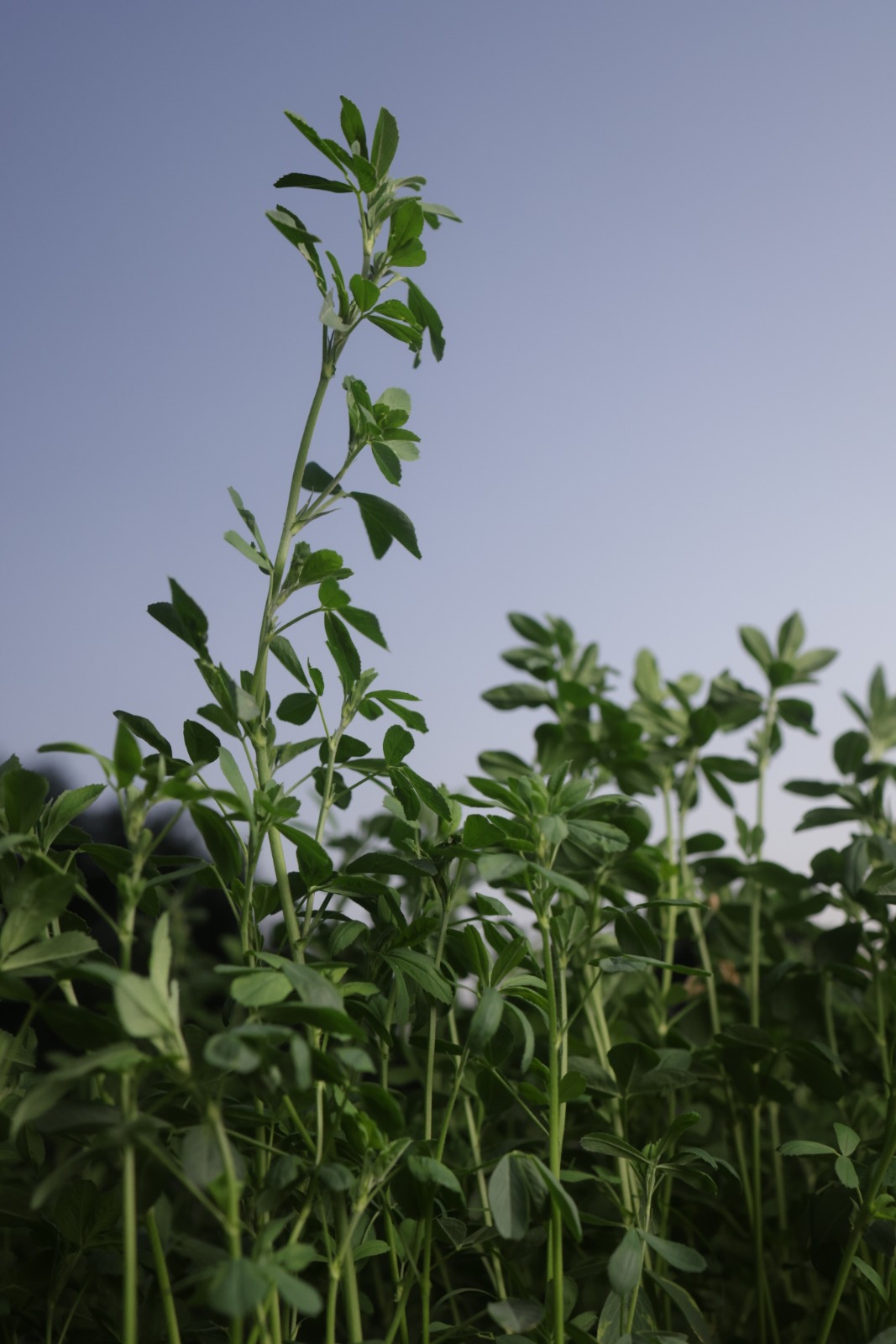
Close view of a vigorous alfalfa plant with dense leaf, the regrowth habit a non-dormant FD10 variety shows after cutting in warm weather

Through the hottest weeks, every alfalfa slows down; no variety grows at full speed at 47 °C. The difference is how it slows. Dormant varieties under extreme heat tend to go into a stress shutdown that resembles autumn dormancy: growth stops, leaves drop, crowns weaken and weeds and grasses move into the gaps. A heat tolerant non-dormant variety keeps a lower but steady rate of growth, retains more leaf, and resumes full production as soon as night temperatures ease. Over a season, that steady behaviour is what delivers the 7 or more cuts a year that our growers plan around — and on frost-free, fully irrigated farms, cutting schedules of 9 to 12 harvests a year are common with non-dormant material, subject to local conditions.

The deep taproot of alfalfa — often 2 to 3 metres and sometimes much deeper in well-drained soils — is the other half of the heat story. A well-established non-dormant stand draws water and nutrients from depth that annual forages cannot reach, which is why alfalfa recovers from a missed irrigation or a heat spike better than most grasses. That recovery is a property of the established crown and root system, so establishment is the critical period: a stand sown into cooler autumn weather, kept moist through emergence and allowed to root before its first summer will handle heat far better than one sown late and rushed.

For a farm that needs green fodder every week of the year for a dairy herd, camel dairy or feedlot, a non-dormant alfalfa is the backbone around which the rest of the year-round forage programme is built. Rhodes grass, sorghum and Super Napier fill the hottest weeks and reduce the water bill; alfalfa supplies the protein.

TAIZTAR: the modern replacement for CUF-101

If you grow alfalfa in a hot country, the chances are high that the variety on your farm or your neighbour's is CUF-101 or seed sold under that name. CUF-101 was released in the late 1970s in California as a non-dormant variety for the irrigated low deserts of the American south-west, and it became the reference non-dormant alfalfa of the world: it was the first non-dormant variety most Gulf and Middle Eastern farms ever planted, it is still a check variety on the fall dormancy scale, and seed bearing its name is still traded in large volumes nearly fifty years later.

That longevity is a tribute to what CUF-101 did well, but it also means that a great many hot-climate farms are planting genetics that predate almost every advance alfalfa breeding has made since. Over the past four decades breeders have selected hard for resistance to the insects and diseases that attack alfalfa in warm regions, for tolerance of saline soils and irrigation water, for faster and more uniform regrowth after cutting, for stand persistence under frequent harvesting, and for the leaf-to-stem ratio that decides forage quality. A variety that stopped being improved in 1978 cannot carry any of those gains. In addition, a variety that has been multiplied by many hands over many decades is not always the variety it was; much of the "CUF-101" sold in some markets has drifted a long way from the original.

TAIZTAR is Kohenoor's answer: a fall dormancy 10 non-dormant alfalfa bred on modern genetics, selected for heat and salinity tolerance, and developed by a company that has grown, tested and exported forage seed since 1957, with its sister research company Noorani Seeds running the breeding and trial programme. It is positioned plainly as the superior replacement for CUF-101 on farms that have been growing the older variety — same non-dormant habit, same fit for hot irrigated systems, but with the genetic progress of the intervening decades built in. Crude protein in well-managed TAIZTAR forage runs 22 to 24% with crude fibre up to 28%, and the variety makes excellent hay and silage as well as green chop.

Because it is a Kohenoor variety, TAIZTAR seed comes from one company that controls the field, the cleaning line, the laboratory and the export desk. Every lot is ISTA-tested, meets at least 98% purity and 85% germination, and is guaranteed 0% dodder in writing. For the full variety profile see the TAIZTAR alfalfa seed page; for a trial, a 1 MT lot is accepted against the normal 5 MT minimum so that you can grow it beside your current variety for a season before committing a whole project to it.

Drought tolerant alfalfa and water use: irrigating alfalfa in hot climates

"Drought tolerant alfalfa" and "dryland alfalfa" are terms worth handling carefully. Alfalfa is drought tolerant in the sense that an established stand, with its deep root system, survives dry periods that would kill shallow-rooted forages and recovers when water returns. It is not a low-water crop. In hot, arid environments the crop's annual water requirement is high — published figures for alfalfa in such regions typically fall somewhere between about 1,500 and 2,500 mm of water per year, several times what a temperate stand uses — and the only farms that grow it without irrigation are those with reliable rainfall or a high water table. A genuine dryland alfalfa stand in a semi-arid zone produces far fewer cuts and is managed for persistence rather than yield. Confirm the crop-water figure for your district with your extension office or irrigation adviser; the ranges here are general.

Irrigated alfalfa field in full growth, the kind of stand TAIZTAR heat tolerant alfalfa is grown in across hot arid regions

What a heat tolerant, non-dormant variety changes is the return on every cubic metre of water. A variety that keeps growing through the warm months converts irrigation into forage at a higher rate than one that sits in stress shutdown while still being watered, and a variety with a strong root system takes up more of what is applied and loses less to evaporation from a thin, open stand. The practical guidance below is general, as of 2026, and should be adapted with a local agronomist.

Farms planning a large block — several hundred to several thousand hectares — should read our large-scale forage project page, which covers seed volume planning, phased establishment and the water and documentation questions that come with scale.

Salt tolerant alfalfa: growing on saline soils and with saline water

Salinity is the quiet killer of alfalfa in hot countries. Irrigation water in the Gulf, Iraq, Egypt's reclaimed lands, the Sahel's groundwater and many Central Asian and Latin American irrigation districts carries dissolved salts, and in a hot climate the water evaporates and the salt stays. Alfalfa as a species is generally classed as moderately sensitive to salinity: yield typically begins to decline when the saturated-soil extract conductivity rises above roughly 2 dS/m, and the decline steepens with each unit above that. Germination and the seedling stage are the most sensitive period of all; an established stand tolerates considerably more than a seedling does.

A salt tolerant alfalfa variety shifts those limits in the farmer's favour. TAIZTAR was selected for salinity tolerance alongside heat tolerance, which in practice means better germination and seedling survival in slightly saline seedbeds, better stand persistence where salt accumulates over the years, and less of the thinning that opens a stand to weeds. It should not be mistaken for a halophyte: no alfalfa thrives in strongly saline soil, and the variety works within the agronomic limits of the species, extending them rather than abolishing them. Where salinity is severe, Rhodes grass, Sesbania or Baymisaal Super Napier from the same Kohenoor range may be the better crop for that block while alfalfa goes on the better land.

Management does the rest. The practices that experienced saline-site growers use, in general terms, are these:

Tell the export desk your water and soil conductivity readings when you enquire. We will not promise a result on a site we have not seen, but we can tell you honestly whether TAIZTAR, a mixed programme or a different crop is the right starting point.

Which climates TAIZTAR is bred for: Gulf, Middle East, Sahel, Central Asia, northern Australia, Latin American lowlands

The best alfalfa variety for desert farming is the one bred for your particular desert. TAIZTAR's home ground is the hot, irrigated, frost-free or nearly frost-free farm. The table below sets out where that fits as of 2026, with the regional notes buyers most often ask about; your local extension office or agronomist confirms the detail for your district.

RegionTypical conditionsKohenoor recommendation
Arabian Gulf — Saudi Arabia, UAE, Oman, Kuwait, Qatar, BahrainExtreme summer heat, no frost, pivot irrigation on sand, saline groundwaterTAIZTAR; autumn sowing; salinity management essential
Middle East and North Africa — Iraq, Egypt, Jordan, Libya, Algeria, MoroccoHot summers, mild winters, river or groundwater irrigation, variable salinityTAIZTAR on lowland farms; KN92 where upland or northern winters bring regular frost
Sahel and Horn of Africa — Sudan, Mauritania, Niger, Mali, Chad, Djibouti, SomaliaVery hot, long dry season, irrigation from rivers or boreholesTAIZTAR; sow at the start of the cooler dry season; combine with Rhodes grass
Central Asia lowlands — southern Uzbekistan, Turkmenistan, Tajikistan valleys, southern KazakhstanVery hot, dry summers; winters range from mild to severeTAIZTAR only where winters are mild; KN92 for most of the region
Northern Australia — Queensland, Northern Territory, northern Western Australia irrigation areasTropical and subtropical heat, wet and dry seasons, irrigatedTAIZTAR on well-drained irrigated land
Latin American lowlands — coastal Peru, northern Mexico, north-east Brazil, Bolivian and Paraguayan lowlandsHot, often dry, irrigated or high water table; some saline coastal soilsTAIZTAR; KN92 at altitude or further south
Pakistan — Sindh and southern PunjabHot summers, mild winters, canal irrigation, saline patchesTAIZTAR; this is where the variety was developed and tested

Kohenoor's offices in Pakistan, Dubai and Australia support buyers across these regions, and the company has supplied 70 or more countries from its base in Hyderabad, Sindh — itself one of the hottest alfalfa-growing environments on earth, with summer temperatures regularly above 45 °C and irrigation from the Indus canal system. A variety that was bred, trialled and multiplied in that climate has been tested by the heat before it reaches your farm. Country-by-country guidance, including import documents and sowing windows, is on our country pages.

Stand life, cutting schedule and yield expectations for alfalfa in hot climates

Farmers moving from a temperate reference point are often surprised by two things about alfalfa in a hot climate: how many cuts it gives, and how much shorter the stand life is. Both follow from the same biology. A non-dormant stand that is cut every 25 to 35 days through most of the year is being asked to regrow from its crown reserves twelve times instead of four, under heat, and under irrigation water that is slowly adding salt. It produces a great deal in those years, but it ages faster.

Cutting schedule. With TAIZTAR under full irrigation in a frost-free climate, growers plan for 7 or more cuts a year as a baseline and many schedule 9 to 12. Intervals are typically 25 to 30 days in the warm months and 35 to 45 days in winter where growth slows. Cut at early bud to one-tenth bloom for the best balance of yield and protein; leaving a slightly taller stubble of 7 to 10 cm in extreme heat shades the crown and speeds regrowth. Allow one cut a year to reach a fuller bloom so that root reserves rebuild.

Yield. Irrigated non-dormant alfalfa on well-managed hot-climate farms is commonly reported in the range of 20 to 30 tonnes of dry matter per hectare per year, with the best Gulf and desert farms exceeding that and newly established or saline sites producing less. These are general figures as of 2026, not a guarantee; the yield on your farm depends on water, soil, fertility, cutting management and stand age, and your extension office will have local trial data.

Stand life. In hot irrigated regions a productive stand of non-dormant alfalfa typically lasts 3 to 5 years, with 3 to 4 years common on sandy saline soils under intensive cutting and longer on better land with careful management. Stands decline through crown loss to heat and salt, wheel traffic from frequent harvests, and weed and grass invasion of thinned areas. Plan on a replanting cycle from the outset so that the farm's forage supply does not depend on one ageing block; staggered blocks of different ages are the usual answer on larger farms, and are covered in the large-scale forage project guide.

Quality. Alfalfa grown in hot, dry conditions and cut on schedule produces hay with crude protein in the 22 to 24% range that TAIZTAR is known for, and the dry air makes field-curing fast and clean. The leaf is where the protein is; harvest and handling that keep leaf on stem — cutting in the cool of the morning, raking at the right moisture, baling before the leaf shatters — matter as much as the variety in deciding what reaches the animal.

TAIZTAR or KN92: when to choose the FD9 cold-tolerant alfalfa instead

Kohenoor supplies two alfalfa varieties for export, and choosing between them is mostly a question about your winter. TAIZTAR is fall dormancy 10, non-dormant, bred for heat and salinity: the variety for farms that rarely or never see frost. KN92 is fall dormancy 9, still non-dormant enough to grow strongly through warm weather, but cold-tolerant: the variety for farms where winter brings regular frosts, where the farm sits at altitude, or where a single severe cold spell every few years would damage an FD 10 stand beyond recovery.

Choose TAIZTAR (FD 10) when:

Choose KN92 (FD 9) when:

Both varieties are supplied to the same specification — ≥98% purity, ≥85% germination, 0% dodder in writing, crude protein 22 to 24%, 25 to 30 kg/ha seed rate, HS 1209.21 — and many larger farms with varied land grow both: TAIZTAR on the hottest, lowest blocks and KN92 where cold air settles. If you are unsure, tell us the coldest night you have recorded in the past five years and we will tell you which variety we would plant.

Dodder-free seed, lot documents and how to order TAIZTAR heat tolerant alfalfa seed

Heat tolerance means nothing if the seed carries dodder. Field dodder (Cuscuta) is a parasitic vine whose seed is close to alfalfa seed in size and shape, and it is the most common and most damaging contaminant of alfalfa seed traded internationally. One infested bag can establish a parasite that spreads outward in rings, kills the alfalfa it attaches to, and persists in the soil for many seasons. Hot irrigated farms are where dodder does its worst, because the parasite enjoys the same warmth and water the crop does. Many importing countries list dodder as a quarantine weed, and a lot found carrying it at the port may be rejected or destroyed.
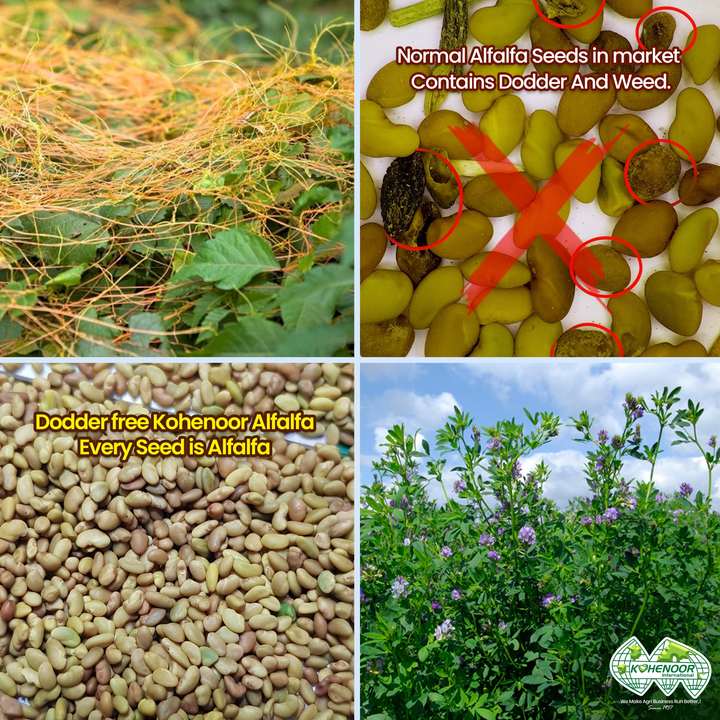
Four-panel image of dodder, the parasitic weed Kohenoor alfalfa seed is cleaned to zero percent of, shown attacking an alfalfa stand

Kohenoor has guaranteed 0% dodder in writing for its export alfalfa for decades, because the Gulf markets demanded it long before most others did. The guarantee is backed by the cleaning line — air-screen cleaners, gravity tables and Sortex optical sorting in sequence — by ISTA testing of every lot, and by the dodder-free additional declaration on the IPPC phytosanitary certificate where your importing authority requires it. The full account is on the dodder-free alfalfa seeds page.

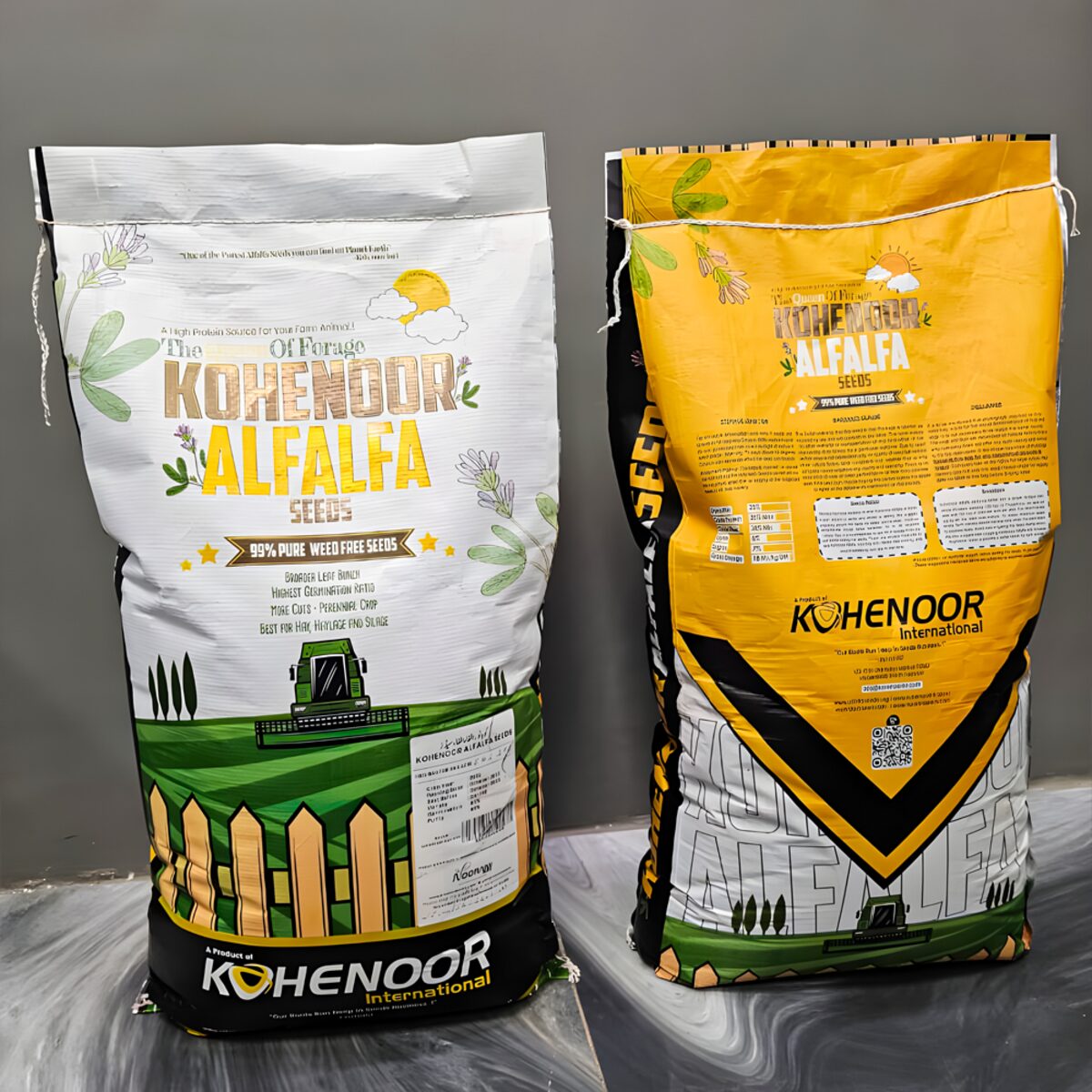
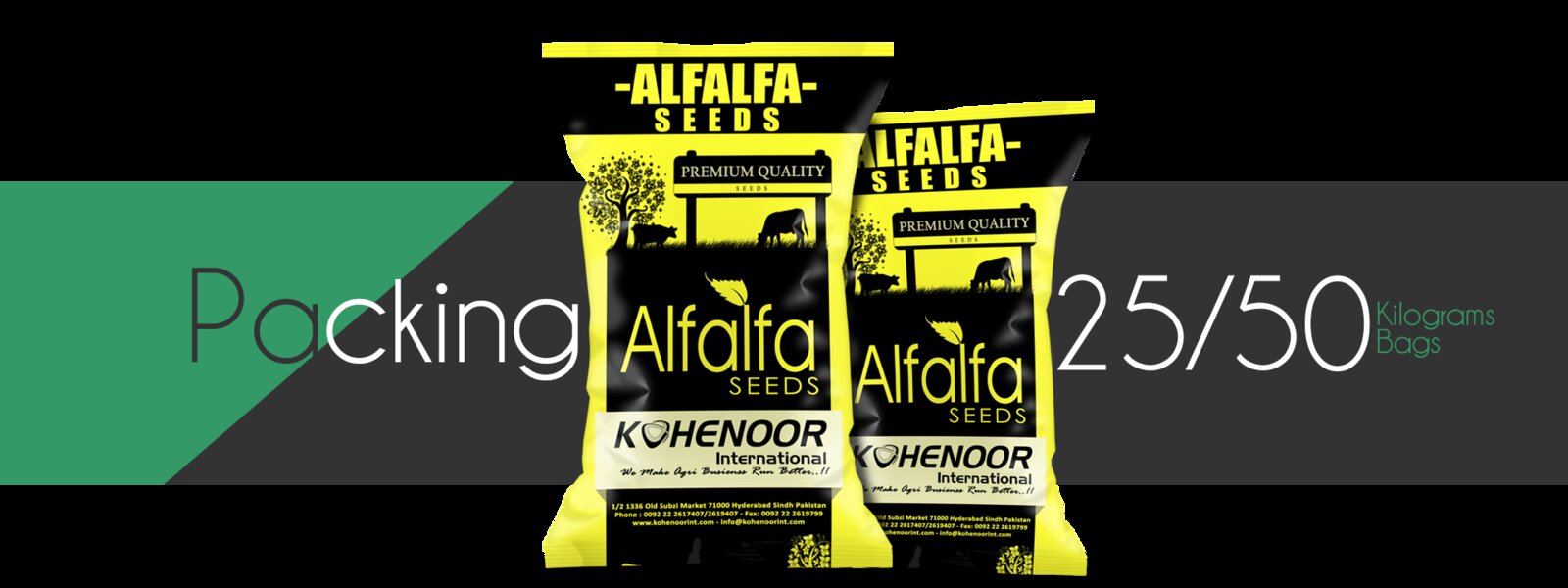
What travels with every TAIZTAR shipment: ISTA Orange Certificate for the lot (purity, germination, other seed, inert matter), Certificate of Analysis within 24 hours of request, IPPC phytosanitary certificate with required additional declarations, certificate of origin, commercial invoice, packing list and bill of lading. Kohenoor is ISO 9001 and HACCP certified and a member of the Australian Seed Federation. Seed ships in 25 kg poly-lined PP woven bags with sealed lot tags, traceable from field to bag to warehouse, under HS code 1209.21.

Minimum order and lead time. The standard minimum is 5 MT; a 1 MT trial lot is accepted for farms that want to grow TAIZTAR beside their current variety for a season. In-stock lots are ready for vessel loading FOB Karachi within 7 to 12 days of order confirmation, with CFR or CIF to your port on request. Payment is 100% TT against bill of lading copy or an irrevocable letter of credit at sight, with easier terms once a buying relationship is established. Alfalfa seed holds its germination for 18 to 24 months in cool, dry storage, so a season's requirement can be bought in one shipment and drawn down block by block.

How to order. Send your location, hectares to be sown, sowing month, destination port and any soil or water conductivity readings by WhatsApp to +92 310 4929292 or by email to export@kohenoorint.com. Within 24 hours the export desk replies in English, Arabic, Spanish or French with a variety recommendation — TAIZTAR or KN92 — a quotation for the lot and destination, the current lot certificates and a sailing schedule. Kohenoor supplies direct from the company to your port or your door: there is no dealer or agent in between, one contact handles the order from enquiry to delivery, and the same desk supplies the Rhodes grass, sorghum, Super Napier and other species that round out a hot-climate forage programme, including for camel, sheep and goat farms. No figures are published on this page; every quotation is given per lot and destination.
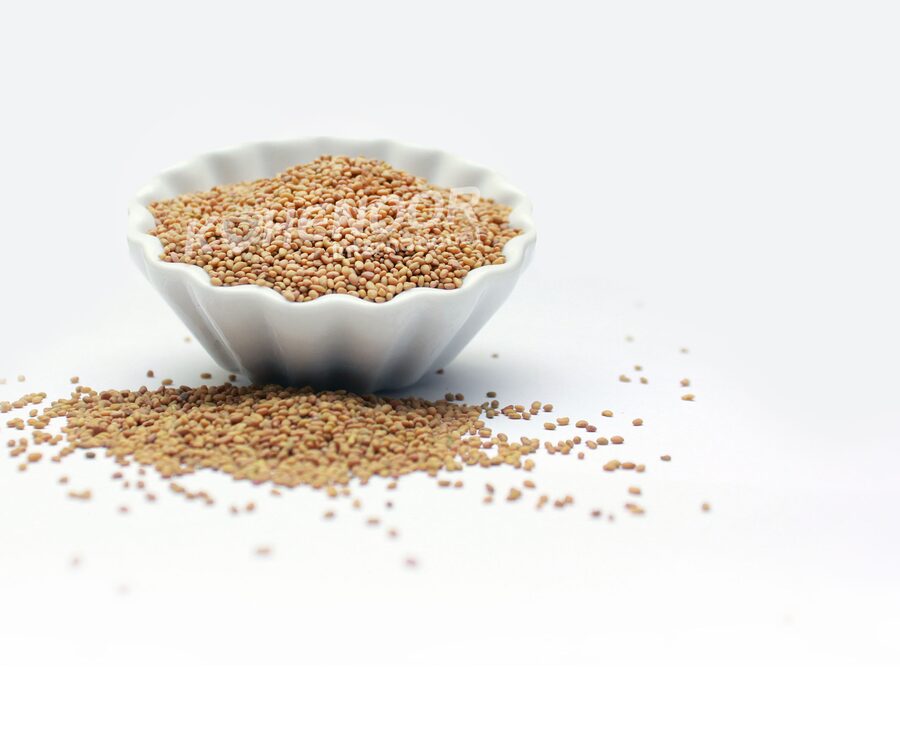
TAIZTAR alfalfa seed: the field, the seed and the loading

Build the rest of the hot-climate forage programme

TAIZTAR alfalfa seed
TAIZTAR alfalfa seedFull variety profile of the FD10 non-dormant, heat and salinity tolerant alfalfa that replaces CUF-101.
Read the variety page →
Forage seeds for camel, sheep and goat farms
Forage seeds for camel, sheep and goat farmsRhodes grass, alfalfa, Sesbania and Baymisaal seed for camel dairies and small-ruminant operations in hot regions.
Read more →
Large-scale forage projects
Large-scale forage projectsSeed volume planning, phased establishment and container logistics for 500 to 10,000 hectare schemes.
Read more →
Alfalfa seed by country
Alfalfa seed by countryImport documents, sowing windows and variety recommendations for Saudi Arabia, the UAE, Iraq, Egypt, Sudan and more.
Browse countries →

Tell us your climate — we will tell you the variety

Send your location, hectares, sowing month and destination port. The export desk replies within 24 hours with a TAIZTAR or KN92 recommendation, a quotation for the lot and destination, current ISTA certificates and a sailing schedule — direct from the company, one contact.

export@kohenoorint.com

Frequently asked questions

What is the best alfalfa variety for desert and hot-climate farming?

A non-dormant variety rated fall dormancy 9 to 11, bred for heat and salinity, is the right type for desert farming. Kohenoor's TAIZTAR is a fall dormancy 10 alfalfa selected for heat and salinity tolerance on modern genetics, developed and tested in Sindh, Pakistan, one of the hottest alfalfa environments anywhere. It is positioned as the superior replacement for CUF-101, the late-1970s variety still planted across many hot regions.

What does alfalfa fall dormancy 10 mean?

Fall dormancy is a 1 to 11 scale describing how much an alfalfa variety slows its growth as autumn days shorten. Class 1 is very dormant and suits long hard winters; class 10 to 11 is very non-dormant and keeps growing whenever temperature allows. A fall dormancy 10 variety such as TAIZTAR gives the most cuts per year in frost-free hot climates but is less winter-hardy, so it is not the choice for farms with regular frost.

Is heat tolerant alfalfa also drought tolerant?

An established non-dormant alfalfa stand is drought tolerant in the sense that its deep taproot survives dry spells and recovers when water returns, and a heat tolerant variety converts irrigation water into forage more efficiently than a dormant one under stress. It is not a low-water crop: in hot arid regions alfalfa typically needs irrigation through most of the year, and true dryland alfalfa in semi-arid zones gives far fewer cuts.

How much water does alfalfa need in a hot climate?

Published crop-water figures for irrigated alfalfa in hot arid environments typically fall between roughly 1,500 and 2,500 mm per year, several times the requirement of a temperate stand. The actual figure for your farm depends on local evapotranspiration, soil, irrigation method and cutting schedule, so confirm it with your extension office or irrigation adviser. Peak-summer intervals on sandy soils under pivot are often every 2 to 4 days.

Can TAIZTAR alfalfa grow on saline soil or with saline water?

TAIZTAR was selected for salinity tolerance alongside heat tolerance, which gives better germination, seedling survival and stand persistence on moderately saline sites than older non-dormant material. Alfalfa as a species remains moderately sensitive to salt, so leaching irrigations, drainage, sowing on bed shoulders and a slightly higher seed rate are still needed. Send your soil and water conductivity readings and the export desk will advise honestly whether alfalfa or another crop suits that block.

How long does a non-dormant alfalfa stand last in a hot climate?

In hot irrigated regions a productive non-dormant stand typically lasts 3 to 5 years, with 3 to 4 years common on sandy saline soils under intensive cutting and longer on better land with careful management. Stands decline through crown loss to heat and salt, wheel traffic and weed invasion of thinned areas, so larger farms stagger blocks of different ages and plan a replanting cycle from the start.

When should I choose KN92 instead of TAIZTAR?

Choose KN92, Kohenoor's fall dormancy 9 cold-tolerant alfalfa, when winter frosts are a regular feature of your farm: northern Iraq, highland Jordan or Morocco, most of Central Asia, the Anatolian plateau, highland East Africa, Andean valleys or northern Pakistan. Choose TAIZTAR where frost is rare or absent and the aim is the maximum number of cuts. Both are supplied at the same purity, germination and zero-dodder specification.

Do you have an agent or dealer in my country for TAIZTAR seed?

Kohenoor supplies direct from the company, delivered FOB Karachi or CFR/CIF to your port, with one contact at the export desk from enquiry to delivery. There is no dealer or agent in between. Send your location, hectares, sowing month and destination port by WhatsApp to +92 310 4929292 or email export@kohenoorint.com; the desk replies within 24 hours with a recommendation, quotation, lot certificates and sailing schedule.

Related pages

WA