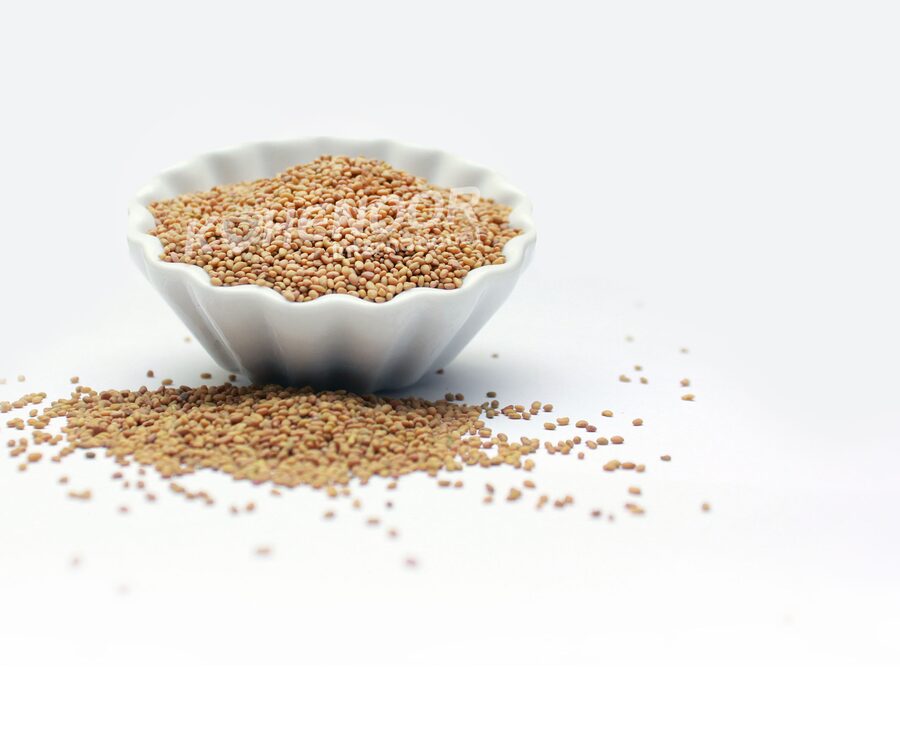
Forage seed programmes for farms · since 1957

The Year-Round Forage Programme: A Planting Calendar That Never Leaves a Gap

Hot-arid · Mediterranean and subtropical · Temperate and continental · Cutting intervals, seed rates, silage and hay windows

A forage gap is the most expensive month on any livestock farm: the weeks when the alfalfa has slowed, the silage pit is empty and the farm is buying hay at whatever the market asks. The cure is a calendar, not a crop. Below are the season-by-season planting programmes Kohenoor International builds for farms in three climate zones, using one seed range (alfalfa, Rhodes grass, ryegrass, hybrid sorghum and pearl millet, berseem and Persian clover, Protein Grass, Super Napier and sesbania), shipped together in one mixed container from a research seed company founded in 1957.

Get a quote in 24h
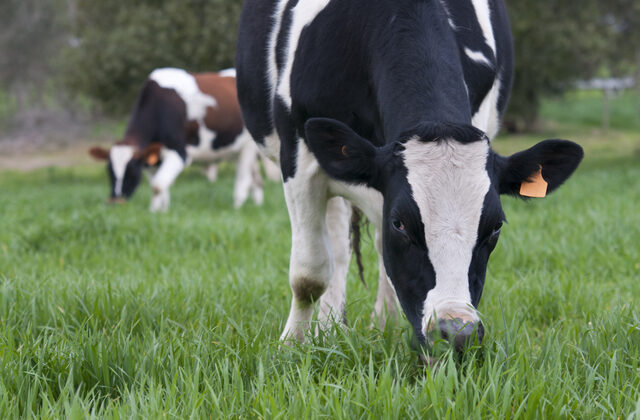
Winter ryegrass stand, the crop that closes the cool-season forage gap in a year-round programme
In short: A year-round forage programme pairs a perennial protein crop (TAIZTAR or KN92 alfalfa) and a perennial bulk crop (Rhodes grass or Super Napier) with a summer silage crop (hybrid sorghum or pearl millet) and a winter annual (ryegrass, berseem or Persian clover), each sown in the window that suits your climate. Kohenoor supplies the whole set from one warehouse so that the entire year's seed arrives in one container, with one document set, before the first sowing window opens.
0% dodder — in writingISTA Orange Certificate per lotOne supplier, whole programmeTAIZTAR heat & salinity geneticsResearch plots since 1957Trial lot 1 MTReply within 24 hPakistan · Dubai · Australia offices
12 monthsOf forage from one planned seed order
7+Alfalfa cuts a year in warm regions
20–25 daysProtein Grass cutting interval
5–8Ryegrass cuts per winter season
25–30 kg/haAlfalfa seed rate
1Mixed container for the whole year

How a forage gap opens, and why a calendar closes it

Almost every farm we visit has a forage gap, and almost every manager knows exactly when it falls. In the Gulf it is high summer, when heat flattens everything but the toughest grasses. In the Mediterranean it is late summer and early autumn, after the annuals have finished and before the winter sowings have grown. In continental climates it is late winter, when the silage is running low and the ground is still frozen. The gap is predictable, which means it is avoidable.

Gaps open for three reasons. The first is relying on too few species: a farm that grows only alfalfa will be short whenever alfalfa slows. The second is sowing late, because the seed arrived late or the paperwork for a second supplier held up the container. The third is harvesting without a plan, so that the silage pit is opened too early and empty too soon.

A planting calendar solves all three. It assigns each hectare a crop for each season, it fixes sowing windows so that seed can be ordered and landed in time, and it sets cutting intervals and conservation windows so that the farm knows, in October, how much silage it will have in April. Build it once, adjust it every year, and the gap disappears.

Established alfalfa stand, the perennial protein base around which a year-round forage calendar is built

The calendar also makes procurement simple. If the whole year's seed is known in advance, it can be ordered from one supplier in one shipment, timed to arrive a few weeks before the first sowing window. That is the service Kohenoor has built: alfalfa, grasses, clovers, silage crops and green manure from one warehouse, one document set and one contact, so the only variable left is the weather.

The three calendars below are starting points. Local frost dates, rainfall, irrigation capacity and the farm's own harvest machinery all shift them. The export desk builds the final version with your agronomist, and it is free to ask.

The building blocks: four roles every programme must fill

However the climate differs, a programme that never leaves a gap fills four roles. Choosing one Kohenoor crop for each role is the whole design.

RoleKohenoor cropsWhy it is needed
Perennial proteinTAIZTAR alfalfa (FD 10, heat and salinity tolerant) or KN92 alfalfa (FD 9, cold tolerant)The backbone. 22–24% crude protein, 7+ cuts a year in warm regions, several years of stand life. Hay or silage.
Perennial bulkRhodes grass (3–5 years, 12–14% hay protein) or Super Napier / Baymisaal (12–15 years, 7–9 cuts, about 16% CP)Effective fibre and tonnage every season without re-sowing. Both tolerate drought, heat and saline soil.
Summer energy and silageHybrid sorghum, hybrid pearl milletMulti-cut, heat-tolerant energy crops that fill the pit for the months when nothing else grows well.
Winter green forageRyegrass (sow Oct–Dec, 5–8 cuts, protein up to 38%), Safa berseem, Persian cloverHigh-protein cool-season feed, grazed, green-chopped or ensiled, while the perennials slow.
Rotation and soilSesbania / Janter (40–45 days), Protein Grass (Safa) blendNitrogen-fixing green manure between crops; a high-protein blend for daily green-chop, cut every 20–25 days.

A farm does not need every crop in the table. A Gulf camel dairy may run alfalfa, Rhodes grass and sorghum and nothing else. A Central Asian dairy may run KN92, sorghum and ryegrass. The rule is that each of the first four roles is filled by at least one crop whose growing season covers the months when the others are weak.

Mixed forage crops from Kohenoor seed covering the four roles of a year-round programme

Everything in the table is supplied at Kohenoor's standard: Sortex-cleaned seed, ISTA-tested lots, IPPC phytosanitary documentation and, for alfalfa and berseem, a written 0 percent dodder guarantee. The alfalfa is sown at 25 to 30 kg per hectare; rates for the other species are confirmed on the quotation and printed on the sealed bag tag of the lot you receive.

Calendar four: humid-tropical farms, and the cover crop that fits in every calendar

The three calendars above cover arid, Mediterranean and temperate farms. A fourth zone, the humid tropics of East Africa, coastal West Africa, South and South-East Asia and tropical Latin America, runs on a different base: perennial tropical grasses that are cut or grazed through the rains, with alfalfa and Super Napier on the drained, fertile ground and sesbania doing the soil work between stands.

Panicum (Guinea grass, Panicum maximum) is the tall, tufted perennial that East African, South-East Asian and Latin American dairies plant as their cut-and-carry base. It grows fast in heat and humidity, tolerates partial shade under trees and along bunds, and regrows quickly after each cut. Young regrowth taken every four to six weeks is leafy and palatable; stands left to go to seed turn stemmy and lose feed value, so it is managed on a cutting calendar like any other high-yield grass. On well-drained, fertile soil it is one of the highest-tonnage grasses available to a tropical farm.

Brachiaria (signal grass, Urochloa / Brachiaria species) is the grazing and sward grass for ground that panicum does not like: acid soils, low-fertility soils and, with the right species, land that waterlogs in the rains. It forms a dense, creeping mat that carries grazing animals, smothers weeds and holds soil on slopes, and it is the backbone of improved pasture across tropical Latin America and much of Africa. Dairies use it for the grazing block and the heifer paddocks while panicum, Super Napier and alfalfa supply the cut forage. The species and lot specification for the brachiaria we offer are stated on the certificate of analysis for that lot.
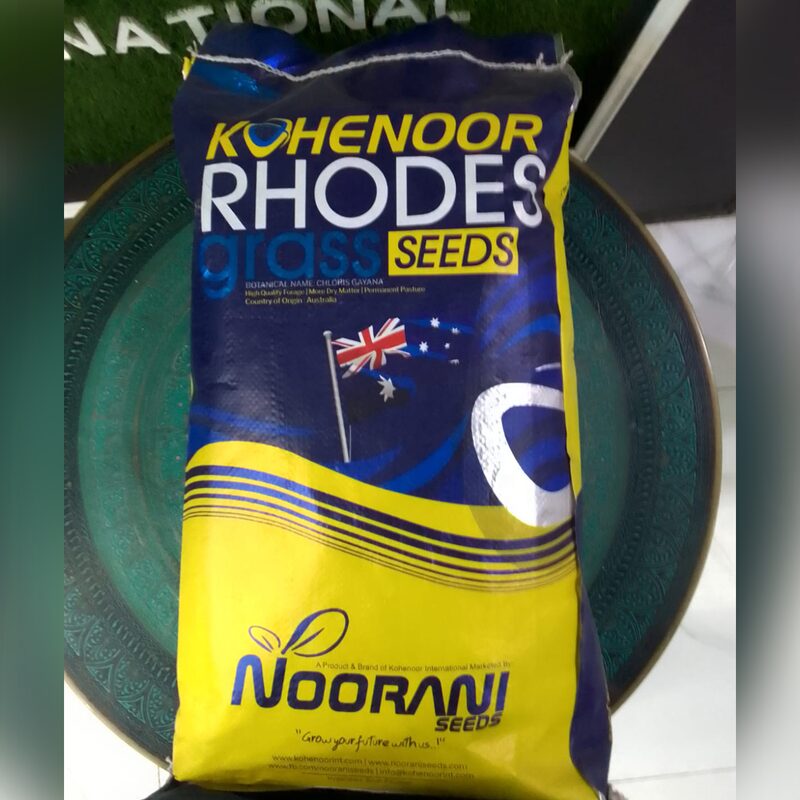
Kohenoor tropical grass seed bag for pasture establishment

Sesbania (janter, Sesbania species) is the crop that does two jobs. As a fodder it is the soft, tender-leaved legume that sheep and goats take readily, giving two to three cuttings and around 150 to 200 maund per acre in 40 to 45 days. As a cover crop and green manure it is a nitrogen-fixing legume that grows on poor and saline land where little else will: sown between main crops or after a tired alfalfa stand is broken, and ploughed in at six to eight weeks before it flowers, it returns nitrogen and organic matter to the soil, improves structure on heavy or salt-affected ground and sets the field up for the alfalfa, panicum or Rhodes grass that follows. Farms reclaiming saline land often start with sesbania precisely because it establishes where the first attempt at alfalfa would fail.
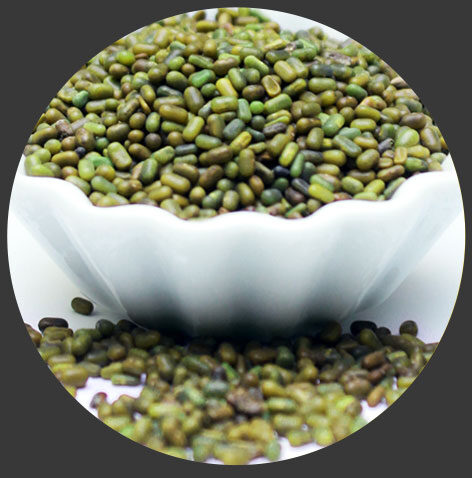
Kohenoor sesbania (janter) seed bag — nitrogen-fixing green manure and goat and sheep fodder

These three sit alongside the Rhodes grass, ryegrass, berseem and Persian clover already in the programme, and they ship in the same mixed container under the same ISTA-tested, phytosanitary-certified document set. Tell the export desk your soil type, rainfall and whether the field is for cutting or grazing, and they will say which of the three belongs where.

In calendar terms: establish panicum and brachiaria at the start of the main rains so the stand is rooted before the dry season; cut panicum every four to six weeks and rotate grazing on brachiaria through the wet months; sow sesbania on any field that comes out of a main crop and has six to eight weeks before the next sowing, and plough it in before it flowers. That single habit, a green-manure crop in every gap, is what keeps a tropical forage rotation productive year after year without buying back the nitrogen as fertiliser.
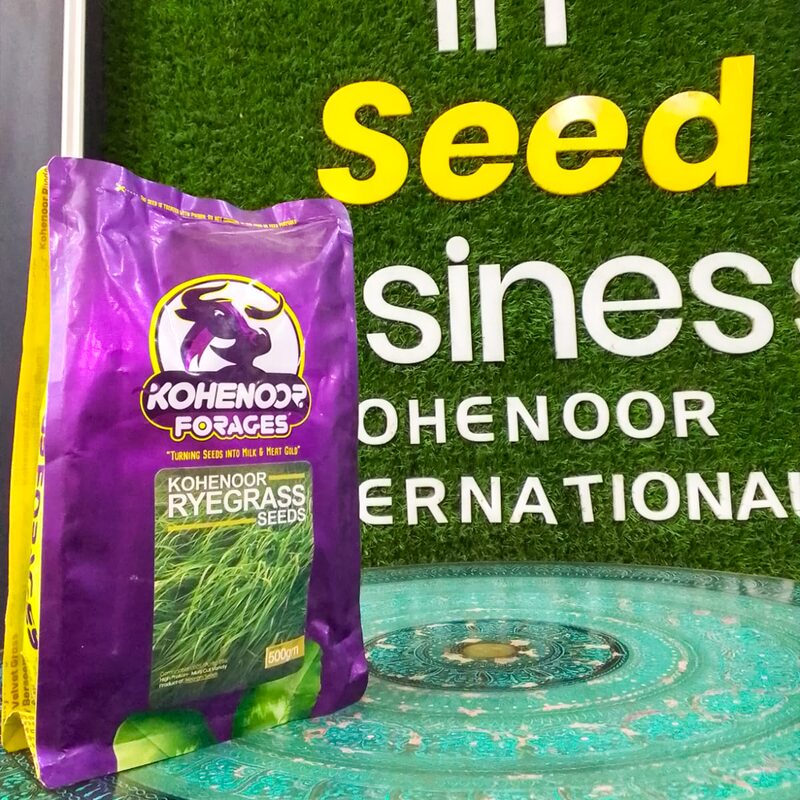
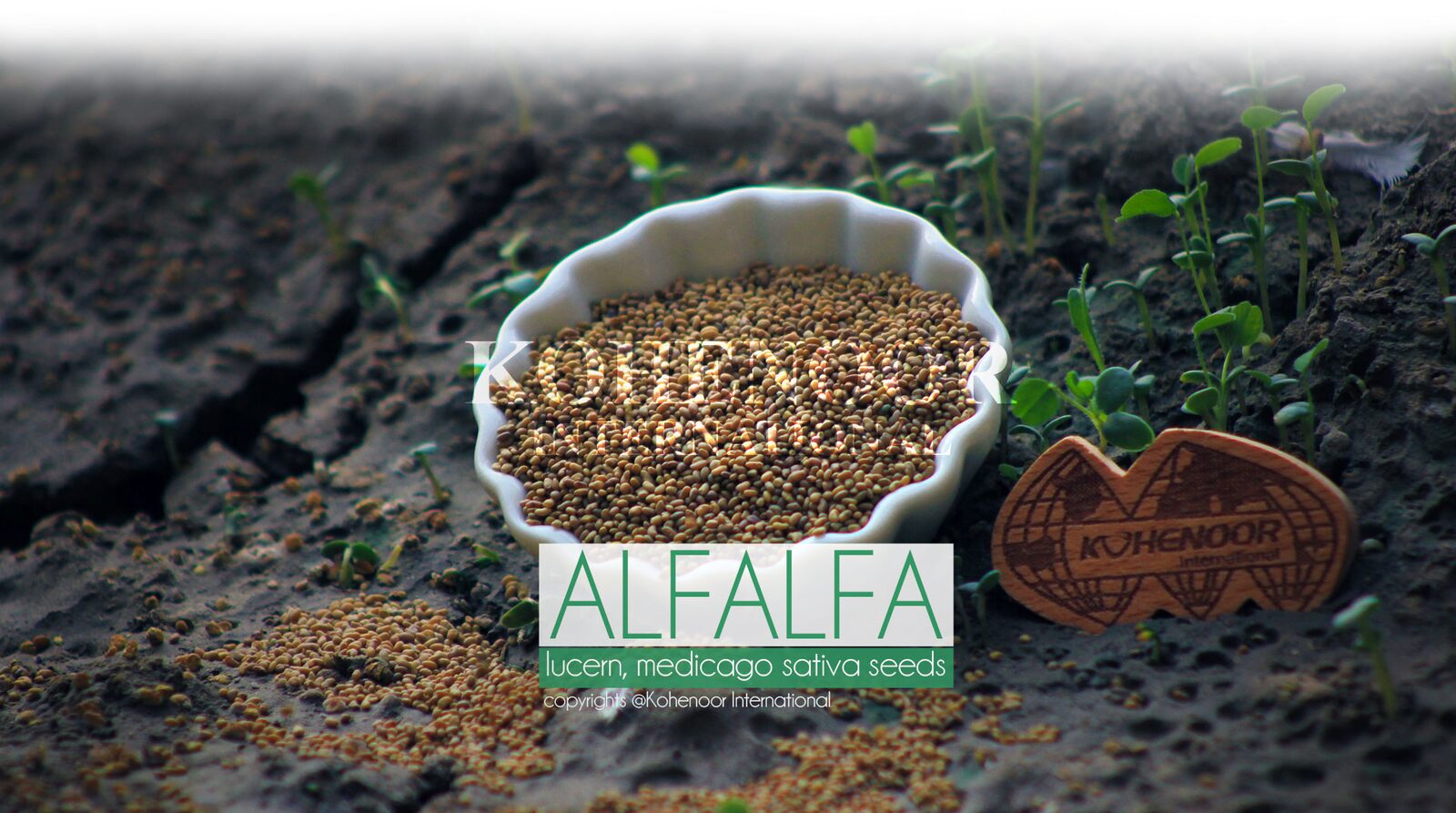
Calendar one: hot-arid farms (Gulf, Egypt, Sudan, Sahel, Sindh, Balochistan)

The hot-arid calendar is built around a mild, productive winter and a brutal summer. Everything is irrigated. The aim is to sow the perennials and winter annuals when temperatures fall in autumn, let them dominate from November to May, and carry the summer with heat-tolerant grasses and silage crops.

MonthSow or plantHarvest and use
SeptemberPrepare seedbeds; receive the year's seed containerLast cuts of sorghum and millet into the pit
OctoberTAIZTAR alfalfa; Rhodes grass (autumn sowing); ryegrass and berseem from mid-monthSuper Napier cut; open summer silage
NovemberRyegrass, berseem, Persian clover continue; Protein GrassFirst light cut of early alfalfa
DecemberLast ryegrass sowingsRyegrass and berseem green-chop begins
January – FebruaryNo sowing; manage irrigationAlfalfa cuts every 4–5 weeks; ryegrass, berseem, Protein Grass cut on interval; Rhodes grass slower
MarchRhodes grass (spring sowing); sesbania on resting fieldsPeak alfalfa and clover production; begin alfalfa hay-making
April – MayHybrid sorghum and pearl millet for silageRyegrass and berseem finish; alfalfa hay windows; Rhodes grass hay
June – AugustSecond sorghum or millet sowing where water allowsAlfalfa slows but TAIZTAR continues; Super Napier and Rhodes grass carry bulk; sorghum and millet cut into the pit

TAIZTAR is the only alfalfa we recommend here. It is non-dormant, bred for heat and salinity, and as the superior replacement for CUF-101 it keeps producing when conventional varieties thin out under salt and summer heat. Rhodes grass and Super Napier are the perennial bulk crops because both tolerate drought, heat and saline soil. Sesbania, which tolerates saline and poor soil and matures in 40 to 45 days, is slotted onto any field that comes out of a winter annual before the summer sowing.

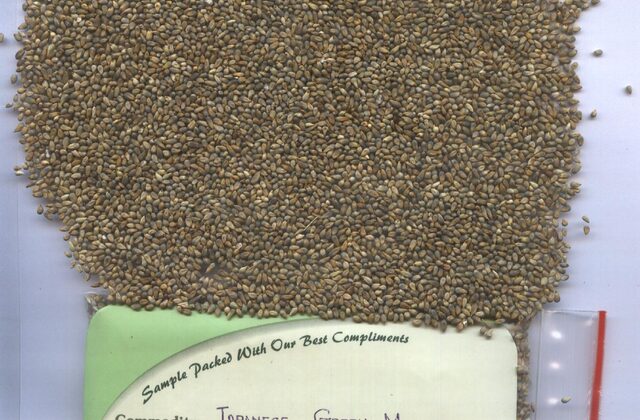
Hybrid pearl millet, the heat-tolerant summer silage crop in the hot-arid forage calendar

Hay-making in this zone is easiest from March to May and again in October, when the air is dry but not so hot that leaf shatters in hours. Silage from sorghum and millet is made from June onwards and carries the herd through the summer and into autumn, so the pit should be sized for roughly four to five months of feeding.

Calendar two: Mediterranean and subtropical farms (Morocco, Jordan, Turkey coast, Spain, Brazil, Australia)

Mediterranean and subtropical farms enjoy a longer productive season than the hot-arid zone and a wetter, cooler winter. Rainfall may carry some winter crops without irrigation; summer is dry and still hot enough to favour sorghum and millet over maize on many farms. Mild frosts are possible in cooler districts, which affects variety choice.

MonthSow or plantHarvest and use
September – OctoberAlfalfa (TAIZTAR in warm districts, KN92 where winters bite); Rhodes grass in frost-free areas; berseem and Persian cloverFinal sorghum and millet cuts into the pit
October – DecemberRyegrass; last berseem sowingsOpen summer silage; Super Napier last cut before cool season
January – FebruaryLittle sowing; plan spring seedbedsRyegrass, berseem and clover green-chop or grazing; alfalfa slow, resumes late February
March – AprilSpring alfalfa sowing where autumn was missed; Rhodes grass; sesbania on resting groundAlfalfa cuts resume every 4–5 weeks; ryegrass peak; clover hay or silage
May – JuneHybrid sorghum and pearl milletMain alfalfa hay windows; ryegrass and clover finish
July – AugustSecond sorghum or millet sowing where irrigatedAlfalfa, Rhodes grass and Super Napier carry the summer; first silage cuts

Variety choice is a site decision here. TAIZTAR suits the warm coastal plains and the subtropics; KN92, our fall-dormancy 9, cold-tolerant alfalfa, suits inland districts where winter frost is regular. Both carry the same protein, purity, germination and dodder guarantee, so the only question is dormancy, and the export desk will advise from your elevation and winter minimums.

Rhodes grass is sown in spring or early autumn wherever frost is rare. In districts that freeze, Super Napier is also marginal and the perennial bulk role is better served by alfalfa itself plus a longer ryegrass season. Berseem and Persian clover thrive in this climate, and on rain-fed land they are often the most economical winter forage a farm can grow.

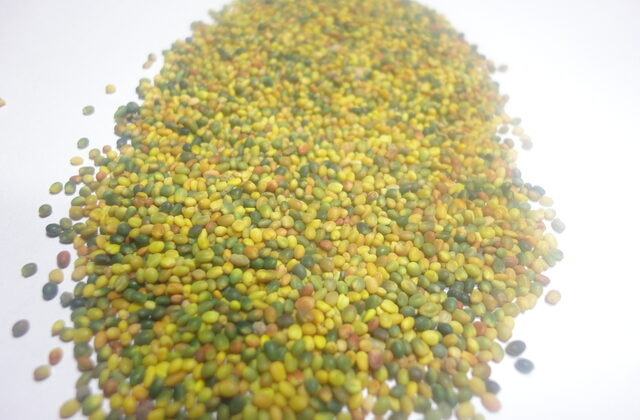
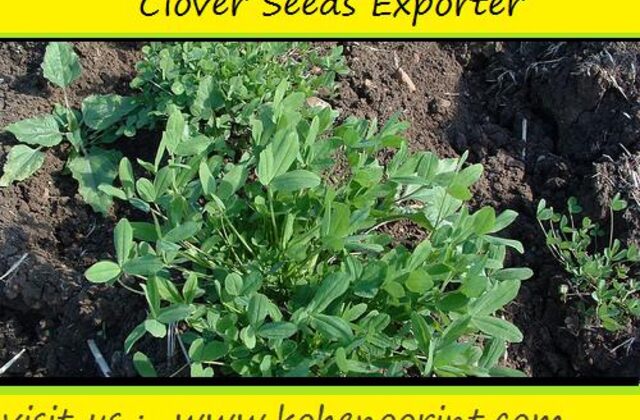
Persian clover, a high-protein winter annual for Mediterranean and subtropical forage calendars

Hay windows are generous from April to June and in September; silage is made from sorghum and millet in July and August and from surplus ryegrass and clover in spring. With rainfall doing part of the irrigation work in winter, this is the zone where a well-run calendar can produce forage in every month of the year without a purchased bale.

Calendar three: temperate and continental farms (Kazakhstan, Uzbekistan, Anatolian plateau, Eastern Europe, highland Africa)

The temperate and continental calendar is governed by frost. The growing season is shorter, often from April to October, and the winter is a storage season rather than a growing season. The programme therefore concentrates on sowing everything in spring and early summer, conserving aggressively, and carrying the herd on silage and hay from November to March.

MonthSow or plantHarvest and use
March – AprilPrepare seedbeds as soil thaws; receive seed containerFeed from stored silage and hay
April – MayKN92 alfalfa as soon as soil is workable; sesbania on resting fields in warmer districtsFirst ryegrass cuts from autumn sowings; late-winter stocks finish
Late May – JuneHybrid sorghum and pearl millet once soil has warmedFirst alfalfa cut (established stands); ryegrass silage
July – AugustLate-summer alfalfa sowing (KN92) where the farm prefers it to springAlfalfa cuts every 4–6 weeks; alfalfa hay windows; first sorghum and millet into the pit
September – OctoberRyegrass for autumn and spring growth; Persian clover in milder districtsFinal sorghum and millet cuts; last alfalfa cut timed to allow regrowth before frost
November – FebruaryNo sowingStored forage: alfalfa hay and haylage, sorghum and millet silage, ryegrass silage

KN92 is the alfalfa for this zone. Its fall-dormancy 9 rating means it stops growth under frost, protects its crown through winter and regrows strongly in spring, and it carries the same 22 to 24 percent crude protein as TAIZTAR with the same guarantees. Rhodes grass and Super Napier are frost-sensitive and are not recommended where winters freeze hard; the perennial bulk role is filled by alfalfa itself and by generous silage stocks.

The critical management point is the last autumn cut of alfalfa, which should leave enough regrowth for the plant to store reserves before the ground freezes. Cutting too late weakens the stand; your local extension service and our export desk can help fix the date for your latitude.

Hybrid sorghum for summer silage, the energy crop that carries a continental dairy through the winter

Because the growing season is short, the silage pit and hay barn must be sized for five to six months of feeding. Sorghum and millet, both multi-cut from our hybrids, give the tonnage; alfalfa gives the protein; ryegrass sown in autumn gives an early bite in spring before the perennials have started.

Cutting intervals: how often each crop comes back

The second half of a forage calendar is the cutting schedule. Sowing on time puts the crop in the ground; cutting on time decides how much of it the animal gets and how good it is. These are the intervals we see in well-managed stands grown from Kohenoor seed; your own climate, irrigation and fertility will stretch or shorten them.

CropTypical interval between cutsCuts a yearCut at
TAIZTAR / KN92 alfalfa4–5 weeks in the warm season, longer in cool months7+ in warm irrigated regionsBud stage, before flowering, for highest protein and digestibility
Protein Grass (Safa)20–25 days8+Leafy stage, for green-chop
RyegrassEvery few weeks through winter5–8 a seasonLeafy, before heading
Super Napier / BaymisaalRoughly 6–7 weeks7–9Soft stage, 6–9 ft, before stems harden
Rhodes grassEvery 4–6 weeks in the warm seasonSeveralBefore seed heads emerge, for 12–14% hay protein
Hybrid sorghum, pearl milletMulti-cut; first cut at boot stage, regrowth every several weeksMultipleBoot to early heading for silage
Berseem, Persian cloverEvery 3–5 weeks through winterMultipleBefore flowering
Sesbania / JanterSingle crop40–45 days to incorporationCut and plough in as green manure, or cut for sheep and goats

Two principles govern every line in the table. Protein and digestibility fall as a plant matures, so cutting earlier gives better feed from less tonnage, and cutting later gives more tonnage from poorer feed. And every crop needs enough recovery time to rebuild root reserves, or the stand thins. The sweet spot for alfalfa is bud stage; for grasses it is just before heading. A farm that keeps a simple cutting log for each field will find its own intervals within two seasons.

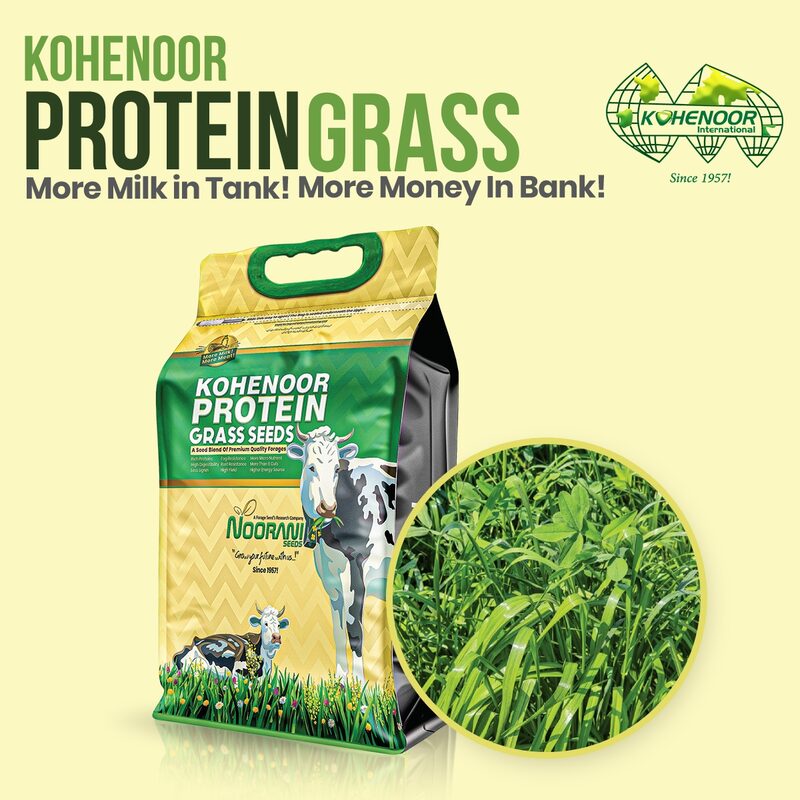
Protein Grass blend cut on a 20 to 25 day interval for daily green-chop

Cutting intervals also set labour and machinery needs. A 500-cow farm with alfalfa, Rhodes grass and sorghum in the ground is cutting something almost every week of the growing season, so the mower, rake and baler or chopper must be sized for continuous work rather than two big harvests a year.

Hay-making and silage windows by climate

Conservation is how a farm moves forage from the months of surplus to the months of shortage. The right window depends on climate, and a calendar that ignores it produces rained-on hay and badly fermented silage.

Hay needs several consecutive dry days with low humidity and enough warmth to cure the crop but not so much heat that leaf shatters. In the hot-arid zone the best hay months are March to May and October; midsummer hay must be baled early in the morning to save leaf. In the Mediterranean and subtropical zone, April to June and September are the reliable windows. In the temperate zone, June to August are the hay months, and farms often make the first cut as haylage because spring weather is unreliable.

Silage is far less weather-dependent, which is why every large herd runs a bunker or pit. Sorghum and millet are chopped at boot to early heading, when dry matter and sugar content favour a good fermentation, from June onwards in hot climates and July to September in temperate ones. Ryegrass and clover surplus in spring is ensiled rather than wasted. Alfalfa haylage, wilted to the right dry matter and wrapped or pitted, removes the risk from the first spring cut in wet regions.

Green-chop needs no conservation at all, which is its attraction. Protein Grass, Super Napier, berseem and ryegrass are cut daily and fed fresh across South Asia, Africa and the Middle East. A farm that green-chops still needs a conserved reserve for the days when the chopper breaks or the weather closes the fields.

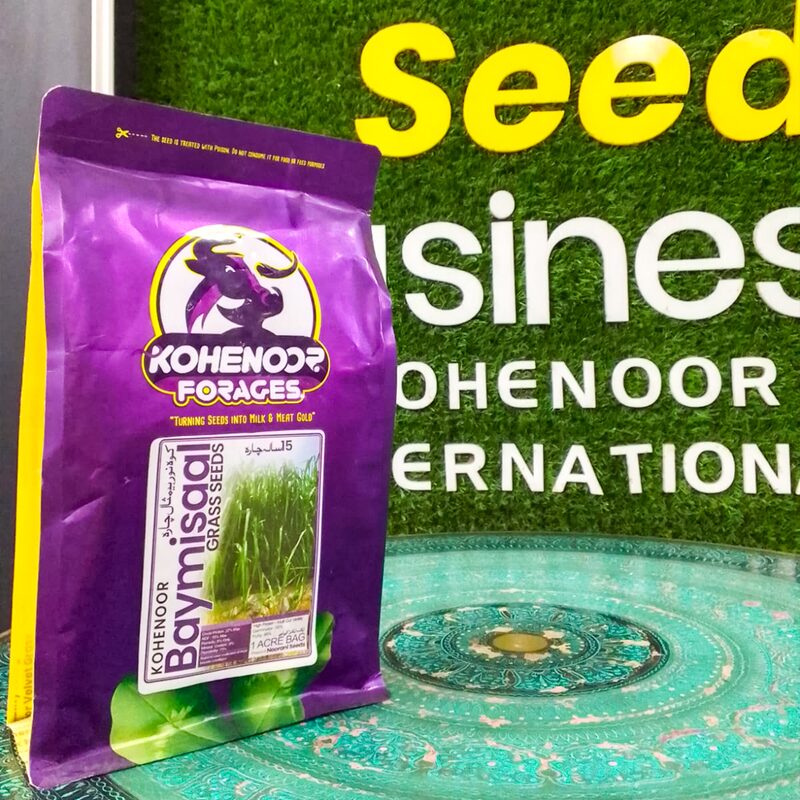
Baymisaal Super Napier fodder stand, a perennial bulk crop cut fresh seven to nine times a year

A practical rule for sizing storage: estimate the months of the year when standing forage will not meet demand, multiply by the herd's daily forage dry-matter requirement, and add a safety margin of several weeks. In the hot-arid zone that is typically four to five months; in the continental zone five to six. The seed order should then be sized so that the summer silage crops alone can fill that store, with everything else as a bonus.

Seed rates and the seed order: from hectares to bags

Once the calendar assigns hectares to crops, the seed order is arithmetic. For alfalfa the rate is firm: 10 to 12 kg per acre, which is 25 to 30 kg per hectare, into a fine, firm, well-drained seedbed with known salinity and pH. A hundred hectares of alfalfa therefore needs 2.5 to 3 tonnes of seed; a thousand hectares needs 25 to 30 tonnes.

For Rhodes grass, ryegrass, sorghum, pearl millet, berseem, Persian clover, Protein Grass and sesbania, the sowing rate depends on the lot, the sowing method and whether the crop is for hay, silage or green-chop, so we confirm it on the quotation and print it on the sealed bag tag rather than publish a single figure. For Super Napier (Baymisaal), which is planted once and then cut for twelve to fifteen years, the export desk advises planting quantities per hectare separately.

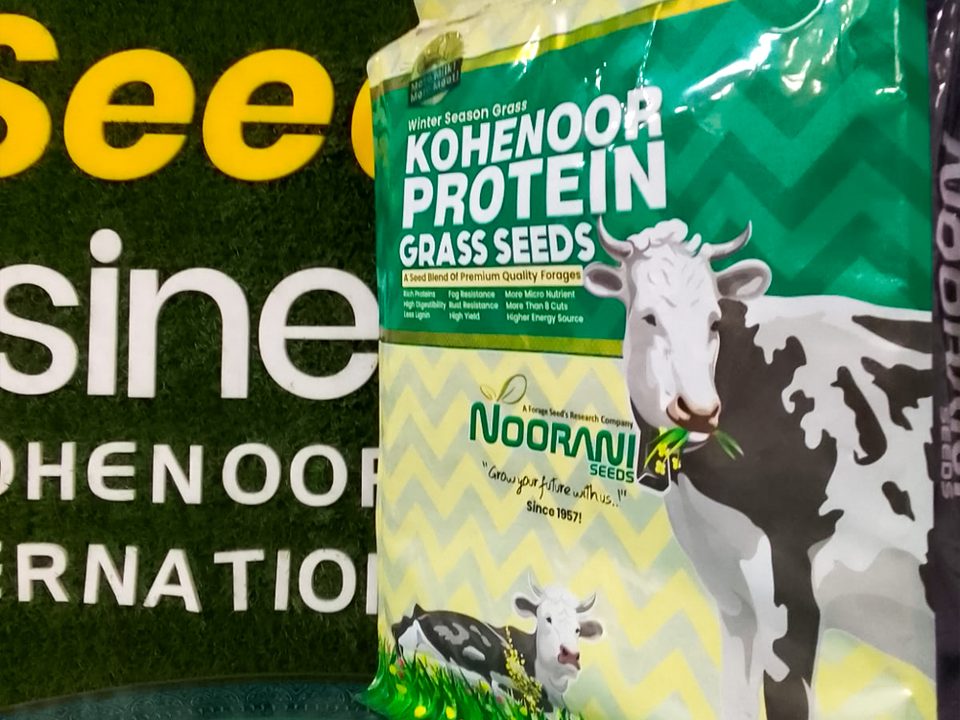
Kohenoor Protein Grass seed bag with sealed lot tag and sowing rate

The minimum order for alfalfa is 5 MT, with 1 MT trial lots accepted; companion crops travel in the same shipment. Every bag is Sortex-cleaned, every lot is ISTA-tested and documented, and the alfalfa and berseem carry a written 0 percent dodder guarantee. A seed order that arrives on time, clean, and with its certificates in order is the most underrated part of a forage calendar, and it is the part we control.

Land allocation for a 500-cow herd: the logic in proportions

Farms often ask how much land each crop should take. There is no single answer, because yields, water and the share of forage in the ration differ from farm to farm, but the logic can be set out in proportions, and that is how we start the conversation with a new dairy.

Start with demand. A lactating cow typically eats something like 3 to 4 percent of her bodyweight in dry matter a day, and in a well-managed total mixed ration forage is commonly half or more of that. For a 500-cow milking herd plus followers, the farm's nutritionist can turn those figures into an annual forage dry-matter requirement; it is a large number, measured in thousands of tonnes, and it is the figure the land plan must meet in every month.

Then allocate roughly, and adjust with experience:

RoleCropsIndicative share of forage landNotes
Perennial proteinTAIZTAR or KN92 alfalfaRoughly two-fifths to one-halfHay and haylage; the ration's protein base
Perennial bulkRhodes grass or Super NapierRoughly one-fifthEffective fibre, dry cows, heifers; less in frost zones
Summer silageHybrid sorghum, pearl milletRoughly one-fifth to one-quarterSized to fill the pit for the gap months
Winter annualsRyegrass, berseem, Persian cloverOversown or double-cropped on the silage landOccupies the same hectares in the cool season
RotationSesbania, Protein GrassSmall, rotating shareSoil building and daily green-chop

These are hedged proportions from general forage planning, not a prescription. A farm with saline water will lean harder on TAIZTAR and Rhodes grass; a farm with a short season will give more land to silage; a farm that green-chops will carve out a permanent block of Protein Grass and Super Napier. The point is that the land plan is written down, matched to the calendar, and converted into one seed order.

When a 500-cow dairy sends us its hectares, climate and water analysis, the export desk returns a proposed allocation, the calendar for its zone, the seed quantities that follow and a quotation with the current lot certificates. The farm's own team then refines it. We have done this with herds far larger and far smaller, and the method does not change.

One order, one mixed container: the logistics of a year's forage

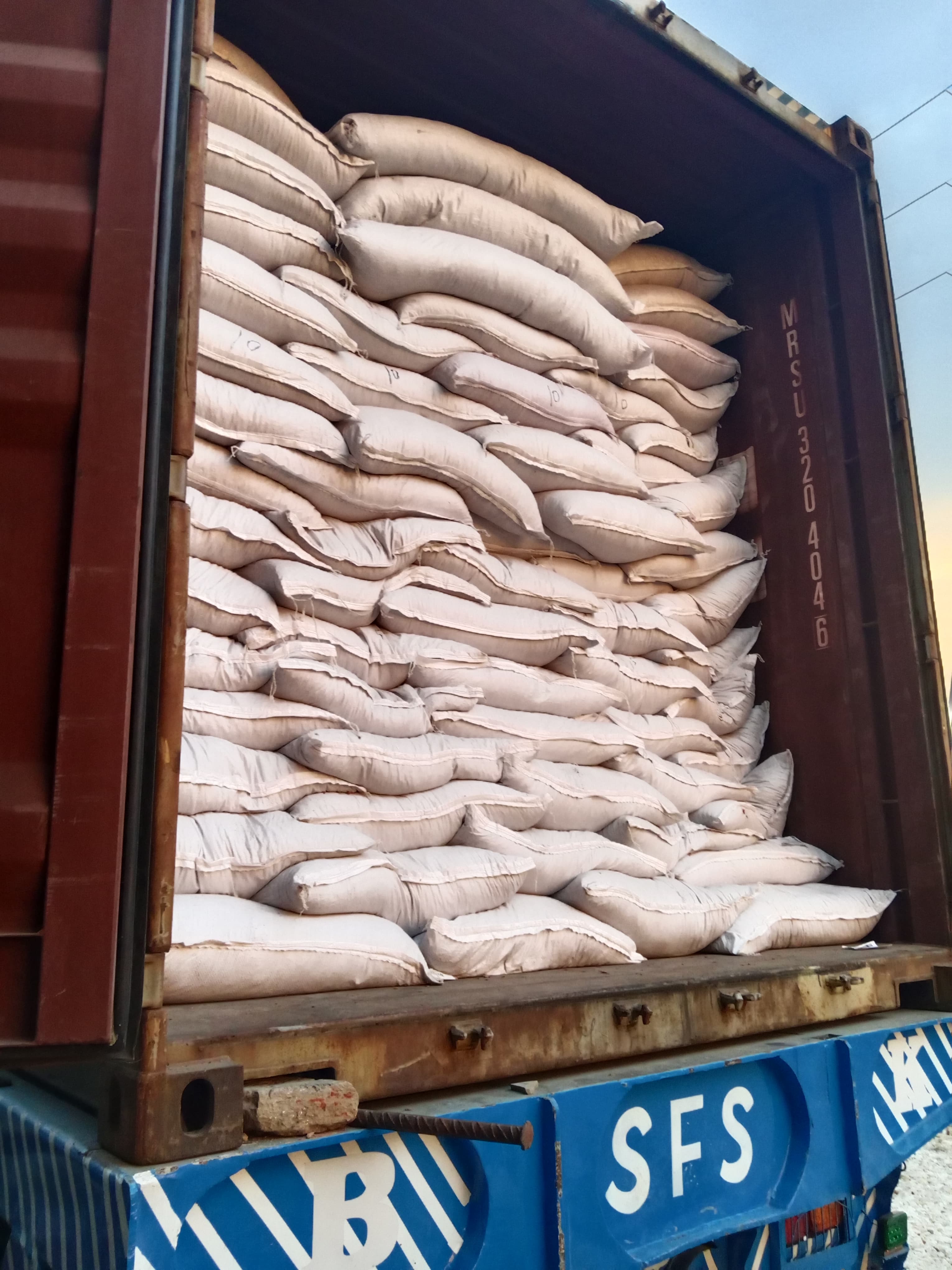
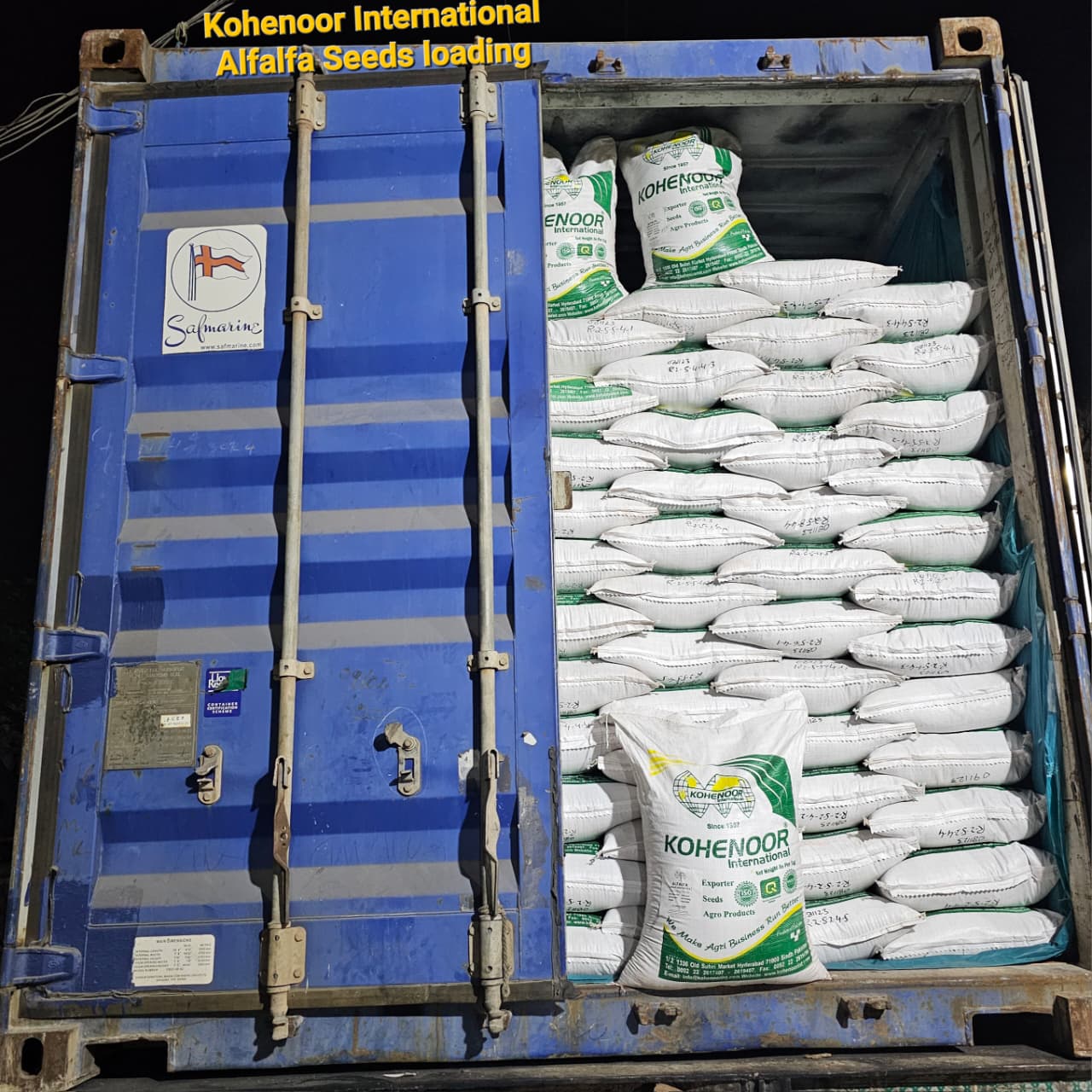
The practical advantage of designing the whole year at once is that the whole year's seed can travel together. A mixed container from Karachi carrying alfalfa, Rhodes grass, ryegrass, sorghum, millet, clover, Protein Grass and sesbania is a routine shipment for us, and it saves a farm the five separate purchases, five document sets and five customs clearances that a crop-by-crop approach demands.

Mixed forage seed container loading at Karachi, one shipment for a farm's whole year of sowing

Timing is everything. For a hot-arid farm the container should land by early September so that October sowings are never delayed; for a Mediterranean farm by late August; for a temperate farm by March. Payment for a first order is normally telegraphic transfer against the bill of lading copy or an irrevocable letter of credit at sight, with easier terms for repeat buyers. In-stock lots move quickly; the export desk confirms lead time and vessel schedule with every quotation.

Kohenoor is ISO 9001 and HACCP certified, a member of the Australian Seed Federation, with offices in Pakistan, Dubai and Australia and customers in more than 70 countries. The desk replies within 24 hours in English, Arabic, Spanish or French on WhatsApp at +92 310 4929292 or at export@kohenoorint.com. Tell us your climate zone, your hectares and your herd, and we will send back a calendar, a land plan and the single seed order that makes both real.

Putting it together: a worked example for each zone

To show how the pieces fit, here is how the same farm, with the same herd, would run its programme in each of the three zones. The hectares are illustrative; the sequence is what matters.

Hot-arid Gulf dairy. The year's container lands in early September. In October the farm sows TAIZTAR alfalfa on its largest block and Rhodes grass on the saline margins, then ryegrass and berseem on the silage land from mid-October. Through winter it cuts alfalfa every four to five weeks and green-chops ryegrass and berseem. In March it makes its first alfalfa hay and sows sesbania on any resting field. In April and May it sows hybrid sorghum and pearl millet on the winter-annual land as those crops finish. From June to September the TAIZTAR keeps producing, Rhodes grass and Super Napier carry bulk, and the sorghum and millet go into the pit to feed the herd through the hottest months and into autumn.

Mediterranean dairy. The container lands in late August. September sees alfalfa (TAIZTAR or KN92 by district), Rhodes grass where frost is rare, and clovers go in; ryegrass follows in October and November. Winter is green-chop and grazing on annuals with slow alfalfa. Spring brings the alfalfa back to full speed, surplus ryegrass and clover into silage and the main hay windows from April to June. Sorghum and millet are sown in May and June on the annual land and chopped in July and August, and the farm enters autumn with a full pit and a full barn.

Continental dairy. The container lands in March. KN92 alfalfa goes in as soon as the soil is workable in April or May; sorghum and millet follow in late May and June once the soil has warmed. Summer is cut after cut of alfalfa for hay and haylage, with sorghum and millet into the pit from August. Ryegrass is sown in September for an early spring bite, the last alfalfa cut is timed to allow regrowth before frost, and from November to March the herd eats what the summer stored.

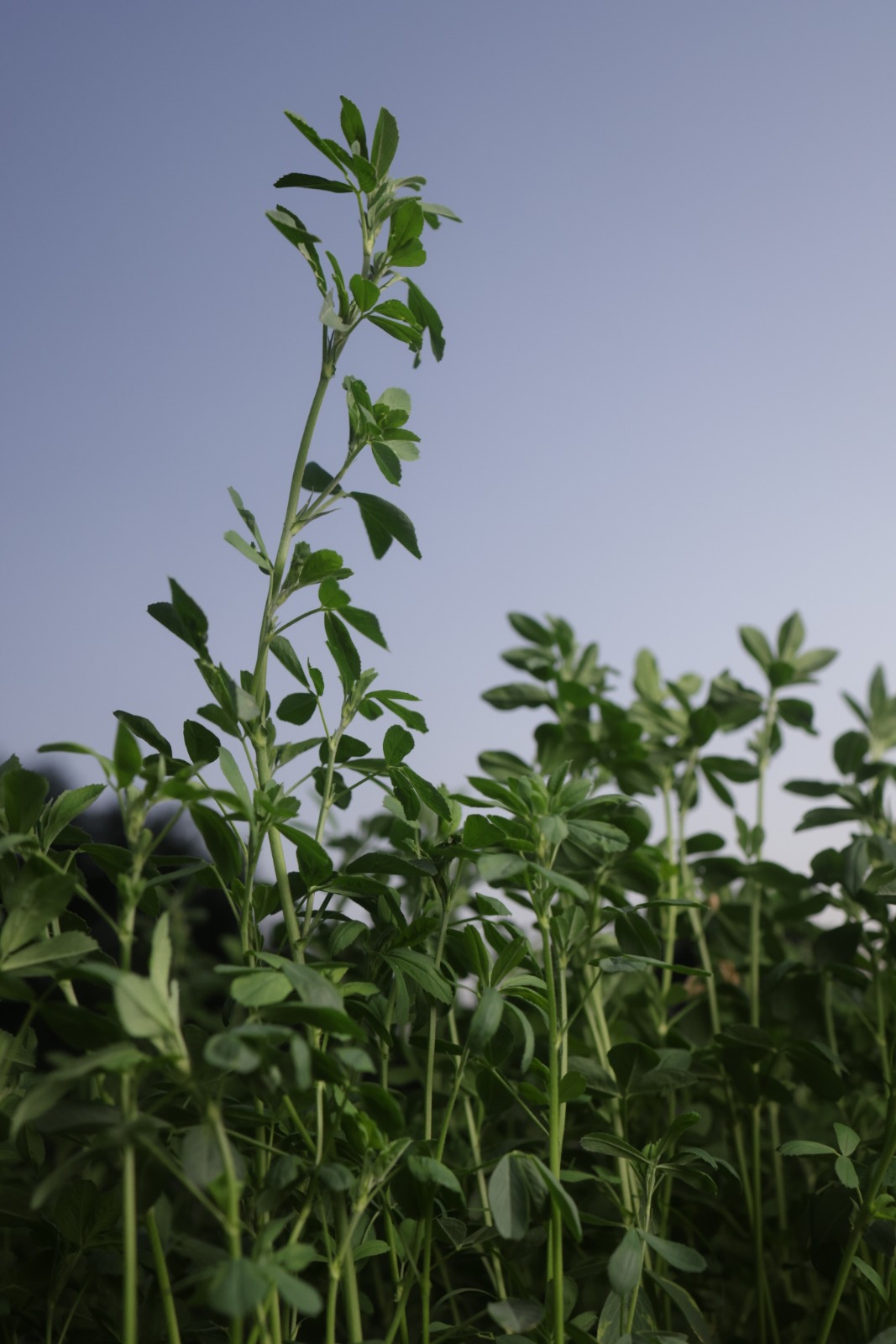
Alfalfa under open sky, the common thread through every climate's forage calendar

Three climates, one seed range, one supplier. The crops change places on the calendar, but the research behind them, the cleaning, the testing and the person at the export desk are the same. That continuity is what a procurement head is really buying when they consolidate a forage programme with Kohenoor: not just seed, but a plan that arrives on time, every year, with its certificates in order.

See the seed, the lab and the loading

Forage programmes for every operation

Forage seeds for dairy farms
Forage seeds for dairy farmsAlfalfa, Rhodes grass, ryegrass, sorghum, clover and Super Napier seed for high-yield herds — one programme, one supplier.
Read more →
Forage seeds for horse farms
Forage seeds for horse farmsClean lucerne, Rhodes grass and ryegrass seed for studs, racing yards and endurance stables that grow their own hay.
Read more →
Large-scale forage projects
Large-scale forage projectsSeed volume planning, phased establishment, documentation and container logistics for 500 to 10,000 hectare schemes.
Read more →
Forage seeds for camel, sheep & goat farms
Forage seeds for camel, sheep & goat farmsRhodes grass, alfalfa, sesbania, Baymisaal and sorghum seed for camel dairies, racing camels and small-ruminant operations.
Read more →

Talk to a real person — quote within 24 hours

Send your product, quantity and destination port. The export desk replies personally with a quotation, current lot certificates and a shipping schedule — no bots, no obligation.

export@kohenoorint.com

Frequently asked questions

What is a forage gap and how do we avoid it?

A forage gap is the period when standing crops cannot meet the herd's needs and the farm must buy feed. It is avoided by filling four roles with crops whose seasons overlap: a perennial protein crop (alfalfa), a perennial bulk crop (Rhodes grass or Super Napier), a summer silage crop (sorghum or millet) and a winter annual (ryegrass, berseem or Persian clover), plus a conserved reserve for the weakest months.

When should alfalfa be sown in a hot-arid climate?

In autumn, typically October, once temperatures fall, using TAIZTAR, our non-dormant, heat and salinity tolerant variety. It establishes through the mild winter and gives 7 or more cuts a year under irrigation.

When should alfalfa be sown in a cold or continental climate?

In spring as soon as the soil is workable, typically April to May, or in late summer, using KN92, our fall-dormancy 9, cold-tolerant alfalfa. Time the last autumn cut to leave regrowth before frost.

Do you supply cover-crop and green-manure seed as well as fodder seed?

Yes. Sesbania (janter) is the nitrogen-fixing legume in the Kohenoor range that works as both a cover crop and a green manure: sown between main crops or on saline and exhausted land, it is ploughed in at six to eight weeks to return nitrogen and organic matter before alfalfa, panicum or Rhodes grass is sown. It doubles as a soft fodder for sheep and goats. Panicum (Guinea grass) and brachiaria complete the tropical pasture base. All ship in the same container with the same ISTA and phytosanitary documents as the rest of the order.

What are the sowing windows for ryegrass and the winter clovers?

Ryegrass is sown October to December and gives 5–8 cuts through the cool season. Safa berseem and Persian clover are sown in autumn alongside it. Hybrid sorghum and pearl millet follow on the same land in late spring for summer silage.

How often is each crop cut?

In well-managed stands alfalfa is cut at bud stage roughly every 4–5 weeks in the warm season, Protein Grass every 20–25 days, ryegrass every few weeks through winter for 5–8 cuts, Super Napier 7–9 times a year and Rhodes grass before heading every 4–6 weeks. Sorghum and millet are multi-cut for silage.

What seed rate should we plan for alfalfa?

10–12 kg per acre, which is 25–30 kg per hectare. A hundred hectares therefore needs 2.5 to 3 tonnes of seed. Rates for the other species are confirmed on the quotation and printed on the sealed bag tag.

Can the whole year's seed come in one shipment?

Yes. Alfalfa, Rhodes grass, ryegrass, sorghum, millet, berseem, Persian clover, Protein Grass and sesbania ship together in one mixed container FOB Karachi with one document set: ISTA certificates per lot, IPPC phytosanitary certificate, certificate of origin, invoice and packing list.

Will Kohenoor help build our calendar?

Yes. Send your climate zone, hectares, herd size and water analysis by WhatsApp to +92 310 4929292 or email export@kohenoorint.com. The export desk replies within 24 hours with a proposed calendar, land allocation, seed quantities and a quotation with lot certificates. Prices are never published.

Related pages

WA