Camel dairies · Racing camels · Sheep and goat operations · Gulf, Africa, Middle East and Central Asia
Camels, sheep and goats are the livestock of the hard country: the sand, the salt flats, the thin rangeland that cattle cannot use. Yet the camel dairies, racing stables and large small-ruminant farms now being built across the Gulf, Africa and Central Asia need forage as reliable as any cattle operation, grown on land that is often as difficult as the animals are tough. Kohenoor International has supplied research forage seed from Sindh since 1957: Rhodes grass and TAIZTAR alfalfa that tolerate heat and salt, sesbania for goats and soil, Baymisaal perennial fodder and hybrid sorghum and millet for the summer, every lot ISTA-tested and 0% dodder in writing.
WhatsApp +92 310 4929292 Get a quote in 24h
There is a comfortable myth that camels, sheep and goats look after themselves. In the open rangeland, with a nomadic herd moving to the grazing, that was partly true. It is not true on a modern camel dairy milking several hundred animals twice a day, in a racing camel stable preparing animals for the season, or on a sheep and goat farm fattening thousands of head for the festival markets. Those operations have taken the animals out of the rangeland, and they must now bring the rangeland to the animals, every day, as forage.
The animals are forgiving in one sense: a camel will eat coarse grass that a dairy cow would refuse, and a goat will strip a shrub that nothing else touches. But forgiving is not the same as indifferent. A milking camel on poor roughage produces less milk and loses condition; a racing camel fed badly does not reach the line fit; a lamb or kid on poor forage takes longer to finish and finishes lighter. The farms that make money from these animals are the ones that feed them well, and feeding them well on hot, saline land begins with the right seed.
Kohenoor International has been a research forage seeds company since 1957, based in Hyderabad, Sindh, where the climate and the groundwater are much like those of the Gulf and the Sahel. Our research plots select varieties that persist under heat and salt because that is what grows around us. For camel, sheep and goat farms we offer a compact programme: Rhodes grass as the staple hay, TAIZTAR alfalfa for protein, sesbania for goats and soil, Baymisaal perennial fodder and hybrid sorghum and pearl millet for the summer. All of it ships from one warehouse with one document set, and the export desk replies within 24 hours.
This page sets out what each species does for each animal, how the programme fits saline land, and how a farm starts with a trial lot. It is written for the farm manager who has to feed the animals tomorrow morning, not for a textbook.
The commercial camel dairy is one of the most interesting livestock businesses of the last two decades, concentrated in the Emirates, Saudi Arabia, Qatar, Oman, Kenya, Somalia and increasingly Central Asia. A camel in milk is a large animal with a large appetite, and although she digests coarse roughage far better than a cow, the quantity and quality of forage she eats still decides how much milk reaches the tank.
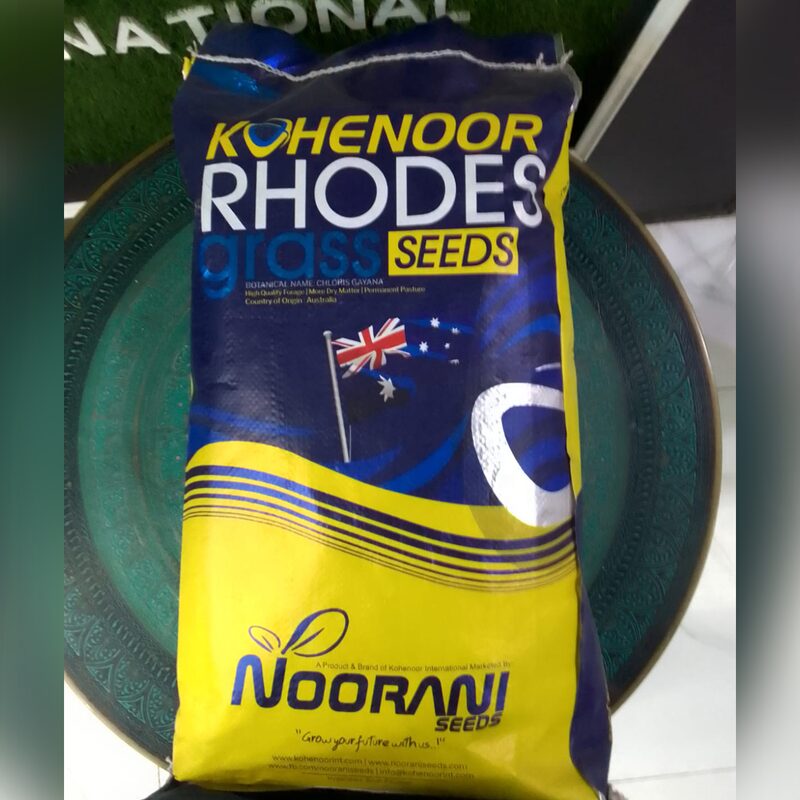
Rhodes grass is the backbone of camel dairy forage across the Gulf, and for good reason. Our Australian Rhodes grass is a perennial that stands three to five years, tolerates drought, heat and saline soil, and makes a clean hay of 12 to 14 percent protein at yields of up to 175 maund per acre per cut, which is around seven tonnes of fresh material. Camels relish it, it stores well in the dry climate, and it improves the sandy soil beneath it over its life.
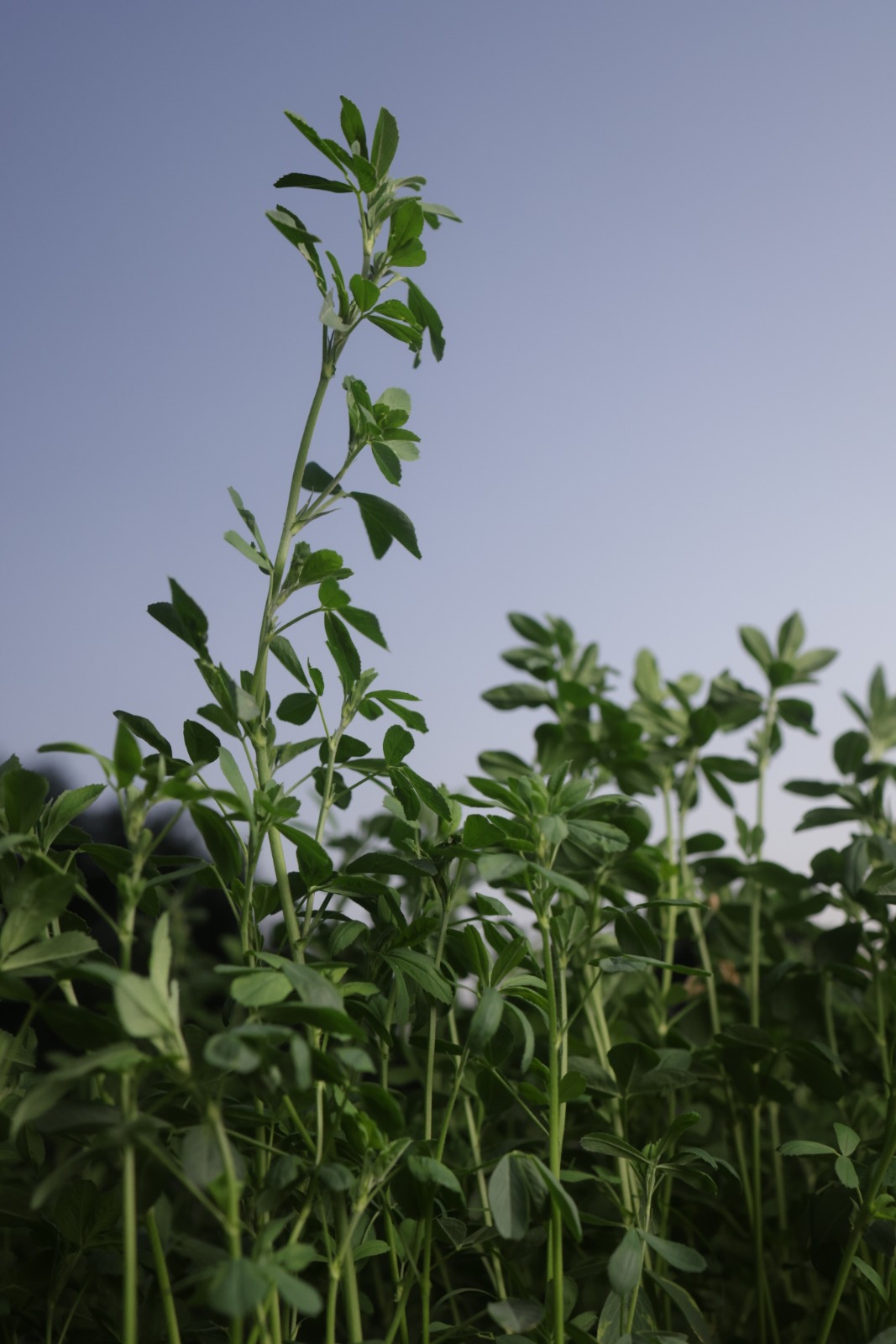
TAIZTAR alfalfa adds the protein. Our fall-dormancy 10, non-dormant lucerne was bred on modern genetics for heat and salinity tolerance as the superior replacement for CUF-101, and it carries 22 to 24 percent crude protein with seven or more cuts a year under irrigation. Camel dairies typically feed it as a portion of the ration alongside Rhodes grass hay, with the share rising for high-yielding animals and falling for dry camels.
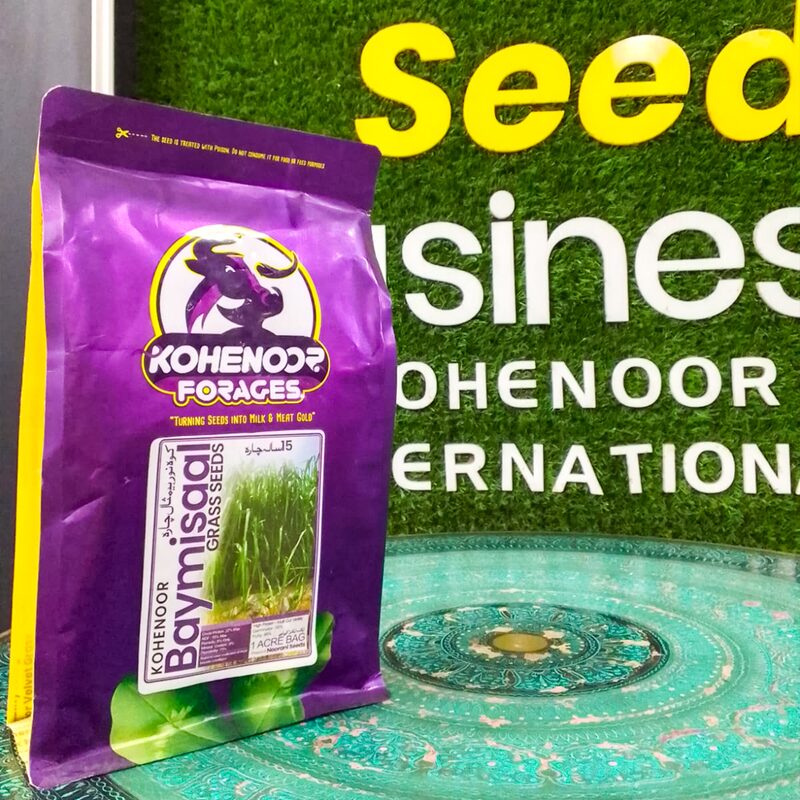
Hybrid sorghum and pearl millet carry the summer, when even Rhodes grass slows in the worst heat; both are multi-cut from our hybrids and can be fed fresh or ensiled. Baymisaal (Super Napier) gives a farm with daily chopping a perennial bulk crop that lasts twelve to fifteen years from one planting, with soft six-to-nine-foot fodder at roughly 16 percent protein and tolerance to drought, heat and salt.
A camel dairy that grows these four crops on its own pivots has a forage base in every season and buys very little hay. The land is often the most saline on the property, which is exactly where Rhodes grass and TAIZTAR were bred to grow. The export desk will match the species to the farm's water analysis before any seed is ordered.
The racing camel is an athlete, and its feeding is as carefully managed as any racehorse's. Trainers across the Gulf want forage that is consistent from bale to bale, clean of dust and mould, palatable enough that the animal eats what it is given, and high enough in quality to support condition and recovery through a racing season without excess bulk.
The two crops that meet this brief are the same two that anchor the camel dairy. Rhodes grass hay cut before heading, in the leafy stage, gives fine-stemmed, palatable roughage with protein at the top of the 12 to 14 percent range and the long fibre a camel's digestion is built for. TAIZTAR alfalfa hay cut at bud stage supplies concentrated protein and energy in a leafy, highly digestible form, fed in measured amounts according to the trainer's programme.
Racing stables are often the most demanding buyers of clean hay in the region, and for good reason. Weedy, dusty hay affects an animal's airways and appetite; a stand contaminated with dodder or foreign seed produces hay a trainer will not accept. This is why stables that have moved from buying hay to growing it on their own land, or on land farmed for them, insist on seed with a written purity guarantee. Our alfalfa is Sortex optical-cleaned, ISTA-tested by lot, supplied at a minimum of 98 percent purity and 85 percent germination and guaranteed 0 percent dodder in writing, and our Rhodes grass and other species are cleaned and tested to the same lot-by-lot standard.
For stables with no land of their own, the practical route is usually a contract with a nearby farm that grows to the stable's specification from seed the stable has approved. The seed programme is the same either way: Rhodes grass and TAIZTAR, cut early, cured carefully and stored under cover.
Our Dubai office is a short drive from most of the region's racing centres, and the export desk is used to talking with trainers as well as farm managers about what goes into the hay.
Large sheep and goat enterprises are growing fast across the Middle East, North and East Africa and Central Asia, driven by festival demand, urban meat markets and government programmes to replace imported live animals with locally finished ones. Feeding several thousand head on a fixed site needs a forage programme as surely as a dairy does, and small ruminants have their own preferences.
Sesbania (Janter) is the crop most farmers in our part of the world associate with goats, and increasingly with sheep. It is a fast-growing nitrogen-fixing legume that reaches harvest in 40 to 45 days, tolerates saline and poor soil, and produces leafy, high-protein fodder that goats in particular browse eagerly. It doubles as a green manure, so a sheep and goat farm can grow it on tired or saline fields, cut the top for the animals and plough the residue in to rebuild the soil for the next crop.
Rhodes grass hay is the roughage base for both species, palatable and easily stored, and its 12 to 14 percent protein suits maintenance and growing animals. TAIZTAR alfalfa, fed as a proportion of the ration, raises protein for lactating ewes and does, for fast-growing lambs and kids and in the finishing period. Berseem, our early-maturing, broad-leaf, disease-resistant Safa clover supplied dodder-free, and Persian clover are the traditional winter green feed for small ruminants across South Asia and the Middle East. Baymisaal and hybrid sorghum and pearl millet provide chopped bulk through the summer.
| Crop | Sheep and goats | Key facts |
|---|---|---|
| Sesbania / Janter | High-protein browse, especially for goats; soil builder | 40–45 days, nitrogen-fixing, tolerates saline and poor soil |
| Rhodes grass | Roughage hay for all stock | Perennial 3–5 years, 12–14% hay protein, drought, heat and saline tolerant |
| TAIZTAR alfalfa | Protein for lactating and growing animals, finishing | 22–24% CP, 7+ cuts a year, 0% dodder in writing |
| Safa berseem, Persian clover | Winter green feed | Early-maturing, disease-resistant berseem, dodder-free; high-protein Persian clover |
| Baymisaal, sorghum, pearl millet | Summer chopped bulk | Baymisaal 12–15 years from one planting; hybrids multi-cut |
Sheep and goats are sensitive to sudden ration changes and to mouldy feed, so the same discipline on cutting, curing and storage that we describe for dairies and horses applies here. Where a farm fattens on a concentrate-heavy ration, good forage remains essential for rumen health, and clean Rhodes grass hay is usually the cheapest way to provide it. The export desk will size the programme to the head count and the finishing system, and we recommend starting, as always, with a trial block.
Compared with a dairy, the camel and small-ruminant programme is compact. Five or six species cover every season and every animal, and they ship together in one container.
| Crop | Variety / product | Role | What the facts say |
|---|---|---|---|
| Rhodes grass | Australian Rhodes grass | Staple hay for camels, sheep and goats | Perennial 3–5 years, drought, heat and saline tolerant, 12–14% hay protein, up to 175 maund per acre per cut, improves soil |
| Alfalfa (lucerne) | TAIZTAR (FD 10) for hot regions; KN92 (FD 9) for cold | Protein for milking camels, lactating and growing small stock, racing camels | 22–24% CP, 7+ cuts a year, ≥98% purity, ≥85% germination, 0% dodder in writing, 25–30 kg/ha |
| Sesbania / Janter | Green manure and fodder | Goat and sheep browse; rebuilds saline soil | 40–45 days, nitrogen-fixing |
| Super Napier | Baymisaal (Mott-type) | Perennial chopped bulk for all animals | 12–15 years from one planting, 7–9 cuts a year, 6–9 ft soft fodder, CP about 16% (up to 22%), drought, heat and saline tolerant |
| Summer silage and green-chop | Hybrid sorghum, hybrid pearl millet | Summer bulk when grasses slow | Heat-tolerant, multi-cut |
| Winter green feed | Safa berseem, Persian clover, ryegrass | Cool-season protein | Berseem dodder-free; ryegrass sow Oct–Dec, 5–8 cuts |
Alfalfa is sown at 10 to 12 kg per acre, which is 25 to 30 kg per hectare. Rates for Rhodes grass, sesbania, sorghum, millet and the clovers depend on the lot and the sowing method, so they are confirmed on the quotation and printed on the sealed bag tag. Baymisaal planting quantities are advised separately by the export desk.
A typical camel dairy or large sheep and goat farm on saline land gives the largest share of its forage area to Rhodes grass, a substantial block to TAIZTAR alfalfa on its best-watered fields, a rotating share to sesbania and the summer crops, and a smaller area to winter clovers, adjusted to the head count and the water. The minimum alfalfa order is 5 MT with 1 MT trial lots accepted, and companion species travel in the same shipment. For farms in the cooler parts of Central Asia, KN92 replaces TAIZTAR and the winter programme leans on ryegrass and conserved forage, since Rhodes grass and Baymisaal are frost-sensitive.
Sesbania appears throughout this page as the sheep-and-goat fodder it is. It is worth setting it beside the two tropical grasses in the Kohenoor range, because the same small-ruminant operations that run on sesbania in the dry belt run on panicum and brachiaria once the rainfall rises, and because sesbania has a second job on any farm, as the cover crop that rebuilds the soil.
Panicum (Guinea grass, Panicum maximum) is the tall, tufted perennial that East African, South-East Asian and Latin American dairies plant as their cut-and-carry base. It grows fast in heat and humidity, tolerates partial shade under trees and along bunds, and regrows quickly after each cut. Young regrowth taken every four to six weeks is leafy and palatable; stands left to go to seed turn stemmy and lose feed value, so it is managed on a cutting calendar like any other high-yield grass. On well-drained, fertile soil it is one of the highest-tonnage grasses available to a tropical farm.
Brachiaria (signal grass, Urochloa / Brachiaria species) is the grazing and sward grass for ground that panicum does not like: acid soils, low-fertility soils and, with the right species, land that waterlogs in the rains. It forms a dense, creeping mat that carries grazing animals, smothers weeds and holds soil on slopes, and it is the backbone of improved pasture across tropical Latin America and much of Africa. Dairies use it for the grazing block and the heifer paddocks while panicum, Super Napier and alfalfa supply the cut forage. The species and lot specification for the brachiaria we offer are stated on the certificate of analysis for that lot.
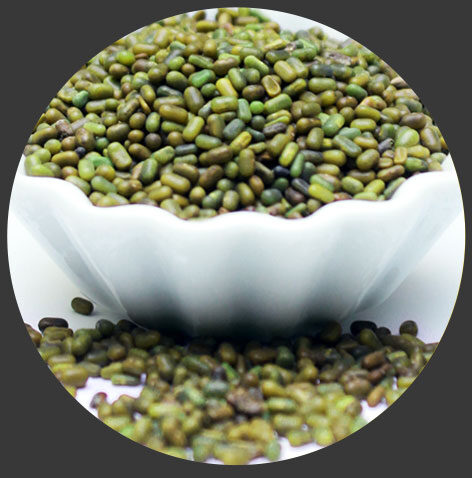
Sesbania (janter, Sesbania species) is the crop that does two jobs. As a fodder it is the soft, tender-leaved legume that sheep and goats take readily, giving two to three cuttings and around 150 to 200 maund per acre in 40 to 45 days. As a cover crop and green manure it is a nitrogen-fixing legume that grows on poor and saline land where little else will: sown between main crops or after a tired alfalfa stand is broken, and ploughed in at six to eight weeks before it flowers, it returns nitrogen and organic matter to the soil, improves structure on heavy or salt-affected ground and sets the field up for the alfalfa, panicum or Rhodes grass that follows. Farms reclaiming saline land often start with sesbania precisely because it establishes where the first attempt at alfalfa would fail.
These three sit alongside the Rhodes grass, ryegrass, berseem and Persian clover already in the programme, and they ship in the same mixed container under the same ISTA-tested, phytosanitary-certified document set. Tell the export desk your soil type, rainfall and whether the field is for cutting or grazing, and they will say which of the three belongs where.
For sheep and goats the practical split is: sesbania and berseem as the cut legume feed, panicum as the cut-and-carry grass, brachiaria as the grazing sward, and a sesbania green-manure cycle on any paddock being brought back from salt or exhaustion before the next forage crop is sown.
The land available to camel, sheep and goat farms is often the land nobody else wanted: coastal flats, inland sabkha margins, old rangeland over saline aquifers, pivots fed by brackish wells. Growing forage there is possible, and it is what our research plots in Sindh have been doing for three generations, because the groundwater of lower Sindh is as salty as anything in the Gulf.
The first rule is to know the water. A salinity analysis of the irrigation source, and a soil test of the field, tell the export desk which species will persist and which will fail, and this costs a fraction of a failed sowing. The second rule is to choose varieties bred for it. The third is to manage the field so that salt does not accumulate faster than it can be leached.
Field management matters as much as the variety. Leaching irrigation to push salt below the root zone, drainage where the water table is high, avoiding over-irrigation that brings salt up, and monitoring soil salinity each season are standard practice on every successful saline-land farm we know. Our export desk can discuss these with your agronomist, and our research plots are open to visitors who want to see salt-tolerant forage growing under the conditions they face at home.
A farm that matches species to water, and manages the salt, can produce forage year after year on land that was written off. That is not a sales claim; it is what our research plots in Sindh are built to demonstrate every season.
Camels and small ruminants are tolerant of coarser forage than cattle and horses, but the farms that get the most from them still cut on time and cure carefully. A few practical rules carry most of the benefit.
Rhodes grass is cut before the seed heads emerge, in the leafy stage, every four to six weeks in the warm season. Protein is at its highest then, stems are still fine and the hay cures evenly. Left to head, the crop gains bulk but loses protein and palatability, and camels and sheep sort through it.
Alfalfa is cut at bud stage, before flowering, which keeps protein and digestibility high and leaf firmly attached. In warm irrigated regions a TAIZTAR stand reaches that point roughly every four to five weeks, which is how it gives seven or more cuts a year. The first cut after sowing is taken later than the routine interval to let the stand root deeply.
Sesbania is cut at 40 to 45 days for fodder, or cut and ploughed in as green manure at the same stage. For goats it can be fed fresh as browse; the leafy top is the valuable part.
Baymisaal is cut while the stems are still soft at six to nine feet, seven to nine times a year, and fed chopped and fresh. Sorghum and millet for silage are chopped at boot to early heading.
Curing in the dry heat of the Gulf and the Sahel is fast, which is an advantage, but it can be too fast: leaf shatters if the crop is handled bone-dry in the afternoon. Baling early in the morning, when there is a little dew on the leaf, saves it. Storage under a roof, off the ground and with airflow through the stack prevents the mould that camels and sheep will refuse and that can harm them. A simple laboratory test of protein, fibre and moisture for each cut lets the farm allocate the best hay to the milking camels or the lactating ewes and the plainer hay to the dry stock.
These are not complicated rules, but they are the difference between forage that feeds the animal and forage that fills the barn.
Camels and goats will eat weeds that other animals refuse, so farm managers sometimes ask us why they should care about seed purity. Three reasons, each of which has cost someone a season.
Dodder kills the stand. Cuscuta, the parasitic vine, travels in poorly cleaned alfalfa and clover seed because its seed is nearly the same size and weight. Once in the field it wraps around the lucerne, lives on its sap and spreads in patches until the stand is gone. It spreads with irrigation water and machinery from one pivot to the next, it is a quarantine weed in many importing countries, and it persists in the soil for years. The camel does not mind eating it; the farmer minds losing the field. Every Kohenoor alfalfa lot is Sortex optical-cleaned, ISTA-tested by lot and guaranteed 0 percent dodder in writing, and Safa berseem is supplied dodder-free.
Weed seed competes at establishment. A Rhodes grass or alfalfa seedling is small and slow in its first weeks. Weeds from contaminated seed outgrow it, shade it and take its water, so the stand establishes thin and never recovers. Clean seed, sown at the right rate into a prepared seedbed, establishes dense and even.
Purity and germination decide the real seed rate. A bag of seed at 98 percent purity and 85 percent germination delivers a known number of live seeds per hectare. A bag of uncertain purity and untested germination may deliver half that, and the farm will not know until it sees the gaps. The ISTA Orange Certificate for each lot tells the farm exactly what it is sowing.
We have cleaned forage seed in Hyderabad, Sindh, since 1957, under ISO 9001 and HACCP today, with an ISTA certificate for every lot and sealed bag tags traceable from field to bag to warehouse. The animals may not notice the difference. The farm's accounts will.
Our customers in this sector are as varied as the animals, but they share a need for forage that grows on difficult land and a preference for one supplier who understands it.
Every one of them receives the same thing: research varieties selected under heat and salt on our own plots, Sortex-cleaned seed, ISTA-tested lots, a written dodder guarantee on alfalfa, IPPC phytosanitary certificates, FOB Karachi shipping with CFR or CIF on request, and an export desk with offices in Pakistan, Dubai and Australia that answers within 24 hours in English, Arabic, Spanish or French. We serve more than 70 countries and we never publish prices; a quotation is built from your species, volumes and destination and arrives with the current lot certificates.
If you manage forage for a camel dairy, a racing stable or a sheep and goat farm, send us your location, your water analysis and your head count by WhatsApp at +92 310 4929292 or email export@kohenoorint.com. We will propose a programme, start with a trial lot, and let your animals and your fields make the case. The companion pages on this site cover the dairy programme, horse farms, large-scale projects and a season-by-season planting calendar for each climate.
The way a new farm starts with us is the same whether it milks camels or fattens goats, and it begins small.
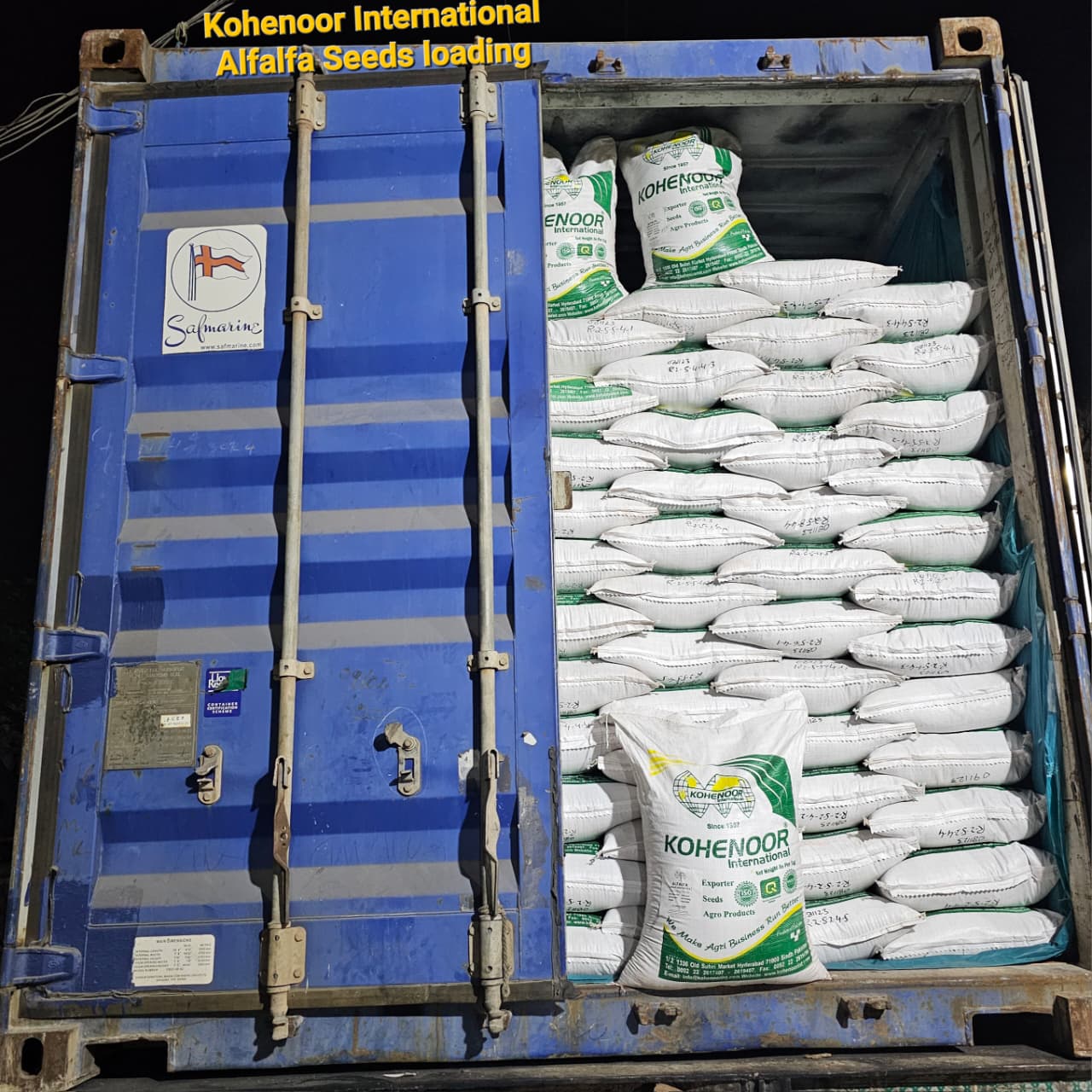
Payment for a first order is normally 100 percent telegraphic transfer against the bill of lading copy or an irrevocable letter of credit at sight, with easier terms for repeat buyers. Alfalfa seed in cool, dry storage typically holds its germination for 18 to 24 months, so a farm can hold stock across seasons. The minimum alfalfa order after the trial is 5 MT; grasses and other species are quoted to the hectares.
Three generations of our family have sold forage seed to the people who keep livestock on hard land, starting with the farmers around Hyderabad and extending now to customers in more than 70 countries. The scale has changed. The promise has not: clean seed, bred for the heat and the salt, with a person who answers.


Send your product, quantity and destination port. The export desk replies personally with a quotation, current lot certificates and a shipping schedule — no bots, no obligation.
WhatsApp +92 310 4929292 export@kohenoorint.comRhodes grass as the staple hay, with TAIZTAR alfalfa for protein. Our Australian Rhodes grass is a perennial standing 3–5 years that tolerates drought, heat and saline soil and gives 12–14% protein hay; TAIZTAR is a non-dormant, heat and salinity tolerant alfalfa with 22–24% crude protein and 7 or more cuts a year. Sorghum, pearl millet and Baymisaal carry the summer.
Sesbania (Janter) is a 40–45 day nitrogen-fixing legume that goats browse eagerly and that tolerates saline and poor soil; Rhodes grass hay is the roughage base; TAIZTAR alfalfa adds protein for lactating and growing animals; Safa berseem and Persian clover are the winter green feed.
Yes, with the right species. Rhodes grass, TAIZTAR alfalfa, sesbania and Baymisaal all tolerate saline soil, and our research plots in Sindh select them under saline groundwater. Send the export desk your water analysis and soil test and we will match species to each field.
Yes. Sesbania (janter) is the nitrogen-fixing legume in the Kohenoor range that works as both a cover crop and a green manure: sown between main crops or on saline and exhausted land, it is ploughed in at six to eight weeks to return nitrogen and organic matter before alfalfa, panicum or Rhodes grass is sown. It doubles as a soft fodder for sheep and goats. Panicum (Guinea grass) and brachiaria complete the tropical pasture base. All ship in the same container with the same ISTA and phytosanitary documents as the rest of the order.
Trainers want clean, consistent, leafy hay. Rhodes grass cut before heading and TAIZTAR alfalfa cut at bud stage, grown from seed with a written purity guarantee and cured and stored carefully, meet that brief. Stables without land can contract a nearby farm to grow to their specification from approved seed.
Because dodder destroys the stand, not the animal. It is a parasitic vine that spreads through a field and persists in the soil for years, and it is a quarantine weed in many countries. Every Kohenoor alfalfa lot is Sortex-cleaned, ISTA-tested and guaranteed 0% dodder in writing; Safa berseem is supplied dodder-free.
Alfalfa is sown at 10–12 kg per acre, which is 25–30 kg per hectare. Rhodes grass, sesbania, sorghum, millet and clover rates depend on the lot and sowing method and are confirmed on the quotation and bag tag. Baymisaal planting quantities are advised separately.
5 MT for alfalfa, with 1 MT trial lots accepted. Rhodes grass, sesbania and the other species are quoted to your hectares and travel in the same shipment, so a trial can cover the whole programme.
Send your location, water analysis, hectares and head count by WhatsApp to +92 310 4929292 or email export@kohenoorint.com. The export desk replies within 24 hours in English, Arabic, Spanish or French with a programme, a quotation and the current ISTA certificates. We never publish prices.