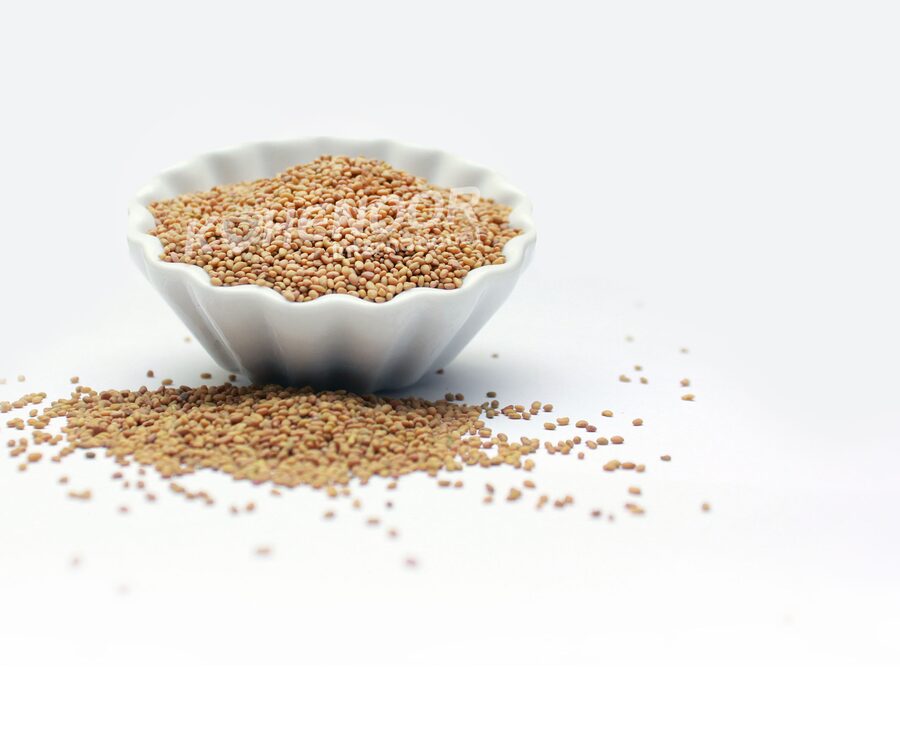
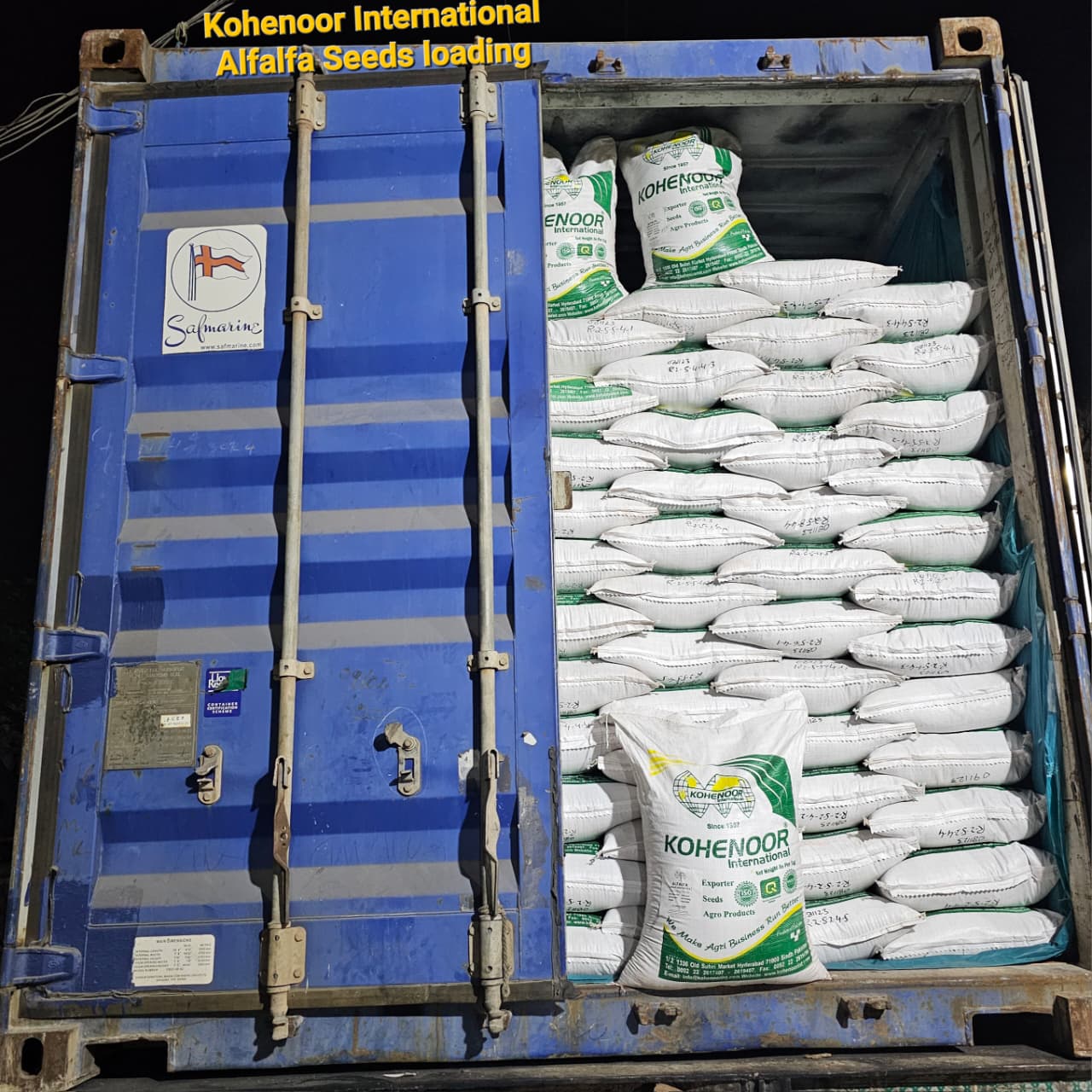
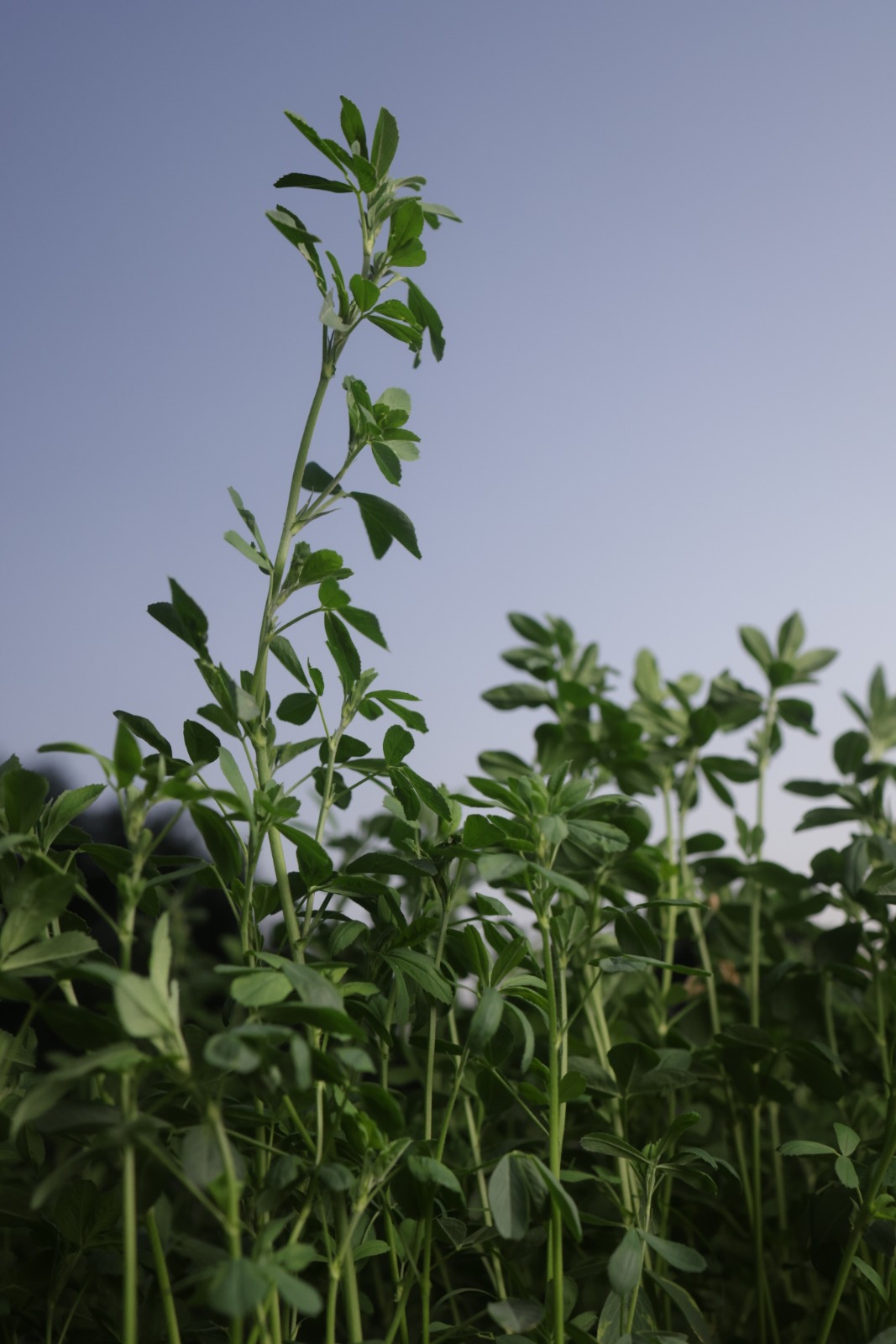
अल्फाल्फा · lucerne · रजका · TAIZTAR for the Terai · KN92 for the hills · 25–30 kg/ha · 0% dodder · MOQ 5 MT (1 MT trial)
Search for "alfalfa in Nepali" and you find two things at once: a word question and a farming question. Nepali farmers call the crop अल्फाल्फा or lucerne, and in the Terai it is commonly known as रजका or लुसन; the farming question is whether this deep-rooted protein legume can be made to work in a country whose lowland floods every monsoon and whose hills freeze every winter — and the answer, with the right variety and the right calendar, is yes.
WhatsApp +92 310 4929292 Get a quote in 24h
The word alfalfa has no old Nepali root, because the crop is a comparatively recent arrival in Nepal's fodder calendar. In written Nepali it is transliterated as अल्फाल्फा, the form you will see in extension leaflets, agricultural college notes and the livestock pages of Nepali newspapers. The second name you will hear is lucerne (sometimes written लुसर्न), the British and Commonwealth name for the same plant and the one older agricultural officers in Nepal were trained on. Alfalfa and lucerne are not two crops; they are one species, Medicago sativa, a perennial legume of the pea family grown for its leafy, protein-rich forage.
In the Terai lowland, in farming circles rather than in dictionaries, the crop is commonly called रजका (rijka or rajka) or लुसन (lusan). Ask for alfalfa by any of the three names — अल्फाल्फा, lucerne or रजका — and a Terai fodder grower will know what you mean. In the mid-hills and the Kathmandu valley, where the crop is newer still, अल्फाल्फा and lucerne are the terms the dairy pockets use.
So the "alfalfa meaning in Nepali" is best given as a description rather than a single word: a deep-rooted, many-cut perennial green fodder (बहुवर्षीय हरियो घाँस) of the legume family (कोसेबाली) that is cut six or more times a year, fixes its own nitrogen, and carries more protein in its leaves than any grass fodder a Nepali dairy or goat farm is likely to grow. One point of accuracy: alfalfa is not berseem (बर्सिम), which is an annual winter clover, nor the vetches and peas grown as winter fodder in the hills. It is the only common fodder legume in Nepal that is a true perennial, and that is why it is worth the extra care at establishment.
The table gives the Nepali Devanagari for the farm terms that come up in any conversation about growing alfalfa, so that an importer, a cooperative manager and a farmer can talk about the same thing in the same words. Regional usage varies between Terai and hill speakers; regional words are marked.
| English | Nepali (Devanagari) | Note |
|---|---|---|
| Alfalfa / lucerne | अल्फाल्फा / लुसर्न | Terai farming circles: रजका (rijka), लुसन (lusan) |
| Seed | बीउ | Alfalfa seed = अल्फाल्फाको बीउ |
| Fodder / green fodder | घाँस / हरियो घाँस | Cut-and-carry fodder |
| Hay (dried fodder) | सुकेको घाँस | Distinct from पराल, rice straw |
| Cutting / harvest | कटाई | First cut = पहिलो कटाई |
| Irrigation | सिँचाइ | The crop's main winter field need |
| Buffalo | भैँसी | The main milk animal of the Terai |
| Goat | बाख्रा | Kids = पाठा / पाठी |
| Milk | दूध | Buffalo milk = भैँसीको दूध |
| Protein | प्रोटिन | Crude protein = कच्चा प्रोटिन |
| Legume | कोसेबाली | Alfalfa is a perennial legume |
| Soil | माटो | Well-drained soil = पानी नजम्ने माटो |
| Monsoon / rainy season | वर्षायाम | The waterlogging season |
| Cooperative | सहकारी | Dairy cooperative = दुग्ध सहकारी |
Two land units matter when you talk seed rates in Nepal. In the Terai the bigha (बिघा) is about 0.68 hectare, so the alfalfa seed rate of 25–30 kg per hectare is roughly 17–20 kg per bigha, or a little under 1 kg per kattha (कट्ठा). In the hills the ropani (रोपनी) is about 0.05 hectare, which puts the rate at roughly 1.3–1.5 kg per ropani. These are rounded conversions for planning; confirm the measured area of your plot before ordering.
The Terai is where most of Nepal's alfalfa is grown and where the search for "alfalfa in terai" comes from: the flat, irrigated plain along the southern edge of the country, through districts such as Jhapa and Morang in the east, Bara in the centre, and Chitwan, Nawalparasi and Rupandehi further west. It is also where the greater part of the country's buffalo milk is produced and collected through cooperative dairies and chilling centres, so fodder demand and growing conditions sit side by side.
The Terai calendar for alfalfa follows the rice harvest. Once the monsoon paddy is cut in Kartik–Mangsir (mid-October to early December), the soil dries enough to plough and the cool, dry winter begins. That is the sowing window: October to November, as early as the land allows. A fine, firm seedbed, seed at 25–30 kg per hectare sown shallow (no deeper than 1–1.5 cm) and lightly covered, and a light irrigation if the soil is dry, typically give emergence in a week to ten days. Rhizobium inoculation is worth doing where an alfalfa-group inoculant can be had, because Terai paddy soils have rarely carried the crop; soil from an established alfalfa stand mixed with the seed is the traditional substitute. Phosphorus at sowing matters more than nitrogen for a legume; a soil test through your district agriculture office will tell you how much.
The variety question is decisive in the Terai. Winters are mild and short, but from March the temperature climbs and by May and June it is routinely above 38–40 °C before the rains break. A dormant alfalfa bred for a cold northern winter slows and thins in that heat. Kohenoor's TAIZTAR is a fall-dormancy class 10, fully non-dormant alfalfa bred on modern genetics for heat and salinity tolerance — the superior replacement for the late-1970s CUF-101 type. It keeps growing through the Terai spring and early summer when the herd most needs green fodder, and recovers fast after each cut; see the TAIZTAR variety page.
In most seasons a Terai stand sown in late October gives its first light cut after 60–70 days, then cuts every 25–35 days through the spring. On well-drained upland (tandi or bhit land) the stand carries on as a perennial for three to four years; on paddy land it is more often managed as a long winter–summer crop that is sacrificed when the monsoon floods the field. Which of those two systems you follow decides whether alfalfa succeeds on your farm.
If there is one agronomic fact every Nepali farmer should know about alfalfa it is this: the crop will not tolerate standing water. Its deep taproot needs oxygen, and when a field is saturated for more than a few days the root rots, crown diseases take hold and the stand dies in patches that weeds fill. The Terai monsoon from Asar to Bhadra (June to September) is exactly that condition on most paddy land, and it is why alfalfa has been called a difficult crop in Nepal even though its winter and spring performance is excellent. There are three workable responses, and Terai farmers use all of them.
Where none of this is possible — a cooperative member with only low paddy land, for instance — the honest advice is to grow alfalfa as an eight-month crop: sow in October, cut from January to June, and plough it in before the monsoon as a nitrogen-rich green manure ahead of the rice. Even as an annual, a TAIZTAR stand in the Terai typically gives five or six cuts of high-protein fodder in the dry months when the herd would otherwise be on straw. It is a different way to use the crop, not a failure of it. In the hills the problem is smaller, but a terrace with a blocked outlet or a seep from above waterlogs in Saun and Bhadau exactly as a Terai paddy does, so check the drainage before sowing.
Nepal's dairy pockets outside the Terai sit in the mid-hills and in the Kathmandu valley at roughly 1,300–1,500 metres, with commercial cow and buffalo farms around the valley towns and along the hill highways. Winters here are cold — frost on clear nights from December to February, colder still above 1,800 metres — but they are dry and mostly snow-free at these altitudes, and spring warms early. That is a climate in which alfalfa does well with a cold-tolerant variety and a calendar that respects the frost.
For the hills Kohenoor recommends KN92, a fall-dormancy class 9 alfalfa selected for cold tolerance. It slows during the coldest weeks rather than being damaged by them, and produces a strong spring flush when the valley warms in Falgun and Chait (February to April). Sow in September–October so the stand has eight to ten weeks of root growth before the first frost, or in Falgun as soon as the soil can be worked; the seed rate is the same 25–30 kg per hectare, about 1.3–1.5 kg per ropani. A spring sowing gives a lighter first season but avoids frost on seedlings.
Hill soils raise one issue the Terai does not: acidity. Many mid-hill bari soils have a pH below 6, and alfalfa, like most legumes, wants 6.5 or higher for its root nodules to work. Liming at establishment — agricultural lime or dolomite worked into the seedbed a few weeks before sowing, at a rate set by a soil test — is typically the single most important input for alfalfa in the hills, and it pays back for the life of the stand. Phosphorus and a little potash at sowing follow; nitrogen fertiliser is unnecessary once the nodules form.
Irrigation in the hills is usually by hand or small pump from a spring or stream, and alfalfa's deep root makes it more forgiving of a missed watering than any annual fodder. In most seasons a hill stand sown in autumn gives four to six cuts from March to November, pausing in the coldest weeks; the fodder goes to crossbred cows and buffalo, and hay made in the dry spring is a prized feed for goats in the lean months. For a cooperative or commercial farm in the valley that wants to lift milk protein and cut dependence on bought concentrate, a few ropani of KN92 is one of the most useful investments available.
The buffalo (भैँसी) is the milk animal of Nepal. A large share of the country's milk is buffalo milk, and the cooperative dairies of the Terai and the hills are built around herds kept on smallholdings of two to ten animals, fed mostly on rice straw, grass cut from field margins, and whatever concentrate the household can afford. Protein is the limiting nutrient in that diet for most of the year, and protein is exactly what alfalfa supplies.
Kohenoor's alfalfa carries a crude protein of 22–24% at the leafy pre-bud stage, with crude fibre up to 28%, and buffalo take to it readily when it is introduced gradually. Fed green alongside rice straw, alfalfa does three things for a buffalo herd that farm experience in warm countries repeatedly confirms: it raises milk yield where protein was limiting, it typically lifts the fat and solids-not-fat that cooperative payment systems reward, and it brings a buffalo back into condition and into calf faster after calving. The exact response depends on the rest of the diet, so introduce alfalfa over a week, keep straw or grass in the ration for fibre, and watch the collection-centre figures.
Two practical notes. First, do not feed a buffalo a stomach-full of fresh wet alfalfa on an empty rumen — the caution that applies to any lush legume. Feed it after straw or grass, or wilt the cut fodder for a few hours in the shade. Second, alfalfa makes excellent hay (सुकेको घाँस) when cut in the dry Terai spring and turned for two or three days; stacked alfalfa hay from March–May is the most valuable store a buffalo farm can lay down for the monsoon months when green fodder is scarce and the fields are too wet to cut.
For cooperatives and chilling centres the arithmetic is simple: a member with 10 kattha (half a bigha) of TAIZTAR under cut has a steady supply of green protein for two or three buffalo from January to June, the season that decides the year's milk. Kohenoor supplies cooperative orders in Nepal directly — one shipment, one document set, one contact. The forage seeds for dairy farms page sets out the full dairy programme.
Nepal keeps goats (बाख्रा) in every district from the Terai to the high hills, and goat meat is the preferred meat of most of the country, with demand that peaks at Dashain and Tihar and outruns domestic supply in most years. Commercial goat farms have multiplied in the Terai and lower hills over the last decade, and their problem is the dairy farmer's problem: growth and kidding rates are limited by protein, and bought concentrate is the costliest line in the budget.
Alfalfa is, for goats, close to an ideal fodder. Goats are selective feeders that prefer leaf to stem, and alfalfa at the pre-bud stage is nearly all leaf; its protein, calcium and energy support the growth of kids, the milk of does raising twins, and the condition of bucks before breeding. Fed green, as sun-cured hay, or as a leafy supplement to tree fodder and grass, alfalfa typically brings market weight forward and improves kid survival where protein was short. It is also one of the few fodders a stall-fed goat eats with as much enthusiasm as browse.
The practical shape of alfalfa for a Nepali goat farm is usually hay. Goats are kept in sheds, kids cannot be let into a standing crop, and the farm needs a feed it can store for the monsoon and the winter. Alfalfa cut in the dry season, wilted and dried in the sun, then stacked under a roof, keeps its leaf and most of its protein for months. A farm of 20–40 goats can be supplied through the year from a few kattha of Terai alfalfa or a few ropani in the hills, with surplus hay sold to neighbours. Feed the leafy hay with a grass or straw component for fibre, and introduce it gradually.
Alfalfa also fits the mixed small-ruminant farm: sheep in the hill and mountain districts take alfalfa hay as readily as goats, and the same stand feeds both. The forage seeds for camel, sheep and goat farms page describes the companion species — sesbania, berseem, Rhodes grass and napier — that round out a small-ruminant forage plan.
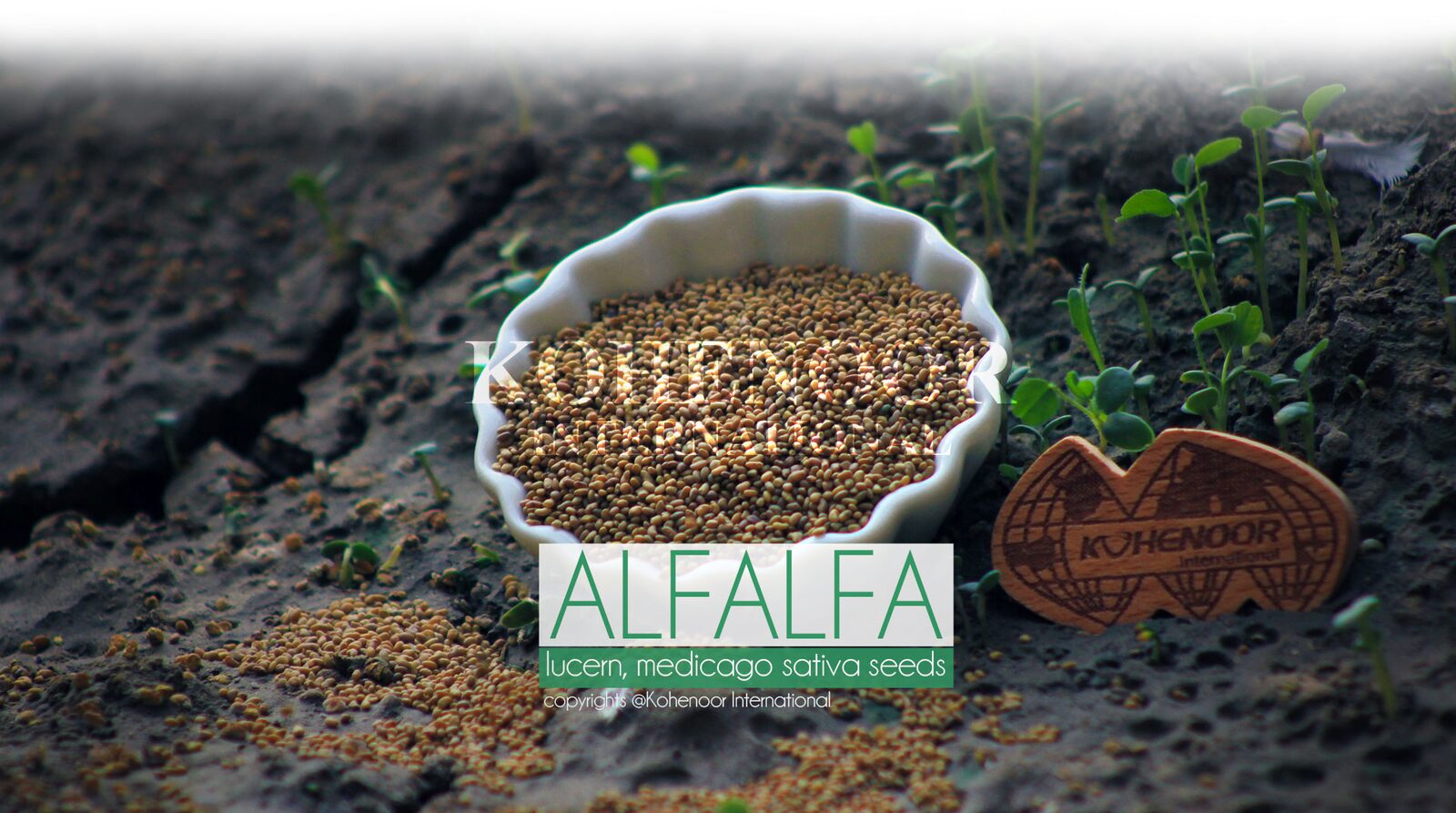
The table brings together the figures a Nepali farmer or cooperative needs for planning, for the two main growing environments. All are typical ranges for most seasons rather than guarantees; drainage, soil and the length of the dry season move them.
| Item | Terai lowland (TAIZTAR) | Hills and Kathmandu valley (KN92) |
|---|---|---|
| Variety and dormancy | TAIZTAR, FD 10 non-dormant, heat and salinity tolerant | KN92, FD 9, cold tolerant |
| Sowing window | October–November (Kartik–Mangsir), after rice | September–October, or February–March (Falgun–Chait) |
| Seed rate | 25–30 kg/ha ≈ 17–20 kg/bigha ≈ 0.9–1 kg/kattha | 25–30 kg/ha ≈ 1.3–1.5 kg/ropani |
| Sowing depth | 1–1.5 cm, firm fine seedbed, light cover | 1–1.5 cm, lime worked in beforehand if pH is below 6.5 |
| First cut | 60–70 days after sowing (late December–January) | 70–90 days, or at early bud |
| Cutting interval | Every 25–35 days, at early bud, 5–7 cm stubble | Every 30–40 days in season; pauses in the coldest weeks |
| Cuts per year | 5–6 on paddy land as a winter–summer crop; 7+ on drained upland | 4–6 from March to November |
| Main risk | Monsoon waterlogging, June–September | Soil acidity; frost on autumn seedlings |
| Stand life | 1 season on paddy land; 3–4 years on drained upland | 3–5 years with liming and drainage |
A few rules of thumb hold in both environments. Cut at early bud, when the first flower buds show but before they open: that is where protein and digestibility are highest and the plant is ready to regrow. Leave 5–7 cm of stubble so the new shoots at the crown are not damaged. Irrigate after cutting, not immediately before, so the field is firm for harvest and the regrowth gets the water. And do not graze the stand; alfalfa in Nepal is a cut-and-carry crop, and treading buffalo will finish a young stand faster than any disease.
Weed control is mostly a matter of establishment: a clean seedbed, a quick-emerging stand and a first cut taken before weeds set seed usually suffice, and after the first year a healthy canopy suppresses most annuals on its own. The one weed that must never arrive with the seed is dodder (Cuscuta), the parasitic yellow vine that kills alfalfa in spreading circles and is nearly impossible to remove once established. Kohenoor's alfalfa seed is guaranteed 0% dodder in writing on every lot — for a farmer in Nepal with no local dodder problem, the simplest way to keep it that way.
Alfalfa is the protein anchor of a fodder plan, not the whole of it, and in Nepal the monsoon gap makes companion species essential. The most useful pattern for a Terai dairy or goat farm, with small changes for the hills, is a perennial grass for bulk, alfalfa for protein in the dry months, and an annual winter legume on the paddy land — so that something green is cut every week of the year. Kohenoor supplies the whole programme from one warehouse, which is why many buyers in Nepal order a mixed consignment rather than alfalfa alone.
A typical Terai calendar built from these reads: berseem and ryegrass on paddy land in October; alfalfa on drained upland in October–November; napier cut from April onward and carrying the monsoon; sorghum on spare upland from March; alfalfa hay made in April–May and fed with napier through Asar–Bhadra; and the cycle beginning again after the rice harvest. The year-round forage programme page lays this out month by month and explains how one order covers it with a single document set for Nepal's quarantine and customs.
Nepal is landlocked, and that shapes how alfalfa seed reaches a buyer in Chitwan or Kathmandu. Kohenoor ships from Pakistan under HS heading 1209.21 (alfalfa seed for sowing). At the time of writing a shipment can travel in one of two ways, and the export desk quotes both so that you can choose on time and quantity.
On the Nepal side, seed is a regulated import. In general terms, and subject to confirmation with your clearing agent at the time of shipment: an import permit from Nepal's plant quarantine authority is normally required before seed is shipped; the consignment must carry a phytosanitary certificate from the exporting country, which Kohenoor obtains from Pakistan's plant protection authority under the IPPC model for every shipment; and commercial sale of a variety may involve registration with the seed regulatory authority, which the importer handles. Fodder seed for a farm's own use, a cooperative's members or a trial is commonly treated differently from seed for general retail, and the quarantine office will say which path applies. We supply whatever additional declaration the permit requires, and we do not claim any registration or approval from Nepal's authorities; our role is to make the paperwork complete so that it passes first time.
Every Nepal shipment carries the ISTA Orange Certificate for the lot, our Certificate of Analysis, the IPPC phytosanitary certificate, the certificate of origin, commercial invoice, packing list and bill of lading or air waybill, with the dodder-free statement in writing and a single lot number tying the bag tag to every document — which is what makes a quarantine inspection quick.
Do you have an agent in Nepal? No — Kohenoor sells direct, to the farm, the cooperative or the importing company, delivered to your port of entry or your door, with one contact from enquiry to clearance. For a Nepal-specific overview see the alfalfa seeds Nepal country page; for the wider region see all countries; and readers who follow the shared agronomy of the plains across the border in Pakistan's Punjab will find the Pakistan pages useful.
Buyers in Nepal order from Kohenoor as a farm, a cooperative, an agro-enterprise or a development project, and the specification is the same for all of them. The export desk confirms the lot documents against your purchase order before anything is loaded, and sends the ISTA certificate and COA for the lot proposed with the quotation. Quotations are given on WhatsApp or email, per lot and destination, for both the sea-and-overland and the air route.
| Parameter | Kohenoor alfalfa seed for Nepal |
|---|---|
| Botanical name | Medicago sativa — alfalfa / lucerne / अल्फाल्फा |
| Varieties | TAIZTAR (FD 10, non-dormant) for the Terai; KN92 (FD 9, cold-tolerant) for the hills and valley |
| Purity | ≥98%, ISTA Orange Certificate per lot |
| Germination | ≥85%, ISTA Orange Certificate per lot, test date stated |
| Dodder | 0%, guaranteed in writing |
| Crude protein (forage) | 22–24%; crude fibre up to 28% |
| Seed rate | 25–30 kg/ha (10–12 kg/acre; about 17–20 kg/bigha; 1.3–1.5 kg/ropani) |
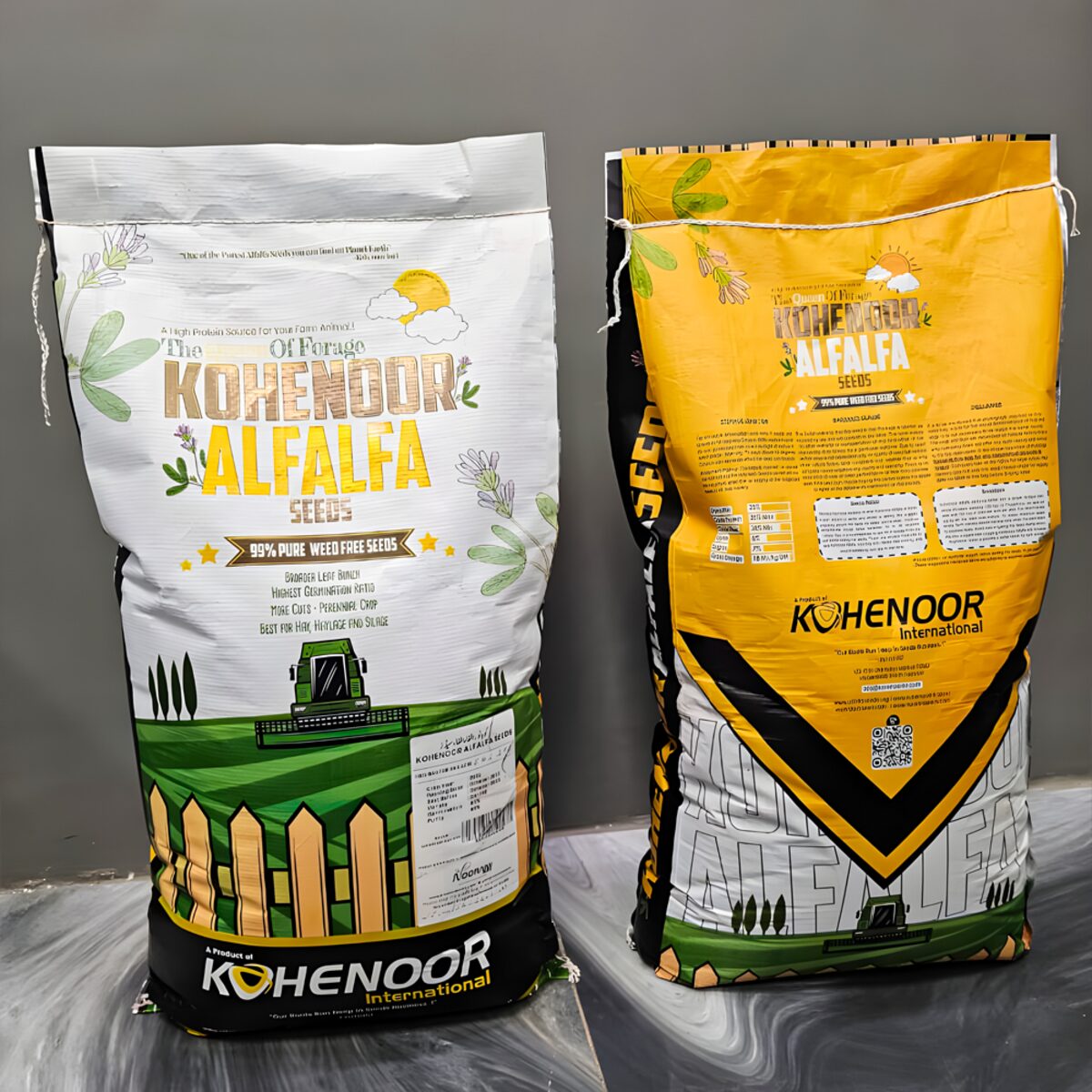
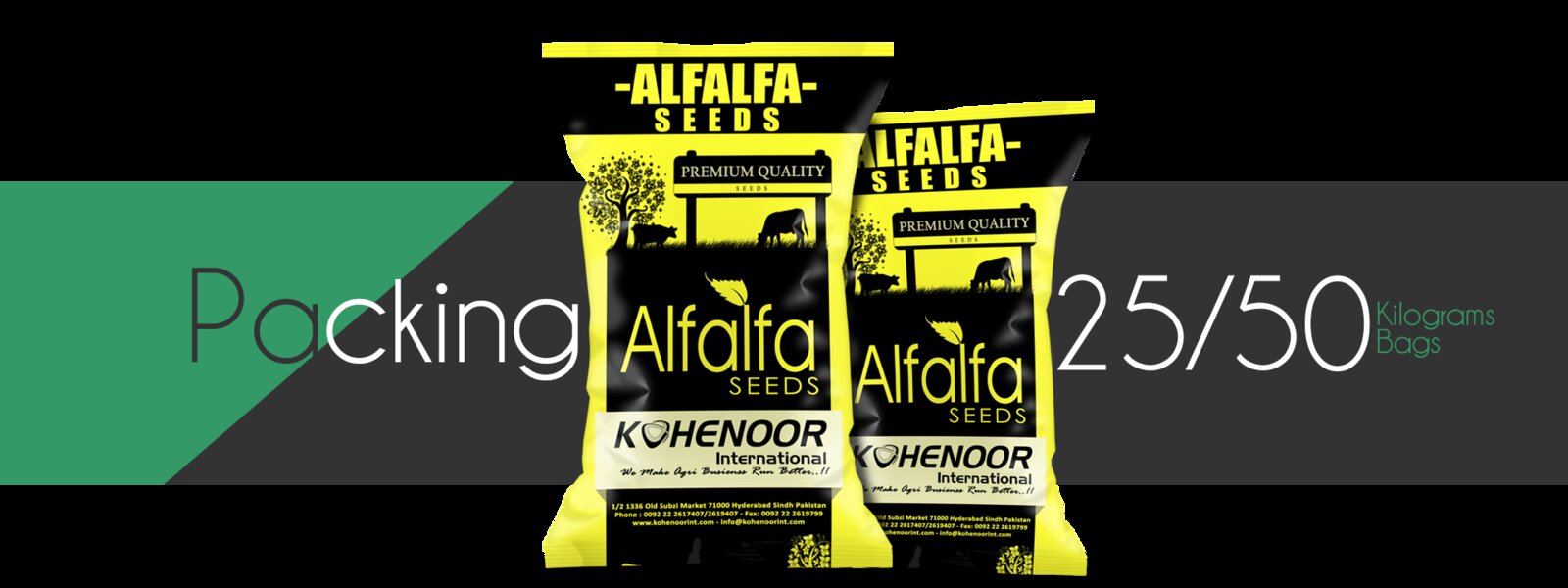
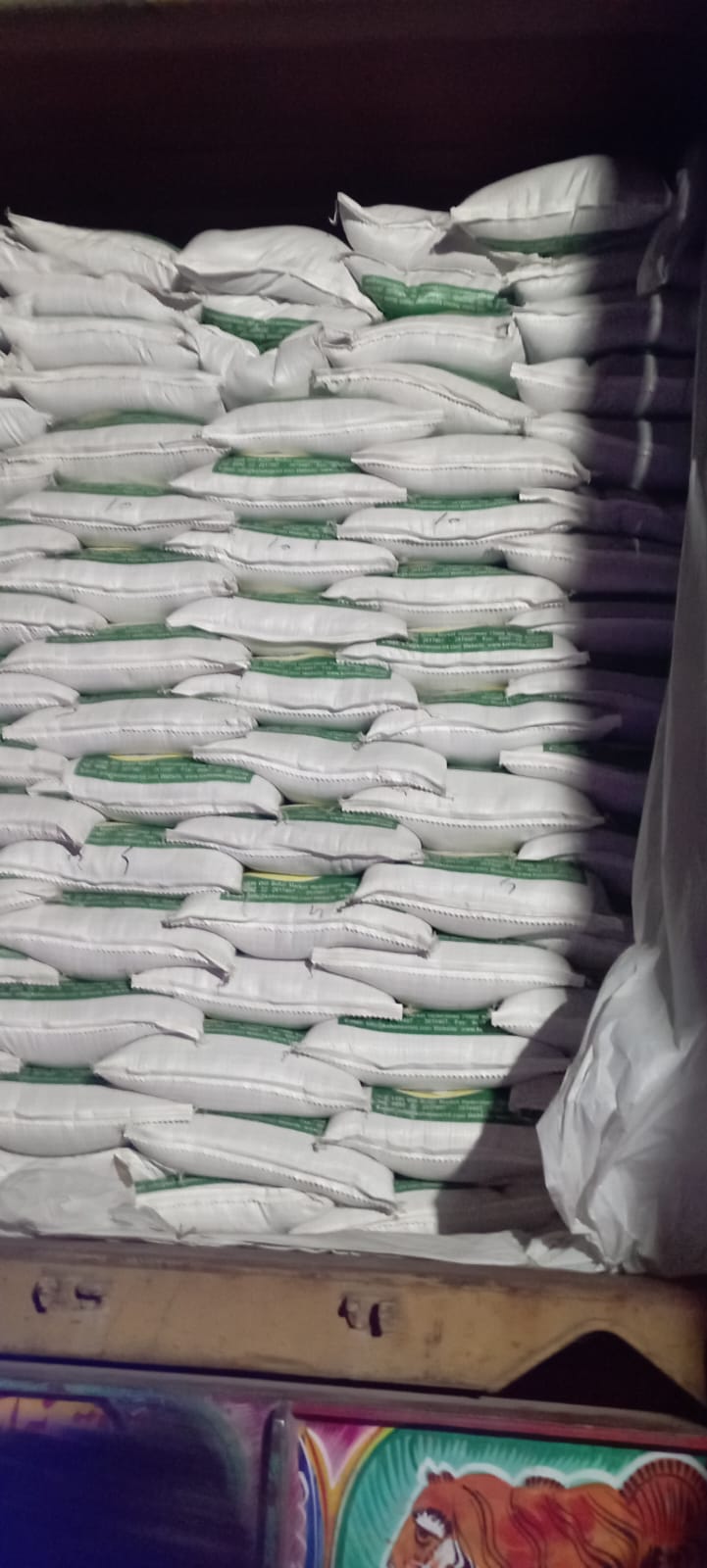
| Packaging | 25 kg poly-lined PP woven bags with sealed lot tags; private-label bags on request |
| HS code | 1209.21 |
| MOQ and lead time | 5 MT; 1 MT trial lots accepted; in-stock lots 7–12 days to FOB Karachi |
| Terms | FOB Karachi, with CFR/CIF to the nearest seaport or air freight to Kathmandu on request; 100% TT against B/L copy or irrevocable L/C at sight |
How to order. First, send your requirement by WhatsApp to +92 310 4929292 or by email to export@kohenoorint.com: the quantity, whether it is for the Terai or the hills (so that we propose TAIZTAR, KN92 or both), your preferred route and point of entry, any companion forages for the same consignment, and whether you hold or are applying for the import permit. Second, within 24 hours you receive a quotation, the COA and ISTA certificate for the lot proposed, and a shipping schedule. Third, on your purchase order and payment arrangement we complete the phytosanitary and origin certificates, load within 7–12 days for stock lots, and send the full document set to you and your clearing agent before the goods arrive.
If this is your first season with alfalfa, say so. We will suggest a trial quantity for your plot in bigha or ropani, confirm the sowing window for your district, and send sowing and cutting notes you can translate for your members. A good first stand of अल्फाल्फा is the best argument for the second one.


Tell the export desk your district, your land in bigha or ropani, and whether the seed is for buffalo, cows or goats. You receive a quotation for TAIZTAR or KN92 with the lot's ISTA certificate within 24 hours — direct from Kohenoor, delivered to Nepal, one contact.
WhatsApp +92 310 4929292 export@kohenoorint.comAlfalfa in Nepali is written अल्फाल्फा, and the same crop is also called lucerne (लुसर्न), its British name. In the Terai, farming circles commonly know it as रजका (rijka) or लुसन (lusan). All of these refer to one species, Medicago sativa, a perennial legume fodder with 22–24% crude protein, cut many times a year for buffalo, cows and goats.
Alfalfa and lucerne are the same plant, Medicago sativa; the two names come from American and British usage. Berseem (बर्सिम) is a different crop, Trifolium alexandrinum, an annual winter clover sown on paddy land in Nepal. Both are legume fodders, but alfalfa is a deep-rooted perennial that can last several years on drained land, while berseem is resown every October.
Yes, with a non-dormant variety. The Terai climbs above 38–40 °C in May and June, and a dormant northern alfalfa thins in that heat. Kohenoor's TAIZTAR is a fall-dormancy 10, heat- and salinity-tolerant alfalfa that keeps growing through the Terai spring and early summer and recovers quickly after each cut. Sow it in October–November after rice on the best-drained land you have.
Alfalfa cannot stand waterlogging, and the June–September monsoon on low paddy land will kill a stand. Grow it on drained upland or on raised beds with working furrows, take the last pre-monsoon cut a little higher, and do not cut while the field is under water. Where only low land is available, grow TAIZTAR as an October-to-June crop and plough it in as green manure before rice.
KN92, Kohenoor's fall-dormancy 9 cold-tolerant alfalfa, is the hill variety. It slows in the frost weeks of December to February rather than being damaged and gives a strong spring flush. Sow in September–October or in February–March at 25–30 kg per hectare, about 1.3–1.5 kg per ropani, and lime acidic bari soils to pH 6.5 or above before sowing, following a soil test.
The seed rate is 25–30 kg per hectare. In the Terai that is about 17–20 kg per bigha, or a little under 1 kg per kattha. In the hills it is about 1.3–1.5 kg per ropani. These are rounded conversions for planning; confirm the measured area of your plot and the export desk will calculate the exact quantity and the number of 25 kg bags you need.
No. Kohenoor supplies direct to the farm, cooperative or importing company in Nepal, delivered to your port of entry or your door, with one contact at the export desk from enquiry to customs clearance. Seed moves by sea to the nearest seaport and overland in transit to a Nepali customs point, or by air to Tribhuvan International Airport for trial lots. Quotations are given on WhatsApp or email, per lot and destination.
At the time of writing, seed imports into Nepal generally require an import permit from the plant quarantine authority obtained before shipment, and the consignment must carry a phytosanitary certificate from the exporting country; variety registration may apply for commercial resale. Confirm the current rules with your clearing agent. Kohenoor supplies the IPPC phytosanitary certificate, ISTA certificate, COA, certificate of origin, invoice, packing list and transport document, all under one lot number, HS 1209.21.