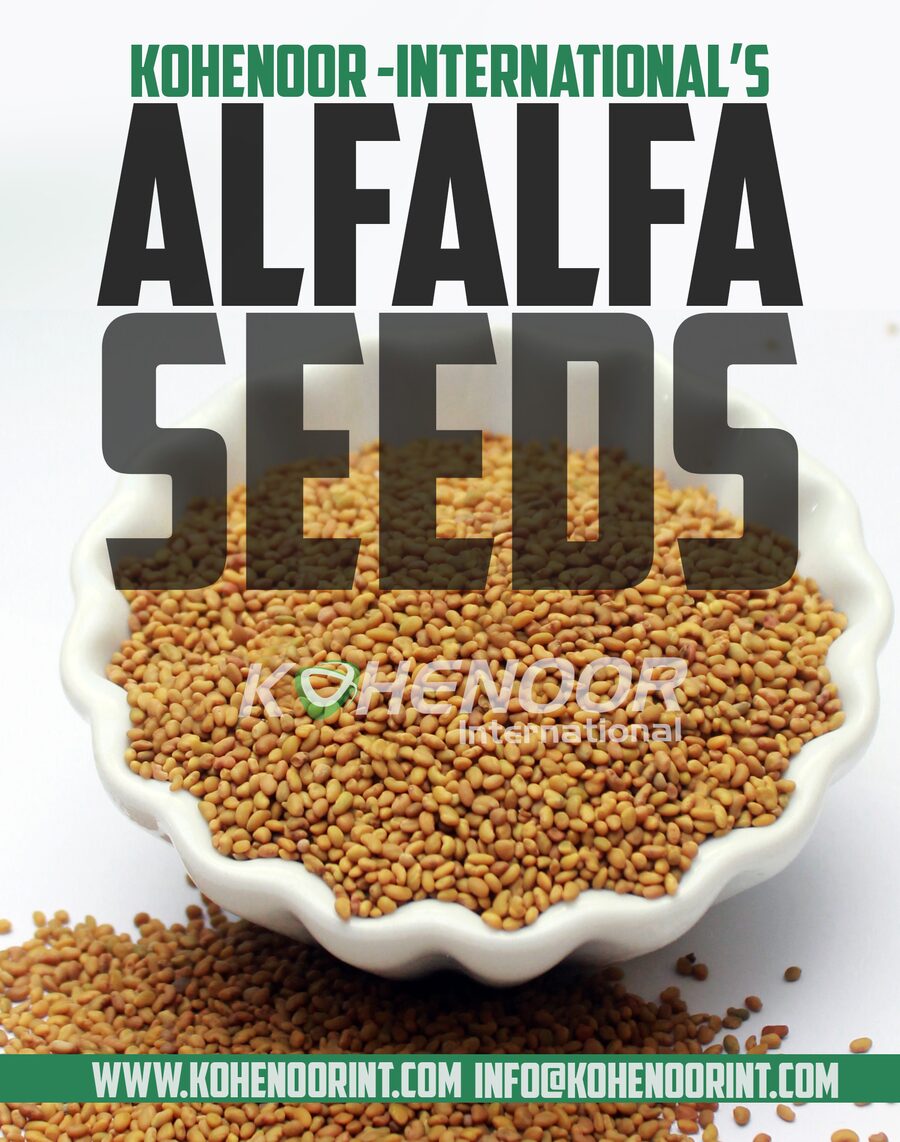
Alfalfa sprouting seed · from origin

Alfalfa sprouting seed for South Korea — importers, sprout-vegetable producers and health-food retailers

Untreated · Sortex-cleaned · ISTA-tested per lot · COA in 24 h · phytosanitary certificate · 25 kg bags · MOQ 1 MT

South Korea eats sprouts every day — soybean sprouts in soup, mung bean sprouts in bibimbap and japchae — and over the past twenty years it has added a whole category of "sprout vegetables", saessak, grown indoors and sold in neat punnets in every Emart, Lotte Mart and Homeplus and through the online grocers that deliver before dawn. Alfalfa sprouts are a staple of that category, in salads, sandwiches, wraps and bibimbap bowls, and the seed behind them is imported. The importer works with the Ministry of Food and Drug Safety on the food side and the Animal and Plant Quarantine Agency on the plant side. Kohenoor supplies untreated, food-grade Medicago sativa sprouting lots from its own cleaning line in Pakistan — purity around 99%, germination 90% and above, zero dodder — with the documents a Korean importer, broker and sprout producer need.

Get a quote in 24h
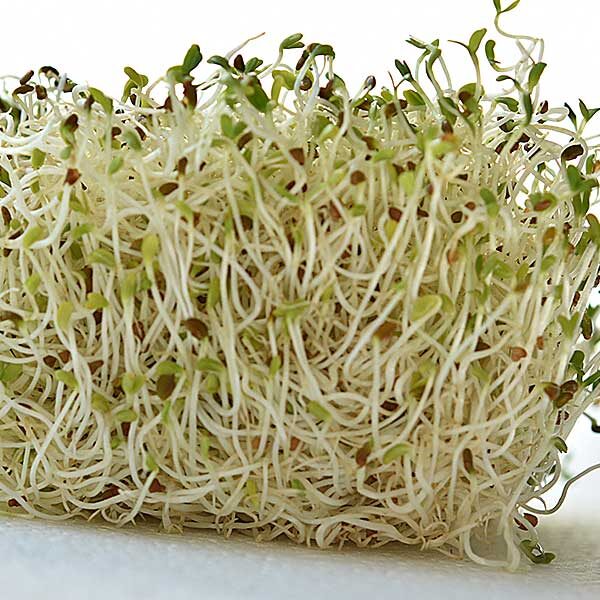
Fresh alfalfa sprouts of the kind grown by Korean sprout-vegetable producers from untreated Kohenoor alfalfa seed
In short: Alfalfa seed imported into South Korea for sprouting is declared to the Ministry of Food and Drug Safety as an imported food under the Imported Food Safety Control Act — which, at the time of writing, generally requires the importer to register the overseas manufacturing facility before the first import declaration — and is inspected by the Animal and Plant Quarantine Agency (APQA) against a phytosanitary certificate at the port. Kohenoor supplies untreated, Sortex-cleaned, ISTA-tested alfalfa sprouting seed (purity ~99%, germination 90%+, 0% dodder) with the facility information, IPPC phytosanitary certificate, COA within 24 hours, third-party Salmonella and E. coli reports on request and sealed lot tags, shipped FOB Karachi to Busan or Incheon from a 1 MT minimum.
Untreated — no coatingSortex optical-cleanedISTA-tested per lotCOA within 24 hThird-party microbial testingLot-tagged traceabilitySince 1957Reply within 24 h
Botanical nameMedicago sativa
Germination90%+ (ISTA, per lot)
Purity~99%
Dodder0%
MOQ1 MT
Packaging25 kg lot-tagged bags

Korea's sprout industry: from soybean sprouts to sprout vegetables

Korea is one of the world's great sprout-eating cultures. Soybean sprouts — kongnamul — are a daily side dish and the base of soups and rice dishes, and mung bean sprouts — sukju — go into bibimbap, japchae and countless banchan. Both are produced in enormous volume by specialist companies running automated, temperature-controlled sprouting plants in Gyeonggi, Chungcheong and the regions around the big cities, with national brands sold in every supermarket and a long tradition of local producers supplying wholesale markets. The industry professionalised early, under food-safety rules and HACCP certification, and the large producers run laboratories, water treatment and traceability systems as a matter of course.

The newer category is sprout vegetables, saessak-chaeso: alfalfa, radish, broccoli, red cabbage, mustard, buckwheat, pea shoots and wheatgrass grown indoors on trays or in hydroponic systems and sold as mixed punnets, as salad-ready packs and as ingredients in the convenience-store salads, sandwiches and wraps that have become a lunchtime habit in Seoul and Busan. The category grew with the well-being and salad trend of the 2000s and has kept growing with the online grocers — Coupang, Market Kurly, SSG — that deliver chilled produce overnight, and with the home-sprouting kits that sell strongly through online marketplaces and as gifts for the holidays.

Alfalfa is a core sprout in almost every Korean mixed punnet and the default sprout in salads and sandwiches. Korea does not grow alfalfa seed commercially, so every kilo sprouted there is imported, and the sprout-vegetable producers and seed importers who serve them have long experience with seed from several origins. They buy on performance in the tray — germination, uniformity, how clean the sprouts come off — and on documents, because Korean food-safety enforcement is strict and the supermarket and convenience-store chains audit their suppliers. Kohenoor's offer is dry, untreated, Sortex-cleaned seed from one company that grows, cleans, tests and ships it, with a lot ID on every bag and a document set that fits the importer's file.

MFDS and the import food declaration: what a Korean importer must do

Imported food in Korea is governed by the Imported Food Safety Control Act, administered by the Ministry of Food and Drug Safety. At the time of writing, and in general terms, the process runs as follows; your customs broker or import agent will confirm the current detail.
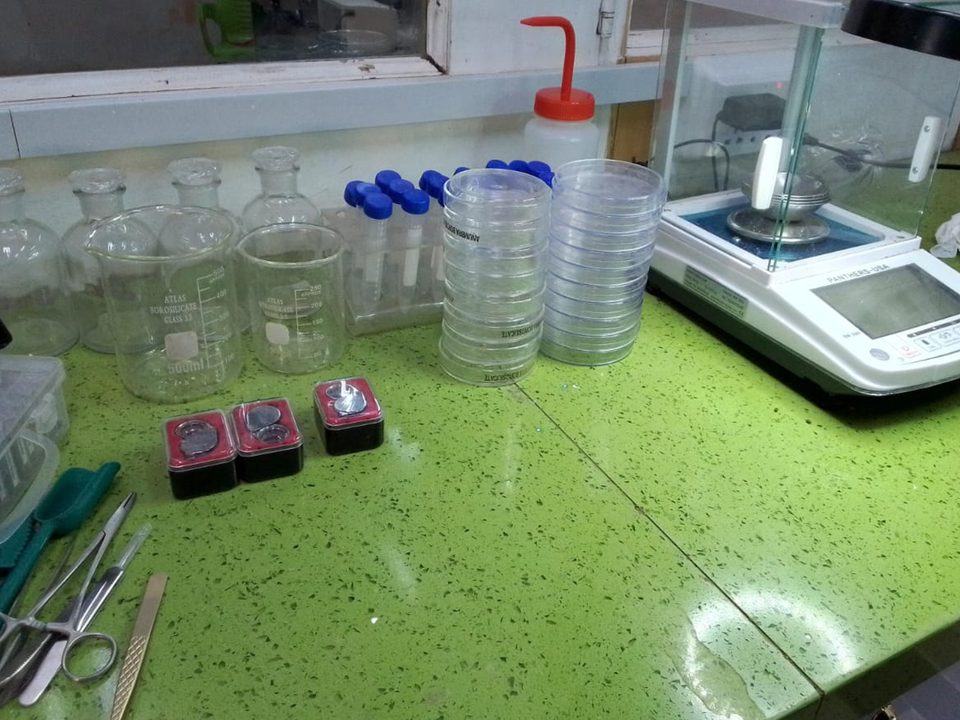
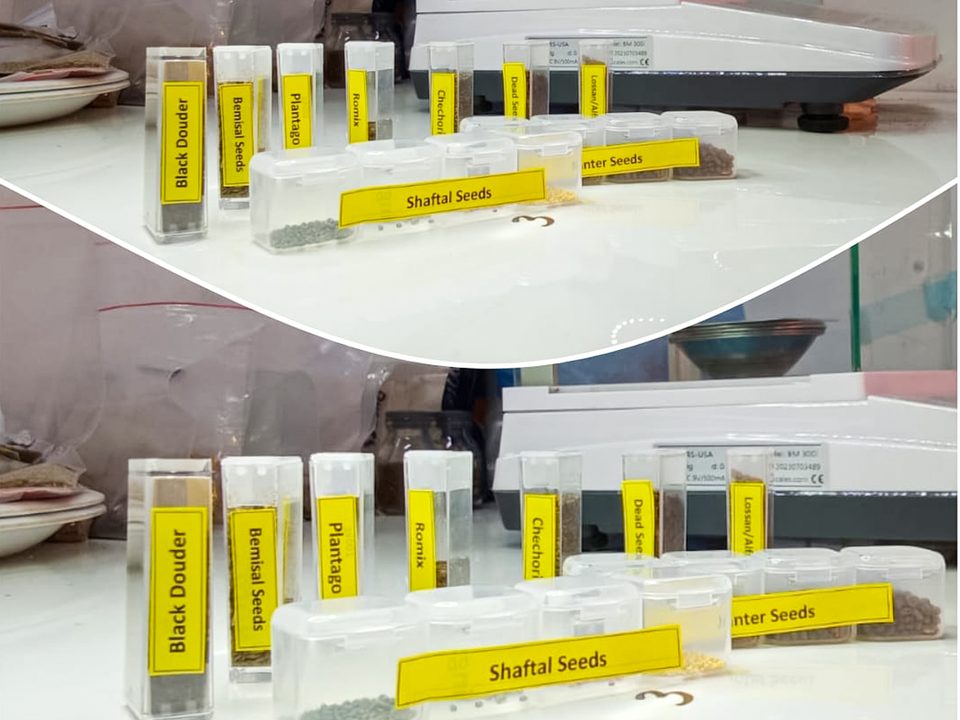
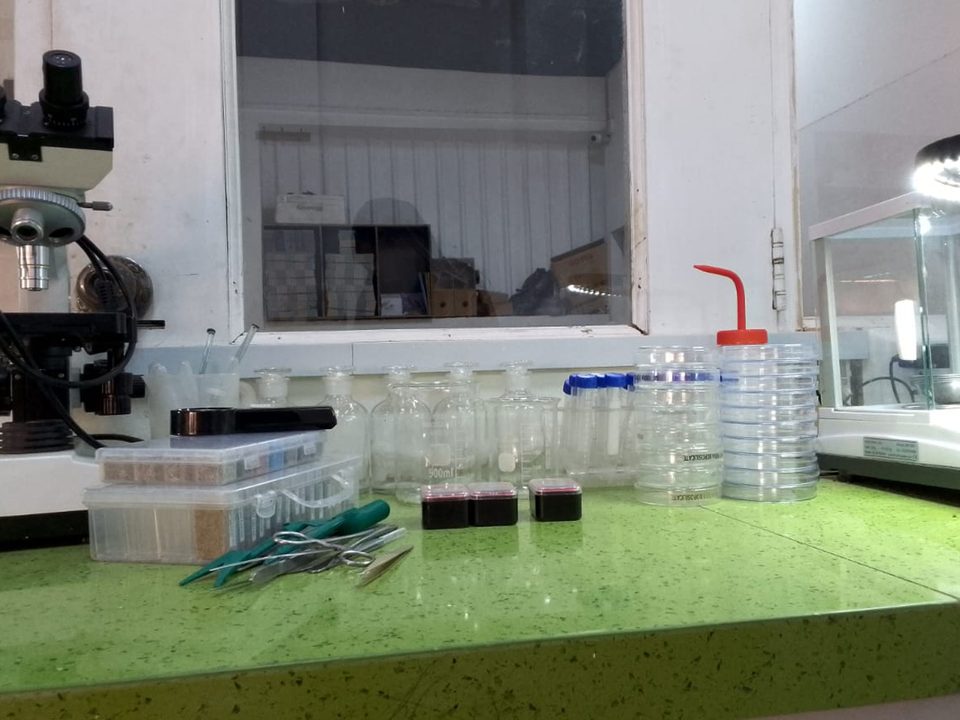
Purity analysis in the Kohenoor seed laboratory — lot results tied to the lot ID that appears on the import documents for Korea

Registration as an importer. A Korean company that imports food for sale must be registered with the MFDS as a food import business before it can file declarations.

Registration of the overseas manufacturing facility. The Act generally requires that the overseas establishment which manufactures, processes or packs food for export to Korea is registered with the MFDS before the first import declaration for its products. The registration is normally filed by the Korean importer (or by the overseas establishment itself) through the MFDS system, with information about the facility, its products and its food-safety management, and it must be renewed periodically. Kohenoor does not claim to hold any such registration or approval; what we do is supply the facility information, process descriptions, HACCP and ISO 9001 documentation and product details that the importer needs to complete the filing, and we respond to any follow-up questions from the MFDS through the importer.

The import declaration. For each consignment the importer files an import declaration with the MFDS before customs clearance, with the commercial documents, a description of the product and its ingredients, and labelling in Korean as required. The MFDS applies document review and, according to its risk-based programme, may order laboratory testing — pesticide residues under Korea's positive-list system, heavy metals, microbiological criteria and other parameters — before release. A consignment that passes is released; one that fails is returned or destroyed, and future consignments of the same product may face intensified inspection.

Korean labelling. Food sold in Korea carries Korean-language labelling; the importer specifies what must appear on the bag or on an attached label, and we print it at origin or supply the information for a label applied in Korea.

How alfalfa seed for sprouting is classified for the declaration, which food category and standards apply, and whether any additional product filing is needed are matters for the importer and broker to settle with the MFDS before the first order. Korea's pesticide positive-list system is strict: untreated seed grown and conditioned for food use, rather than seed diverted from a treated agricultural lot, is the only kind that passes it reliably, and if your system requires a residue screen on the lot before shipment we will arrange it with the lot sample so the report travels with the seed.
APQA plant quarantine: phytosanitary certificates and inspection at the port

Seed is a plant product before it is a food, and in Korea the plant-health side is handled by the Animal and Plant Quarantine Agency, APQA, under the Plant Protection Act, with regional offices at Busan, Incheon and the other ports of entry. In general terms, at the time of writing, a consignment of seed must be accompanied by a phytosanitary certificate issued by the plant protection organisation of the exporting country under the International Plant Protection Convention; the importer or its broker applies for quarantine inspection on arrival; and the consignment is subject to document review, physical inspection and sampling for quarantine pests and weed seeds, with treatment, return or destruction if problems are found. Korea maintains lists of regulated pests and of plants whose import is prohibited or conditional by species and origin, and some seeds require an import permit or additional declarations. Whether alfalfa seed from Pakistan needs anything beyond the standard certificate is a question for your broker and APQA to confirm before ordering.

Kohenoor provides the IPPC phytosanitary certificate issued by Pakistan's plant protection authority for every shipment, with any additional declaration that APQA or your broker specifies. Dodder (Cuscuta) is a quarantine weed in Korea and the contaminant most often found in alfalfa seed; our sprouting lots are cleaned to 0% dodder, the figure is on the ISTA certificate, and we state it on the phytosanitary certificate when required. If a fumigation certificate or a specific treatment statement is required, we arrange it with the authority before loading.

The food declaration and the quarantine inspection run in parallel on the same consignment, and Korean brokers are used to coordinating them. What helps most is that the physical consignment matches the paper exactly: species, lot IDs, bag count and net weight identical on the phytosanitary certificate, the invoice, the packing list, the import declaration and the tags. We check that line by line before the container leaves Karachi and send the full document set to you and your broker before the vessel arrives, so both filings can be prepared ahead of time.

A quarantine inspector may also ask for the seed's intended use, because seed for sowing and seed for food are treated differently under some rules. Our documents describe the seed as untreated alfalfa for sprouting, and the COA, ISTA certificate and microbiology report together make that use self-evident.

What a Korean sprout-vegetable producer needs from alfalfa seed

Korean sprout-vegetable producers work on tight cycles for demanding customers — convenience-store chains and online grocers that expect a uniform punnet every day of the year — and that exposes seed quality quickly. A lot that germinates unevenly leaves bare patches on the tray that hold water and warm up, produces sprouts of mixed length that are hard to pack neatly, and forces the grower to extend the cycle or accept rejects. The specification a producer should write into the purchase order, in our experience, covers three things.

Germination and vigour on the actual lot. Ask for an accredited germination test on the shipping lot, with the test date, not a typical figure. Our lots test at 90% or better by ISTA method and the Orange Certificate travels with the seed. Vigour — how fast and how uniformly the lot germinates — is the trait our KN92 line was selected for over many seasons on our own plots, and it is what fills a tray evenly on day two and brings it to harvest length together.

Physical cleanliness. Alfalfa seed is around 2 mm and travels with chaff, broken and immature seed, stones and weed seed unless it is cleaned properly. Our line runs air-screen cleaners, gravity tables and Sortex optical sorters in sequence, giving around 99% purity and a bright, uniform colour. Less debris means less organic matter in the water, fewer places for bacteria to grow and cleaner sprouts off the tray — which matters when the finished punnet is tested by a supermarket chain.

Moisture and storage. Seed shipped at safe moisture in poly-lined bags arrives in condition and holds germination for 18 to 24 months in cool, dry storage; seed a point too wet can heat in the container and lose germination. Korean summers are hot and humid, so keep the liner sealed until use and store below 20 °C where possible. The moisture figure is on the COA for every lot.

Typical Korean practice — a short soak, trays or hydroponic channels at around 20 °C with misting every few hours, harvest at four to six days with brief light at the end to green the cotyledons, hull flotation for retail packs — rewards a lot that behaves the same way every week. One container, one lot, drawn down over a year is the simplest route to that consistency, and we hold lot samples so that a repeat order can be matched to the last shipment.

Documents, testing and food safety for Korean buyers

Korean supermarket chains, convenience-store operators and online grocers audit their sprout suppliers, and those suppliers ask their seed importers for documents that stand up in an audit and in an MFDS query. Our export desk prepares a document set that has been refined over years of shipping sprouting seed to East Asia.

Retained samples from every lot are kept so that any question from a customer or an authority can be answered against the same seed that was shipped, and we can courier a retained sample ahead of the container. We answer supplier questionnaires, host video audits of the plant at Hyderabad and welcome on-site visits.

Organic is a meaningful channel in Korea, with a strong organic and "eco-friendly" retail sector and consumers who look for certification marks. Kohenoor offers organic-certified alfalfa sprouting lots under USDA NOP, EU Organic and JAS, subject to a 5 MT minimum and a 60 to 90 day lead time. At the time of writing Korea recognises certain foreign organic certifications for processed food under equivalence arrangements but applies its own certification system to agricultural products; whether a given certification allows an organic claim for sprouting seed or the sprouts grown from it in Korea is a question for the importer to confirm with the National Agricultural Products Quality Management Service before ordering an organic lot. For the full testing programme see our food safety and testing page.

Ports and logistics: Busan and Incheon

We ship FOB Karachi with CFR or CIF to your Korean port on request. Karachi is connected to Korea by the main east-west services through Singapore, Port Klang or Colombo and by the Korean and Chinese carriers that call on the Indian subcontinent, and transit is steady through most of the year. The notes below describe the usual pattern at the time of writing; your forwarder or ours confirms the current schedule when we book.

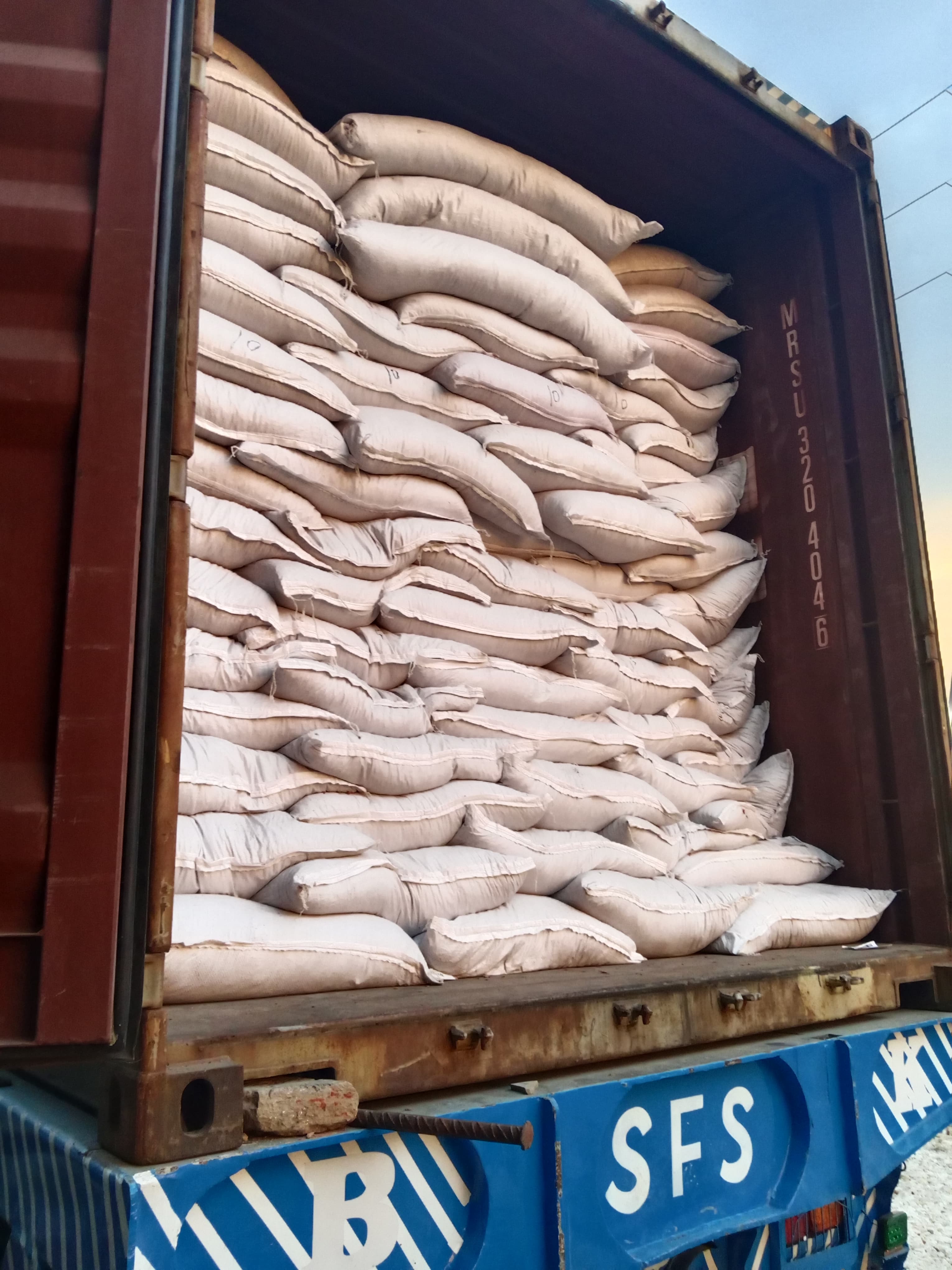
Kohenoor alfalfa seed bags being loaded into an export container at Karachi for shipment to Korea

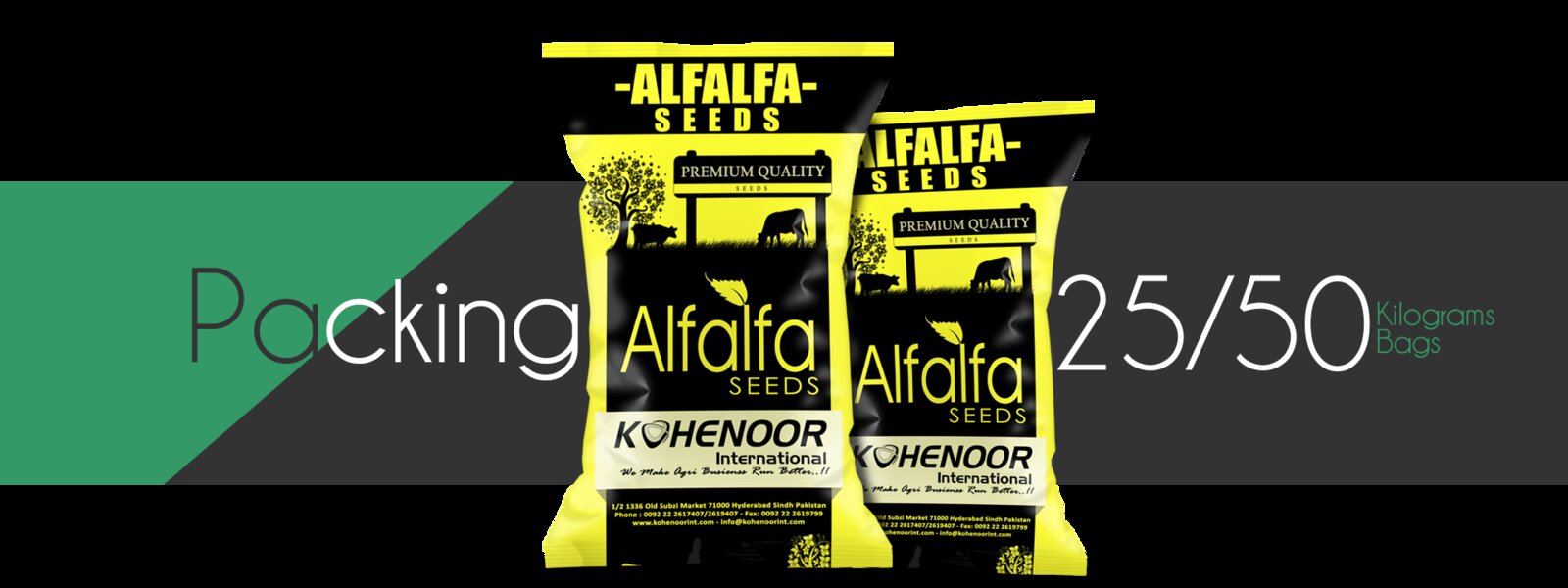
Alfalfa sprouting seed ships in 25 kg poly-lined PP woven bags, 40 bags to the tonne, palletised or loaded loose as you prefer. A 20-foot container carries roughly 18 to 20 MT depending on palletisation; Korean importers very often mix alfalfa with radish, broccoli-type, mustard and other sprouting seeds from our range, and with mung bean, so that one phytosanitary certificate, one import declaration and one inspection cover the season. The minimum for alfalfa alone is 1 MT, and in-stock lots are ready for vessel loading within 7 to 12 days of order confirmation.

The full document set — phytosanitary certificate, ISTA certificate, COA, microbiology report, declarations, certificate of origin, invoice, packing list and bill of lading — is emailed to you and your broker before the vessel arrives so that the MFDS declaration and the APQA inspection application can be prepared in advance. Our offices in Pakistan and Dubai overlap with the Korean afternoon, and the Australian office with the Korean morning, so the export desk is reachable through most of your working day, with replies within 24 hours.

Who buys alfalfa sprouting seed from Kohenoor in Korea

Korean buyers fall into a handful of recognisable types. The descriptions below are of types, not of named customers.

Sprout-vegetable producers. The indoor growers who supply mixed sprout punnets, salad-ready packs and ingredient sprouts to the supermarket chains, convenience-store operators and online grocers are the largest buyers of alfalfa seed in Korea. They buy by the container, want one lot for as long as possible so that the room behaves the same way every week, and judge a supplier on germination, cleanliness and the speed with which documents arrive when an auditor or the MFDS asks. Several grow alfalfa alongside radish, broccoli and pea shoots in the same facility.

Packaged-salad and convenience-food processors. Companies assembling salads, sandwiches, wraps and bibimbap bowls for convenience stores, supermarkets and delivery platforms either sprout their own alfalfa or contract it. Those who sprout in-house buy regular smaller quantities and are especially sensitive to uniformity, because the sprouts go straight into a retail product with a short shelf life.

Seed importers and trading companies. Established importers of vegetable, sprouting and forage seed who handle the MFDS and APQA process for their customers and redistribute to producers across the country. For them the breadth of our range — 20 and more sprouting species from one document set — and the consistency of the alfalfa line are the attractions, and some also buy our forage alfalfa for the dairy sector.

Health-food retailers and online brands. Korea's organic and well-being shops, and the brands selling through Coupang, Naver and the department-store food halls, sell finished alfalfa sprouts, home-sprouting seed packs and sprouting kits — the latter a popular gift and a classroom favourite. The distributors behind them buy 25 kg bags to repack into pouches and jars, want bright seed that looks good in a transparent pack and a COA they can quote, and often ask for an organic option.

Private-label brands. Brands that want alfalfa sprouting seed packed under their own name, either in bulk for their own repacking or in finished retail-ready pouches produced at origin with Korean artwork. We offer private-label and OEM packaging on request.

Why Pakistan-origin untreated alfalfa suits Korean sprout producers

Korean importers have sourced alfalfa seed from several origins over the years and know what performs in a sprout room. Kohenoor's seed is a good fit for reasons that start in the field and end at the bag tag.

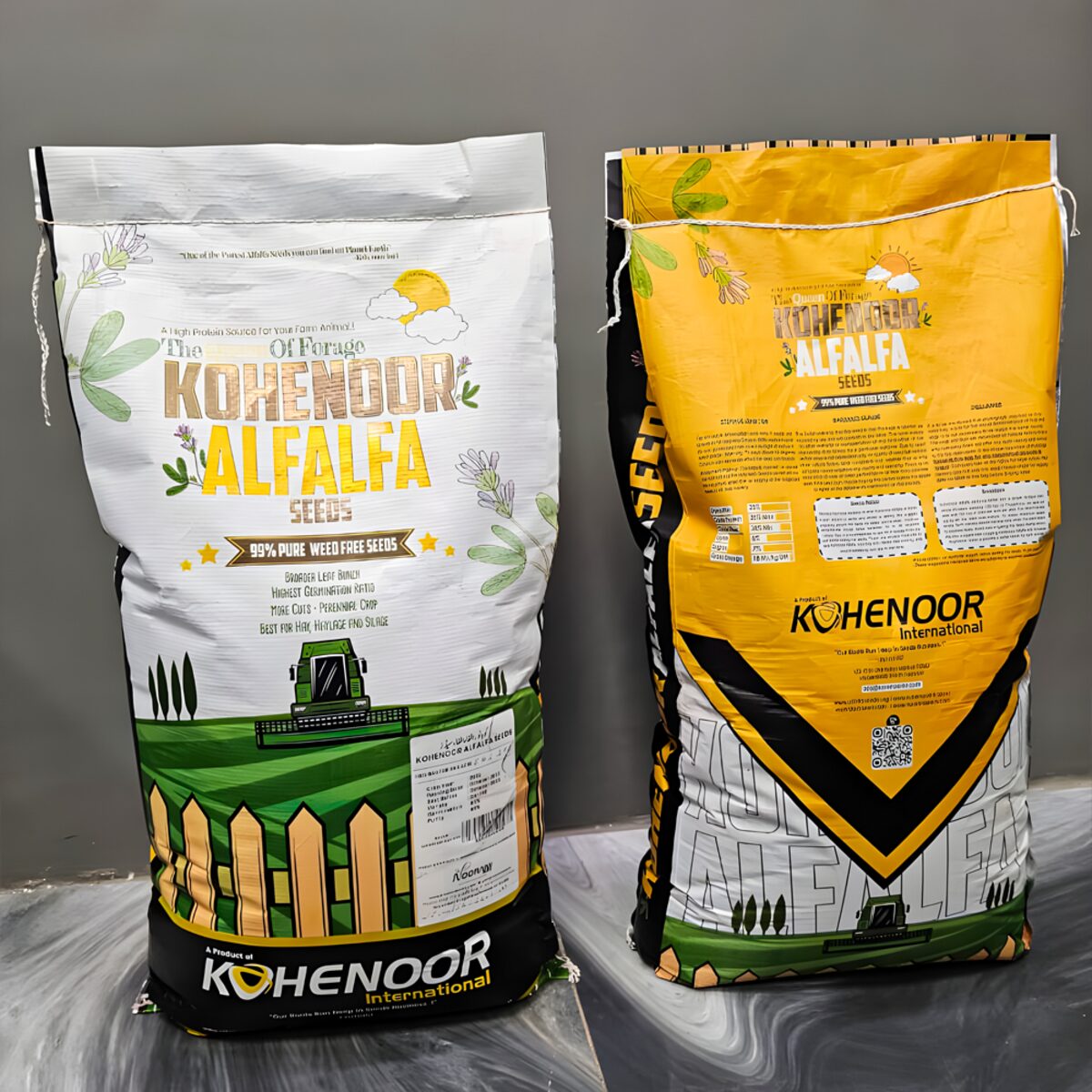
Kohenoor alfalfa seed in 25 kg poly-lined bags with sealed lot tags, ready for export

Dry harvest, long storage life. Alfalfa for seed in Sindh ripens through a long, hot, dry season and is combined at low moisture, which is good for germination, microbial load and storage. Our lots hold germination for 18 to 24 months in cool, dry conditions — important for a producer drawing one lot from the warehouse over a year through a humid Korean summer.

Dodder-free as standard. Field dodder (Cuscuta) is a quarantine weed in Korea and the contaminant most often found in alfalfa seed. Kohenoor has guaranteed 0% dodder in writing for its forage alfalfa for decades, and the same cleaning line and inspection discipline produce the sprouting lots. The contaminant most likely to delay a seed consignment at an APQA inspection is not in the bag.

Vigour from a breeding programme. The seed for sprouting lots comes from our KN92 line, selected over many seasons on our own research plots for vigour and uniformity. In a tightly scheduled sprout room that is the trait that fills the tray evenly on day two and brings the whole tray to harvest length on the same day.

Untreated and grown for food use. No fungicide, insecticide or coating; grown and conditioned for sprouting, kept separate from the forage line under a HACCP plan; declared untreated and non-GMO in writing. That is what passes Korea's positive-list residue system reliably and satisfies a supermarket auditor.

One company, one lot ID. Grower, cleaner, laboratory and exporter are the same business, founded in 1957 and now led by the third generation, serving buyers in 70 or more countries. Kohenoor is ISO 9001 and HACCP certified and a member of the Australian Seed Federation; ISTA Orange Certificates travel with every lot; a traceability question can be answered in an hour because every record sits behind one number.

A desk that works with your broker. Export staff in Pakistan, Dubai and Australia reply within 24 hours in English, and we are used to supplying the facility information for the MFDS registration and the declarations APQA asks for before a first order is placed. Korean-language bag labelling is printed at origin as your broker specifies.

Specification, documents and how to order

Korean buyers normally write a seed specification into the purchase order and ask us to confirm it against the lot documents before shipment. Our standard alfalfa sprouting lots meet the figures below; tighter limits or additional analyses — pesticide residue screening against Korea's positive-list limits, heavy metals, a GMO declaration — can be arranged with the lot sample if you tell us at enquiry.

ParameterKohenoor alfalfa sprouting lots
Botanical nameMedicago sativa, KN92-grade sprouting lots, conventional non-GMO
Germination90%+ by ISTA method, Orange Certificate per lot, test date stated
Physical purity~99%
Dodder and weed seed0% dodder; weed seed removed by Sortex optical sorting
Treatment statusUntreated — no fungicide, insecticide or coating; declared on COA and tag
MicrobiologySalmonella and E. coli/STEC by independent third-party laboratory, per lot on request
MoistureStated on COA per lot
Packaging25 kg poly-lined PP woven bags, sealed lot tag; food-contact grade; Korean labelling as specified
MOQ and lead time1 MT; in-stock lots 7–12 days to FOB Karachi vessel loading
TermsFOB Karachi (CFR/CIF on request); 100% TT against B/L copy or irrevocable L/C at sight

Documents supplied with every Korea shipment: IPPC phytosanitary certificate with any additional declaration APQA or your broker specifies; fumigation or treatment certificate where required; ISTA Orange Certificate; Certificate of Analysis; third-party microbiology report on request with sampling record; declarations of untreated and non-GMO status; facility and process information for the MFDS overseas-facility registration; certificate of origin; commercial invoice, packing list and bill of lading; food-contact packaging declaration; and for organic lots the organic certificate and transaction documents from the certifier.

How to order. First, send your requirement by WhatsApp to +92 310 4929292 or by email to export@kohenoorint.com: quantity, destination port, the specification your customers require, any additional analyses, whether you need organic, Korean labelling requirements, and whether you would like a sample of the current lot. Second, within 24 hours you receive a quotation FOB Karachi or CFR/CIF, the COA and ISTA certificate for the proposed lot and a sailing schedule; this is the moment to send your supplier questionnaire and for your broker to confirm the MFDS registration and APQA steps with us. Third, on your purchase order and payment arrangement we book the vessel, complete the phytosanitary and origin certificates, print the labelling and load within 7 to 12 days for stock lots. The full set reaches you and your broker before the vessel does, and the desk stays in contact until both the import declaration and the quarantine inspection have released the container.

If this is your first import of seed for sprouting into Korea, say so and we will go through the sequence with you and your broker before you commit. See also the alfalfa sprouting seed product page and our full exporter guide.

See the seed, the lab and the loading

Alfalfa sprouting seed by market

Alfalfa sprouting seed for the USA
Alfalfa sprouting seed for the USAUntreated lots with the lot documents a Subpart M sprout safety plan and an FSVP file need.
Read the market guide →
Alfalfa sprouting seed for Europe & the UK
Alfalfa sprouting seed for Europe & the UKTraceability and import-certificate support for Regulations 208/2013 and 211/2013; GB mirror rules.
Read the market guide →
Alfalfa sprouting seed for Taiwan
Alfalfa sprouting seed for TaiwanPhytosanitary and food-import paperwork for Kaohsiung, Keelung and Taichung; hydroponic sprout industry.
Read the market guide →
Alfalfa sprouting seed for China & Hong Kong
Alfalfa sprouting seed for China & Hong KongDocuments for GACC and customs quarantine; Shanghai, Shenzhen, Qingdao, Tianjin and Hong Kong.
Read the market guide →

Talk to a real person — quote within 24 hours

Send your product, quantity and destination port. The export desk replies personally with a quotation, current lot certificates and a shipping schedule — no bots, no obligation.

export@kohenoorint.com

Frequently asked questions

Is Kohenoor registered with the MFDS as an overseas manufacturing facility?

We do not claim any registration or approval with the MFDS or any other Korean authority. At the time of writing the Imported Food Safety Control Act generally requires the overseas facility to be registered before the first import declaration, and the registration is normally filed by the Korean importer through the MFDS system. Kohenoor supplies the facility information, process descriptions, HACCP and ISO 9001 documentation and product details the importer needs for that filing, and answers follow-up questions through the importer. Confirm the current procedure with your broker.

What does APQA require for alfalfa seed from Pakistan?

In general terms, a phytosanitary certificate issued by Pakistan's plant protection authority under the IPPC, an application for quarantine inspection on arrival, and inspection and sampling for quarantine pests and weed seeds. Whether any import permit or additional declaration applies to alfalfa seed from Pakistan is for your broker to confirm with APQA before ordering. We supply the certificate with any specified declaration, including dodder-free, and arrange fumigation if it is required.

Will the seed pass Korea's pesticide positive-list system?

Our alfalfa sprouting lots are untreated — no fungicide, insecticide or coating — and are grown and conditioned for food use, kept separate from the treated forage line under a HACCP plan. If your system requires a residue screen before shipment, tell us at enquiry and we will arrange it on the lot sample so the report travels with the seed. We do not guarantee the result of a test we have not run; we do guarantee that the seed is untreated.
Do you test for Salmonella and E. coli?

On request, each lot is sampled and sent to an independent third-party laboratory for Salmonella and E. coli/STEC testing, and the report travels with the lot documents together with the sampling record. Retained samples are kept so your own laboratory can correlate its results with ours, and we can courier a retained sample ahead of the container.

Busan or Incheon — which should we choose?

Busan has the most sailings from the Indian subcontinent and suits buyers in the south-east and anyone who values frequency; Incheon saves the overland leg for the Seoul capital region, where most sprout-vegetable producers and online grocers are based, though it has fewer direct calls. Both have MFDS and APQA offices at the port. We quote FOB Karachi with CFR or CIF to either, and the forwarder gives the current schedule at order confirmation.

Can you print Korean labelling or pack under our brand?

Yes. Bag tags and labels can carry Korean-language text as your broker specifies, and private-label or OEM packaging — including retail-ready pouches for home-sprouting packs and kits — is available on request. Send your artwork and pack sizes and we will quote the packaging alongside the seed.

Can you supply organic alfalfa sprouting seed for Korea?

Organic-certified lots under USDA NOP, EU Organic or JAS are available subject to a 5 MT minimum and a 60–90 day lead time. Korea applies its own organic certification system to agricultural products and recognises certain foreign certifications only under specific equivalence arrangements, so whether a given certification allows an organic claim for sprouting seed or the sprouts grown from it is for the importer to confirm with the National Agricultural Products Quality Management Service before ordering.

What is the minimum order and lead time?

The minimum for alfalfa sprouting lots is 1 MT (40 bags of 25 kg). In-stock conventional lots are ready for FOB Karachi vessel loading within 7–12 days of order confirmation. Most Korean buyers ship a 20-foot container of roughly 18–20 MT, often mixing alfalfa with radish, mustard, mung bean and other sprouting species from our range so that one declaration and one inspection cover the season.

Related pages

WA