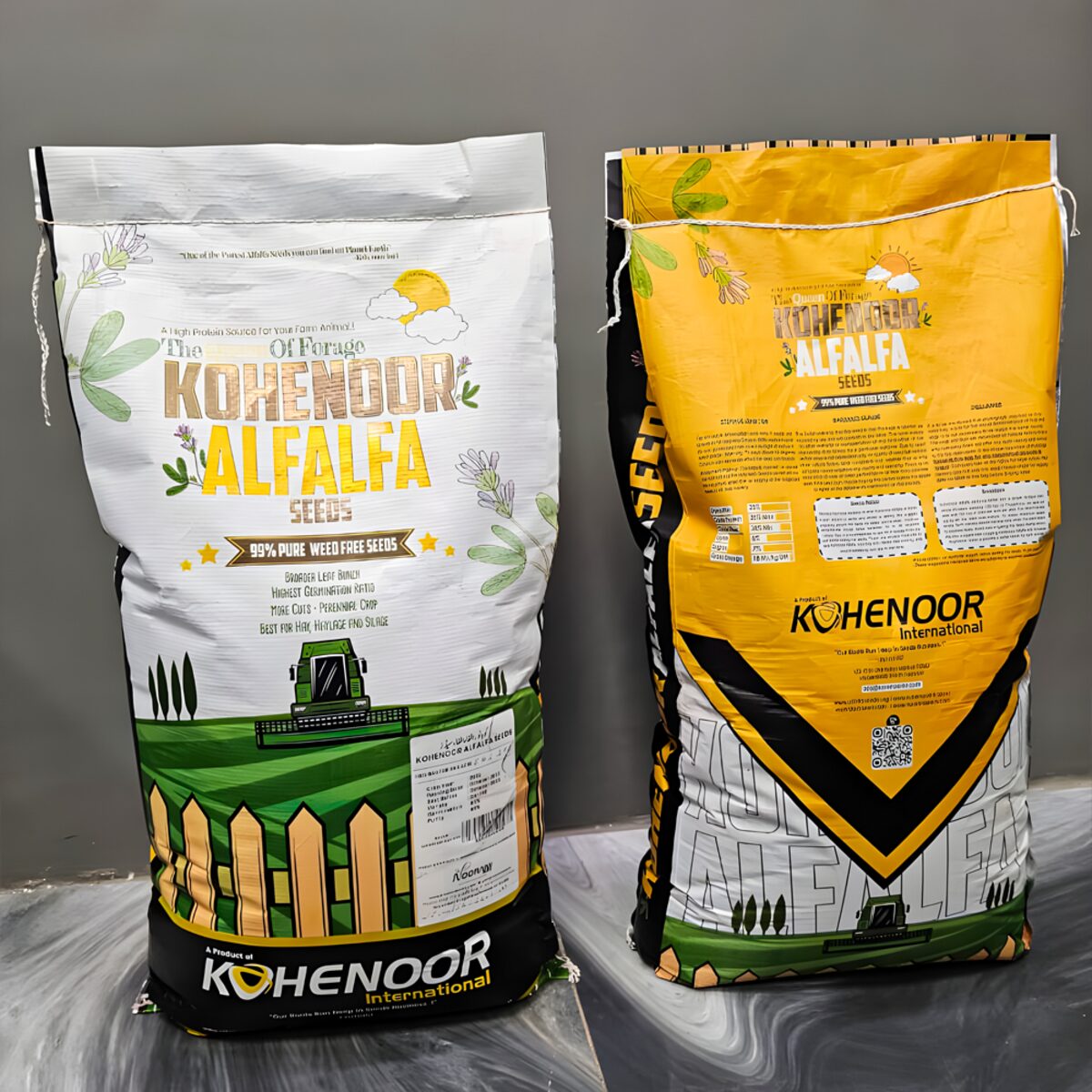
Alfalfa sprouting seed · from origin

Alfalfa sprouting seed for mainland China and Hong Kong — importers and sprout producers

Untreated · Sortex-cleaned · ISTA-tested per lot · COA in 24 h · phytosanitary certificate · 25 kg bags · MOQ 1 MT

China runs the largest sprout industry on earth, built on mung bean and soybean sprouts produced in industrial quantities for every wet market, supermarket and restaurant kitchen in the country. Alfalfa sprouts — mu xu ya — are the premium end of that industry: a salad and Western-restaurant product that has grown with the fresh-cut and health-food trade in Shanghai, Beijing, Shenzhen, Guangzhou and Hong Kong. The seed is imported, and the importer who brings it in works with the General Administration of Customs on both food and plant-quarantine rules. Kohenoor supplies untreated, food-grade Medicago sativa sprouting lots from its own cleaning line in Pakistan — purity around 99%, germination 90% and above, zero dodder — with the documents a Chinese or Hong Kong importer, broker and sprout producer need.

Get a quote in 24h
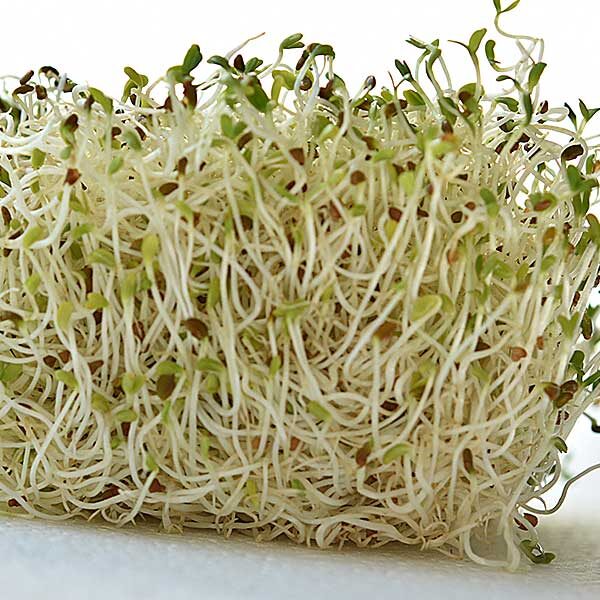
Fresh alfalfa sprouts of the kind grown by Chinese and Hong Kong sprout producers from untreated Kohenoor alfalfa seed
In short: Alfalfa seed imported into mainland China for sprouting is handled by the General Administration of Customs (GACC), which administers both the registration of overseas food producers and the plant-quarantine inspection of seed; how a consignment is classified decides which rules apply, and the importer confirms the current HS code, permit and registration requirements with its broker before ordering. Hong Kong applies its own, lighter food-import and plant-import rules. Kohenoor supplies untreated, Sortex-cleaned, ISTA-tested alfalfa sprouting seed (purity ~99%, germination 90%+, 0% dodder) with the IPPC phytosanitary certificate, COA within 24 hours, third-party Salmonella and E. coli reports on request and sealed lot tags, shipped FOB Karachi to Shanghai, Shenzhen/Yantian, Qingdao, Tianjin or Hong Kong from a 1 MT minimum.
Untreated — no coatingSortex optical-cleanedISTA-tested per lotCOA within 24 hThird-party microbial testingLot-tagged traceabilitySince 1957Reply within 24 h
Botanical nameMedicago sativa
Germination90%+ (ISTA, per lot)
Purity~99%
Dodder0%
MOQ1 MT
Packaging25 kg lot-tagged bags

China's sprout industry and the premium niche for alfalfa

Sprouts are not a health-food novelty in China; they are a staple. Mung bean sprouts and soybean sprouts are among the most widely eaten vegetables in the country, produced in every province by operations ranging from family workshops to automated factories turning out tens of tonnes a day in climate-controlled sprouting halls. The industry has professionalised rapidly under food-safety enforcement and supermarket audits, and the larger producers now run stainless-steel drum and tray systems, water treatment, laboratory testing and barcode traceability.

Alfalfa sprouts sit at the premium end of this industry. They arrived with Western restaurants, hotel buffets and the salad culture of the big coastal cities, and they have grown with the fresh-cut vegetable trade that supplies supermarket salad boxes, sandwich chains, airline caterers and the online grocery platforms that now deliver chilled produce within the hour in Shanghai, Beijing, Shenzhen and Guangzhou. Hong Kong has eaten alfalfa sprouts for longer, through its international restaurant scene and its supermarket chains, and remains both a significant market in its own right and a trading hub through which seed and other inputs have traditionally moved into southern China.

Alfalfa seed is grown in China for forage, but seed grown for hay is treated or coated for sowing and is not food-grade, and a sprouting lot needs a different cleaning and testing discipline. Chinese sprout producers who want untreated, dodder-free, laboratory-documented alfalfa seed in container quantities therefore import it, and the importers who serve them have become experienced in the customs and quarantine process. Kohenoor's offer is dry, untreated, Sortex-cleaned seed from one company that grows, cleans, tests and ships it, with a lot ID on every bag.

GACC and the registration of overseas food producers: what to confirm

Since 2022 the General Administration of Customs of China has operated a registration system for overseas producers of food exported to China, under the regulation commonly cited by its decree number, together with a companion regulation on the safety of imported and exported food. In general terms, overseas manufacturers, processors and storage facilities of food destined for China must be registered with GACC — either through recommendation by the competent authority of the exporting country for higher-risk categories, or by self-application through the online system for other categories — and the registration number must appear on the inner and outer packaging of the food. Importers in China must themselves be recorded with customs and must keep import and sales records.

Whether, and how, those rules apply to a particular consignment of alfalfa seed for sprouting depends on how the consignment is classified and declared. Seed for sowing is normally classified under HS heading 1209.21 and enters under plant-quarantine rules; a product declared as a food ingredient enters under the imported-food rules and the producer-registration requirements. Which classification is correct for seed that will be sprouted and eaten, which registration category applies, and what must be printed on the bags are questions that the importer must settle with its customs broker and, if necessary, with the local customs office before the first order is placed. At the time of writing the answers can differ between ports and have changed since the regulations were introduced, so we describe the framework only in general terms and ask every Chinese importer to confirm the current position.

Kohenoor does not claim to be registered, approved or listed by GACC or by any other Chinese authority. What we do is support the importer through whichever route applies: we supply the facility information, product descriptions, process summaries, HACCP and ISO 9001 documentation and laboratory records that a registration application or a customs query asks for, and if a registration number or a particular statement must appear on the packaging, we print it on the bags and tags as instructed. The export desk is used to working alongside a Chinese broker on the sequence of steps before a container is booked.

The practical lesson is that the classification question should be answered first and in writing; permits, labels, certificates and the inspection the container will face all follow from it.

Customs plant quarantine for seed: permits, phytosanitary certificates and inspection

If a consignment is declared as seed, it is a plant product and enters under China's plant-quarantine regime, administered since 2018 by GACC after the former inspection and quarantine agency was merged into customs. In general terms, at the time of writing, the import of seed into mainland China requires the importer to obtain an import quarantine permit from customs before the goods are shipped, specifying the species, origin, quantity and port of entry; the consignment must be accompanied by a phytosanitary certificate issued by the exporting country's plant protection organisation; and on arrival the consignment is subject to document review, physical inspection and laboratory testing for quarantine pests and weed seeds, with treatment, return or destruction as the outcomes if problems are found. Some species and origins are subject to specific conditions or prohibitions, and certain ports are designated for seed entry.

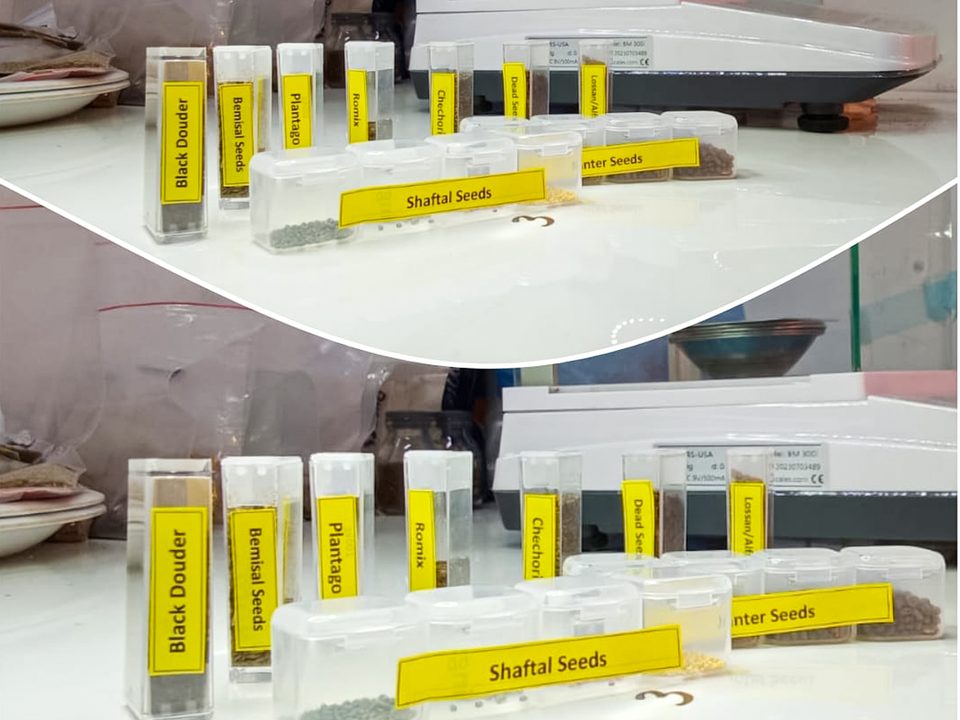
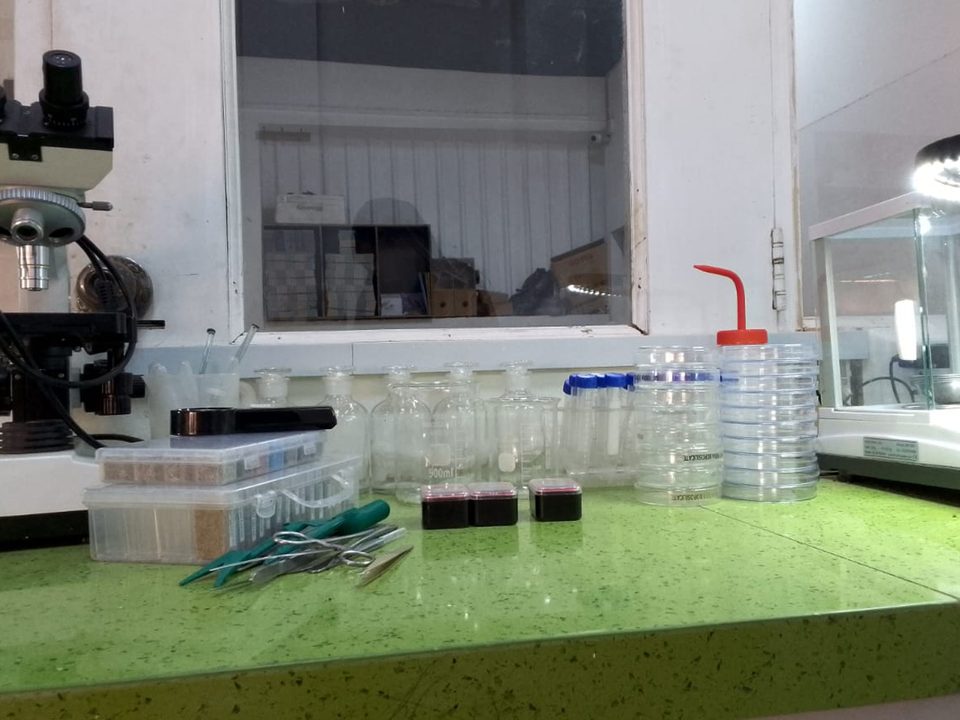
Kohenoor seed testing laboratory — purity and weed-seed analysis on each alfalfa sprouting lot before export to China

The permit is the importer's document, applied for in China, and the application normally has to be approved before loading; a container that arrives without a valid permit will not be released. We therefore ask Chinese buyers to begin the permit process at the time of enquiry and to tell us the permit number and the port named on it before we book the vessel, so that the phytosanitary certificate, invoice and packing list match the permit exactly.

Kohenoor provides the IPPC phytosanitary certificate issued by Pakistan's plant protection authority for every shipment, with any additional declaration that the permit or your broker specifies. Dodder (Cuscuta) is a quarantine weed in China and the contaminant most often found in alfalfa seed; our sprouting lots are cleaned to 0% dodder, the figure is on the ISTA certificate, and we state it on the phytosanitary certificate when required. If fumigation or another treatment is required as a condition of the permit, we arrange it and the corresponding certificate before loading. Pakistan and China have a long and active trade in agricultural products, and the phytosanitary channel between the two plant protection authorities is well established.

Inspection goes smoothly when the consignment matches the paper — species, lot IDs, bag count and net weight identical on the permit, phytosanitary certificate, invoice, packing list and tags — and we check that line by line before the container leaves Karachi.

Hong Kong: a lighter regime and a long-standing gateway

Hong Kong is a separate customs territory with its own food-safety and plant-health laws, and for many years it has served as both a market for alfalfa sprouts in its own right and a hub through which seed and other food inputs were traded into southern China. At the time of writing the general shape of its rules is as follows; your Hong Kong agent will confirm the current detail.

Under the Food Safety Ordinance, businesses that import food into Hong Kong must register as food importers with the Centre for Food Safety, keep records of the source and distribution of the food they handle, and comply with the Centre's food-safety standards and any specific import controls for the product category. Most food — including seeds for sprouting — enters without a pre-import licence, and the Centre operates a risk-based sampling and testing programme at import and retail level rather than a documentary certificate scheme for every consignment. The importer is expected to be able to trace a product back to its supplier and forward to its customers, which our lot system supports directly.

Plant health in Hong Kong is administered by the Agriculture, Fisheries and Conservation Department under the Plant (Importation and Pest Control) Ordinance. Plants and certain plant products require an import licence and a phytosanitary certificate; whether seed for food use falls within the licensing requirement in a given case is for the importer to confirm with the Department, and we supply the IPPC phytosanitary certificate with every shipment regardless, because it is the document most likely to be asked for and because it carries the dodder-free declaration that matters for alfalfa.

Kohenoor makes no claim to any registration or approval in Hong Kong; the registration obligation under the Food Safety Ordinance rests with the Hong Kong importer. For a buyer who wants to serve both Hong Kong and the mainland, a common pattern is to import into Hong Kong for the local market and for re-export under the mainland rules described above, with the mainland permit and declaration handled by a mainland importer. If that is your structure, tell us at enquiry so that documents can be prepared for both legs.

What a Chinese sprout factory needs from alfalfa seed

Chinese sprout producers run some of the largest and most automated sprouting halls anywhere, and scale magnifies the consequences of seed quality. A lot that germinates unevenly in a 20 kg drum is a nuisance; in a hall turning over several tonnes of seed a week it is a daily loss in labour, water, energy and rejects. The specification a producer should write into the purchase order, in our experience, covers three things.

Germination and vigour on the actual lot. Insist on an accredited germination test on the shipping lot, with the test date, not a typical figure. Our lots test at 90% or better by ISTA method and the Orange Certificate travels with the seed. Vigour — the speed and uniformity of germination — is the trait our KN92 line was selected for over many seasons, and it is what fills a drum or tray evenly on day two.

Physical cleanliness. Alfalfa seed is about 2 mm and arrives with chaff, broken and immature seed, stones and weed seed unless properly cleaned. Our line runs air-screen cleaners, gravity tables and Sortex optical sorters in sequence, giving around 99% purity and a bright, uniform colour. Less debris means less organic matter in the sprouting water, fewer places for bacteria to multiply and cleaner sprouts off the line — which matters in a market where supermarket chains test finished sprouts.

Moisture and storage. Seed shipped at safe moisture in poly-lined bags arrives in condition and holds germination for 18 to 24 months in cool, dry storage. Seed that is a point too wet can heat in a container and lose germination. The moisture figure is on the COA for every lot; keep the liner sealed until use and store cool.

Typical Chinese practice — soak, drain, drum or tray at around 20 °C with frequent rinsing, harvest at four to six days, flotation to remove hulls for retail packs — rewards a lot that behaves the same way every week. For a large producer that usually means buying a full container of one lot and drawing it down over the year, and we hold lot samples so that a repeat order can be matched to the previous shipment.

Documents, testing and food safety for Chinese and Hong Kong buyers

Supermarket chains, fresh-cut processors and online grocery platforms in China audit their sprout suppliers, and sprout producers in turn ask their seed importers for documents that stand up in those audits and in a customs query. Our export desk prepares a document set that has been refined over years of shipping sprouting seed to East Asia.

Retained samples from every lot are kept so that any question from a customer or an authority can be answered against the same seed that was shipped, and we can courier a retained sample ahead of the container. We answer supplier questionnaires, host video audits of the plant at Hyderabad and welcome on-site visits.

Organic is a smaller channel in China than in Europe but is growing in the premium supermarket and online segments, and Hong Kong has a well-established organic retail sector. Kohenoor offers organic-certified alfalfa sprouting lots under USDA NOP, EU Organic and JAS, subject to a 5 MT minimum and a 60 to 90 day lead time. Whether a foreign organic certification may be used on a label in mainland China — where the national organic standard and certification system apply — or in Hong Kong is a question for the importer to confirm before ordering an organic lot. For the full testing programme see our food safety and testing page.

Ports and logistics: Shanghai, Shenzhen/Yantian, Qingdao, Tianjin and Hong Kong

We ship FOB Karachi with CFR or CIF to your Chinese or Hong Kong port on request. Karachi is connected to the Chinese coast by the main east-west services through Singapore, Port Klang or Colombo, and by direct services operated by Chinese carriers that reflect the close trade between the two countries. The notes below describe the usual pattern at the time of writing; your forwarder or ours confirms the current schedule when we book. Note that for mainland ports the port of entry must match the one named on the import quarantine permit.

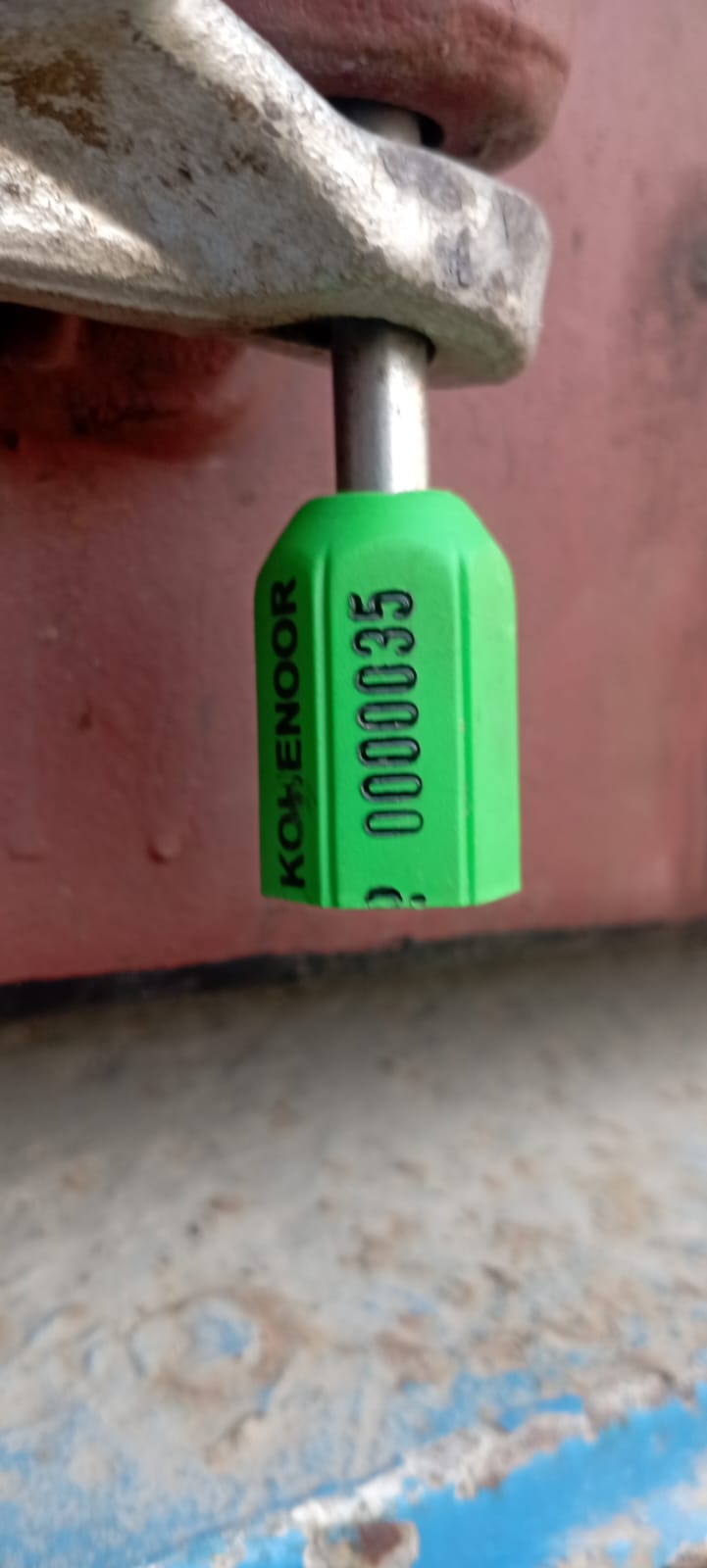
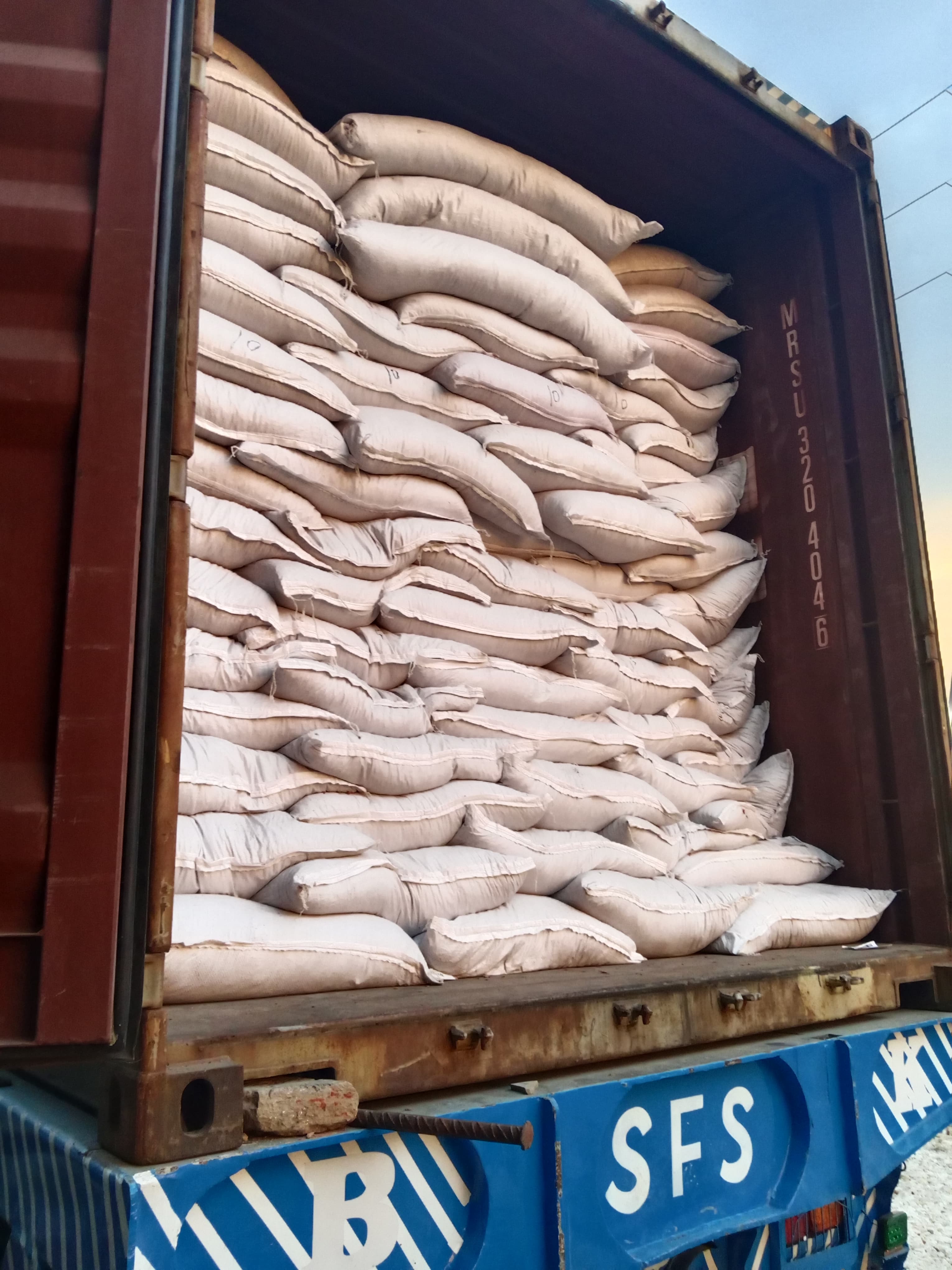
Kohenoor alfalfa seed in 25 kg bags loaded into an export container at Karachi for shipment to China

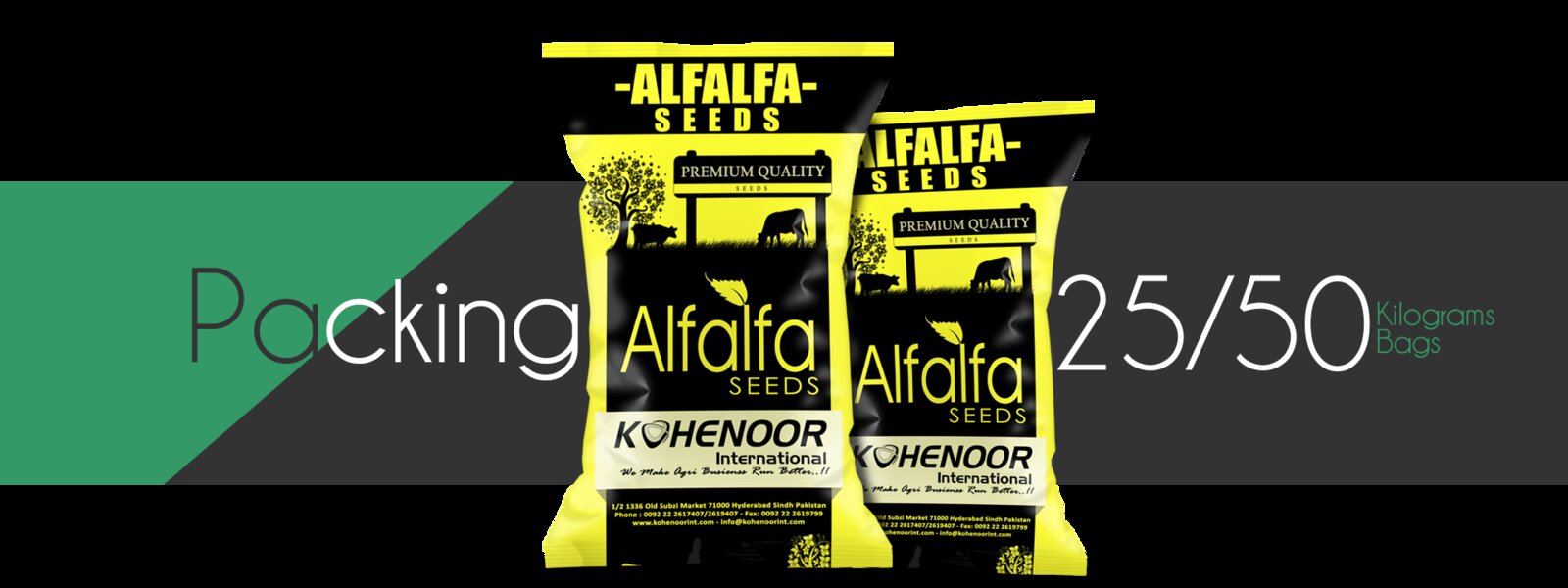
Alfalfa sprouting seed ships in 25 kg poly-lined PP woven bags, 40 bags to the tonne, palletised or loaded loose as you prefer. A 20-foot container carries roughly 18 to 20 MT depending on palletisation; Chinese importers often mix alfalfa with radish, clover, fenugreek and other sprouting species from our range so that one permit, one phytosanitary certificate and one inspection cover the season — subject to the permit covering each species. The minimum for alfalfa alone is 1 MT, and in-stock lots are ready for vessel loading within 7 to 12 days of order confirmation, which should be timed so that the permit is in hand before loading.

The full document set is emailed to you and your broker before the vessel arrives so that the customs declaration can be prepared in advance. Our offices in Pakistan and Dubai mean the export desk overlaps with most of the Chinese working day, with replies within 24 hours.

Who buys alfalfa sprouting seed from Kohenoor in China and Hong Kong

Buyers in this market fall into a handful of recognisable types. The descriptions below are of types, not of named customers.

Industrial sprout factories. The large, automated sprout producers in Shandong, Guangdong, the Yangtze delta and around Beijing that supply supermarket chains, wholesale markets and food-service distributors. Most built their business on mung bean and soybean sprouts and have added alfalfa and other health sprouts as the premium market has grown. They buy by the container, want one lot for as long as possible and judge a supplier on germination, cleanliness and documents.

Fresh-cut and salad processors. Companies assembling ready-to-eat salads, sandwich fillings and vegetable boxes for supermarkets, convenience chains, airline caterers and online grocery platforms. Those who sprout their own alfalfa buy regular smaller quantities and are especially sensitive to uniformity because the sprouts go straight into a retail pack.

Seed importers and agricultural trading companies. Established importers of vegetable, forage and sprouting seed who redistribute to producers across several provinces and who handle the permit, registration and customs process on behalf of their customers. For them our breadth of range and the consistency of the alfalfa line are the attractions, and some also buy our forage alfalfa for the dairy sector.

Hong Kong traders and distributors. Food and seed trading houses in Hong Kong serving the local restaurant, hotel and supermarket trade, and in some cases structuring supply into the mainland. They value fast clearance, the ability to hold a lot in Hong Kong and draw it down, and a supplier who understands both regimes.

Health-food and e-commerce brands. Brands selling finished sprouts, home-sprouting seed packs and sprouting kits through Tmall, JD, Pinduoduo and cross-border channels, and through the organic and natural-food shops of the big cities. They buy 25 kg bags to repack, want bright seed that looks good in a transparent pouch and a COA they can quote, and increasingly ask for private-label packaging at origin with Simplified Chinese artwork, which we provide on request.
Why Pakistan-origin untreated alfalfa suits Chinese sprout producers

Chinese importers know what works in a sprouting hall. Kohenoor's seed is a good fit for reasons that start in the field and end at the bag tag.

Alfalfa seed being packed into 25 kg lot-tagged bags at the Kohenoor plant for export

Dry harvest, long storage life. Alfalfa for seed in Sindh ripens through a long, hot, dry season and is combined at low moisture, which is good for germination, microbial load and storage. Our lots hold germination for 18 to 24 months in cool, dry conditions — important for a producer drawing one lot from the warehouse over a year, and in the humid summers of the Chinese coast.

Dodder-free as standard. Field dodder (Cuscuta) is a quarantine weed in China and the contaminant most often found in alfalfa seed. Kohenoor has guaranteed 0% dodder in writing for its forage alfalfa for decades, and the same cleaning line and inspection discipline produce the sprouting lots. The contaminant most likely to stop a seed consignment at a Chinese quarantine laboratory is not in the bag.

Vigour from a breeding programme. The seed for sprouting lots comes from our KN92 line, selected over many seasons on our own research plots for vigour and uniformity. In an industrial drum system that is the trait that fills the drum evenly and brings the whole batch to harvest together.

Untreated and grown for food use. No fungicide, insecticide or coating; grown and conditioned for sprouting, kept separate from the forage line under a HACCP plan; declared untreated and non-GMO in writing. That is what passes a residue screen reliably and satisfies a supermarket auditor.

One company, one lot ID. Grower, cleaner, laboratory and exporter are the same business, founded in 1957 and now led by the third generation, serving buyers in 70 or more countries. Kohenoor is ISO 9001 and HACCP certified and a member of the Australian Seed Federation; ISTA Orange Certificates travel with every lot; a traceability question can be answered in an hour.

Proximity and a working trade channel. Karachi to the Chinese coast is a short voyage by the standards of the seed trade, and Pakistan and China have established phytosanitary cooperation. Replies within 24 hours in English; Chinese-language bag labelling as your broker specifies.

Specification, documents and how to order

Chinese and Hong Kong buyers normally write a seed specification into the purchase order and ask us to confirm it against the lot documents before shipment. Our standard alfalfa sprouting lots meet the figures below; tighter limits or additional analyses — pesticide residue screening against the national standards, heavy metals, a GMO declaration — can be arranged with the lot sample if you tell us at enquiry.

ParameterKohenoor alfalfa sprouting lots
Botanical nameMedicago sativa, KN92-grade sprouting lots, conventional non-GMO
Germination90%+ by ISTA method, Orange Certificate per lot, test date stated
Physical purity~99%
Dodder and weed seed0% dodder; weed seed removed by Sortex optical sorting
Treatment statusUntreated — no fungicide, insecticide or coating; declared on COA and tag
MicrobiologySalmonella and E. coli/STEC by independent third-party laboratory, per lot on request
MoistureStated on COA per lot
Packaging25 kg poly-lined PP woven bags, sealed lot tag; food-contact grade; Chinese labelling as specified
MOQ and lead time1 MT; in-stock lots 7–12 days to FOB Karachi vessel loading, timed to your permit
TermsFOB Karachi (CFR/CIF on request); 100% TT against B/L copy or irrevocable L/C at sight

Documents supplied with every China or Hong Kong shipment: IPPC phytosanitary certificate with any additional declaration your permit or broker specifies; fumigation or treatment certificate where the permit requires it; ISTA Orange Certificate; Certificate of Analysis; third-party microbiology report on request with sampling record; declarations of untreated and non-GMO status; certificate of origin; commercial invoice, packing list and bill of lading; food-contact packaging declaration; facility and process information for any GACC registration or customs query; and for organic lots the organic certificate and transaction documents from the certifier.

How to order. First, send your requirement by WhatsApp to +92 310 4929292 or by email to export@kohenoorint.com: quantity, destination port, whether the consignment will be declared as seed or as food and under which HS code, the specification your customers require, any additional analyses, whether you need organic, and whether you would like a sample of the current lot. Second, within 24 hours you receive a quotation FOB Karachi or CFR/CIF, the COA and ISTA certificate for the proposed lot and a sailing schedule; this is the moment for your broker to confirm the permit and registration steps with us and to begin the permit application. Third, on your purchase order, permit and payment arrangement we book the vessel, complete the phytosanitary and origin certificates, print any required labelling and load within 7 to 12 days for stock lots. The full set reaches you and your broker before the vessel does, and the desk stays in contact until the container is released.

If this is your first import of seed for sprouting into China, say so and we will go through the sequence with you and your broker before you commit. See also the alfalfa sprouting seed product page and our full exporter guide.

See the seed, the lab and the loading

Alfalfa sprouting seed by market

Alfalfa sprouting seed for South Korea
Alfalfa sprouting seed for South KoreaMFDS import declaration and APQA plant quarantine support; Busan and Incheon.
Read the market guide →
Alfalfa sprouting seed for the USA
Alfalfa sprouting seed for the USAUntreated lots with the lot documents a Subpart M sprout safety plan and an FSVP file need.
Read the market guide →
Alfalfa sprouting seed for Europe & the UK
Alfalfa sprouting seed for Europe & the UKTraceability and import-certificate support for Regulations 208/2013 and 211/2013; GB mirror rules.
Read the market guide →
Alfalfa sprouting seed for Taiwan
Alfalfa sprouting seed for TaiwanPhytosanitary and food-import paperwork for Kaohsiung, Keelung and Taichung; hydroponic sprout industry.
Read the market guide →

Talk to a real person — quote within 24 hours

Send your product, quantity and destination port. The export desk replies personally with a quotation, current lot certificates and a shipping schedule — no bots, no obligation.

export@kohenoorint.com

Frequently asked questions

Is Kohenoor registered with GACC?

We do not claim any registration, approval or listing with GACC or any other Chinese authority. Whether overseas-producer registration applies to a consignment of alfalfa seed for sprouting depends on how it is classified and declared, which your broker confirms with customs. Kohenoor supplies the facility, process, HACCP, ISO 9001 and laboratory information that a registration application or customs query asks for, and prints any required registration number or statement on the bags as instructed.

Which HS code and permit apply to alfalfa seed for sprouting in China?

Alfalfa seed for sowing is normally classified under HS 1209.21 and enters under plant-quarantine rules, which at the time of writing require the importer to obtain an import quarantine permit before shipment; a product declared as a food ingredient enters under the imported-food rules instead. The correct classification and permit route for seed that will be sprouted and eaten must be confirmed by the importer with its customs broker and, if needed, the local customs office before the first order. We time loading so that the permit is in hand first.

What do you supply for the plant-quarantine inspection?

The IPPC phytosanitary certificate issued by Pakistan's plant protection authority, with any additional declaration your permit specifies, plus a fumigation or treatment certificate where the permit requires one. Our sprouting lots are cleaned to 0% dodder (Cuscuta), a quarantine weed in China, and the figure is on the ISTA certificate and stated on the phytosanitary certificate when required.

What are the rules in Hong Kong?

In general terms, Hong Kong food importers register with the Centre for Food Safety under the Food Safety Ordinance and keep source and distribution records, and most food enters without a pre-import licence under a risk-based sampling programme; plant imports are administered by the Agriculture, Fisheries and Conservation Department. Whether seed for food use needs a plant import licence in a given case is for your Hong Kong agent to confirm. We supply the phytosanitary certificate and the full document set regardless.

Do you test for Salmonella and E. coli?

On request, each lot is sampled and sent to an independent third-party laboratory for Salmonella and E. coli/STEC testing, and the report travels with the lot documents together with the sampling record. Retained samples are kept so your own laboratory can correlate its results with ours, and we can courier a retained sample ahead of the container.

Which ports do you ship to?

Shanghai for the Yangtze delta, Shenzhen/Yantian for Guangdong, Qingdao for Shandong and the north, Tianjin for Beijing and the north-east, and Hong Kong for the Hong Kong market and for buyers structured through a Hong Kong entity. For mainland ports the port of entry must match your import quarantine permit. We quote FOB Karachi with CFR or CIF to any of them.

Can you label the bags in Chinese or pack under our brand?

Yes. Bag tags and labels can carry Simplified Chinese text and any registration number or statement your broker specifies, and private-label or OEM packaging — including retail-ready pouches for e-commerce and health-food brands — is available on request. Send your artwork and pack sizes and we will quote the packaging alongside the seed.

What is the minimum order and lead time?

The minimum for alfalfa sprouting lots is 1 MT (40 bags of 25 kg). In-stock conventional lots are ready for FOB Karachi vessel loading within 7–12 days of order confirmation, timed so that your permit is approved before loading. Most Chinese buyers ship a 20-foot container of roughly 18–20 MT, often mixing alfalfa with other sprouting species covered by the same permit.

Related pages

WA