Alfalfa in the Kingdom · market guide

Alfalfa in Saudi Arabia: the ban, the hay market and where seed still fits

A plain account of the 2016–2019 green fodder phase-out, what a Saudi farm, camel owner or hay importer can still do in 2026, and how TAIZTAR seed reaches Dammam, Jeddah and Riyadh direct from the breeder.

Saudi Arabia once grew more alfalfa under centre-pivots than almost any desert country on earth, and then, in stages between roughly 2016 and 2019, it decided to stop growing most of it in order to save the groundwater that fed those pivots. The Kingdom now imports the greater part of the alfalfa hay its dairy herds, camels and sheep eat while its agribusinesses grow fodder abroad, and this page explains what that means for a Saudi buyer in 2026 — the small plots that remain permitted, the hay trade, the overseas farms — and how Kohenoor supplies heat-tolerant alfalfa seed into all three.

Get a quote in 24h
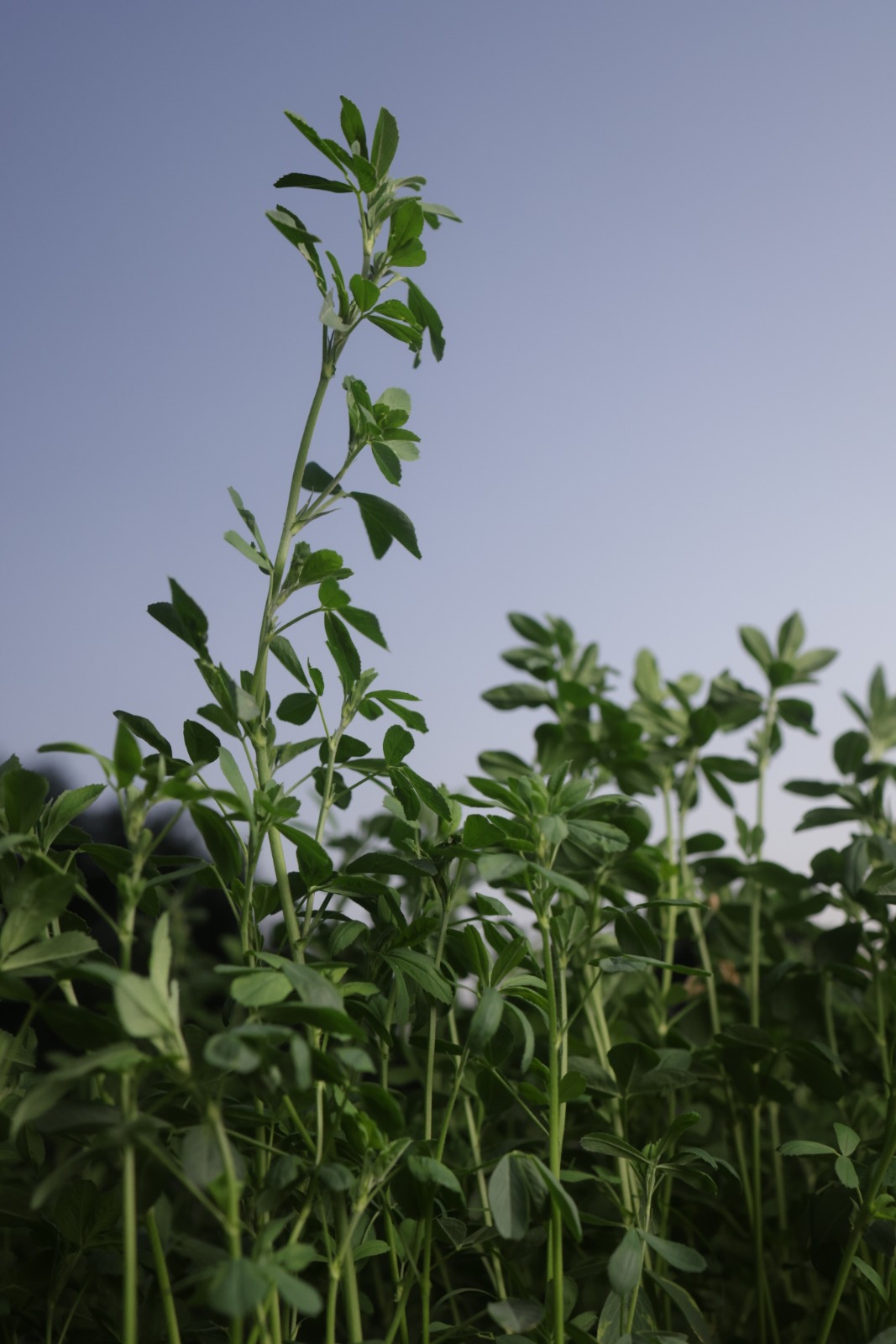
Alfalfa field under a clear sky of the kind once common on centre-pivot farms in central Saudi Arabia
In short: Large-scale alfalfa (green fodder) cultivation was phased out in Saudi Arabia between roughly 2016 and 2019 to conserve groundwater, with allowances for small holdings; as of 2026, confirm the rules with the Ministry of Environment, Water and Agriculture. The Kingdom now imports most of its alfalfa hay, chiefly from the USA, Spain and Sudan. Kohenoor supplies heat-tolerant TAIZTAR seed direct to Dammam, Jeddah and Riyadh and to Saudi-owned farms abroad.
TAIZTAR — FD10 non-dormantHeat & salinity tolerant0% dodder in writingISTA Orange CertificateIPPC phytosanitaryISO 9001 · HACCPDubai officeReply within 24 h
VarietyTAIZTAR (FD 10, non-dormant)
Purity / germination≥98% / ≥85% (ISTA, per lot)
Dodder0% — guaranteed in writing
Seed rate25–30 kg/ha (10–12 kg/acre)
MOQ5 MT (1 MT trial lots)
RouteKarachi → Dammam / Jeddah; air to Riyadh

Is it illegal to grow alfalfa in Saudi Arabia? The alfalfa ban explained

The short answer is that alfalfa itself was never outlawed, but growing it as a large commercial fodder crop was. Between roughly 2016 and 2019 the Saudi government phased out large-scale cultivation of green fodder — alfalfa above all, but also Rhodes grass, Sudan grass and other irrigated forages — on the big agricultural holdings that had spread across the central and northern provinces since the 1980s. The policy was announced with a transition period so that farms could wind down planting, and by the end of the decade the big pivots at Al-Kharj, Wadi Al-Dawasir, Hail, Al-Jouf and Tabuk had largely stopped sowing fodder. What people search for as "alfalfa Saudi Arabia ban" or the "alfalfa ban Saudi Arabia" is this phase-out.

It is important to be precise about what the measure was, because the question "is it illegal to grow alfalfa in Saudi Arabia" is asked by two very different people: the owner of a few camels outside Riyadh who wants to grow a small patch of green feed, and the investor wondering whether a 500-hectare pivot project is possible. For the second person the answer is, in general terms, no — large-scale commercial green fodder cultivation is not licensed. For the first person the picture is different. The policy as widely reported carried allowances for small holdings and limited areas, and traditional smallholders in the oases and village districts have continued to grow modest plots of alfalfa (known locally as barseem or jat) for their own animals. The restriction operates through agricultural licensing, water-use permits and the withdrawal of support for fodder on large farms, not through a criminal prohibition on the plant.

Two cautions apply throughout this page. First, the detail of what is permitted — the area threshold, the licensing route, the position of new wells — has been adjusted more than once and may be again. As of 2026, anyone planning to plant alfalfa in the Kingdom should confirm current rules with the Ministry of Environment, Water and Agriculture (MEWA) before buying seed. Second, Kohenoor is a seed company, not a Saudi regulatory adviser; what follows is the general shape of the position as we understand it from working with Gulf buyers, written to help you ask the right questions, not to replace the official answer.

Why Saudi Arabia stopped growing alfalfa: groundwater and the wheat precedent

The decision had a long run-up. From the late 1970s Saudi Arabia pursued food self-sufficiency with heavily supported wheat production, pumping fossil groundwater from deep aquifers under the central plateau to irrigate pivots in the open desert. By the early 1990s the Kingdom was briefly a wheat exporter, an extraordinary outcome for a country with almost no rainfall, paid for with water that had accumulated over thousands of years and was not being replaced. Wheat support was wound down from 2008 and domestic wheat procurement ended in 2016.

Fodder followed the same logic, with the added problem that alfalfa is thirstier than wheat. It is a perennial that is cut all year round in a hot climate and transpires water in every month; under desert centre-pivots, applications well above 20,000 cubic metres per hectare per year are commonly cited, several times what a winter wheat crop needs. As the dairy industry expanded through the 2000s the area under alfalfa and Rhodes grass grew with it, and fodder came to account for a very large share of agricultural water use. A national water strategy published in the mid-2010s set out the arithmetic plainly: the aquifers were being drawn down at a rate that could not be sustained, and irrigated fodder was the largest single draw.

The phase-out was the response. By moving fodder production offshore and importing hay, the Kingdom in effect imports the water embedded in the crop — roughly a thousand or more tonnes of water for every tonne of hay — from countries where it falls as rain or runs in rivers and canals. The remaining allowances for small holdings reflect a judgement that traditional plots are a small part of the total and a large part of rural livelihoods. A buyer in Saudi Arabia in 2026 lives inside that policy, and the rest of this page is about what can still be done.

The Saudi Arabia alfalfa hay market today: who supplies the Kingdom

Having stopped growing most of its own, Saudi Arabia became one of the world's largest importers of alfalfa hay almost overnight. Trade estimates put the Kingdom's alfalfa hay imports at well over a million tonnes a year in most recent seasons, with the other Gulf states adding to a regional market that every exporting country with a port now serves. The alfalfa hay import Saudi Arabia buyers deal with arrives as double-compressed bales in containers, large bales for the big dairy groups, and pellets or cubes for feed mills and the camel and sheep trade.

Irrigated alfalfa field at cutting stage — the kind of crop Saudi Arabia now imports as hay rather than grows at scale

The supplying countries, broadly and as of 2026, are these. The United States is the single largest exporter of alfalfa hay to the Gulf, mostly from the irrigated valleys of California, Arizona, Washington and Idaho, shipped out of West Coast ports in double-compressed container loads. Spain is the leading European supplier, with dehydrated and sun-cured alfalfa from the Ebro valley and Andalusia moving through the Mediterranean to Jeddah. Sudan, along the Nile and in the irrigated schemes east of Khartoum, has become a significant regional source with a short sea leg to Jeddah — much of it grown on farms with Gulf investment. Other origins that appear in Saudi import statistics in varying volumes include Egypt, Argentina, Australia, Romania and Italy.

For a Saudi hay importer the trade is now a mature, competitive business run from Dammam, Jeddah and Riyadh by established feed companies and the procurement arms of the dairy groups. Quality is bought on protein, relative feed value, colour, moisture and absence of mould and foreign matter. The connection to what Kohenoor does is indirect but real: the alfalfa that becomes export hay in Sudan, Egypt and Pakistan has to be sown from seed, and non-dormant, heat-tolerant varieties that give seven or more cuts a year are what those farms need. If you are a Saudi importer who has moved from buying hay to growing it abroad, the sections below on overseas farms and on TAIZTAR are written for you.

Alfalfa farming in Saudi Arabia in 2026: what is still permitted

Alfalfa farming in Saudi Arabia did not disappear; it shrank to the scale at which it had existed for centuries before the pivots arrived. In the oases of Al-Ahsa and Qatif in the east, around Medina and Tabuk in the west, in Qassim and Hail in the centre and in the terraced valleys of Asir and Jazan in the south, smallholders continue to grow plots of alfalfa — a few hundred square metres to a few hectares — to cut green for camels, sheep, dairy goats and household cattle. Green alfalfa is sold in bundles at livestock markets across the Kingdom every day, and it is this trade, not the big pivots, that the allowances for small holdings were intended to protect.

In general terms, and subject to confirmation with MEWA, the activities a Saudi buyer can reasonably expect to be within the rules in 2026 are these:

What a buyer should not expect, as of 2026, is a licence for a new large commercial fodder farm in the open desert. If that is your project, the realistic route is the one the Saudi dairy groups took: grow it abroad. For readers who prefer Arabic, the same ground is covered on our Arabic page for Saudi Arabia and the Arabic jat seed page; the English product and shipping detail is on alfalfa seeds for Saudi Arabia.

Saudi-owned farms abroad: seed for Sudan, Egypt, Ethiopia and Pakistan

The most consequential effect of the fodder phase-out was to push Saudi agriculture across the sea. Saudi dairy groups, feed companies and agricultural investment funds now farm alfalfa and other forages where water is renewable and land is available: along the Nile in Sudan, in the new reclamation areas of Egypt, in the irrigated lowlands of Ethiopia, and in the canal-irrigated plains of Pakistan's Punjab and Sindh, as well as further afield in Argentina, the United States and Eastern Europe. Hay from these farms is baled, compressed and shipped back to Jeddah and Dammam. For many of these projects the farm is Saudi-owned, the agronomist is local, and the seed is bought centrally by a procurement office in Riyadh or Jeddah.

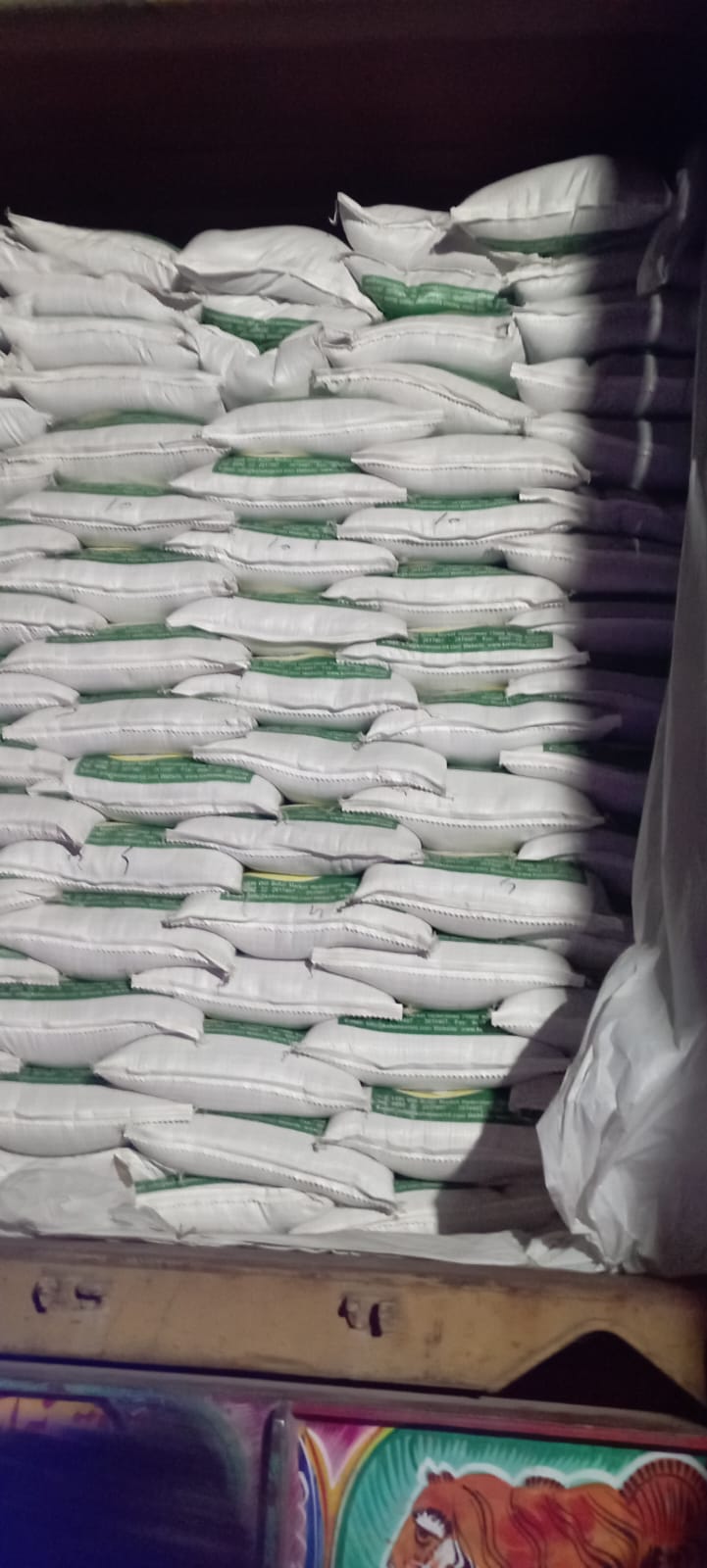
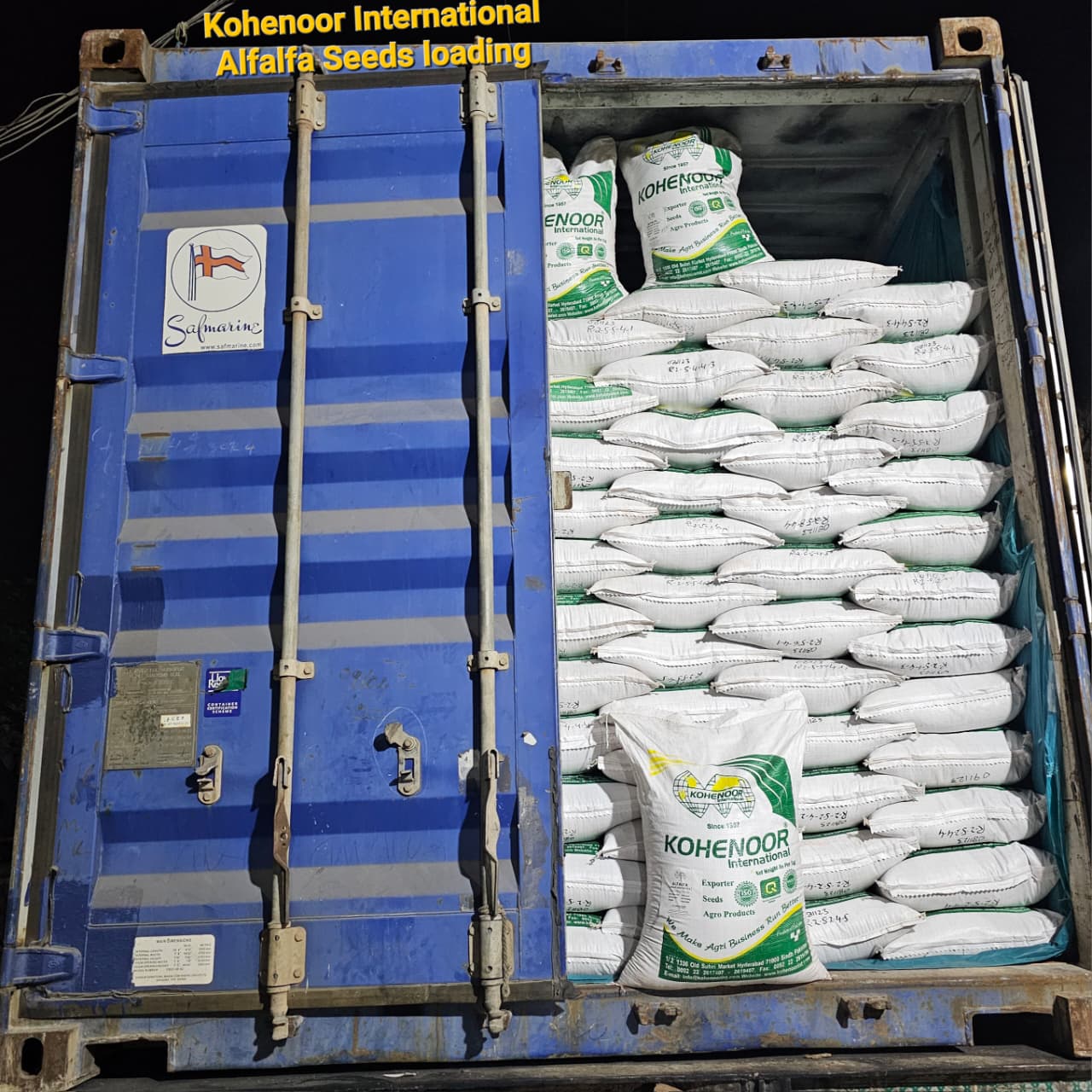
Kohenoor alfalfa seed bags being loaded into a container at Karachi for a Gulf or Red Sea destination

Seed sourcing for these farms differs from buying for a plot outside Riyadh. The overseas farm needs a non-dormant variety that will cut every 28 to 35 days through a long hot season, tolerate the salinity of Nile or Indus irrigation water and reclaimed desert soils, and establish quickly under pivot or drip. It needs seed in volume — at 25 to 30 kilograms per hectare, a 1,000-hectare project sows 25 to 30 tonnes — with documents that clear quarantine in the country where the farm is, and a supplier who can ship to Port Sudan, Alexandria, Djibouti or Karachi on one contract while the invoice goes to Saudi Arabia.

Kohenoor does this routinely. TAIZTAR seed is shipped FOB Karachi to Port Sudan and Alexandria for Saudi-owned and Gulf-owned farms, with the IPPC phytosanitary certificate issued for the destination country's requirements and the certificate of origin and ISTA Orange Certificate for the buyer's file in Riyadh. For a farm in Pakistan, delivery is by road from our Hyderabad plant to the farm gate in Punjab or Sindh, with no sea leg at all. Our country pages for alfalfa seed in Sudan and alfalfa seed in Egypt cover the agronomy and port detail, and the large-scale forage projects page explains how we support a project from variety selection through the first season's cutting schedule. Whatever the destination, there is one export desk, one document set and one contact.

TAIZTAR alfalfa seed for Gulf heat and salinity

The alfalfa grown on Saudi pivots for thirty years was overwhelmingly CUF-101, a non-dormant Californian variety released in the late 1970s that became the default seed of the Gulf because it grew through the summer and tolerated the heat. It did its job, but it is now almost fifty years old, and the breeding of the decades since has produced varieties with better persistence, higher yield per cut, improved resistance to the root and crown diseases that shorten stand life in hot irrigated conditions, and better behaviour on saline soils.

TAIZTAR is Kohenoor's non-dormant alfalfa, bred on modern genetics as the superior replacement for CUF-101 in the hot, saline, irrigated conditions of the Gulf, the Nile valley and the Indus plain. Its fall dormancy rating is 10 — the fully non-dormant class — which means it does not slow down in the mild Saudi winter and gives seven or more cuts a year under irrigation. Crude protein in the hay is typically 22 to 24 percent at the right cutting stage, crude fibre up to 28 percent, and it makes both good hay and good silage. It tolerates salinity in irrigation water and soil that would thin a dormant variety, and it establishes quickly from a 25 to 30 kilogram per hectare sowing. Every lot is tested by ISTA method to at least 98 percent purity and 85 percent germination, and dodder is guaranteed at zero in writing — a guarantee that matters in the Gulf, where field dodder has ruined many stands sown from cheap, uncleaned seed.

For a smallholder plot in Al-Ahsa, TAIZTAR's advantage is more green feed per square metre of licensed land and per cubic metre of water, with a stand that lasts longer before re-sowing. For a Saudi-owned pivot in Sudan or Egypt, it is yield and persistence over a five-year stand under heavy cutting, which is where the economics of export hay are decided. The full variety description is on the TAIZTAR alfalfa seed page; the heat-resistant alfalfa seed page compares non-dormant options. For cooler highland sites — northern Tabuk, or the Ethiopian highlands — we also offer KN92, a fall dormancy 9 variety with the same purity, germination and dodder guarantee.

Water-use honesty: alfalfa is thirsty, so irrigate and cut with intent

A seed company selling alfalfa into Saudi Arabia has an obligation to be straightforward about water. Alfalfa is one of the thirstiest field crops in the world; its deep roots and year-round growth in a hot climate mean it will transpire as much water as it is given, and the figures that drove the Saudi phase-out are real. The Kingdom's water strategy was not wrong about the plant. For the small plot that remains permitted, every cubic metre must earn its keep, and the agronomy of growing alfalfa in Saudi Arabia in 2026 is mostly the agronomy of using less water per kilogram of feed.

Alfalfa plant at early bud stage, the point at which cutting gives the best balance of protein and yield

Irrigation method. Flood irrigation from a well, still common in oasis plots, is the least efficient way to water alfalfa; a large share evaporates or drains below the roots. Drip or subsurface drip irrigation is now well established on alfalfa in hot countries and can cut water use substantially while keeping yield, because water reaches the root zone and the soil surface stays dry. Where a plot is large enough for a small pivot, low-pressure nozzles close to the crop and night irrigation reduce evaporation. Treated wastewater, where supplied, suits alfalfa well.

Cutting schedule. Water productivity depends on when you cut. Cutting at early bud, roughly every 28 to 35 days in the Saudi summer, gives hay of 22 to 24 percent protein with the best feed value per unit of water; waiting for full flower adds fibre and little else. In the hottest months, cutting a little later and leaving taller stubble protects the crown; in the mild winter a non-dormant variety like TAIZTAR keeps growing. Letting one autumn cut reach early flower helps the stand store root reserves.

Stand management. A dodder-free, high-germination seed lot sown at the right rate gives a dense stand that shades weeds and uses water efficiently for four or five years; a thin or weedy stand wastes water on plants that are not alfalfa. For a smallholder in Saudi Arabia, the best water-saving decision after irrigation method is to sow good seed once rather than poor seed twice. Growers wanting a lower-water companion crop for sheep and camels may also look at Rhodes grass and the other species on our camel, sheep and goat forage page, subject to the same licensing rules as alfalfa.

Alfalfa for camels, sheep and dairy goats in the Kingdom

Camels are the animal most Saudi smallholders have in mind when they ask about alfalfa for camels. The Kingdom has one of the largest camel populations in the world, kept for racing, milk, meat and show, and camel feeding has shifted from rangeland grazing to stall feeding on purchased hay, barley and concentrates. Alfalfa is the preferred green feed and hay for camels across the Gulf: palatable, high in protein and calcium, typically fed as the protein base with barley or dates for energy.

A few feeding notes, offered generally and to be confirmed with your veterinarian. Camels are browsers adapted to sparse, fibrous diets, and a sudden switch to lush green alfalfa can cause digestive upset; introduce it gradually alongside a coarser roughage. Mature camels at maintenance need far less protein than racing or lactating animals, and alfalfa's 22 to 24 percent protein is more than a resting camel requires, so many owners dilute it with wheat straw, Rhodes grass hay or barley straw. Lactating, young growing and racing camels are the animals that justify alfalfa as a large part of the ration.

Sheep and goats. The Kingdom's Naemi, Najdi and Harri sheep and its Ardi goats are kept in large numbers for the Eid and Hajj seasons and for daily meat, and alfalfa hay is a standard part of fattening and breeding rations. Dairy goats, a growing niche around the cities, respond to alfalfa with higher milk yield as dairy cows do. Bloat risk means green alfalfa is usually fed wilted or mixed with dry roughage. For a smallholder with a dozen sheep or goats and a licensed plot of a few hundred square metres, alfalfa is still the most productive use of that land and water, and TAIZTAR's seven-plus cuts a year give a near-continuous supply of green feed. The forage seeds for camel, sheep and goat farms page sets out the species and ration ideas in more detail.

Green fodder in Saudi Arabia beyond alfalfa: what else fits the rules

Searches for green fodder Saudi Arabia usually come from people working out what they can still grow. The phase-out covered green fodder as a category, not alfalfa alone, so the same small-holding allowances and licensing questions apply to Rhodes grass, Sudan grass, sorghum and the other irrigated forages. Within those limits the choice of species is agronomic, and water drives it.

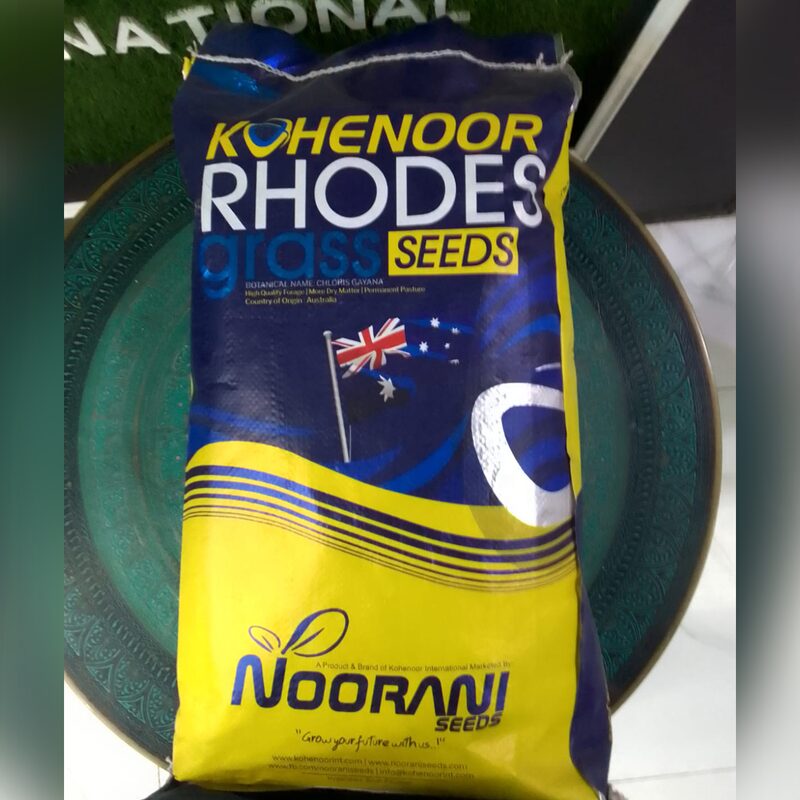
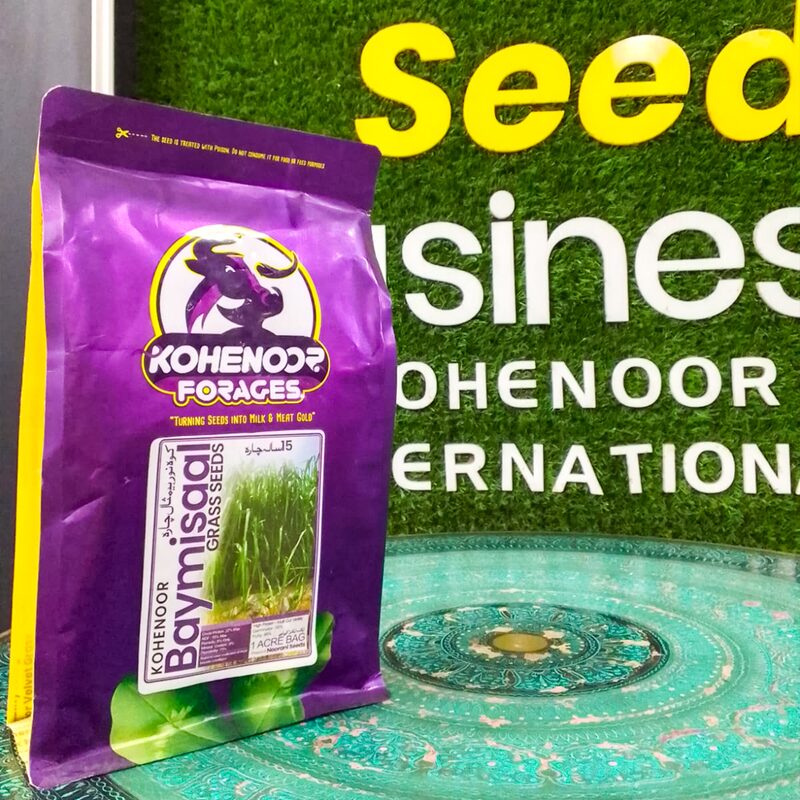
Rhodes grass (Chloris gayana) is the other great Gulf forage: a perennial, drought-, heat- and salt-tolerant grass that gives hay of 12 to 14 percent protein, lasts three to five years and uses less water than alfalfa per cut. It is the natural partner to alfalfa in a camel or sheep ration, providing the fibre that alfalfa lacks. Super Napier (Mott-type elephant grass, sold by Kohenoor as Baymisaal) is a tall, soft, very high-yielding perennial that lasts 12 to 15 years from one planting and tolerates heat and saline water, with protein around 16 percent; it suits a smallholder cutting green feed daily for cattle and camels. Hybrid sorghum and pearl millet are summer annuals that give large tonnages of green or silage feed in a short season. For winter, berseem clover and ryegrass give high-protein green feed in the cooler months.

Hydroponic fodder — grain sprouted on trays and fed as a green mat after seven or eight days — has spread in the Gulf because it uses a small fraction of the water of field fodder and needs no agricultural land; for a camel owner in a city with no licensed field it is often the only green feed option. Kohenoor supplies the forage seeds above as one order with one document set, and the camel, sheep and goat forage page and the countries index point to the right page for each species and destination.

Alfalfa seeds Saudi Arabia: how Kohenoor delivers to Dammam, Jeddah and Riyadh

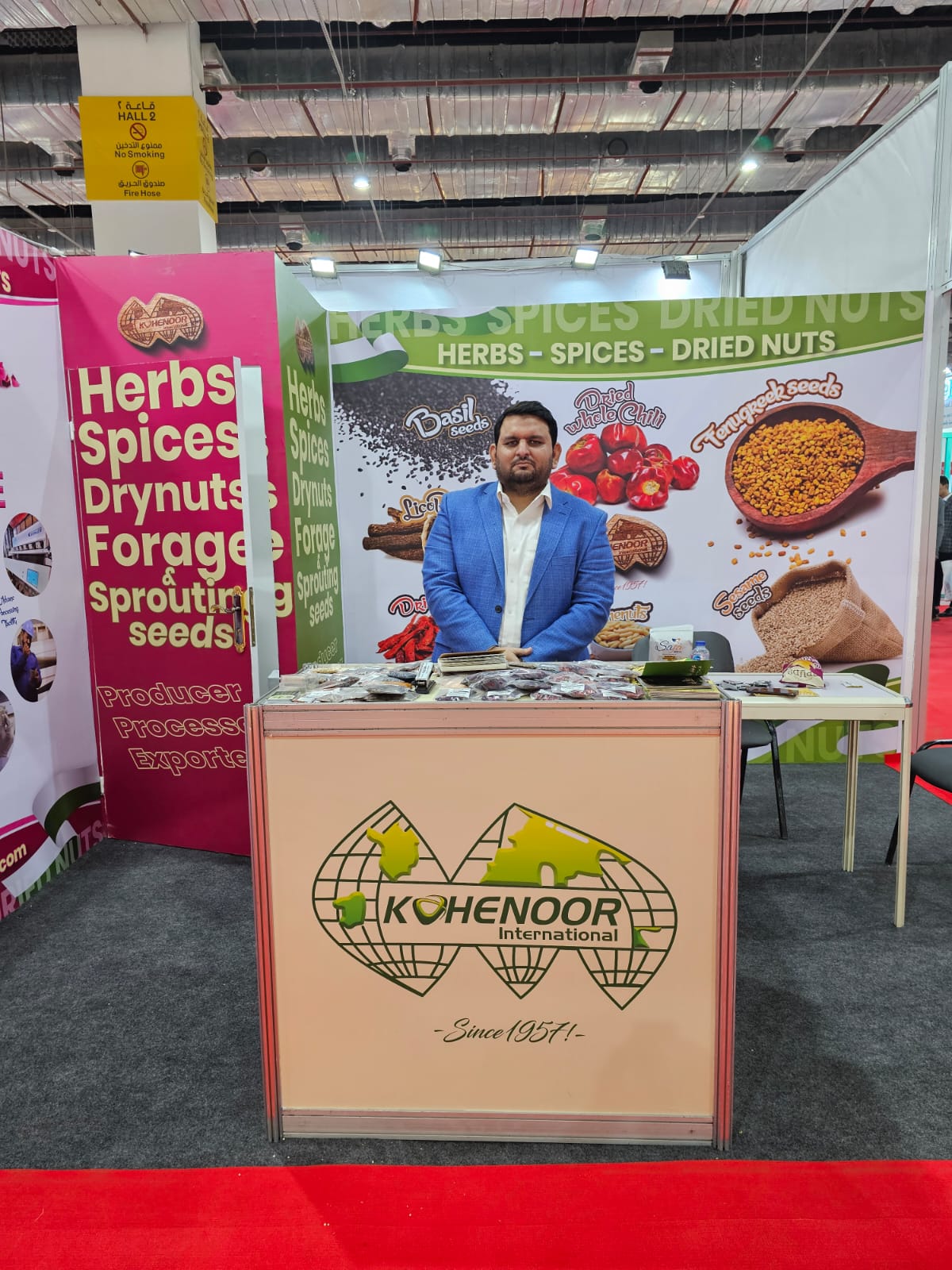
Kohenoor has shipped forage seed into the Gulf for decades and keeps an office in Dubai, so supplying alfalfa seeds to Saudi Arabia is routine. We sell direct — no agent or dealer between you and the company — and deliver to your port or your door from our plant at Hyderabad, Sindh, with one contact on the export desk throughout. Lots are quoted per order and destination, by WhatsApp or email within 24 hours, in English or Arabic.

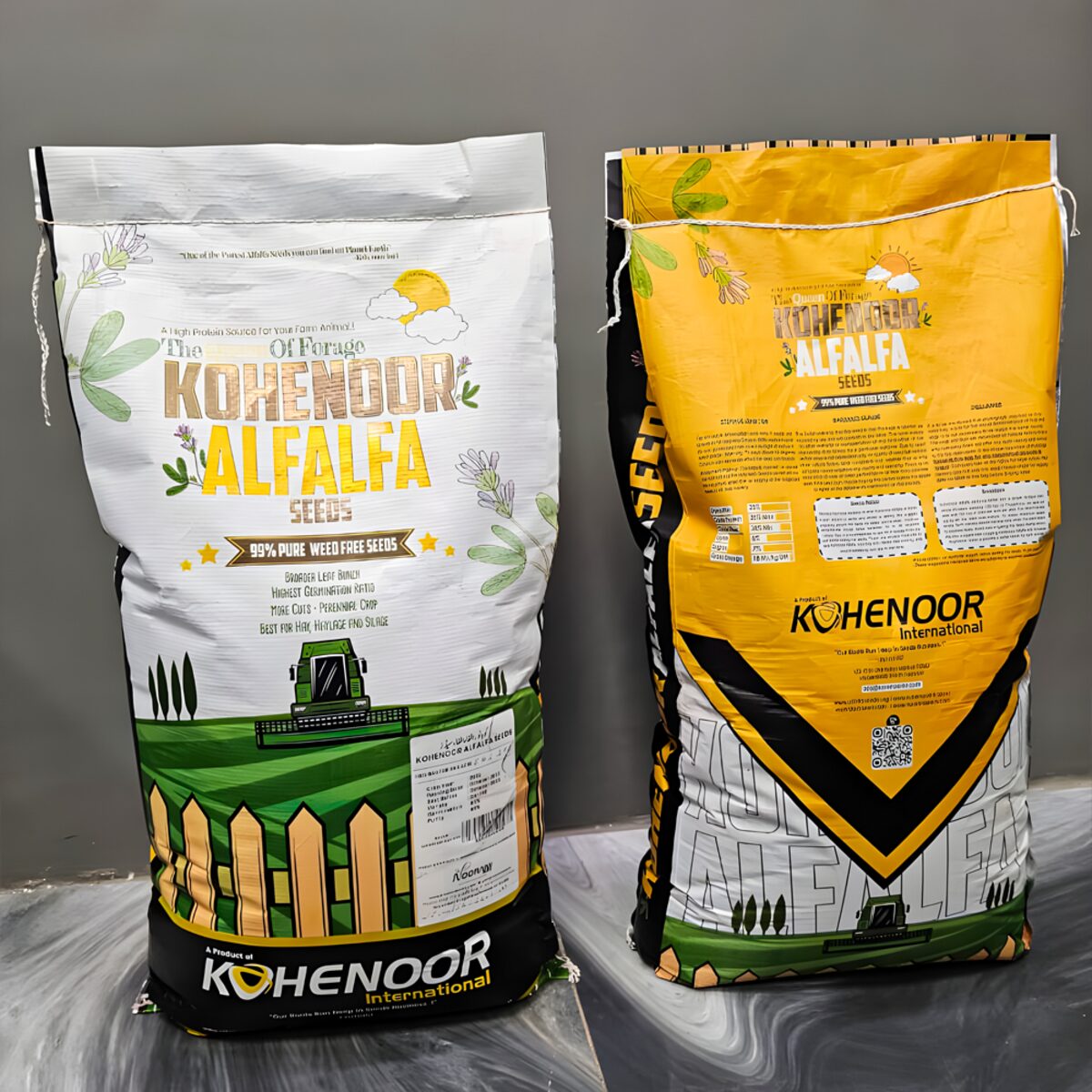
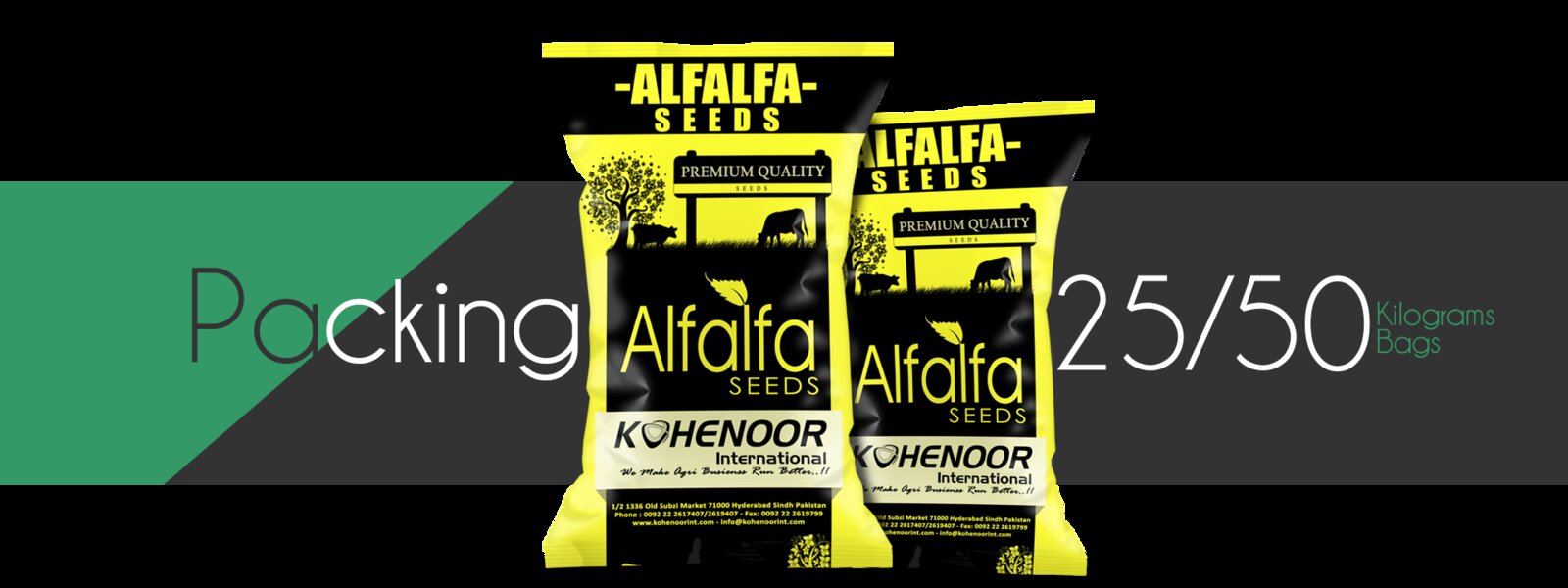
Routes. By sea, containers and part-loads move from Karachi to King Abdulaziz Port at Dammam on a short Arabian Gulf service of about a week to ten days port to port in most seasons, serving Riyadh, the Eastern Province and Al-Qassim by road. For the west, Karachi to Jeddah Islamic Port via the Red Sea serves Medina, Makkah, Tabuk and the southern provinces. Trial lots of one tonne and urgent orders travel by air from Karachi to Riyadh (King Khalid), Dammam or Jeddah in a few days. Seed is packed in 25 kilogram poly-lined PP woven bags with sealed lot tags, palletised, and in-stock lots are ready for vessel loading within 7 to 12 days of order confirmation. Alfalfa seed holds its germination for 18 to 24 months in cool, dry storage, so a season's requirement can be bought once.

Documents. Every shipment carries the ISTA Orange Certificate for the lot, our Certificate of Analysis, the IPPC phytosanitary certificate issued by Pakistan's plant protection authority with any additional declaration the Saudi side requires (dodder-free is standard), the certificate of origin attested as the importer's clearing agent instructs, the commercial invoice, packing list and bill of lading or air waybill. As of 2026, seed for planting entering the Kingdom generally requires an agricultural import permit from MEWA obtained by the importer, and the clearing agent will advise whether a SASO conformity certificate or an SFDA registration applies to a particular consignment — these requirements differ between seed for sowing and feed products, and they change, so we ask every Saudi buyer to confirm the current list with their agent before we load. We prepare whatever the agent specifies.

ParameterKohenoor TAIZTAR alfalfa seed for Saudi Arabia
VarietyTAIZTAR — Medicago sativa, fall dormancy 10, non-dormant, heat and salinity tolerant
Purity / germination≥98% / ≥85% by ISTA method, Orange Certificate per lot
Dodder0% — guaranteed in writing; dodder-free declaration on phytosanitary certificate
Seed rate25–30 kg/ha (10–12 kg/acre); 7+ cuts per year under irrigation
Hay qualityCrude protein 22–24%, crude fibre up to 28%; hay and silage
Packaging25 kg poly-lined PP woven bags, sealed lot tags, palletised
MOQ / lead time5 MT (1 MT trial lots accepted); in-stock lots 7–12 days to FOB Karachi
TermsFOB Karachi; CFR/CIF Dammam or Jeddah on request; quotation per lot and destination
HS code1209.21

How to order. Send the quantity, the destination (Dammam, Jeddah, Riyadh by air, or an overseas farm in Sudan, Egypt, Ethiopia or Pakistan), the sowing date and any document your clearing agent has specified, by WhatsApp to +92 310 4929292 or by email to export@kohenoorint.com. Within 24 hours you receive the quotation, the ISTA certificate of the lot we propose and the schedule. On confirmation and payment arrangement — 100 percent TT against bill of lading copy, or an irrevocable letter of credit at sight, with easier terms for repeat buyers — we complete the certificates, load within 7 to 12 days for stock lots, and the documents reach you and your agent before the vessel does. If you are a procurement office buying for farms in three countries, send us the list and we will quote each destination on one sheet. The product and shipping page for the Kingdom is alfalfa seeds for Saudi Arabia.
Seed, packing and loading for the Gulf

Related pages for Saudi buyers

Alfalfa seeds for Saudi Arabia
Alfalfa seeds for Saudi ArabiaThe product and shipping page for the Kingdom: TAIZTAR lots, documents, Dammam and Jeddah routing, trial lots by air.
Open the Saudi Arabia page →
Forage seeds for camel, sheep and goat farms
Forage seeds for camel, sheep and goat farmsAlfalfa, Rhodes grass and the other species that make up a camel or small-ruminant ration in hot, saline conditions.
See the forage species →
Large-scale forage projects
Large-scale forage projectsSeed and agronomy support for Saudi-owned pivots in Sudan, Egypt, Ethiopia and Pakistan — one contract, several destinations.
Plan a project →
Heat-resistant alfalfa seed
Heat-resistant alfalfa seedHow non-dormant varieties compare for Gulf heat, and why TAIZTAR replaces the late-1970s CUF-101.
Compare varieties →

Talk to the export desk about Saudi Arabia — quotation within 24 hours

Tell us the quantity, the destination (Dammam, Jeddah, Riyadh by air, or a farm in Sudan, Egypt, Ethiopia or Pakistan) and your sowing date. The export desk replies directly with a quotation per lot and destination, the ISTA certificate of the current lot and the schedule — in English or Arabic, no agents, no obligation.

export@kohenoorint.com

Frequently asked questions

Is it illegal to grow alfalfa in Saudi Arabia?

Alfalfa the plant is not banned, but large-scale commercial green fodder cultivation, alfalfa included, was phased out between roughly 2016 and 2019 to conserve groundwater and is not licensed on big farms. Allowances were made for small holdings and limited areas, and smallholders in the oases still grow plots for their own camels, sheep and goats. As of 2026, confirm the current rules for your district with the Ministry of Environment, Water and Agriculture before planting.

Why did Saudi Arabia ban alfalfa farming?

Because alfalfa under desert centre-pivots uses enormous volumes of water — commonly cited at well over 20,000 cubic metres per hectare per year — drawn from deep aquifers that are not replenished. Irrigated fodder had become the largest single use of the Kingdom's non-renewable groundwater as the dairy industry grew, and the national water strategy of the mid-2010s concluded the drawdown could not continue. Hay imports replaced domestic production.

Where does Saudi Arabia import its alfalfa hay from?

Mainly from the United States, which is the largest supplier of alfalfa hay to the Gulf, followed by Spain and Sudan. Egypt, Argentina, Australia, Romania and Italy also appear in Saudi import statistics in varying volumes. Trade estimates put the Kingdom's alfalfa hay imports at well over a million tonnes a year in most recent seasons, arriving at Jeddah and Dammam as compressed bales, pellets and cubes.

Can a small farm or camel owner still buy alfalfa seed for Saudi Arabia?

Yes. Most of the seed Kohenoor ships to the Kingdom goes to smallholders, camel owners and sheep and goat breeders growing limited areas of green feed on licensed land, within the allowances that remained after the phase-out. Trial lots of one tonne travel by air to Riyadh, Dammam or Jeddah; larger orders go by sea from Karachi. Confirm your plot's position with MEWA, then send us the quantity and destination.

Which alfalfa variety suits Saudi heat and salinity?

TAIZTAR, Kohenoor's fall dormancy 10 non-dormant alfalfa, bred on modern genetics as the superior replacement for the late-1970s CUF-101 that Gulf farms used for decades. It grows through the Saudi summer and mild winter for seven or more cuts a year, tolerates saline irrigation water and soils, gives hay of 22 to 24 percent crude protein, and every lot is ISTA-tested with dodder guaranteed at zero in writing.

Does Kohenoor supply seed to Saudi-owned farms in Sudan, Egypt, Ethiopia or Pakistan?

Yes, routinely. Saudi dairy groups and investors grow alfalfa abroad and ship the hay home, and we supply TAIZTAR seed FOB Karachi to Port Sudan, Alexandria or Djibouti with the phytosanitary certificate issued for the destination country, while the invoice and ISTA certificate go to the procurement office in Riyadh or Jeddah. Farms in Pakistan are supplied by road from our Hyderabad plant.

How much water does alfalfa need in Saudi Arabia and how can a grower use less?

Alfalfa is one of the thirstiest field crops; under desert pivots it has been measured at tens of thousands of cubic metres per hectare per year. A smallholder can use substantially less by switching from flood to drip or subsurface drip irrigation, irrigating at night, using treated wastewater where supplied, cutting at early bud every 28 to 35 days rather than at flower, and sowing a dense, dodder-free stand once instead of a thin stand twice.

What documents and approvals are needed to import alfalfa seed into Saudi Arabia?

Kohenoor supplies the ISTA Orange Certificate, Certificate of Analysis, IPPC phytosanitary certificate with a dodder-free declaration, attested certificate of origin, invoice, packing list and bill of lading or air waybill. As of 2026 the importer generally needs an agricultural import permit from MEWA, and the clearing agent advises whether SASO or SFDA requirements apply to a particular consignment, since these differ between seed for sowing and feed and change over time.

Related pages

WA