Farm and wholesale buying · 25 kg bags · pallets and 20'/40' containers · TAIZTAR FD10 or KN92 FD9 · 0% dodder in writing · 7–12 days to FOB Karachi
Alfalfa seeds are sold in two very different ways. A home grower buys a small pack for sprouting or a garden bed; a farm, a dairy project or an importer buys by the 25 kg bag, the pallet and the container. This page is for the second buyer. It explains how bulk alfalfa seed is packed and shipped, how much seed a field needs per acre or per hectare, how to work out the number of bags, how to choose between TAIZTAR and KN92, what "alfalfa seed for sale" listings leave out, and the exact steps to buy from Kohenoor, a Pakistani seed company exporting since 1957.
WhatsApp +92 310 4929292 Get a quotation in 24 h
The first question is not which supplier but which kind of buyer you are, because the two markets barely touch. Small packs — a few hundred grams to a few kilograms for sprouting, a garden bed or a pasture patch — are a retail product sold by garden centres, health-food shops and online stores. Bulk alfalfa seed — 25 kg bags bought by the pallet or the container — is a farm input sold to a specification, with a laboratory certificate for each lot.
Kohenoor is in the second market only. We do not retail small packs and we do not ship a single bag by courier; our minimum order is 5 MT, with a 1 MT trial accepted for a farm that wants to grow our seed beside its current variety for a season. Home growers looking for sprouting seed are better served by a retailer or online store, and our guide to sprouting alfalfa seeds explains what to look for and how to grow them. Farms, dairies, cooperatives, forage schemes and importers should read on.
Between the two sits the smallholder who needs ten or twenty bags. In Pakistan, Kohenoor supplies such farms directly through its own offices, and the Pakistan lucerne seed page is written for them. Overseas, a farm below the trial quantity should still ask: where several farms in one district want seed for the same season, the desk can often combine them into one shipment to one consignee.

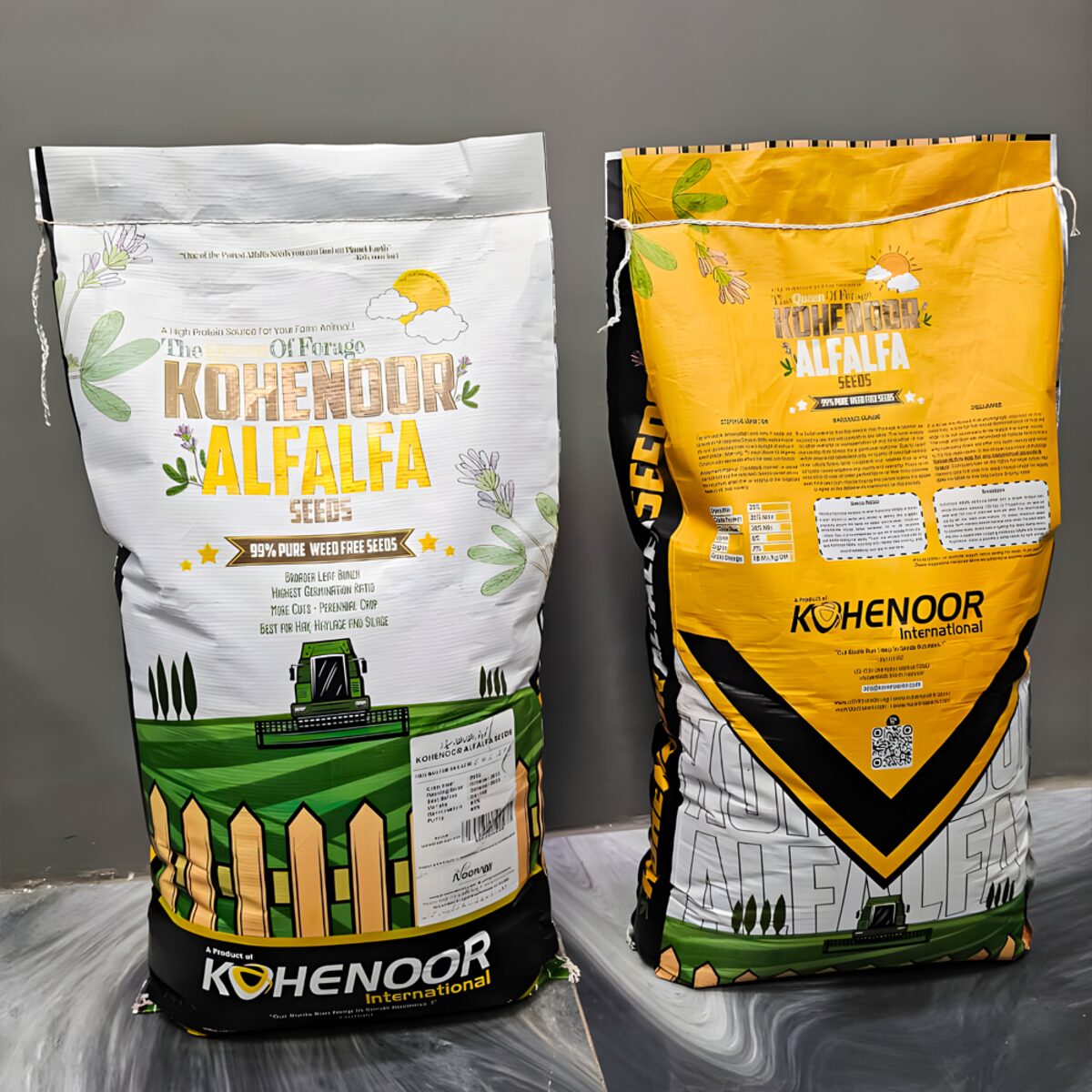
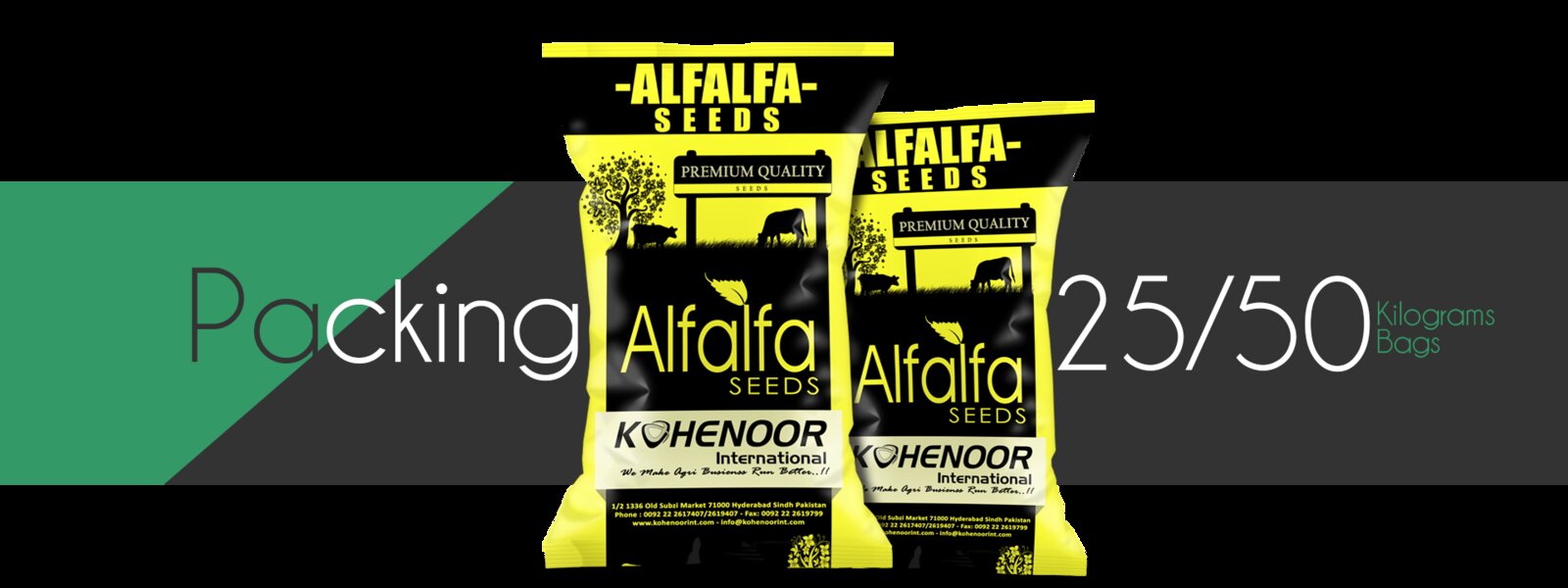
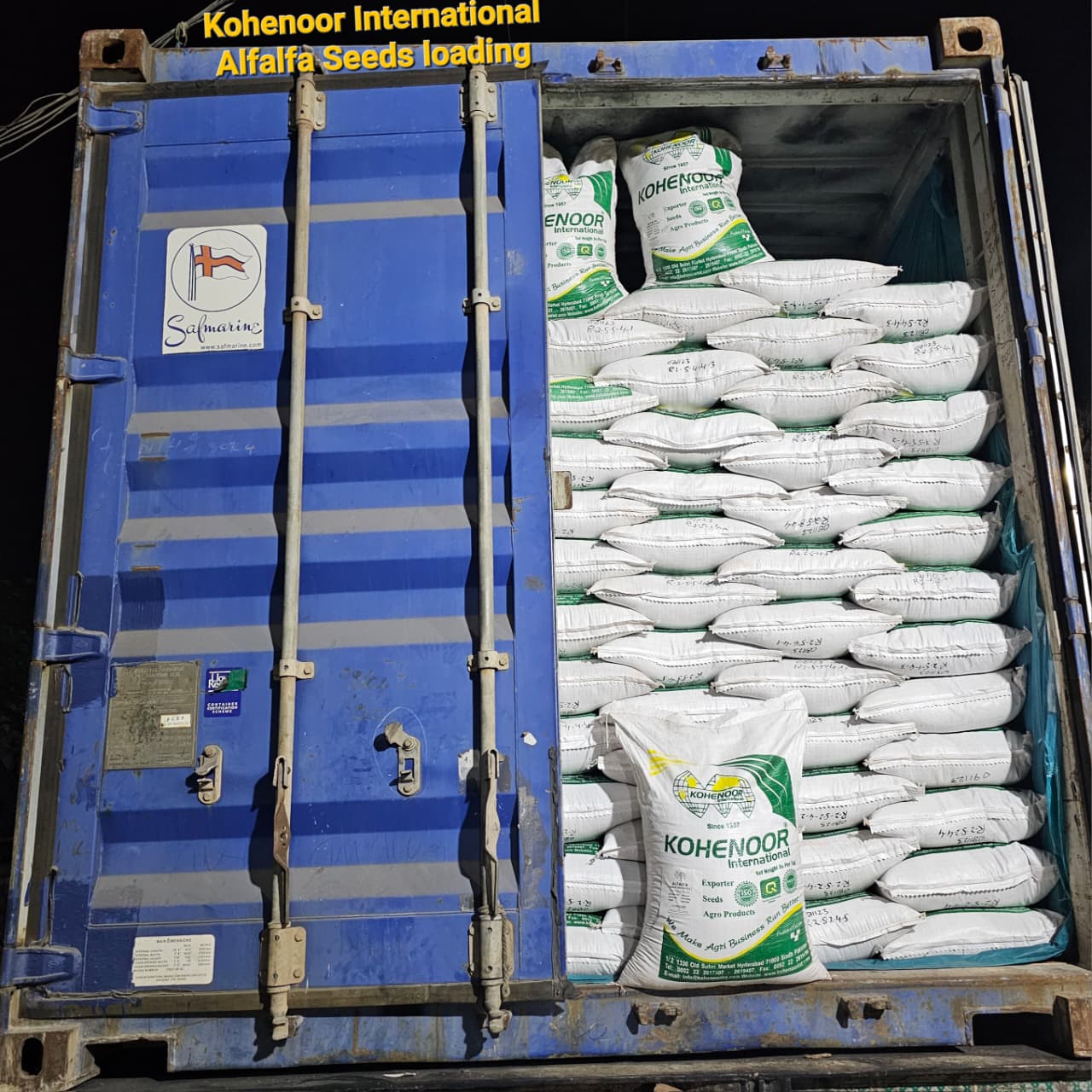
Bulk alfalfa seed is packed almost everywhere in 25 kg bags. Kohenoor uses poly-lined woven polypropylene bags with a sealed tag carrying the variety, lot number and net weight, matching the ISTA Orange Certificate and the invoice. The seed is bare and untreated, so 25 kg on the tag means 25 kg of seed; coated seed carries a clay or polymer layer that can make up a large share of bag weight, so a coated 25 kg bag sows considerably less area.
| Unit | Typical contents | Approximate area sown at 25 kg/ha | Notes |
|---|---|---|---|
| One bag | 25 kg bare seed | About 1 hectare (2.5 acres) | Sealed lot tag; variety, lot and weight printed |
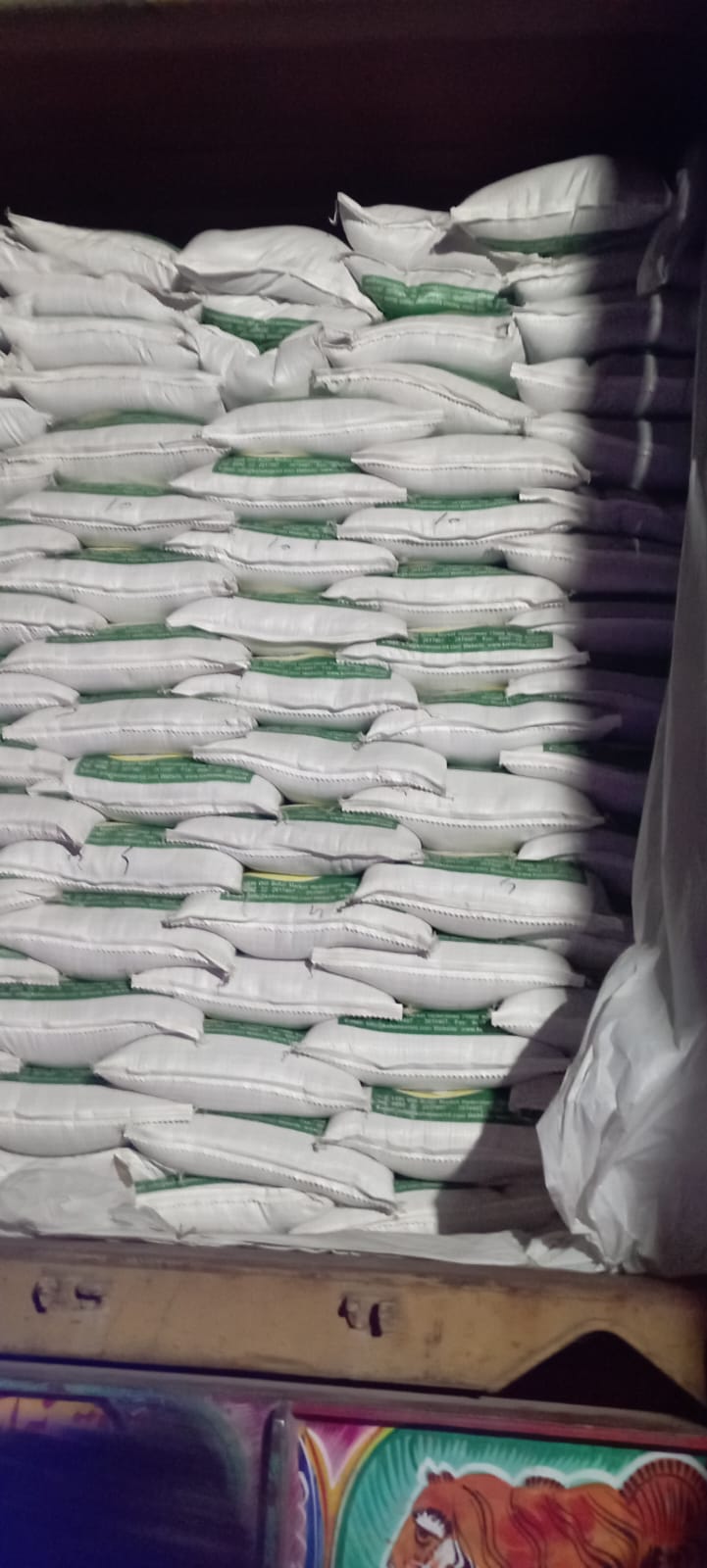
| One pallet | Typically 40 bags = 1 MT | About 40 hectares (100 acres) | Shrink-wrapped; also the size of the trial lot |
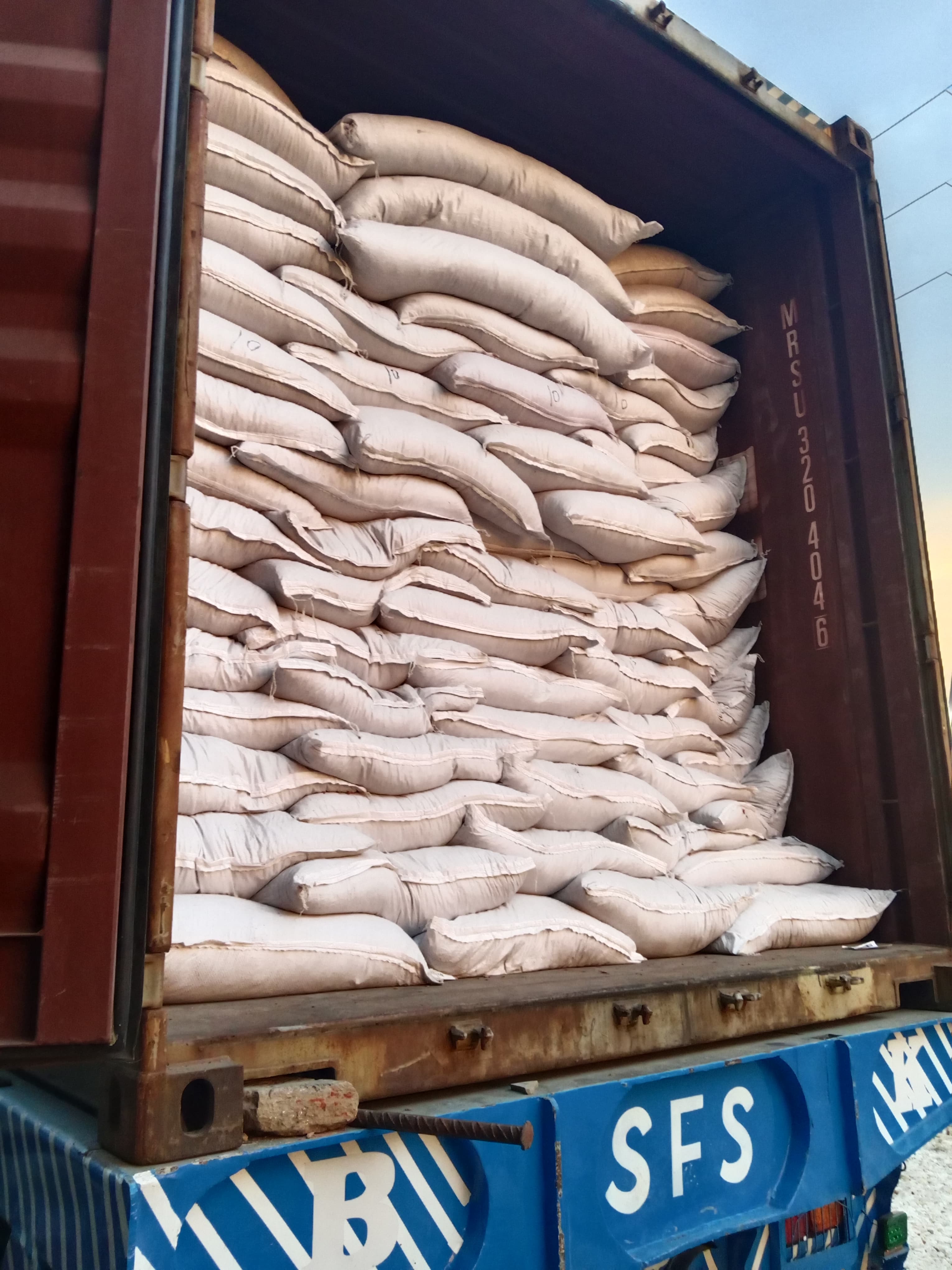
| 20-foot container | Typically 18 to 20 MT palletised (720 to 800 bags) | About 720 to 800 hectares | Limited by road weight rules at destination, not by volume |
| 40-foot container | Typically 24 to 26 MT palletised (960 to 1,040 bags) | About 960 to 1,040 hectares | Only where destination weight limits allow; often little gain over two 20-foot units |
The figures are typical loadings as of 2026, confirmed on the quotation for your route, because permitted road weights differ by country and decide how many pallets go in. The practical units are the pallet (a trial), the 5 MT minimum (a mid-sized farm or a distributor's season) and the 20-foot container (a large farm, project or importer). Palletising and documents are described on the packing and shipping page.
Seed rate is where most bulk-buying mistakes begin. The published ranges below are typical for bare alfalfa seed; your extension service, agronomist or the seed company will narrow them for your soil, seedbed and machinery, and coated seed needs its rate adjusted for the coating share.
| Situation | Sowing method | Typical rate per hectare | Typical rate per acre | Why |
|---|---|---|---|---|
| Irrigated, good seedbed | Drill, 1–2 cm deep | 20–25 kg | 8–10 kg | Precise placement; most seed emerges |
| Irrigated, good seedbed | Broadcast and roll | 25–30 kg | 10–12 kg | Uneven depth; extra seed compensates |
| Irrigated, saline or cloddy seedbed | Either | Top of range, about 30 kg | About 12 kg | Seedling losses to salt and poor contact |
| Dryland, reliable rainfall | Drill | 8–12 kg | 3–5 kg | Fewer plants can be supported by rain alone |
| Dryland, broadcast or marginal | Broadcast | 12–15 kg | 5–6 kg | Compensates for poor placement |
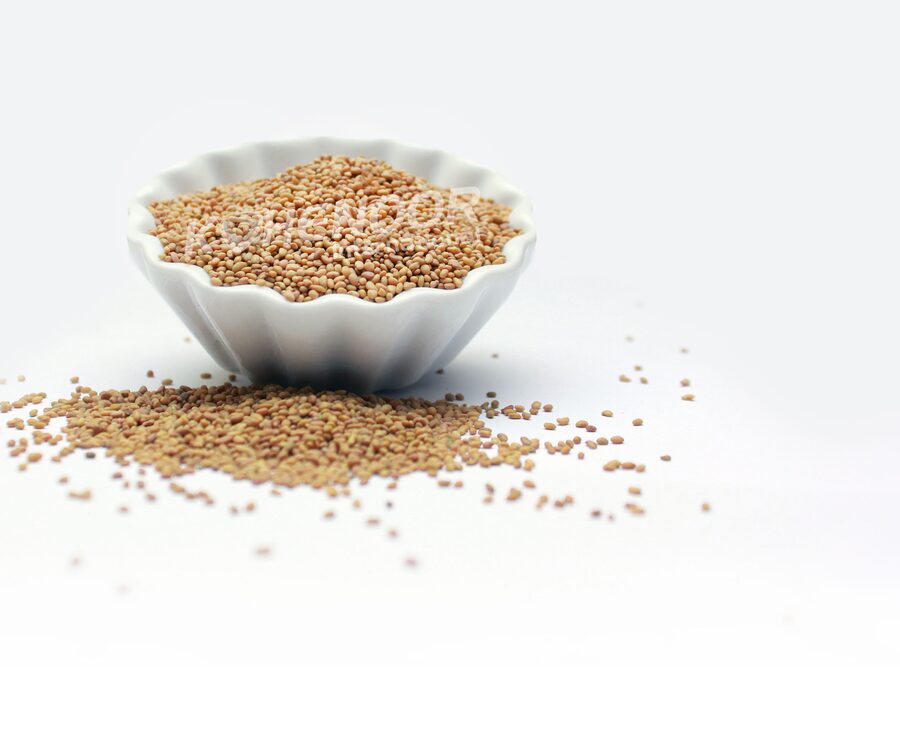
Kohenoor's standard recommendation for TAIZTAR and KN92 under irrigation is 25 to 30 kg per hectare, or 10 to 12 kg per acre, sown into a fine, firm, moist seedbed at 1 to 2 cm depth, in the cooler part of the year where there is one. Alfalfa seed is small, around 440,000 to 500,000 seeds per kilogram, so even the lower rates put several hundred seeds on every square metre; the higher rates buy insurance against a poor seedbed, salt or a hot start.
One conversion is worth memorising: 1 hectare is 2.47 acres, so a 25 kg bag sown at 25 kg/ha covers one hectare or about two and a half acres — one bag per 2.5 acres is a useful rule of thumb in acre-based countries.
Doing the arithmetic before the enquiry saves a round of messages and prevents the two classic errors: mixing acres and hectares, and forgetting a reserve for patching. Two typical farms, in kilograms and bags:
For a project the same arithmetic applies block by block, with the order split across sowing windows so each container arrives a few weeks before its land is ready. A 1,000-hectare scheme at 25 kg/ha needs 25,000 kg, or 1,000 bags: roughly one 20-foot container plus a part load. Send the export desk your area, sowing method and sowing month and it returns the bag count, the container plan and the quotation together.
Buying in bulk commits a field to one variety for three to five years. Kohenoor exports two, both bred and trialled in Pakistan, and the choice comes down almost entirely to your winter.
| TAIZTAR | KN92 | |
|---|---|---|
| Fall dormancy | FD 10, non-dormant | FD 9, non-dormant but cold-tolerant |
| Bred for | Heat and salinity tolerance; frost-free or nearly frost-free irrigated farms | Farms with regular winter frost, altitude or occasional severe cold spells |
| Typical regions | Arabian Gulf, Nile valley and delta, southern Iraq, Sahel, northern Australia, tropical lowlands, Sindh and southern Punjab | Northern Iraq, highland Jordan and Morocco, Central Asia, Anatolian plateau, highland East Africa, Andean valleys, northern Pakistan |
| Specification | ≥98% purity · ≥85% germination · 0% dodder in writing · crude protein 22–24% · ISTA certificate per lot · HS 1209.21 | |
| Seed rate | 25–30 kg/ha (10–12 kg/acre) under irrigation | |
If your coldest winter nights rarely drop below freezing and you irrigate, buy TAIZTAR. If frost is a normal part of your winter, buy KN92. Larger farms with varied land often buy both, and the two travel in one container as separate lots. Tell the export desk your coldest recorded night and it will confirm the choice; buyers in cold temperate regions needing a dormant FD 3 to 5 variety will be told plainly that neither is the right seed for them.

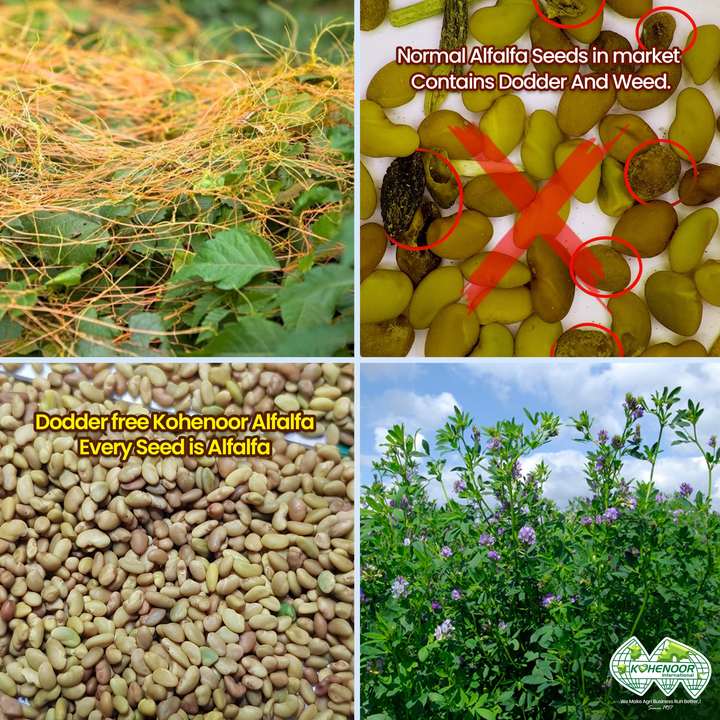
Search for alfalfa seeds for sale and you will find hundreds of listings with a photograph of a green field, a weight and an invitation to contact the seller. What such a listing leaves out matters more than what it says. Before buying from any of them, check for the following.
Seed that looks like a bargain usually has something removed from it: the variety identity, the fresh test, the cleaning step or the guarantee, each worth far more once the seed is in the ground.
The honest answer to "how much is a bag of alfalfa seed" is that a bag is 25 kg and the figure depends on variety, lot, quantity, season, destination port and delivery term, which is why no serious exporter prints a single number on a web page. Kohenoor quotes every enquiry individually within 24 hours, and what you should expect is not a number alone but a quotation you can compare fairly with any other. It contains:
When two quotations differ, the difference is almost always in those lines: bare seed against coated, a lot certificate against none, FOB against delivered. How the figure itself is built is explained on the alfalfa seed price page.
The route from first message to loaded container is the same for a 1 MT trial and a 1,000-hectare project, with one contact at the export desk throughout and no agent or dealer in between.
Buyers who want to see the plant first are welcome at Hyderabad, Sindh, or at the Dubai office; a video walk-through is available for those who cannot travel. Country-specific import requirements are summarised on our country pages.

A season's or a project's requirement can be bought in one shipment and drawn down block by block, provided it is stored well. Stored cool and dry, alfalfa seed holds its germination for 18 to 24 months and often longer; the enemies are heat, humidity, rodents and insects rather than time itself.
Seed arriving in a hot port in summer should leave the container promptly; a closed container in the sun shortens seed life if it sits for weeks. Plan the store before the vessel sails.
Buyers ask for alfalfa seeds for farming, for hay, for planting or for pasture, and the words carry real differences in what to buy and how much.
A pure stand cut on schedule is the highest-protein forage a farm can grow, with crude protein of 22 to 24% from TAIZTAR and KN92 under good management. Buy the full irrigated rate and drill if you can for an even stand that cures evenly. Why alfalfa hay outperforms grass hay for dairy and beef cattle is set out on our alfalfa hay versus grass hay page.
Dairy, camel and feedlot operations in hot regions cut alfalfa green every 25 to 35 days. Non-dormant TAIZTAR is the variety for this in frost-free climates; stagger blocks so that cutting is continuous.
In mixed pastures with Rhodes grass or other grasses, alfalfa goes in at a lower rate, typically 5 to 10 kg per hectare. Kohenoor supplies the grass components too, so a mixed-pasture order travels as one shipment.
A lower rate and a variety matched to the winter: KN92 where frost occurs, TAIZTAR in hot frost-free zones with a water table or reliable rain. Expect fewer cuts.
Whatever the purpose, the bag is the same 25 kg of bare, certified, dodder-free seed. The lucerne seed page covers the same questions for buyers who know the crop by that name, and the export desk page describes the company behind it.


Send your country, area in hectares or acres, destination port and sowing month. The export desk replies within 24 hours with the bag count, the variety, the ISTA certificate for the lot and a quotation for your quantity and delivery term — direct from the company, no agent in between.
WhatsApp +92 310 4929292 export@kohenoorint.comA standard export bag of alfalfa seed holds 25 kg of bare seed and sows roughly one hectare at the usual irrigated rate. The figure for it depends on the variety, the lot, the quantity, the season, the destination port and the delivery term, so Kohenoor does not publish a single number. Send your country, quantity and port by WhatsApp to +92 310 4929292 or email export@kohenoorint.com and a quotation follows within 24 hours.
Under irrigation, typical published rates are 8 to 10 kg per acre when drilled and 10 to 12 kg per acre when broadcast, with the top of the range used on saline or cloddy seedbeds. Dryland rates are lower, around 3 to 6 kg per acre. Kohenoor recommends 10 to 12 kg per acre (25 to 30 kg per hectare) for TAIZTAR and KN92 under irrigation; one 25 kg bag then covers about two and a half acres.
The standard minimum order is 5 MT, which is 200 bags of 25 kg or five pallets, enough to sow about 200 hectares at 25 kg per hectare. A 1 MT trial lot of 40 bags is accepted on the same specification, certificate and dodder guarantee so that a farm can grow the variety beside its current seed for a season. Stock lots load FOB Karachi within 7 to 12 days of order confirmation.
No. Kohenoor supplies farm and wholesale quantities only, from a 1 MT trial lot upward, and does not retail small packs or ship single bags by courier. Home growers looking for sprouting seed are better served by a local retailer or online store, and our guide to sprouting alfalfa seeds explains what to look for in sprouting-grade seed and how to grow it. Farms, projects, cooperatives and importers should contact the export desk directly.
A 20-foot container typically carries 18 to 20 MT of palletised bagged alfalfa seed, which is 720 to 800 bags of 25 kg, enough for roughly 720 to 800 hectares at 25 kg per hectare. The limit is usually the permitted road weight at the destination rather than the container's volume, so the exact loading is confirmed on the quotation for your route. A 40-foot container adds capacity only where destination weight rules allow.
For frost-free or nearly frost-free irrigated farms in the Gulf, the Nile valley, the Sahel, northern Australia or tropical lowlands, buy TAIZTAR, Kohenoor's fall dormancy 10 non-dormant alfalfa bred for heat and salinity tolerance and positioned as the modern replacement for CUF-101. Where winter frost is regular, buy KN92, the fall dormancy 9 cold-tolerant variety. Both are supplied at ≥98% purity, ≥85% germination and 0% dodder in writing.
Stored cool and dry in its sealed poly-lined bags, on pallets off the floor and protected from rodents and insects, alfalfa seed holds its germination for 18 to 24 months and often longer. Heat and humidity are what shorten its life, so a shaded, ventilated store matters more than a short storage time. Re-test a sample from any lot held over a year and adjust the seed rate slightly if germination has fallen.
Kohenoor loads stock lots for vessel loading FOB Karachi within 7 to 12 days of order confirmation, once payment terms are agreed and the phytosanitary inspection is booked. Sailing time to your port depends on the route and is sent with the booking; Gulf ports are a few days from Karachi, East and West African, Mediterranean and Latin American ports longer. The document set is sent ahead so that clearance is ready when the container lands.