Lot-specific quotation · FOB Karachi or CFR/CIF your port · ISTA certificate per lot · 0% dodder in writing · MOQ 5 MT (1 MT trial) · reply within 24 h
If you searched for the alfalfa seed price per kg, the lucerne seed price for a 25 kg bag or the alfalfa seed cost per acre, you will not find a number on this page, and the reason is the subject of the page: alfalfa seed is quoted per lot, because variety, dormancy class, certified status, purity, germination, dodder status, bag and lot size, season, origin, Incoterm, freight and payment terms all change the figure. Kohenoor's export desk builds that quotation line by line and sends it on WhatsApp or email within 24 hours.
WhatsApp +92 310 4929292 Get a quote in 24h
Alfalfa seed is not a commodity with one quoted figure the way a bushel of wheat has one. It is a certified agricultural input whose value depends on what is in the bag, what document proves it, where the bag is going and who pays for which part of the journey. Two 25 kg bags of "alfalfa seed" can sit side by side on a pallet and carry very different figures on their invoices, and both can be fairly priced. When a buyer asks for the alfalfa seed price per kg, the honest first answer is a question: which seed, to which port, on which terms? The factors below are the ones that move the figure on a Kohenoor quotation.
Because all of this is true for every exporter, any website publishing one alfalfa seed price per kg is publishing a number that cannot apply to your order. Our export desk quotes per lot and per destination instead, and explains each line.
A proper quotation is a short document, not a single number, and reading it line by line is how a buyer sees exactly what is being paid for. The sequence below is the one the Kohenoor export desk follows for every enquiry, whether it is a 1 MT trial or a container programme.
When all of these lines are visible, "how much is a bag of alfalfa seed" becomes a question the buyer can answer: the seed and packing lines divided by the number of bags, plus the share of freight and documents that applies to their Incoterm. A lump figure without the lines behind it cannot be compared with anything. For bag counts per container and what each term adds, see packing and shipping.
Buyers in different markets ask the same question in different units. North American farmers think in alfalfa seed price per pound and per 50 lb bag; the Commonwealth, the Gulf, Africa and Asia think in lucerne seed price per kg and per 25 kg bag; importers think per metric tonne and per container. The unit does not change what the seed is worth, but it changes what gets forgotten in the conversion.
Per kilogram. The unit most quotations use. It is clean for raw seed of a stated specification and misleading the moment coated seed enters the picture, because a coating can be a large share of a coated kilogram. Ask whether the seed is raw or coated and, if coated, what the coating percentage is.
Per pound. One kilogram is roughly 2.2 pounds, so a per pound figure is multiplied by about 2.2 to compare with a per kg figure. A 50 lb bag holds about 22.7 kg, not 25 kg; two "one bag" figures from the two systems are not for the same quantity of seed.
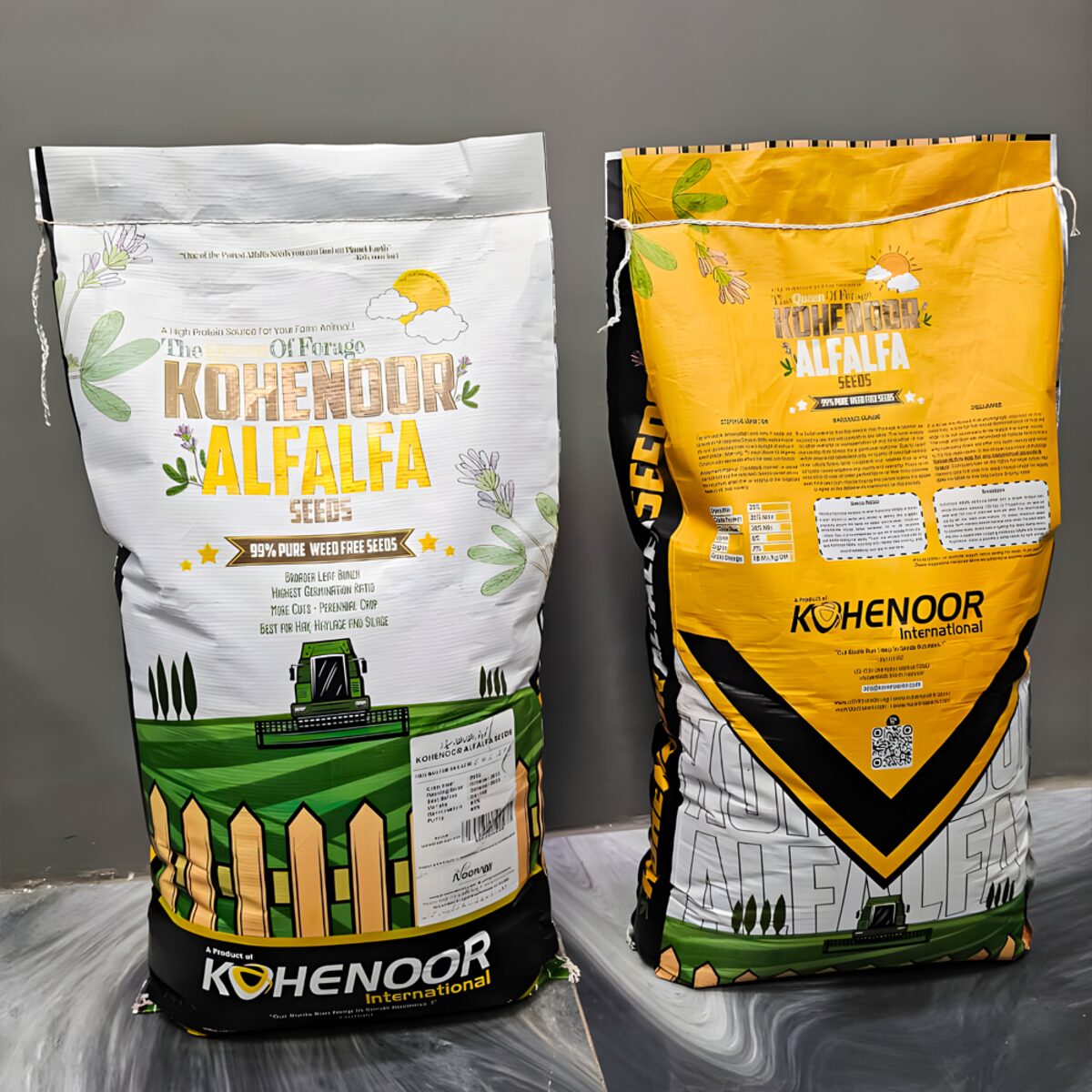
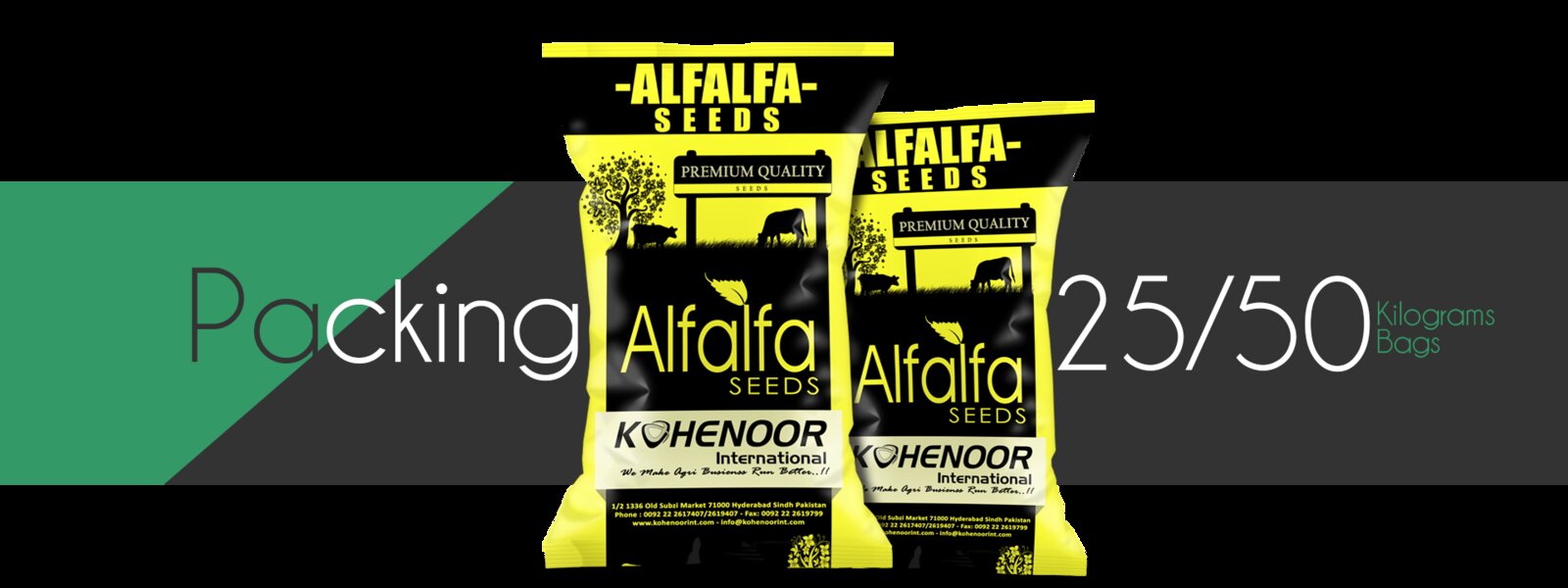
Per 25 kg bag. The unit most farmers in Pakistan, the Gulf and Africa buy in, and the unit our packing is built around. A per-bag figure is the per kg figure multiplied by 25 at the seed and packing lines; it does not include freight unless the quotation says so.
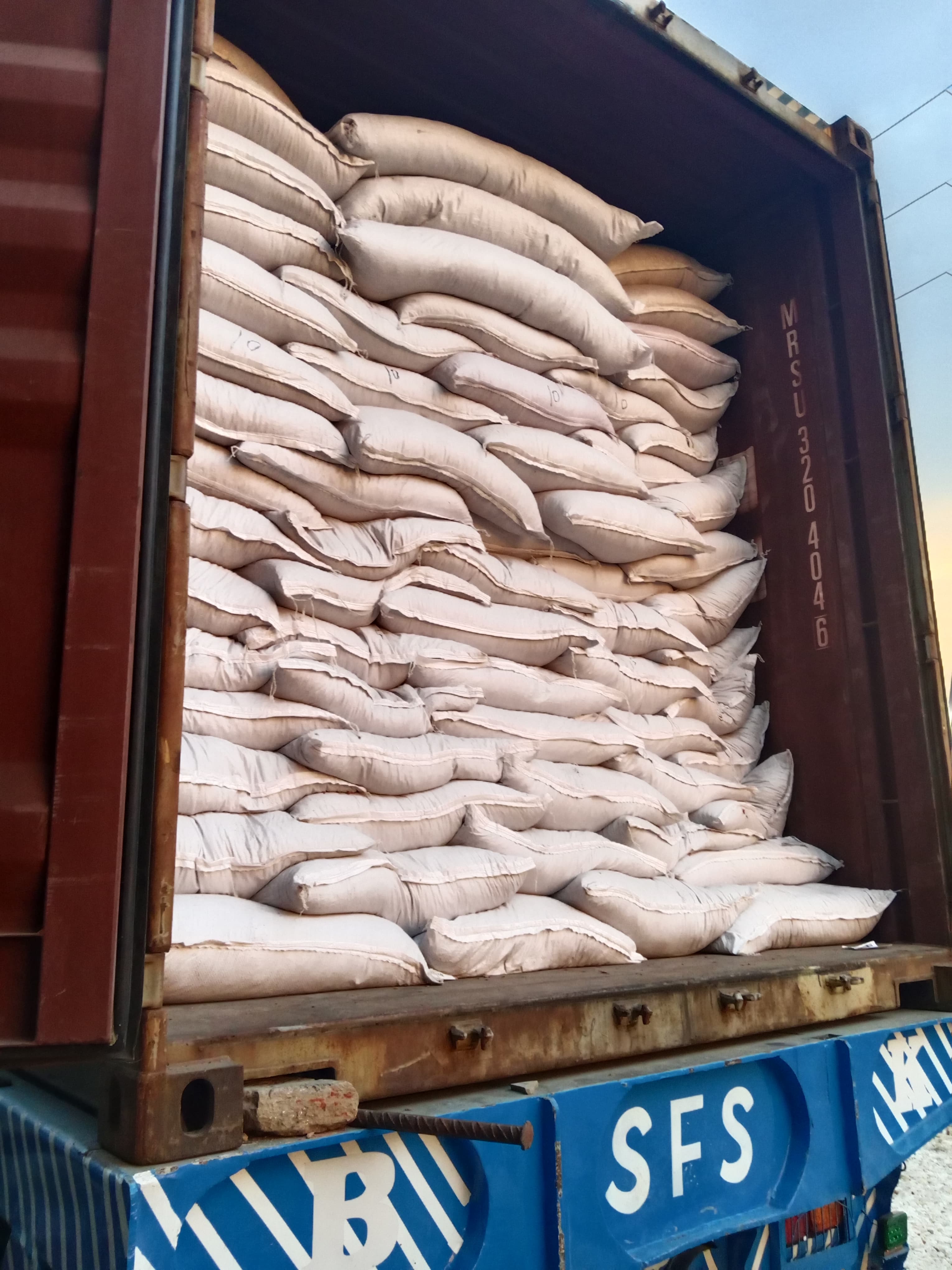
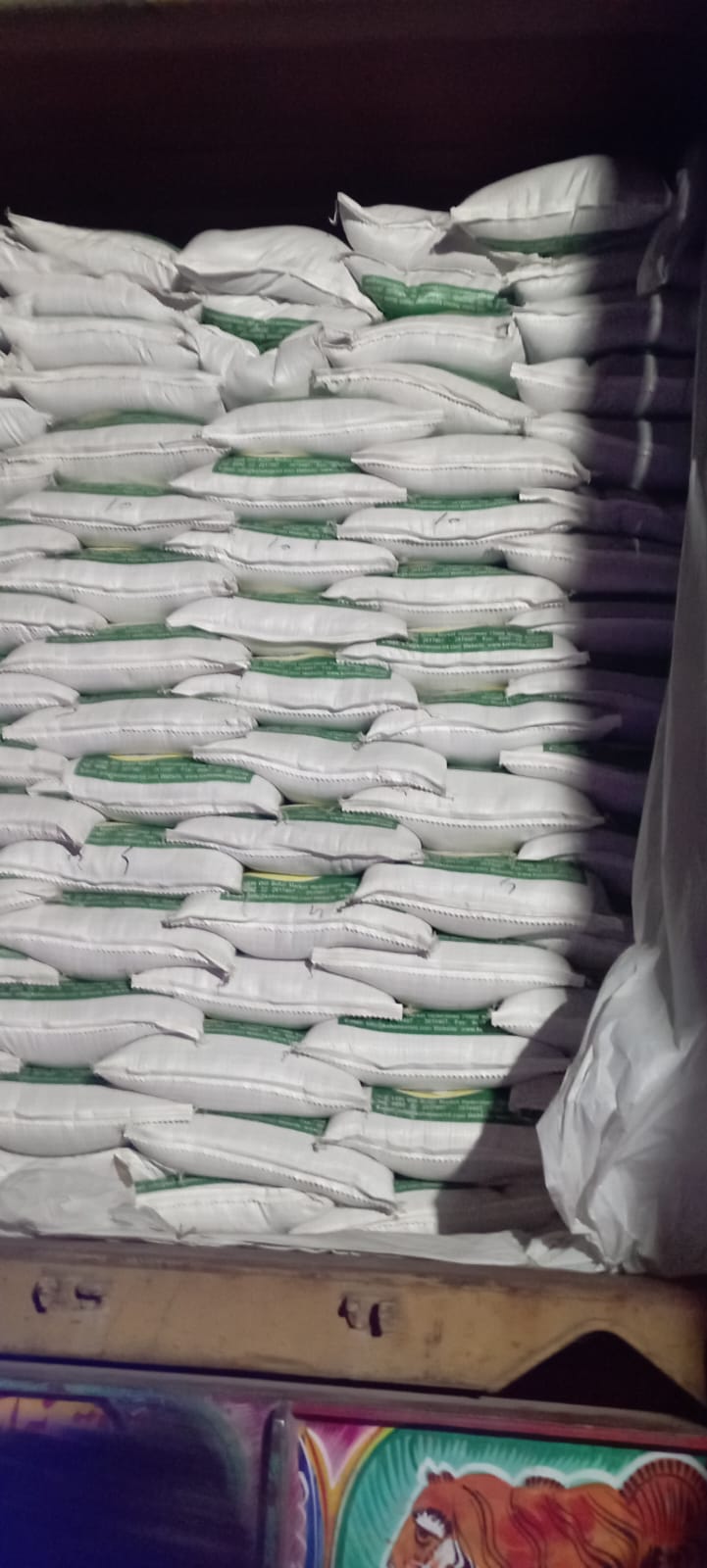
Per metric tonne and per container. Exporters quote in metric tonnes because lots are tested and freight is costed that way; 1 MT is 40 bags of 25 kg. A twenty-foot container typically takes around 18 to 20 MT of bagged seed depending on palletisation; weight limits rather than volume usually decide the load.
The practical rule: compare quotations in metric tonnes of raw seed of a stated specification under a stated Incoterm, then convert to the unit your farm thinks in. Kohenoor's lot specification is on the alfalfa seed specifications page so the per kg conversation starts from the same definition of a kilogram.
The alfalfa seed cost per acre, or per hectare, is the question a farmer really needs answered, because the farm budget is written per field, not per bag. The good news is that the seed part of the calculation is simple and does not need a published price at all. It needs the seed rate, the field area and the quotation for your lot. The formula is:
Seed needed (kg) = seed rate (kg per acre or per hectare) × field area (acres or hectares) Bags needed = seed needed (kg) ÷ 25 Seed cost = seed needed (kg) × the per kg figure on your quotation
The seed rate is an agronomic decision. General guidance for clean, high-germination seed in a well-prepared seedbed is 25 to 30 kg per hectare, roughly 10 to 12 kg per acre; drilled seed at the low end, broadcast or saline seedbeds at the high end. Your agronomist confirms the rate. In kilograms only:
| Field area | At 10 kg/acre (25 kg/ha) | At 12 kg/acre (30 kg/ha) | 25 kg bags |
|---|---|---|---|
| 1 acre | 10 kg | 12 kg | 1 bag covers 2 to 2.5 acres |
| 10 acres (about 4 ha) | 100 kg | 120 kg | 4 to 5 bags |
| 25 acres (about 10 ha) | 250 kg | 300 kg | 10 to 12 bags |
| 100 ha (about 247 acres) | 2,500 kg | 3,000 kg | 100 to 120 bags (2.5 to 3 MT) |
| 1,000 ha | 25 MT | 30 MT | 1,000 to 1,200 bags; one to two containers |
Two things follow. First, the seed rate matters as much as the per kg figure: seed of lower germination needs a higher rate to reach the same number of live seedlings, which erases part of the apparent saving before the drill leaves the shed. Second, seed is a small fraction of the cost of establishing and running a stand cut for three to five years; land preparation, water, fertiliser and harvesting dominate the budget. Send your acreage with your enquiry and the export desk returns the seed quantity, bag count and quotation together, so the per acre figure is yours to calculate the same day.
Every season buyers arrive at the export desk with a lower quotation from elsewhere and a fair question: why is yours higher? Sometimes the other lot is comparable and the buyer should take it. More often the two quotations are not for the same thing, and the difference hides in three places no per kg figure shows.
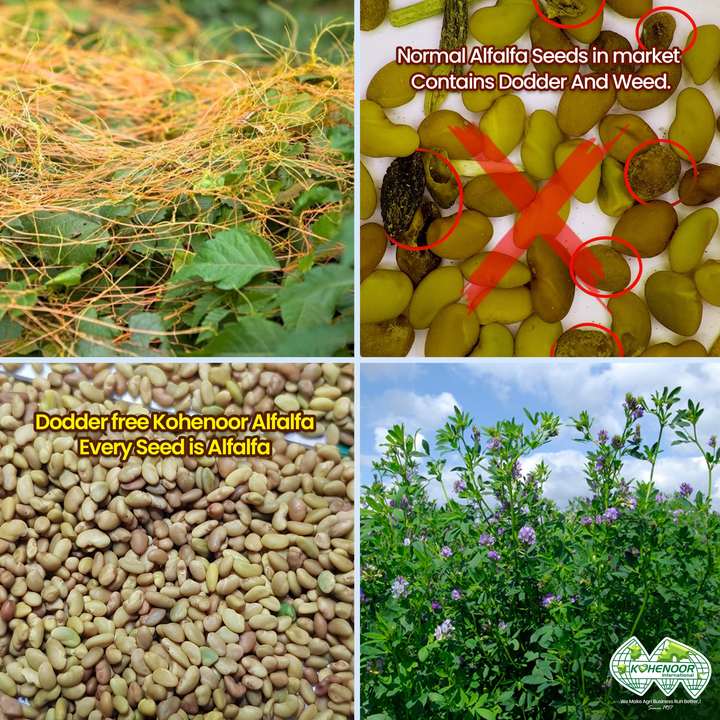
Dodder. Field dodder (Cuscuta) is a parasitic vine whose seed is close to alfalfa seed in size and weight, which is exactly why cheap cleaning leaves it in. One infested bag establishes a parasite that spreads in rings, kills the alfalfa it attaches to and leaves seed in the soil for many seasons. Many importing countries list dodder as a quarantine weed; a lot carrying it can be rejected at the port. The most expensive alfalfa seed is the one ploughed in after one season because of dodder. Kohenoor's guarantee of 0% dodder in writing is explained on the dodder-free alfalfa seeds page.
Low germination and low purity. A lot at 75% germination needs a higher seed rate than one at 85% or above, and the extra kilograms are bought at the same per kg figure. A lot at 95% purity carries more weed seed, chaff and inert matter, so the buyer pays seed rates for material that never becomes forage. A lot that looks cheaper per kilogram is frequently more expensive per live seedling, the only unit the field counts in.
Wrong dormancy class or unknown variety. Seed of unknown variety sold as "common" or under a borrowed name may be a dormant type that stalls through the hot months of a Gulf or African farm, or a non-dormant type killed by the first hard frost on a highland farm. Either way the stand underperforms for years or fails outright, and the saving on seed is lost many times over in forage never cut. A certified variety with a declared fall dormancy class is the only way to buy the right plant, which is why the export desk asks about climate and soil before quoting, and why the quotation names a variety and a lot rather than "alfalfa seed".
Most buying mistakes come from comparing figures that were never for the same thing. A quotation can only be set against another when four things match; if one differs, ask both suppliers to re-quote on the same basis, which a serious exporter does without complaint.
| Must match | Why it changes the figure | What to ask |
|---|---|---|
| Incoterm | FOB stops at the ship's rail; CFR adds sea freight; CIF adds insurance. A CFR quotation will always look higher than an FOB one for identical seed. | "Please quote FOB Karachi (or FOB your port) so I can compare, and show CFR to my port as a separate line." |
| Specification | Purity, germination, other seed, dodder status, raw or coated, variety and dormancy class decide what a kilogram contains. | "Please attach the ISTA certificate for the lot you are quoting and state the variety and fall dormancy class." |
| Lot size and packing | A 1 MT trial and a 60 MT programme are costed differently; 25 kg bags, 50 kg bags and totes are packed differently. | "Please quote for the same tonnage in 25 kg bags." |
| Payment terms and validity | Advance transfer, transfer against bill of lading copy and a letter of credit at sight carry different costs and risks for the seller; a figure valid for seven days and one valid for sixty are not alike. | "Please state payment terms and how long the quotation is valid." |
Once those match, read the two documents side by side rather than the totals. Is the ISTA certificate for the actual lot or a sample from a previous season? Is dodder shown as 0% or not mentioned? Is the phytosanitary certificate with your country's declarations included or "available on request"? Is the variety named? Does the exporter own the cleaning and packing, or trade another company's bags? Each is a cost one quotation has absorbed and the other has left for you to discover later.
Kohenoor's quotations are written to be compared this way: FOB Karachi as the base, CFR or CIF as separate lines, the lot's ISTA certificate attached, variety and dormancy class named, 0% dodder in writing. How exporters differ is on the alfalfa seed exporters page; how tonnage changes the quotation is in the buy alfalfa seeds in bulk guide.
Farmers searching for the alfalfa seed price in Pakistan, or in Urdu for لوسن کے بیج کا ریٹ (lucerne seed rate), are usually asking about the domestic market, and the answer follows the same logic with a different contact. Kohenoor's domestic brand, Noorani Seeds, together with Kohenoor-branded lucerne seed, is sold inside Pakistan in sealed bags from the company's stations at Hyderabad, Sindh and Khanewal, Punjab, with delivery across Sindh, Punjab, Khyber Pakhtunkhwa and Balochistan.
The domestic rate is not printed here for the same reasons the export figure is not: it depends on the variety (heat-tolerant TAIZTAR for Sindh and southern Punjab, cold-tolerant KN92 for northern districts and the Pothohar), bag size, quantity, season — demand peaks in the autumn sowing window from late September through November — and delivery district. It is quoted on the day, on WhatsApp, for the bags you want.
The two desks are deliberately separate. Domestic seed is sold in Pakistani bags for Pakistani fields without export documents; export seed is lot-tested to ISTA standards, packed under HS 1209.21 and documented for a foreign plant protection authority. Starting with the right number saves a day. For the names alfalfa goes by in Pakistan — لوسن, lusan, rijka, baramasi — see alfalfa in Urdu; for the Commonwealth word, see lucerne seeds.
Alfalfa seed is a once-a-year harvest from a crop managed for seed rather than forage, and like every annual harvest its availability and quotation move through the year. Knowing the cycle lets a buyer time an enquiry sensibly; it does not let anyone predict a figure, which is why none is given here.
In Pakistan the seed crop is harvested in late spring and early summer and is cleaned, tested and in the warehouse by mid-year. New-crop lots are most plentiful from then until the autumn sowing season, when demand from the Gulf, the Middle East, Africa and the domestic market peaks at once, because October and November are the sowing months across most of the hot-climate alfalfa belt. By late winter the best lots are allocated and what remains is quoted on a tighter stock position. Spring-sowing northern buyers and autumn-sowing southern buyers in Australia, South Africa or South America meet the warehouse at different points in that cycle.
Things outside the field also move a quotation from one month to the next. Ocean freight rates change with the shipping cycle and route, which is why CFR and CIF figures carry short validity. Exchange rates shift between enquiry and shipment. Fuel and inland transport costs move. A lot that passes its germination re-test after a year in storage is still good seed, but it is described as a year-old lot on its certificate.
The practical advice is simple. Enquire early in the window: a buyer who confirms in July for an October sowing chooses from the whole new crop and books freight calmly; one who enquires in late October chooses from what is left and pays for an urgent sailing. Buy a season's requirement in one shipment where storage allows, since alfalfa seed holds its germination for eighteen months to two years in cool, dry conditions. And ask for the validity date on every quotation.
The fastest quotation is the one that needs no second round of questions. The export desk quotes within 24 hours from a single WhatsApp message containing the items below; a message that says only "alfalfa seed price per kg?" gets a friendly reply asking for them.
| Item | Why the desk needs it | Example of what to write |
|---|---|---|
| Country and destination port | Decides phytosanitary declarations, freight route and whether CFR/CIF can be quoted | "Kenya, Mombasa" or "Saudi Arabia, Dammam" |
| Quantity | Lot size changes the seed, packing and freight lines; confirms MOQ (5 MT, or 1 MT trial) | "20 MT" or "800 bags of 25 kg" or "1 MT trial" |
| Variety or climate | Selects TAIZTAR (FD10, heat and salinity tolerant) or KN92 (FD9, cold tolerant) | "Frost-free, irrigated, saline water" or "KN92" |
| Sowing month and hectares | Confirms timing against stock and sailing; lets the desk check your seed rate | "Sowing late October, 400 ha" |
| Incoterm wanted | FOB Karachi, CFR or CIF — each is a different figure | "FOB and CFR Mombasa, both please" |
| Bag size and labelling | 25 kg standard; other sizes or private label are quoted separately | "25 kg, your standard tag" or "private label" |
| Payment terms preferred | Advance transfer, transfer against B/L copy or letter of credit at sight | "LC at sight" or "TT against B/L" |
| Import permit or special documents | Some authorities need additional declarations, fumigation or legalised certificates | "KEPHIS import permit in hand; need dodder-free declaration" |
| Soil or water readings (optional) | Lets the desk advise on variety and seed rate for saline or difficult sites | "Water EC 2.1 dS/m, sandy loam" |
With those items the desk assembles the quotation lines described above and sends them with the current lot's ISTA certificate and a sailing schedule. If you do not know an item, say so; the desk will propose the usual choice for your market. The one thing not to leave out is the Incoterm, because a quotation without it cannot be compared with anything else you receive.
Kohenoor International has grown, cleaned, tested and exported alfalfa seed from Pakistan since 1957, supplies more than 70 countries from its head office in Hyderabad, Sindh, and keeps offices in Dubai and Australia. The export desk quotes direct from the company: no dealer, agent or trading house stands between the field and your port, which is why every line can be shown and one contact handles the order from enquiry to delivery.
Every Kohenoor export lot is specified at ≥98% purity, ≥85% germination and 0% dodder guaranteed in writing, with crude protein of 22 to 24% in well-managed forage, ISTA-tested, packed in 25 kg lot-tagged bags under HS 1209.21. The company is ISO 9001 and HACCP certified and a member of the Australian Seed Federation. Sowing windows and import notes are on the country pages. No figure is published here because a published figure would be wrong for your order; everything that goes into the right one is. Send the five details and the quotation follows within a day.


Tell the export desk your country and port, the quantity in metric tonnes or 25 kg bags, the variety or climate, your sowing month and the Incoterm you want. The desk replies within 24 hours with a quotation for that lot and destination, the current ISTA certificate, bag specification and sailing schedule — direct from the company, one contact.
WhatsApp +92 310 4929292 export@kohenoorint.comThere is no single alfalfa seed price per kg, because the figure depends on variety and fall dormancy class, certified status, purity and germination, dodder status, raw or coated seed, lot size, season, origin and Incoterm. Kohenoor quotes each lot and destination individually on WhatsApp +92 310 4929292 or email within 24 hours, with the lot's ISTA certificate attached so the figure can be compared properly.
Inside Pakistan, Noorani and Kohenoor lucerne seed bags are quoted on the day by WhatsApp on +92 326 8880000, because the rate changes with variety, bag size, quantity, season and delivery district. Export seed leaving Pakistan is quoted separately by the export desk on +92 310 4929292, FOB Karachi or delivered to your port, within 24 hours. Urdu details are on the Pakistan lucerne seed page.
A 25 kg bag is the standard export unit, and its figure is the per kg seed and packing lines multiplied by 25, plus any share of freight and documents your Incoterm includes. Because those lines differ by variety, lot and destination, the bag figure is quoted per order rather than published. Send your country, quantity and sowing month on WhatsApp and the desk replies within 24 hours.
Lucerne is the Commonwealth name for alfalfa, so the lucerne seeds 25 kg figure follows the same logic: it depends on whether the lot is TAIZTAR or KN92, its purity, germination and dodder status, how many bags are ordered, and whether it is quoted FOB Karachi or CFR/CIF to Mombasa, Durban or another port. Kohenoor quotes within 24 hours on WhatsApp +92 310 4929292.
The seed part of the cost per acre is the seed rate multiplied by the area, then multiplied by your quoted per kg figure. General guidance is roughly 10 to 12 kg per acre, or 25 to 30 kg per hectare, for clean high-germination seed, so one 25 kg bag covers about two to two and a half acres. Send your acreage and the desk returns the kilograms, bags and quotation together within 24 hours.
A per pound figure is the per kg figure divided by roughly 2.2, and a 50 lb bag holds about 22.7 kg rather than 25 kg, so figures from the two systems must be converted before comparison. Kohenoor quotes in metric tonnes of raw seed of a stated specification and will show the per pound and per 50 lb equivalent on request, on WhatsApp or email within 24 hours.
Because the saving is usually hidden in dodder contamination, low germination or purity, or an unknown variety of the wrong dormancy class. Dodder can destroy a stand and cause rejection at the port; low germination forces a higher seed rate; the wrong dormancy class underperforms for three to five years. Kohenoor seed is ≥98% purity, ≥85% germination and 0% dodder in writing, quoted per lot within 24 hours.
Compare only when Incoterm, specification, lot size and payment terms match. Ask both suppliers for FOB at the same port, the same tonnage in 25 kg bags, the lot's ISTA certificate with variety, dormancy class and dodder status, and stated payment terms and validity. Kohenoor quotations are written this way, with CFR or CIF to your port as separate lines, and arrive within 24 hours of your request.