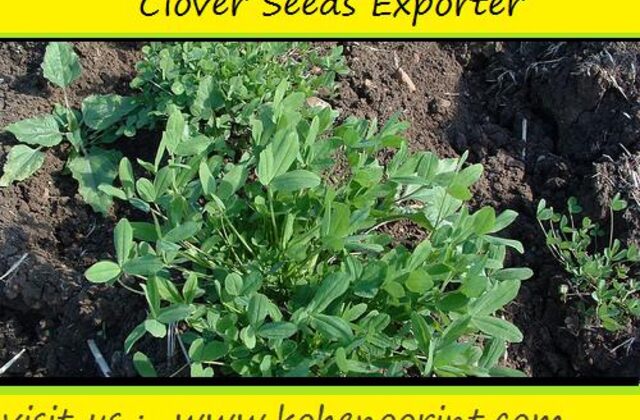
The one page that explains what alfalfa is called in Urdu, Punjabi and Sindhi, when to sow it in Pakistan, how much seed an acre needs, and how to get dodder-free لوسن کے بیج direct from Kohenoor.
If you have typed "alfalfa in Urdu" or "alfalfa meaning in Urdu", the short answer is لوسن (lusan) — the same perennial fodder that Punjabi and Sindhi farmers call رجکا (rijka) and that everyone in the villages knows as بارہ ماسی (baramasi, "twelve-month") because it keeps giving green fodder through all twelve months for three or four years from one sowing. Kohenoor has bred, cleaned and supplied this seed since 1957 — from Khanewal in southern Punjab and the head office in Hyderabad, Sindh — direct to farmers across Pakistan on one WhatsApp number, and to buyers in more than 70 countries.
WhatsApp +92 310 4929292 Get a quote in 24h
Alfalfa is the American and Spanish-derived name for the fodder legume Medicago sativa; in British English and in most agricultural writing in Pakistan the same plant is lucerne. In Urdu it is لوسن, written in Roman Urdu as lusan, lucen or losan and pronounced close to "loo-sun". Older texts and some extension leaflets spell it لوسرن (lusern), a direct borrowing from "lucerne". Both spellings mean the same crop: if a seed bag, a university bulletin or a WhatsApp message says لوسن or لوسرن, it means alfalfa.
So "alfalfa meaning in Urdu" is simply this: الفالفا = لوسن = لوسرن, a deep-rooted perennial fodder (چارہ) legume with purple flowers, trifoliate leaves and the highest crude protein of any common green fodder grown in Pakistan — typically 22 to 24 percent when cut at the right stage. The word "alfalfa" came into English from Spanish, which took it from the Arabic al-fisfisa. The Arabic-speaking Gulf, where many Pakistani workers live, calls the crop برسيم حجازي (barseem hijazi) — a frequent source of confusion, because in Pakistan برسیم means Egyptian clover, a completely different winter fodder. We come back to that below.
Why does the name matter? Because most agronomy published online about alfalfa is written in English for North American and Australian conditions, while the farmer in Khanewal, Sahiwal or Sanghar thinks in Urdu, Punjabi or Sindhi. This page is the bridge: the names in all three languages, the sowing calendar for Pakistan, the seed rate per acre, and how to buy clean لوسن کے بیج (lucerne seed) direct from the company that grows and cleans it. For the world list, see alfalfa names in different languages.
Pakistan's farming languages each have their own everyday word for lucerne, and a buyer searching "alfalfa in Punjabi" or "rijka seed" is often the same person who searched "alfalfa in Urdu" an hour earlier. The words you will hear:
None of these names points to a different plant. Whether a farmer asks for لوسن, رجکا, بارہ ماسی, سدا بہار or spasta, he is asking for Medicago sativa — the only real differences are between varieties (how dormant, how heat- or salt-tolerant) and between clean seed and dirty seed. The page on لوسرن (الفالفا) بیج covers the Kohenoor variety in Urdu; the sections below do the same in English with the Urdu and Punjabi terms alongside, for readers more comfortable in English — including the many Pakistanis in the United Kingdom and the Gulf who manage family land back home by phone.
When a son in Manchester or Dubai talks to a father or a munshi on the farm, the conversation jumps between English and the village language. This table puts the lucerne vocabulary side by side so that a WhatsApp conversation about seed, sowing and cuttings is understood at both ends. Punjabi is written in Shahmukhi as spoken in central and southern Punjab; Sindhi and Saraiki speakers will recognise most of the same words.
| English | Urdu (اردو) | Punjabi (پنجابی) | Note |
|---|---|---|---|
| Alfalfa / lucerne | لوسن · لوسرن | لوسن · رجکا | Medicago sativa; Sindhi رجڪو |
| Perennial (year-round) | بارہ ماسی · سدا بہار | بارہ ماہی · بارہ ماسی | "twelve-month" crop |
| Seed | بیج | بیج · بی | alfalfa seeds in Urdu = لوسن کے بیج |
| Green fodder | چارہ · سبز چارہ | پٹھے | cut-and-carry fodder |
| Hay (dried fodder) | خشک چارہ · ہے | سُکا چارہ | sun-dried lucerne |
| Sowing | بوائی · کاشت | بیجائی | Rabi sowing = ربیع کی کاشت |
| Cutting / harvest of fodder | کٹائی | وڈائی | 6–8 cuttings a year |
| Acre | ایکڑ | ایکڑ · کِلّا | a killa is about one acre |
| Irrigation / watering | آبپاشی · پانی لگانا | پانی لاؤنا | first watering after sowing |
| Canal / watercourse | نہر · کھال | نہر · کھال | canal-irrigated land = نہری زمین |
| Loam soil | میرا زمین | میرا · بھوں | best soil for lucerne |
| Saline / alkaline land | کلر · تھور | کلر | needs gypsum and a tolerant variety |
| Germination | اُگاؤ · روئیدگی | اُگ · جماؤ | ≥85% on Kohenoor lots |
| Weed | جڑی بوٹی | گھاہ پھوس · نیکی | control in the first 40 days |
| Dodder (parasitic vine) | اکاس بیل · آکاش بیل | اکاس ویل · امر ویل | Cuscuta; comes in with dirty seed |
| Berseem (Egyptian clover) | برسیم | برسیم | a different winter fodder |
| Shaftal (Persian clover) | شفتل | شفتل | also a winter annual |
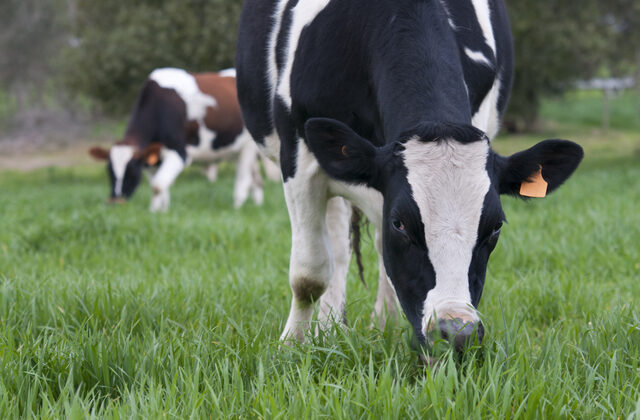
| Buffalo / cow / milk | بھینس · گائے · دودھ | مجھ · گاں · دُدھ | the reason the fodder is grown |
| Rate / quotation | ریٹ · نرخ | ریٹ · بھا | لوسن کے بیج کا ریٹ — ask on WhatsApp |
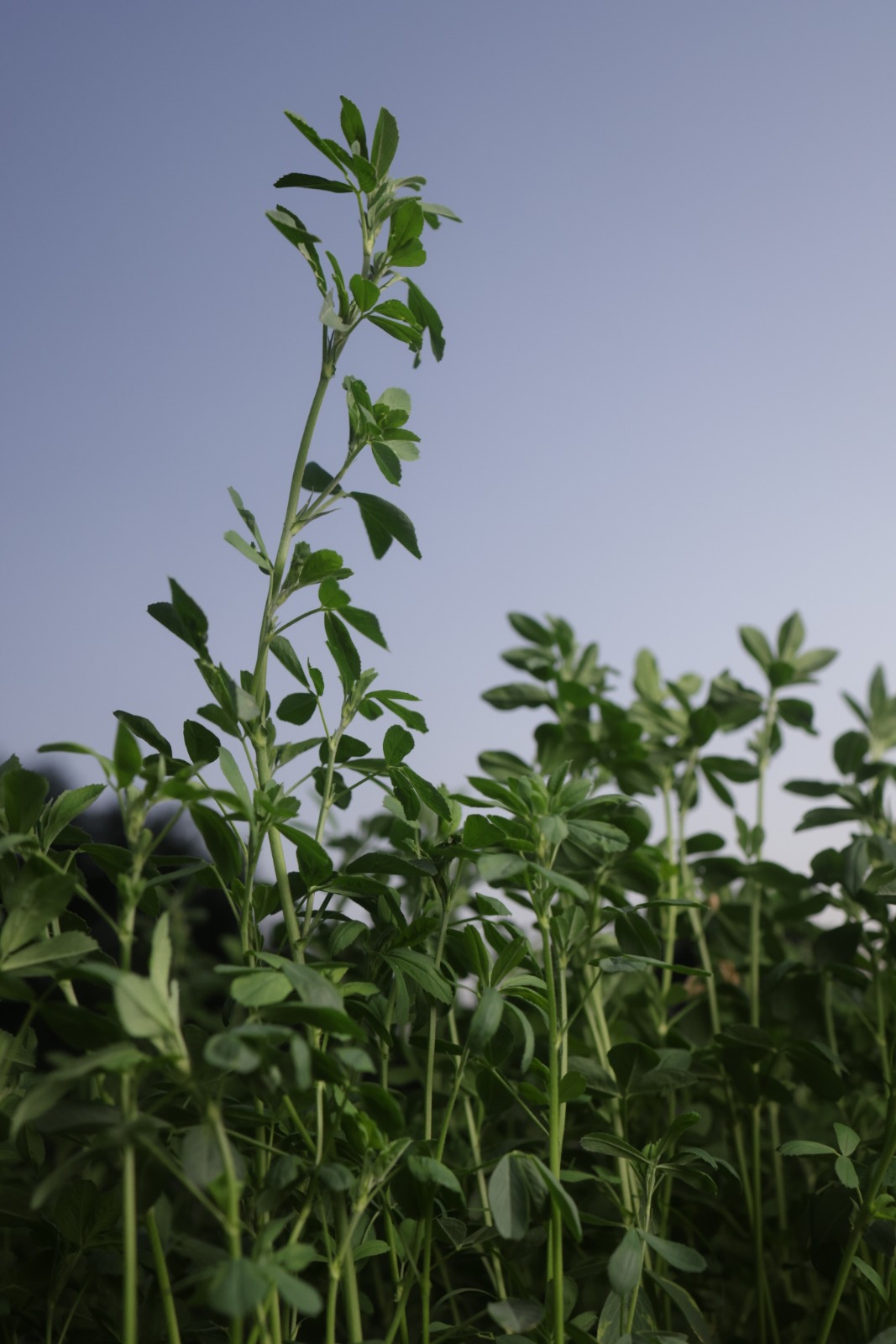
A note on the Gulf: in Saudi Arabia, the UAE and Oman the Arabic seed market says برسيم حجازي ("Hijazi") for alfalfa and "Masri" (Egyptian) for berseem clover. A Pakistani on a farm in Al Kharj or Al Ain and a brother farming in Vehari therefore use the word برسیم for two different crops. When in doubt, say "lucerne" or send a leaf photo: lucerne has narrow oval leaflets and purple flowers; berseem has rounder, softer leaflets and white flower heads.
The most common mistake made by first-time buyers — and by people translating between Urdu and Arabic — is to confuse lucerne with berseem. Both are legumes cut green for buffaloes and cows, both are sown in the Rabi season from October, but they behave completely differently in the field, and a dairy farm (ڈیری فارم) in Punjab or Sindh usually needs both, on separate plots, to keep green fodder coming all year.
| Lucerne · لوسن · alfalfa | Berseem · برسیم | Shaftal · شفتل (Persian clover) | |
|---|---|---|---|
| Botanical name | Medicago sativa | Trifolium alexandrinum | Trifolium resupinatum |
| Life of the crop | Perennial — 3 to 4 years from one sowing (بارہ ماسی) | Winter annual — October to April | Winter annual — October to April or May |
| Summer fodder? | Yes — keeps cutting in May–September with irrigation | No — finishes with the first heat | No — finishes in late spring |
| Cuttings | 6–8 a year, 7+ in warm irrigated zones | 4–6 in the season | 3–5 in the season |
| Crude protein (typical) | 22–24% | Around 17–20% at the leafy stage | Around 18–22% at the leafy stage |
| Root | Deep taproot — drought-tolerant once established | Shallow — needs frequent water | Shallow to medium |
| Can be made into hay? | Yes — the classic hay crop; dries well in Pakistan's dry heat | Poorly — too watery | Poorly |
| Seed rate per acre (common practice) | About 8–10 kg | About 8–10 kg | About 3–5 kg |
| Dodder risk | High — lucerne is the main host; use 0% dodder seed | High in dirty seed lots | Moderate |
In practice a Pakistani dairy farmer uses berseem (Kohenoor's Safa berseem, an early-maturing, broad-leaf, dodder-free clover) for heavy winter tonnage from December to April, and keeps a permanent plot of بارہ ماسی لوسن to carry the animals through the two fodder gaps: April to June, when berseem is gone and sorghum and maize are not ready, and October to November, when summer fodders are finished and berseem has only just been sown. Shaftal is a useful third winter crop on heavier land and in cooler districts. The Urdu pages for برسیم بیج and the Pakistan forage range explain the seasonal programme; the English overview is on forage seeds for dairy farms.

Lucerne is a Rabi-sown crop in Pakistan. The main window across the Indus plains is mid-October to the end of November — after cotton in southern Punjab and Sindh, after rice in central Punjab, and as soon as the kharif fodder plot is cleared. The soil is still warm for fast germination, nights are cooling so seedlings are not scorched, and the crop is established before the December–January cold. A second, smaller window opens in February and the first half of March, after frost but before the April heat; a spring-sown crop must be well rooted before the first hot wind, so earlier is safer. Dates shift a week or two with altitude and latitude; the agriculture extension office (محکمہ زراعت) in your tehsil will confirm the local recommendation.
Whatever the district, the principle is the same: give the seedling six to eight weeks of mild weather to put down its taproot. A plant rooted before the first heat or frost will stand for three to four years; one that has not will thin out in its first summer.
Seed rate. The common recommendation in Pakistan for clean, high-germination lucerne seed is about 8 to 10 kg per acre (roughly 20–25 kg per hectare) sown in lines or broadcast on a fine seedbed. Kohenoor's general forage guidance is 10–12 kg per acre (25–30 kg/ha), the safer figure on rough seedbeds, when broadcasting into standing water, or wherever conditions are less than ideal. Dirty seed is often sown at 12–15 kg to compensate for low germination and weed seed — one reason clean seed with a written germination figure works out more economical per acre. Tell us your soil and sowing method on WhatsApp and we will suggest the rate for your field rather than a blanket number.
Seedbed (کھیت کی تیاری). Lucerne seed is tiny, and the biggest cause of a poor stand is burying it too deep. Plough two or three times, break the clods, level the field — laser levelling pays on a crop that stands for years and dislikes water in low patches — and apply well-rotted farmyard manure (گوبر کی کھاد) before the last ploughing. On low-phosphorus soils a basal dose of DAP at sowing helps rooting; the quantity depends on a soil test the extension office can arrange. Lucerne fixes its own nitrogen once established and needs little or no urea.
Sowing. Sow about half an inch deep — no more — in lines 20 to 30 cm apart with a drill, or broadcast evenly and cover lightly with a plank. Mixing the seed with dry sand helps spread it evenly. Some Sindh farmers broadcast رجکا into a shallow flood and let the water settle the seed; this works on level fields but wastes seed on uneven ones. Lines make the first weeding much easier.
Irrigation (آبپاشی). A light irrigation immediately after sowing, another after about a week to help emergence, then every 10 to 15 days in winter. From April onwards an established crop in southern Punjab and Sindh is usually watered every 7 to 10 days. Never let water stand on young lucerne for more than a few hours; the crown rots. Monsoon fields need drainage.
First cutting and cutting intervals (کٹائی). The first cutting is typically ready 50 to 60 days after an October sowing, when plants are about a foot tall and the first buds appear. Then cut every 25 to 30 days in winter and 20 to 25 days in the hot months, leaving 5 to 7 cm of stubble so the crown regrows quickly. Cutting too early or too low weakens the stand; too late loses protein as the stem turns fibrous. Six to eight cuttings a year is normal on a good irrigated field, and a stand from quality seed keeps producing for three to four years. Lucerne also sun-dries well for hay in the heat of May and June: cut, turn twice over two or three days, and stack under cover for the monsoon and winter gaps.
Weeds. Weed control in the first 40 days decides the stand: hand-weeding or a light hoe between lines, and a clean field before sowing. After the first cutting the canopy closes and most weeds are shaded out.
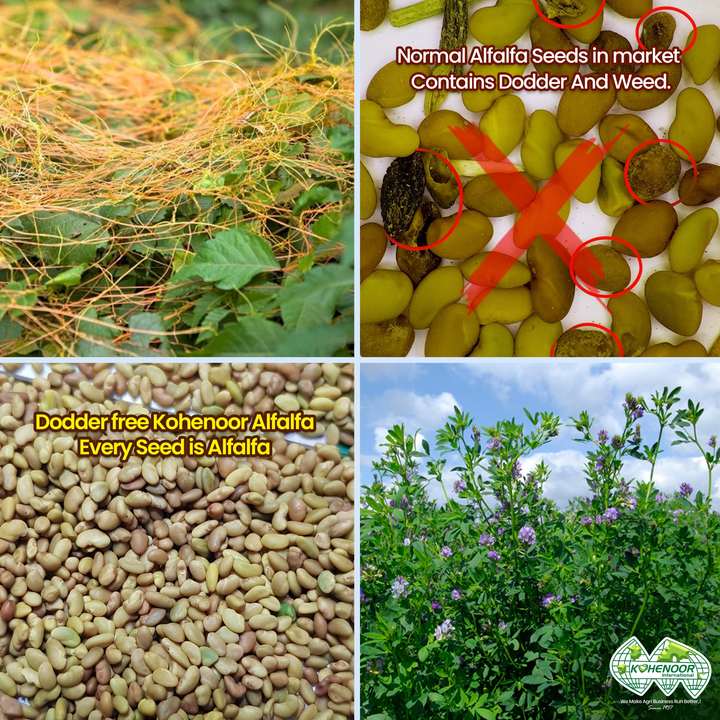
Ask any lucerne grower in Multan, Khanewal, Vehari or Sanghar what destroyed their last stand and the answer is often one word: اکاس بیل (akas bel, "sky vine"), also written آکاش بیل and known in Punjabi as اکاس ویل or امر ویل. In English it is dodder, Cuscuta, a leafless, rootless yellow-orange parasitic vine that wraps around the lucerne stem and lives on its sap. A patch the size of a charpai in December is a quarter of the field by March. The plants under the vine die, and because dodder seed survives in the soil for years, a badly infested plot cannot go back to lucerne for a long time.
The important fact for a seed buyer: dodder does not walk into a field. It arrives in the seed bag. Dodder seed is small, rounded and close in size to lucerne seed, almost impossible to see by eye in loose or uncleaned seed. This is why Gulf importers write "0% dodder" into their conditions, and why Kohenoor guarantees 0% dodder in writing — the discipline that protects a farm in Saudi Arabia protects a farm in Sahiwal just as well.
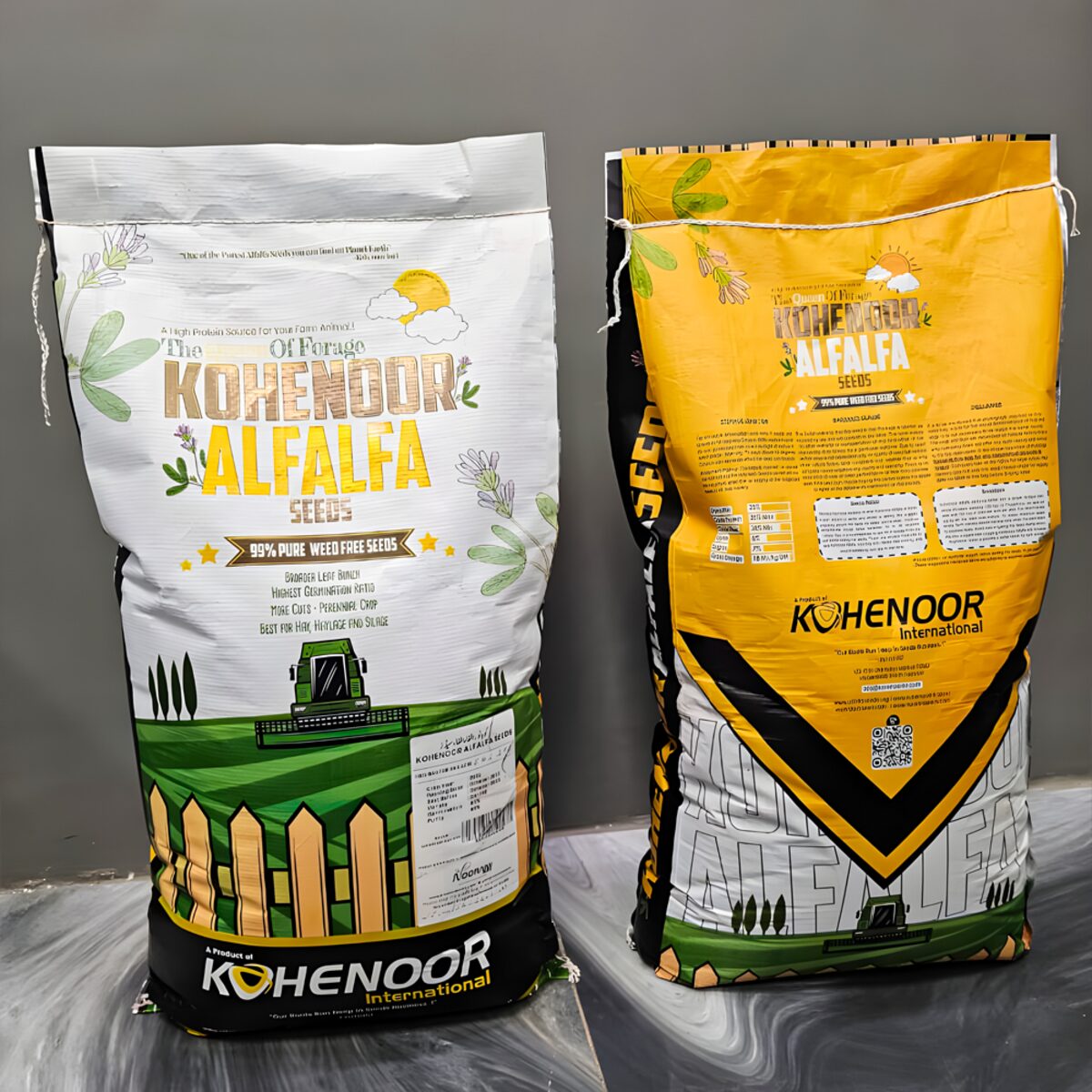
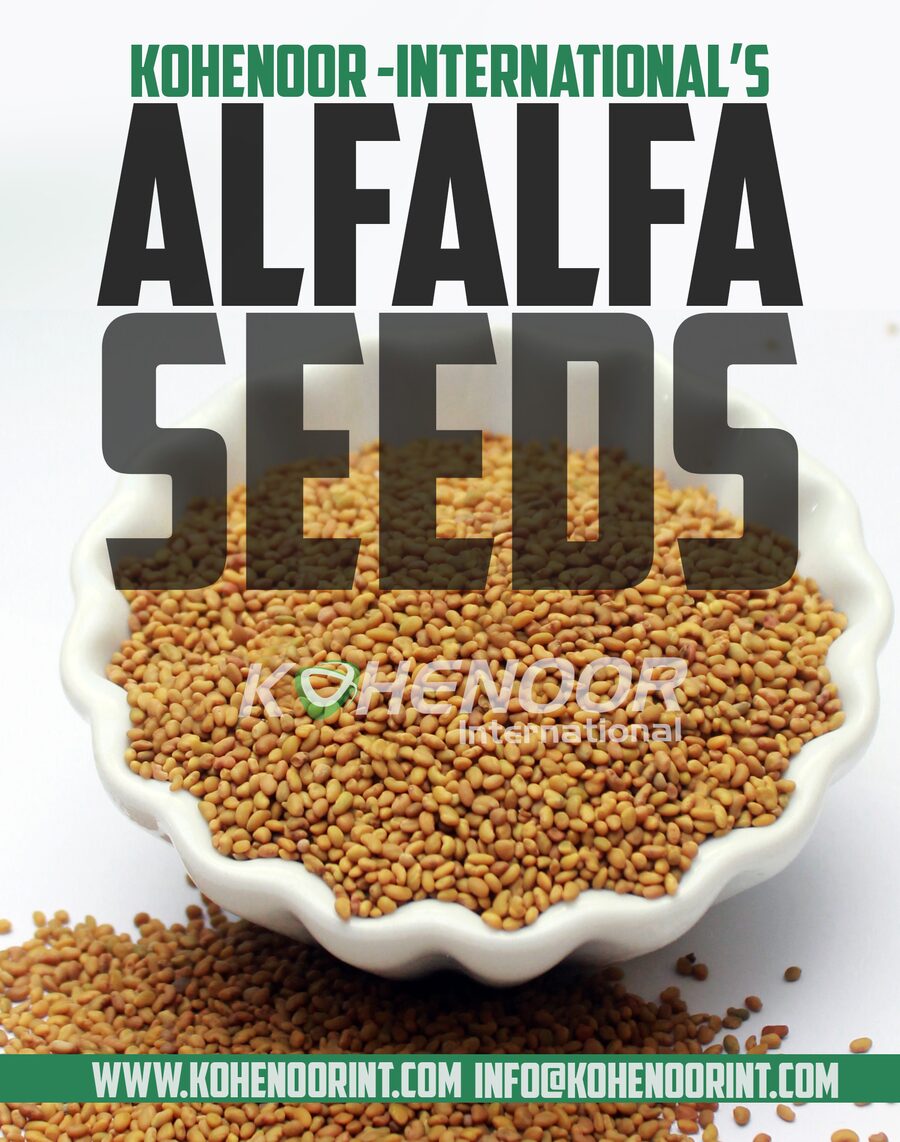
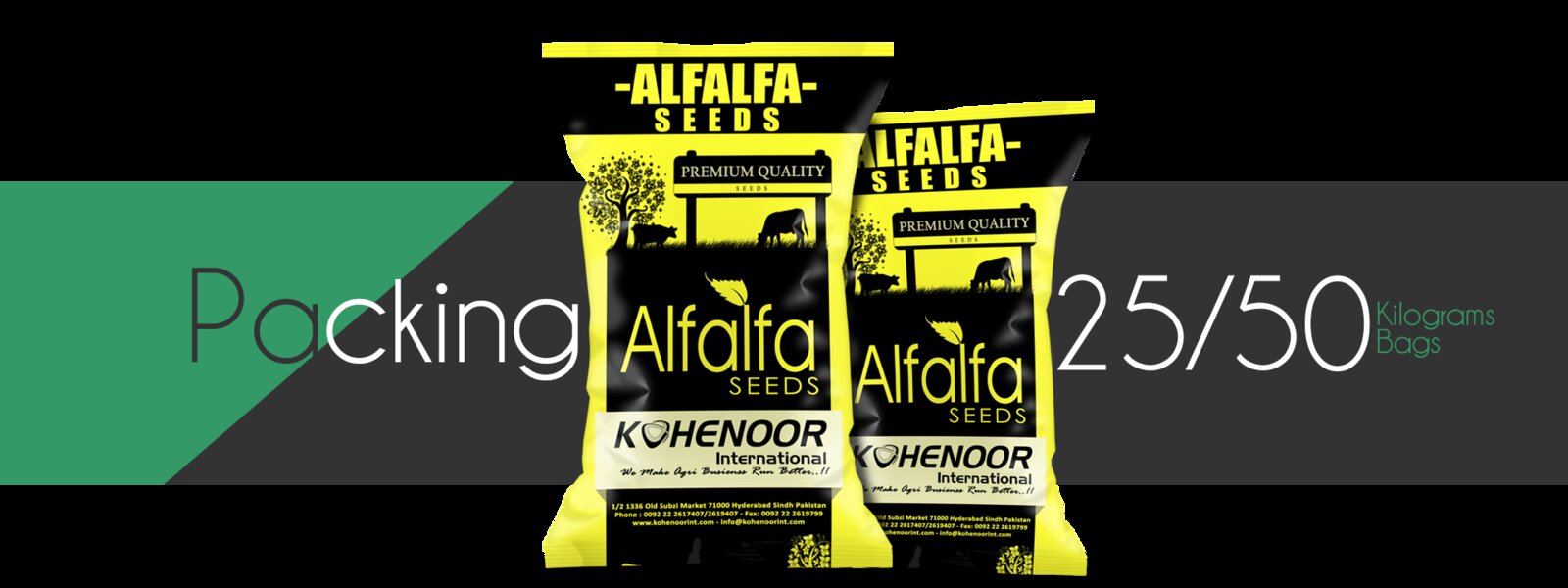
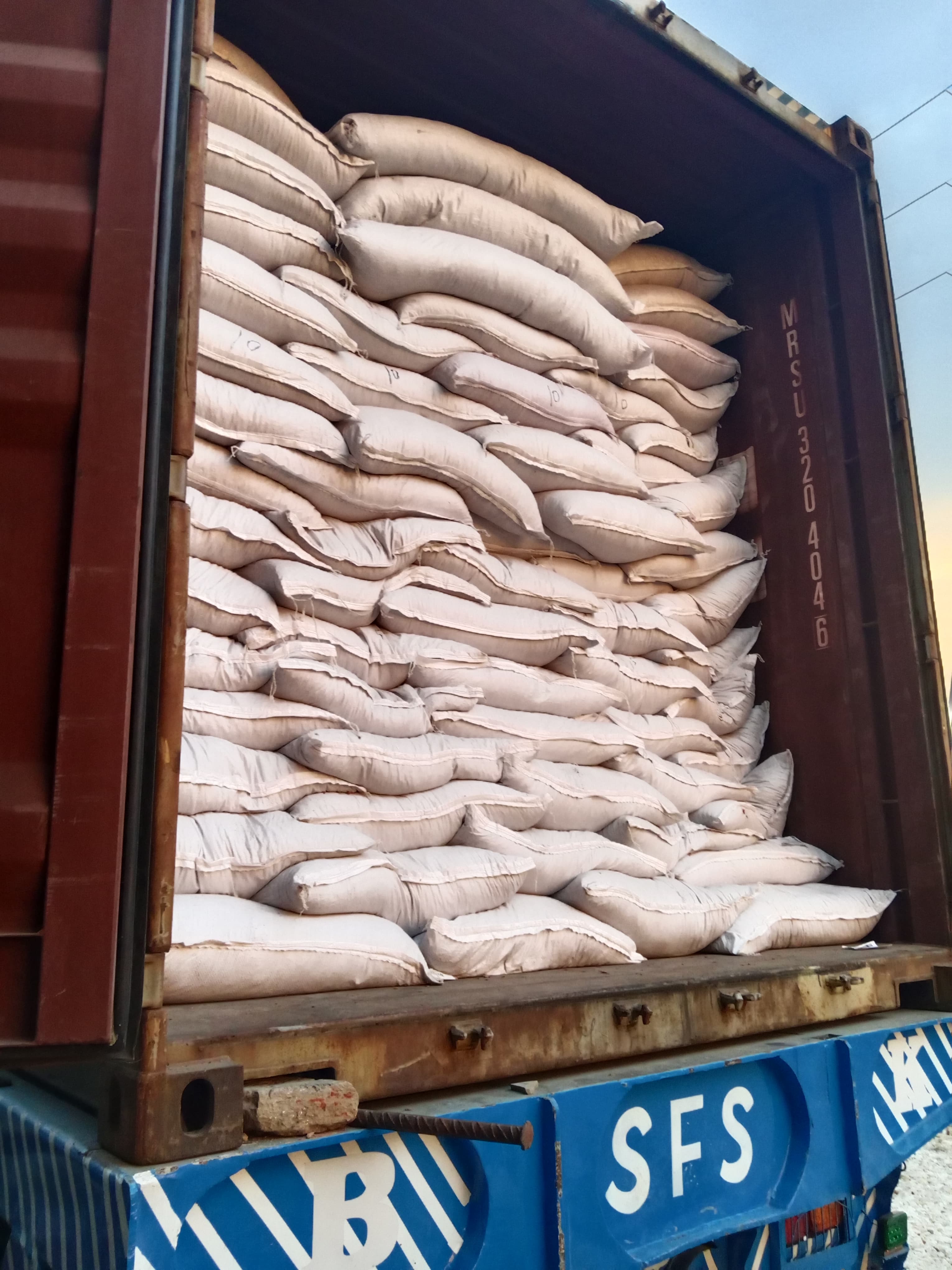
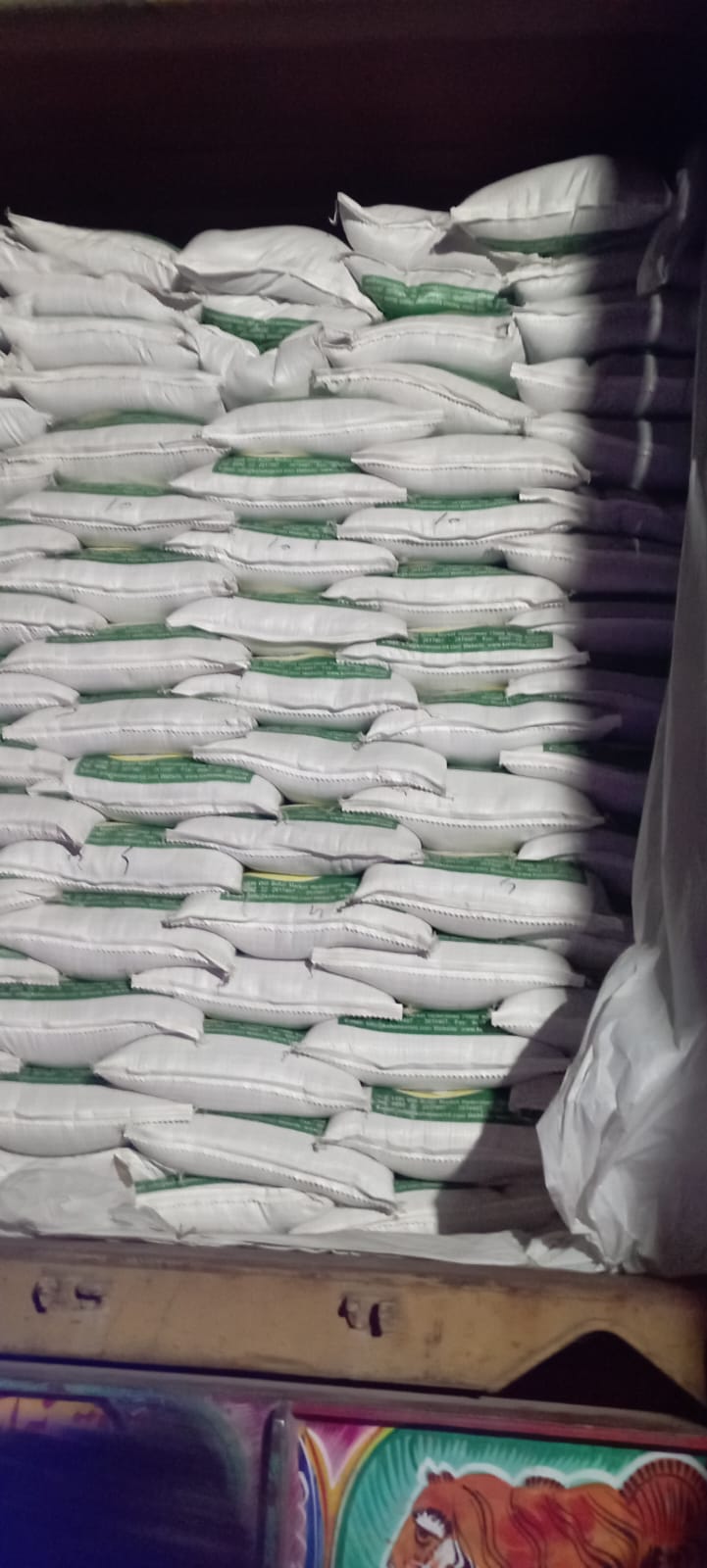
Every Kohenoor lucerne lot passes through air-screen cleaners, gravity tables and Sortex optical sorters, and is then tested in the seed laboratory, with ISTA testing per lot: purity 98 percent or higher, germination 85 percent or higher, dodder zero — stated on the lot documents. Seed is sold in sealed, lot-numbered bags, never loose. If you are offered loose لوسن کا بیج from a sack with no lot number and no germination figure, the saving on the bag can cost you the plot. Our page on dodder-free alfalfa seeds explains the cleaning and testing, and what to do if dodder is already in a field (cut and burn the patch before it seeds, do not feed it green, and do not move machinery from that field to a clean one).
The most-searched Urdu phrase about this crop is لوسن کے بیج کا ریٹ — "the rate of lucerne seed". We understand why people want a figure on the page, and we deliberately do not print one. Lucerne seed is an agricultural commodity whose value moves with the harvest, the season, the exchange rate and the variety, and a figure written on a website one month is wrong the next; it also invites comparison with loose, untested seed that is not the same product. So the honest answer to "لوسن کے بیج کا ریٹ کیا ہے؟" is: send a WhatsApp message to +92 310 4929292 with your district, your acreage and your sowing month, and you will receive the current quotation for the variety that suits your field, with the lot's purity and germination figures. No obligation, no middleman margin.
Kohenoor sells direct to the farmer. We do not ask you to find a dealer, an agent or a commission shop. The company that bred the variety, grew, cleaned and tested the seed is the company on the other end of the WhatsApp, and the bag that reaches you carries its lot tag. For the Punjab farmer the seed comes from Khanewal; for Sindh and Balochistan from the head office in Hyderabad, Sindh (1/2 1336 Old Subzi Market, Hyderabad 71000). Delivery to your town or village anywhere in Pakistan, the payment method and the timing are confirmed in the same conversation.
What to send in your first message (Urdu, Punjabi, Sindhi or English — all are fine):
You will receive the quotation, the variety recommendation, the seed rate for your field and the delivery arrangement within 24 hours; one message can cover the whole farm.
Kohenoor supplies two lucerne varieties, chosen by climate rather than by district name.
| TAIZTAR (تیز تر) | KN92 | |
|---|---|---|
| Fall dormancy | FD 10 — non-dormant, keeps growing through winter in warm zones | FD 9 — cold-tolerant, slows in hard winter and recovers fast |
| Bred for | Heat and salinity tolerance on modern genetics; the superior replacement for the late-1970s CUF-101 type still sold under many names | Colder winters, frost, higher altitude |
| Best fit in Pakistan | Sindh, southern and central Punjab, Balochistan's hot irrigated valleys — wherever summers are long and winters mild | Khyber Pakhtunkhwa, the Potohar plateau, northern Punjab, Balochistan uplands |
| Cuttings | 7+ per year in warm irrigated conditions | 6–8 per year |
| Protein / purity / germination / dodder | 22–24% / ≥98% / ≥85% / 0% | 22–24% / ≥98% / ≥85% / 0% |
For most of the Indus plain — the cotton belt of southern Punjab, the whole of lower Sindh — TAIZTAR is the natural choice: a non-dormant lucerne that does not stop in a mild winter, tolerates the heat of May and June and the mild salinity of many tubewell fields, and gives the seventh and eighth cutting that older varieties miss. For the colder north, KN92 is the safer stand. If unsure, a photo of the field and the name of your tehsil is enough for the team to recommend. The technical page is TAIZTAR alfalfa seed. Crude fibre in both runs up to 28 percent at the normal cutting stage, good for hay and silage as well as green feeding; at 22–24 percent crude protein, a daily share of lucerne lets a dairy farmer cut purchased concentrate (ونڈا) while holding milk yield — the practical reason the crop has spread so fast in Punjab's dairy districts.
Many people who search "alfalfa in Urdu", "lucerne in Urdu" or "alfalfa seed Pakistan" are not in Pakistan at all. They are in Bradford, Birmingham, London, Dubai, Riyadh, Doha, Toronto or Sydney, and they fall into three groups.
Managing family land from abroad. The most common case: a family in Pakistan keeps a few buffaloes and some acres, and the son or daughter abroad who sends money home wants to understand what the father or the munshi means when he says the رجکا has gone yellow, or asks for money for بارہ ماسی بیج. This page gives you the vocabulary and the agronomy for that conversation, and a way to make sure the seed bought with your money is clean, tested, sealed and from a company that answers its phone. You can place the order yourself on WhatsApp from anywhere; we deliver to the farm and confirm with the person on the ground.
Pakistanis working on farms in the Gulf. Thousands of Pakistani farm workers, supervisors and managers run the pivots, hay fields and dairy camps of Saudi Arabia, the UAE, Oman, Qatar and Kuwait, where lucerne is called برسيم حجازي, and many are asked by their employers to source seed. Kohenoor exports lucerne seed to the Gulf and beyond — HS 1209.21, ISTA Orange Certificate per lot, IPPC phytosanitary certificate, 0% dodder in writing, minimum 5 MT with 1 MT trial lots, 7–12 days to FOB Karachi for stock lots — and the export desk replies in English, Arabic and Urdu. See alfalfa seeds for Saudi Arabia, alfalfa seeds for the UAE, or the Arabic pages for السعودية and الإمارات.
Buyers in the UK and the West. British Pakistanis in horse, sheep and smallholding farming sometimes want lucerne for their own land; others buy alfalfa sprouting seed for the health-food trade. Lucerne in Britain is a different agronomic question — a dormant variety and a different calendar — and we are happy to advise. The company your family buys from in Khanewal is the one that ships containers to Europe, the Gulf, East Asia and Australia; the countries page lists every destination. Whichever group you belong to, the contact is the same: WhatsApp +92 310 4929292 or export@kohenoorint.com, in English or Urdu, reply within 24 hours.
KOHENOOR International was founded in 1957 in Hyderabad, Sindh, by the late Mr. Noor Muhammad Aleemi, and is led today by the third generation of the same family. It is a research forage seeds company: the sister company Noorani Seeds runs the breeding and trials, and the retail brand Safa carries the berseem, Protein Grass and other fodder seeds Pakistani farmers know from the shelves. The company is ISO 9001 and HACCP certified, tests to ISTA standards with an Orange Certificate per lot, issues IPPC phytosanitary certificates for export, and is a member of the Australian Seed Federation, with offices in Pakistan, Dubai and Australia, serving more than 70 countries with more than 60 seed products.
For the Pakistani farmer this matters for one reason: the company answering your WhatsApp about لوسن کے بیج in Khanewal is the one whose seed clears inspection at ports in the Gulf, East Asia and Australia. There is no separate "export grade" — the farmer in Mian Channu, Kabirwala or Jahanian gets the same sealed, numbered bag as the importer in Jeddah.
From Khanewal the Punjab team covers the dairy districts of southern and central Punjab — Khanewal, Multan, Vehari, Lodhran, Sahiwal, Toba Tek Singh and beyond — and from Hyderabad the Sindh team covers Hyderabad, Tando Allahyar, Mirpur Khas, Sanghar, Nawabshah and Sukkur, with Balochistan and Khyber Pakhtunkhwa served from both. The Pakistan home page in Urdu lists every district. Beyond lucerne, one message covers the full year-round programme: Safa berseem for winter tonnage, ryegrass for winter protein, Protein Grass as a complete-ration summer blend, Baymisaal / Super Napier for twelve to fifteen years of bulk fodder from one planting, Rhodes grass for saline land, Sesbania / janter for green manure and goat fodder, and hybrid sorghum and pearl millet for silage. One supplier, one bag quality, one contact.
If you came to this page for a word, you now have it — alfalfa = لوسن = lucerne = رجکا = بارہ ماسی. If you came for the seed, the next step is a WhatsApp message with your district and your acres.
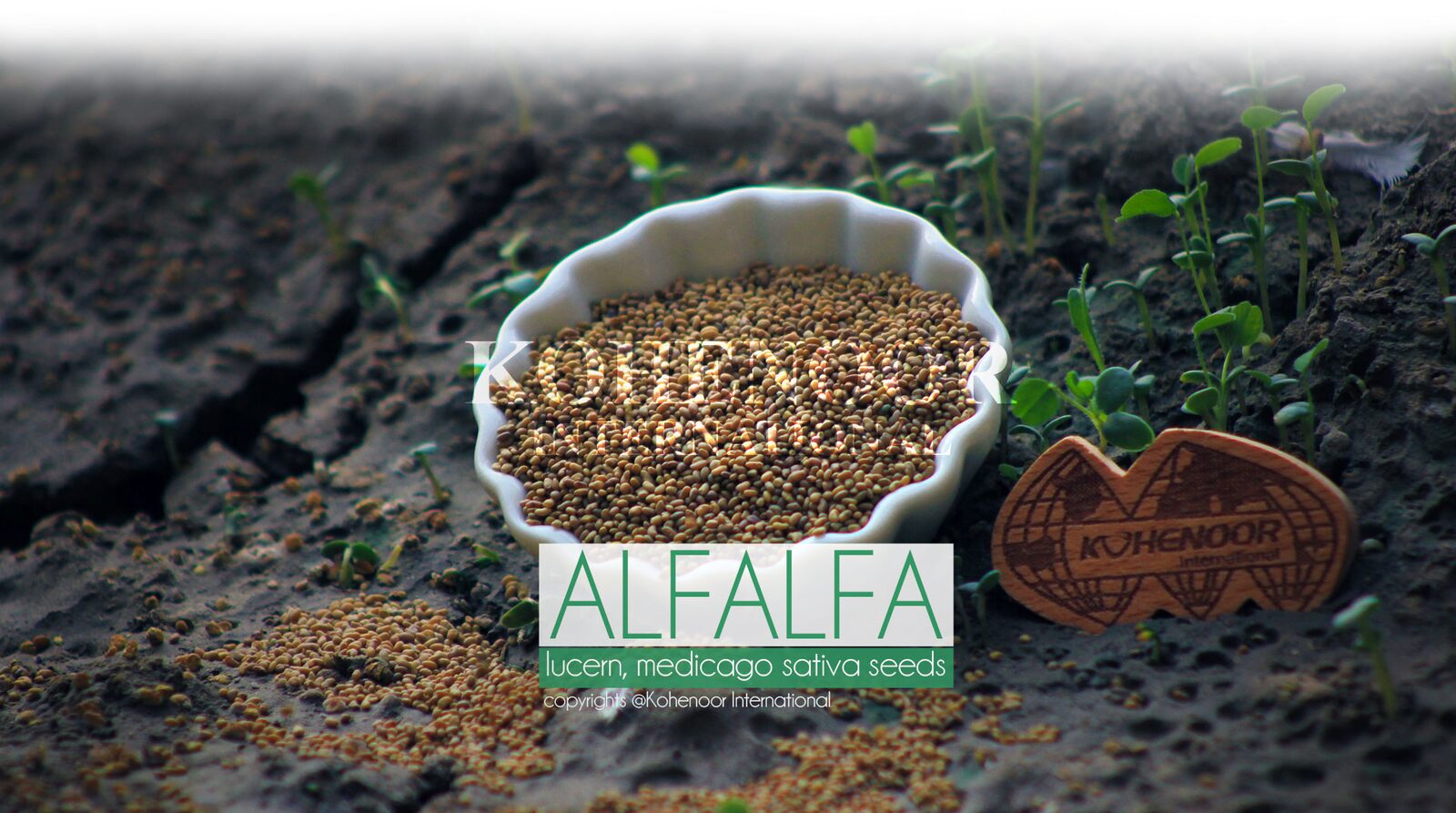
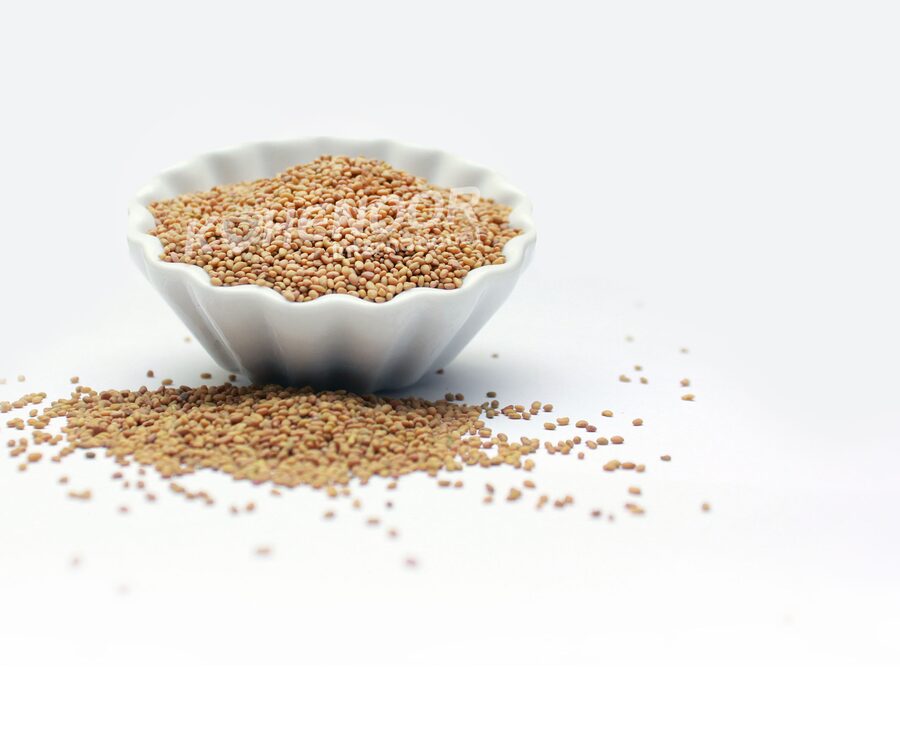
Send your district, your acres and your sowing month, in Urdu, Punjabi, Sindhi or English. The Kohenoor team replies personally with the current quotation, the variety for your field, the seed rate and the delivery arrangement — direct from the company, no middleman.
WhatsApp +92 310 4929292 export@kohenoorint.comAlfalfa in Urdu is لوسن (lusan), also spelt لوسرن (lusern) from the English word lucerne, so alfalfa seeds in Urdu are لوسن کے بیج. Punjabi farmers use the same word لوسن or رجکا (rijka), Sindhi speakers say رجکا or رجڪو, and the perennial type is called بارہ ماسی لوسن or سدا بہار لوسن. All of these names refer to the same plant, Medicago sativa.
بارہ ماسی means "of twelve months" and is the everyday Urdu and Punjabi term for a perennial crop that stays green all year. Baramasi or baramashi alfalfa is simply perennial lucerne: one sowing in October–November gives six to eight cuttings a year for three to four years, including the April–June and October–November months when berseem and summer fodders are not available.
Yes. رجکا (rijka or rajka) is the traditional name for lucerne in Sindh and the southern Punjab districts along the Sindh border, so rijka seed, rajka beej and لوسن کا بیج are all alfalfa seed. The differences that matter are between varieties — non-dormant TAIZTAR for hot zones, cold-tolerant KN92 for the north — and between cleaned, tested seed and loose seed that may carry dodder.
We do not publish a figure because the rate moves with the season, the harvest and the variety, and a number printed on a website is soon out of date. Send your district, acreage and sowing month on WhatsApp +92 310 4929292 and you will receive the current quotation for the variety that suits your field, with the lot's purity and germination figures, within 24 hours. Kohenoor supplies direct, with no dealer margin.
The main window is mid-October to the end of November, after cotton, rice or the summer fodder plot is cleared, when the soil is still warm but nights are cooling. A second window is February to mid-March, once frost risk has passed and before the April heat. In Khyber Pakhtunkhwa and the Potohar sow a little earlier in autumn; in Sindh the autumn window runs later into December. Confirm local dates with your extension office.
Common Pakistani practice with clean, high-germination seed is about 8 to 10 kg per acre on a fine, level seedbed, sown no deeper than half an inch. Kohenoor's general forage guidance of 10 to 12 kg per acre (25 to 30 kg per hectare) is the safer figure on rough seedbeds or when broadcasting. Loose seed of unknown germination is often sown at 12 to 15 kg, which is why tested seed is usually cheaper per acre in the end.
Lucerne is a deep-rooted perennial that lasts three to four years, keeps cutting through the summer and makes good hay, with crude protein of about 22 to 24 percent. Berseem is a shallow-rooted winter annual sown in October and finished by April, with heavy winter tonnage but no summer growth. In Pakistan برسیم means Egyptian clover; in Gulf Arabic برسيم حجازي means alfalfa, which causes confusion between the two countries.
Kohenoor supplies farmers directly rather than through dealers or agents. You place the order on WhatsApp +92 310 4929292, the seed is dispatched from Khanewal in Punjab or the head office in Hyderabad, Sindh, and delivery to your town or village, payment method and timing are confirmed in the same conversation. The bag that reaches you carries the company's own lot tag with purity, germination and 0% dodder.