For alfalfa seeds importers · first order to repeat order · since 1957

Alfalfa seeds importers guide: how to import alfalfa seed with the documents in the right order

Import permit · phytosanitary certificate · ISTA Orange Certificate · HS code 1209.21 · FOB Karachi or CFR/CIF · 25 kg bags · MOQ 5 MT (1 MT trial) · 7–12 days to loading

Importing alfalfa seed is not difficult, but it is unforgiving of a missing document or an unnamed variety. This guide is written for alfalfa seed importers and first-time buyers: dairy groups, feed mills, seed distributors, tender agencies and large farms. It walks through who imports alfalfa seed and why, the paperwork chain from import permit to bill of lading, the HS code and how customs treat seed for sowing, the Incoterms, how many tonnes fit in a container, the timeline from enquiry to arrival, what to check when the seed lands, and the mistakes that cost importers a season. It ends with what Kohenoor, exporting since 1957, does to make each step easier.

Get a quote in 24h
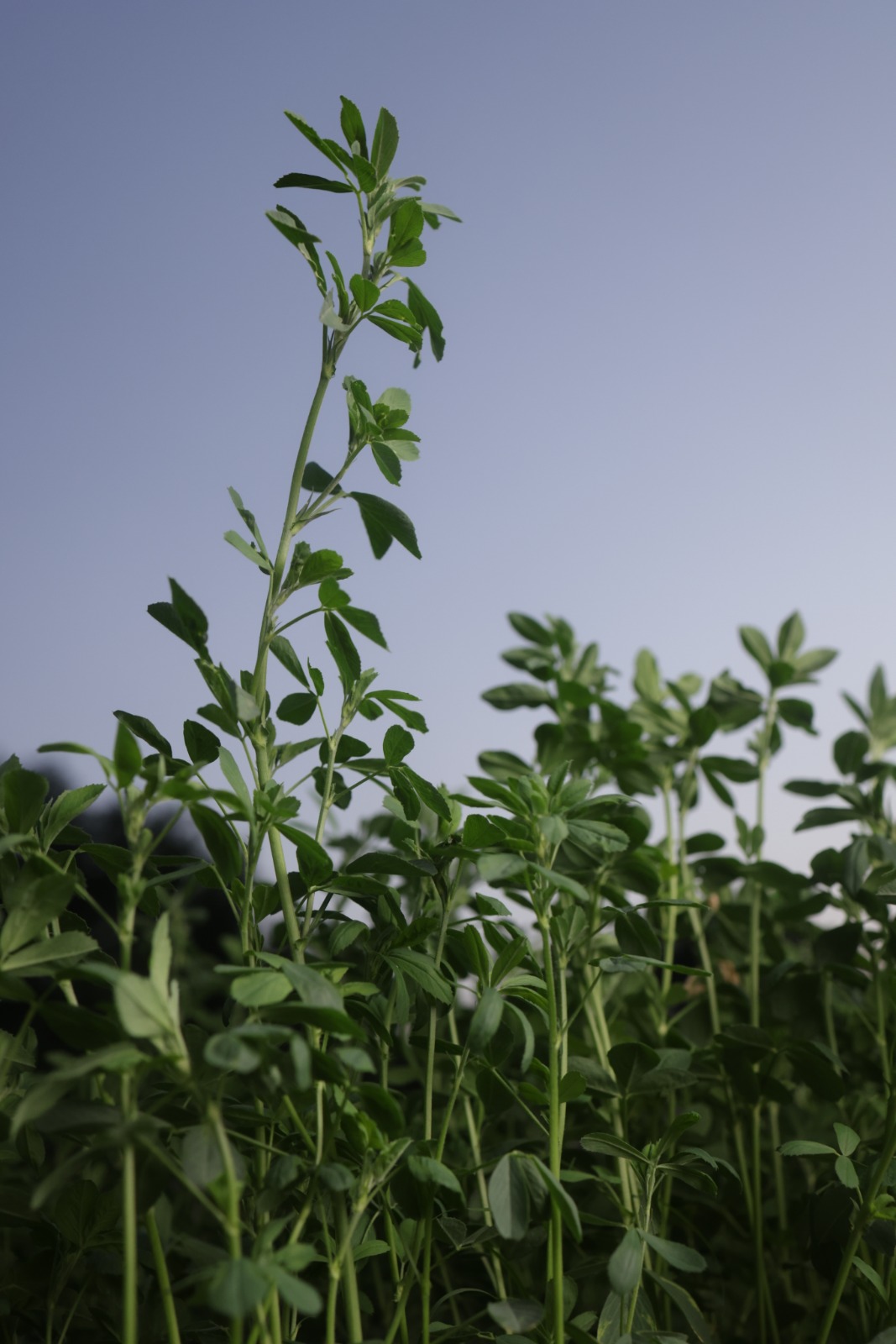
Established irrigated alfalfa field under a clear sky, the result an alfalfa seed importer is buying
In short: Alfalfa seeds importers are dairy groups, feed mills, seed distributors, tender agencies and large farms. To import alfalfa seeds you need, depending on your country, an import permit, a phytosanitary certificate, an ISTA Orange Certificate for the lot, a certificate of origin, invoice, packing list and bill of lading, declared under HS code 1209.21. Kohenoor supplies the full set with every shipment.
Documents for 70+ countriesISTA Orange Certificate per lotPhytosanitary with your declarations0% dodder in writingHS 1209.21 · 25 kg lot-tagged bagsFOB Karachi or CFR/CIFMOQ 5 MT · 1 MT trialDirect supply · no agent
HS code1209.21 — lucerne (alfalfa) seed for sowing
Core documentsPhytosanitary · ISTA Orange Certificate · certificate of origin · invoice · packing list · B/L
Where requiredImport permit · fumigation certificate · additional declarations
IncotermsFOB Karachi standard · CFR / CIF on request
Packing25 kg poly-lined PP bags · loose or palletised · approx. 18–20 MT per 20'
Lead time7–12 days to FOB Karachi · plus sailing time to your port

Who imports alfalfa seed, and what each type of alfalfa seed buyer needs

Alfalfa seed importers are a varied group. The farm that sows the seed is often not the company that imports it, and the paperwork, packing and payment terms that suit one buyer are wrong for another. Kohenoor's export desk sees five types of alfalfa seed buyer.

Whatever the type, the importer of record applies for the import permit where required, appears on the phytosanitary certificate as consignee, and clears the goods. Decide early which entity that will be, because the documents are issued in its name and cannot easily be changed after inspection. The alfalfa seed exporters guide covers the other side of the trade.

How to import alfalfa seed: the paperwork chain from import permit to bill of lading

The alfalfa seed import requirements follow a sequence, each document depending on the one before it. Requirements vary by country, so the chain below is general; confirm each step with your plant-quarantine authority and customs broker. Kohenoor's export documents page describes each certificate in more detail.

  1. Import permit or import authorisation (where required). Issued by your plant-quarantine authority to the importer before shipment; it states the conditions the phytosanitary certificate must meet. Mandatory for all seed in some countries, not needed in others. Apply early.
  2. Specification, sample and certificate of analysis. Agree variety, purity, germination and dodder guarantee with the exporter and receive a sealed sample from the offered lot. Test it locally if you can.
  3. Proforma invoice and contract. Fixes variety, lot, quantity, packing, Incoterm, documents and payment terms. Attach your permit conditions so both sides work from the same wording.
  4. ISTA Orange International Seed Lot Certificate. Issued by an ISTA-accredited laboratory on a sample from the sealed lot, stating purity, germination, other seed and inert matter. Your own laboratory compares against it on arrival.
  5. Phytosanitary certificate. Issued by the exporting country's plant protection authority after inspection, following the International Plant Protection Convention model, carrying the additional declarations your permit requires, for example freedom from dodder (Cuscuta) seed. This is the document most often wrong in a failed import, usually because the importer never sent the exporter the exact wording.
  6. Fumigation or treatment certificate (where required). Some countries require fumigation of seed, container or wooden pallets; others prohibit certain treatments. Confirm before loading.
  7. Certificate of origin. Issued by the chamber of commerce in the exporting country; required by most customs authorities and many letters of credit. Preferential forms may reduce duty under trade agreements.
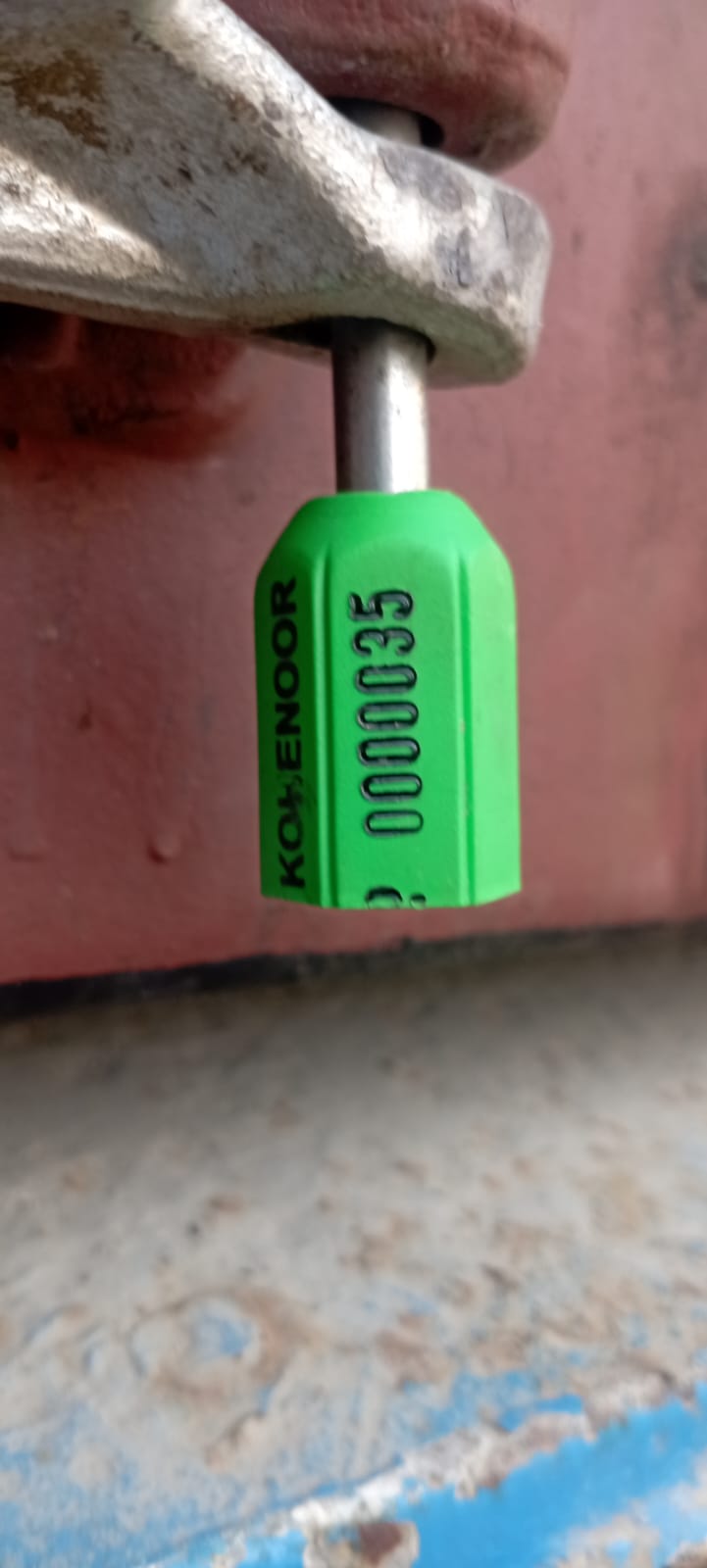
  8. Commercial invoice and packing list. The invoice shows HS code, quantity, value and Incoterm; the packing list shows bag count, net and gross weight per lot, container and seal numbers.
  9. Bill of lading (or air waybill). Issued by the carrier on sailing; the title document that releases the cargo, sent as originals through the bank or by courier, or as a telex release where agreed.
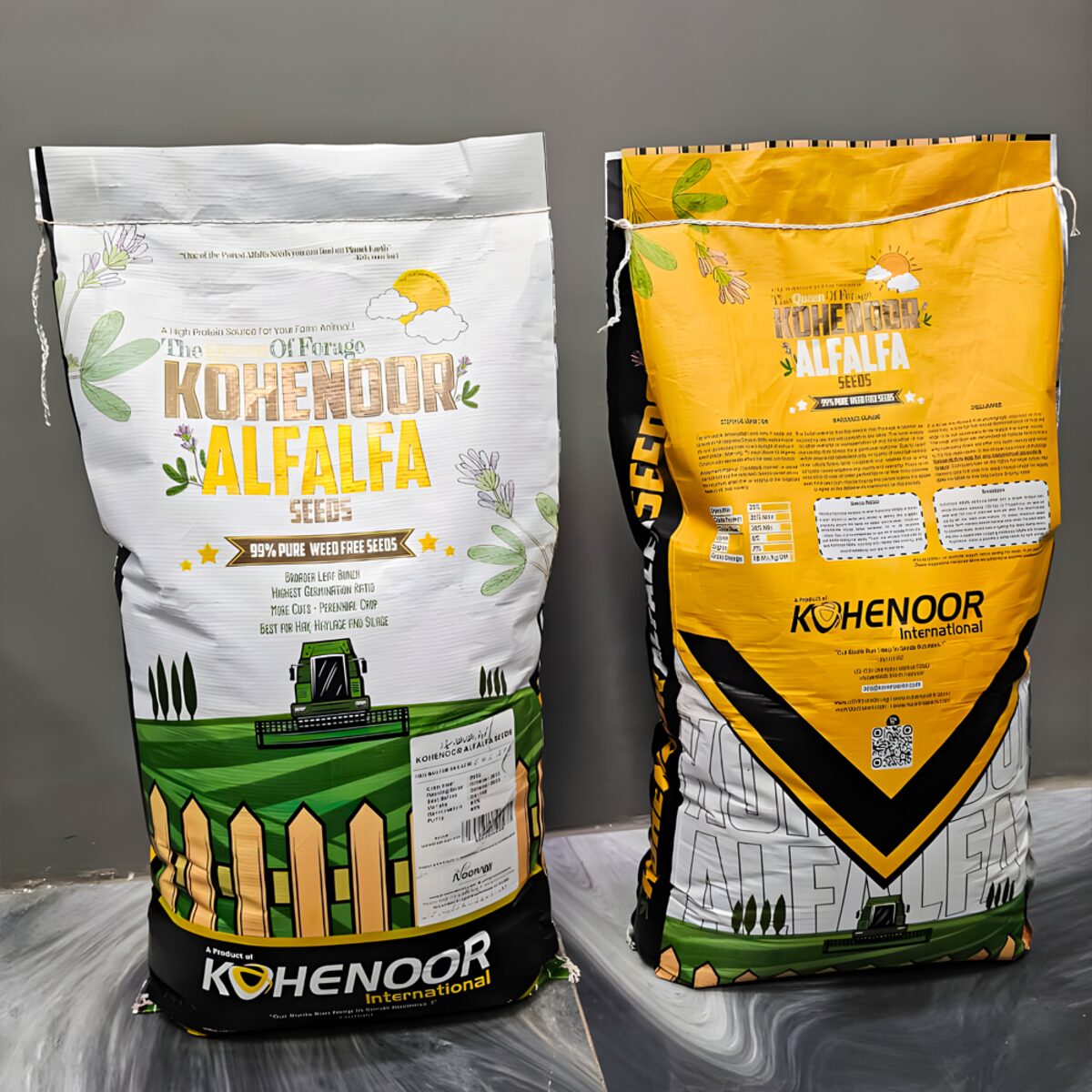
Export bags of alfalfa seed with sealed lot tags that match the ISTA certificate and packing list

The practical rule for alfalfa seed importers: every document should name the same lot number, variety, bag count and consignee, because a mismatch is a common cause of a hold at the port. Kohenoor cross-checks the set before sailing and sends scans for your broker while the vessel is at sea.

Alfalfa seed HS code 1209.21 and how customs treat seed for sowing

Alfalfa seed for sowing is classified under HS code 1209.21, described in the Harmonized System as lucerne (alfalfa) seed, within heading 12.09, seeds, fruit and spores of a kind used for sowing. The six-digit alfalfa seed HS code 1209.21 is common to every country using the system; national tariffs extend it to eight or ten digits. Declaring the right code matters: seed for sowing is treated differently from feed, hay or sprouting seed for human consumption, and a shipment misdeclared under a feed or food heading may face the wrong duty, the wrong inspection regime or both.

In general terms, many countries admit seed for sowing at low or zero customs duty because it is an agricultural input, and some apply preferential rates under trade agreements when a preferential certificate of origin is presented. Value-added or sales tax treatment also varies: some countries exempt agricultural seed, others charge it at import and credit it later. No figures are given here because they change and differ by country; ask your broker for the current treatment of 1209.21 at your port.

Beyond duty, the code triggers the quarantine process: customs systems flag heading 12.09 for plant-quarantine inspection, which is why the phytosanitary certificate and any import permit must be in order before the container is presented. Some countries also require the variety to be listed before commercial sale; distributors should check this before ordering. The how to import alfalfa seed page walks through the customs steps in order.

Alfalfa seed import permit and plant-quarantine requirements

The alfalfa seed import permit is the document first-time buyers most often misunderstand, because its name and its necessity change from country to country. The general picture, always to be confirmed with your plant-quarantine authority, is as follows.

Many countries require the importer to obtain a permit or phytosanitary import authorisation before shipment. The permit sets out the conditions the phytosanitary certificate must satisfy: the quarantine pests the lot must be declared free from, additional declarations such as freedom from dodder, any treatment required, and sometimes the laboratory certificate the lot must carry. It is issued to the importer and usually has a validity period and a quantity limit, so it must match the shipment.

Other countries require no permit for seed, only a phytosanitary certificate that meets published import conditions. A third group requires registration of the variety or of the importer before commercial sale, which affects distributors more than farms. Several countries also apply rules to seed treated with fungicide or insecticide, requiring a declaration or prohibiting certain products; untreated seed, which is how Kohenoor supplies alfalfa unless treatment is requested, is the simpler case.

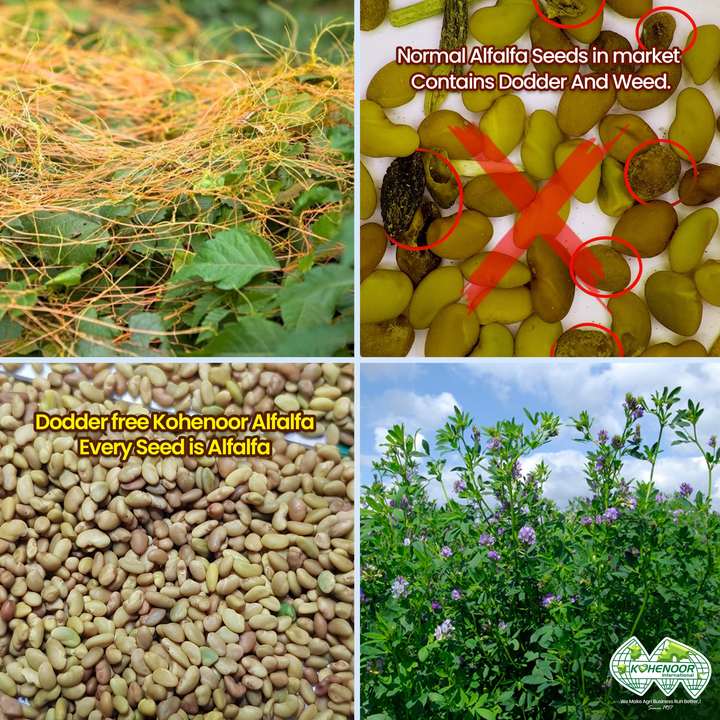
The common quarantine concerns for alfalfa seed are weed seeds, above all dodder (Cuscuta), a listed quarantine weed in many importing countries; certain seed-borne pathogens; and insects in bags or container. Kohenoor's seed is cleaned to 0% dodder with the guarantee given in writing, and the dodder-free additional declaration is placed on the phytosanitary certificate where the importing authority requires it; the dodder-free alfalfa seeds page explains the cleaning sequence behind that guarantee.

Practical advice: obtain the exact import conditions in writing from your authority, send them to the exporter before you agree the order, and have the exporter confirm each declaration in writing. Conditions in a national language can be sent as they are.

Incoterms for alfalfa seed importers: FOB Karachi, CFR and CIF explained

The Incoterm on the quotation decides who arranges and pays for each leg of the journey and where risk passes from exporter to importer. Three terms cover almost every alfalfa seed shipment from Pakistan.

TermExporter arranges and paysImporter arranges and paysRisk passesBest suited to
FOB Karachi (Free On Board)Bagging, inland transport, export customs, loading on board at KarachiSea freight, marine insurance, destination charges, import clearance, deliveryWhen the goods are on board the vessel at KarachiImporters with their own forwarder or freight contract; the standard Kohenoor quotation
CFR (Cost and Freight) to your portEverything in FOB plus sea freight to the named portMarine insurance, destination charges, import clearance, deliveryOn board at Karachi, even though freight is prepaidImporters who want one figure for goods plus freight but insure themselves
CIF (Cost, Insurance and Freight) to your portEverything in CFR plus minimum marine insuranceDestination charges, import clearance, deliveryOn board at KarachiLetters of credit that require CIF; first-time importers who want the exporter to handle freight and insurance

Two points catch first-time alfalfa seed importers. First, under both CFR and CIF the risk still passes at Karachi, not at your port. Second, destination charges such as terminal handling, documentation fees and container detention are the importer's cost under all three terms, so budget for them and appoint a customs broker before the vessel sails.

Kohenoor quotes FOB Karachi as standard and CFR or CIF on request, on the same basis as other suppliers so that figures can be compared fairly. The alfalfa seed price page explains what a quotation includes and why no serious supplier publishes a list figure.

Container maths: 25 kg bags, pallets and tonnes per container

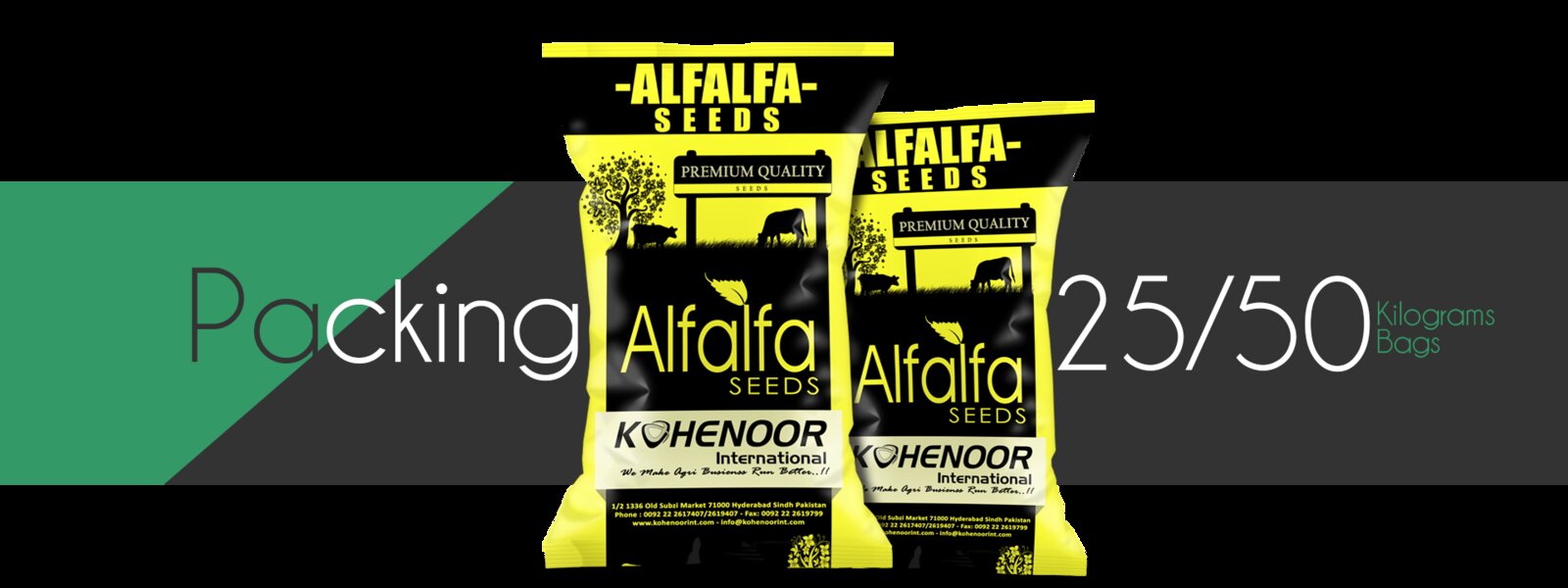
Alfalfa seed is heavy for its volume, so planning a shipment is a weight calculation first. Kohenoor packs alfalfa seed in 25 kg poly-lined polypropylene woven bags, each with a sealed tag showing variety, lot number, net weight and test reference. The figures below are general working numbers; confirm payload limits with your forwarder and road authority.

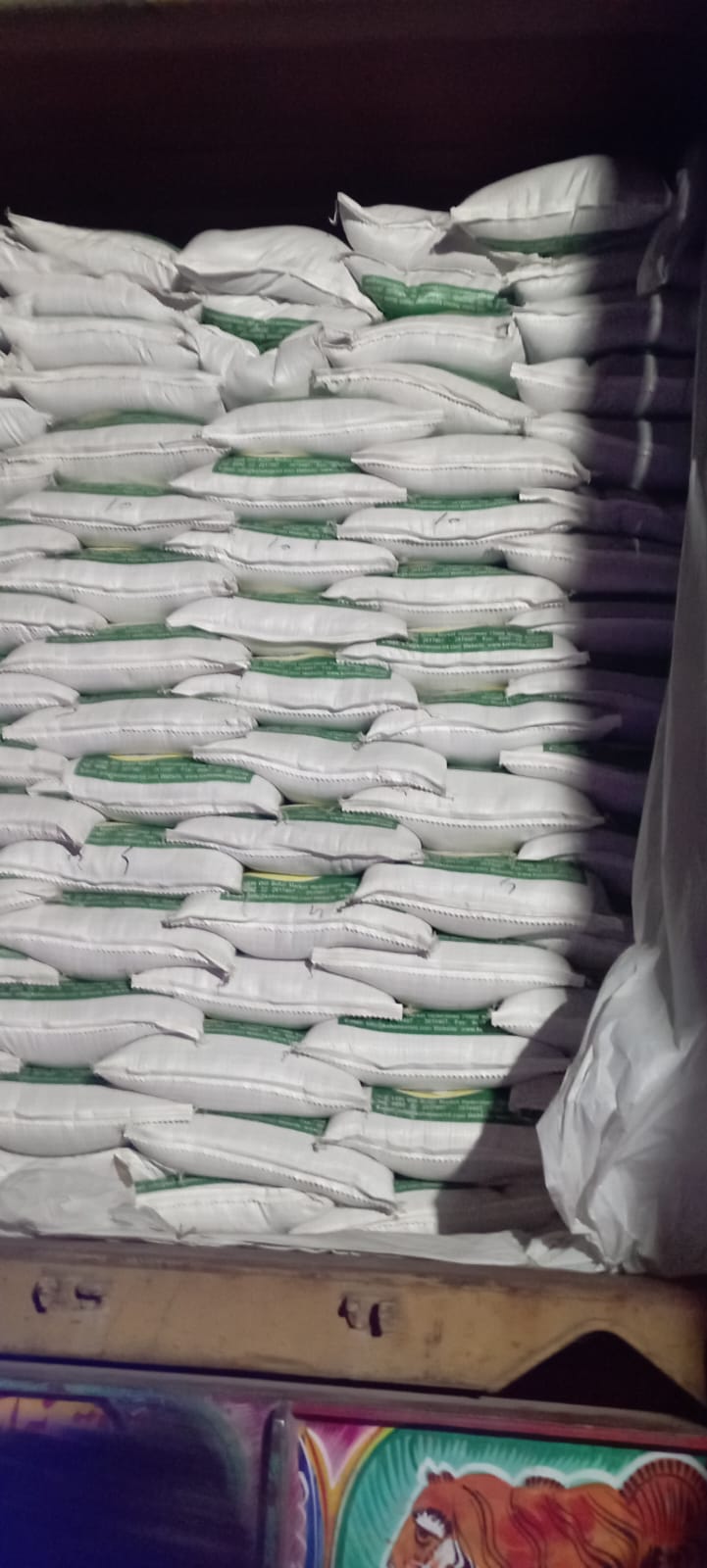
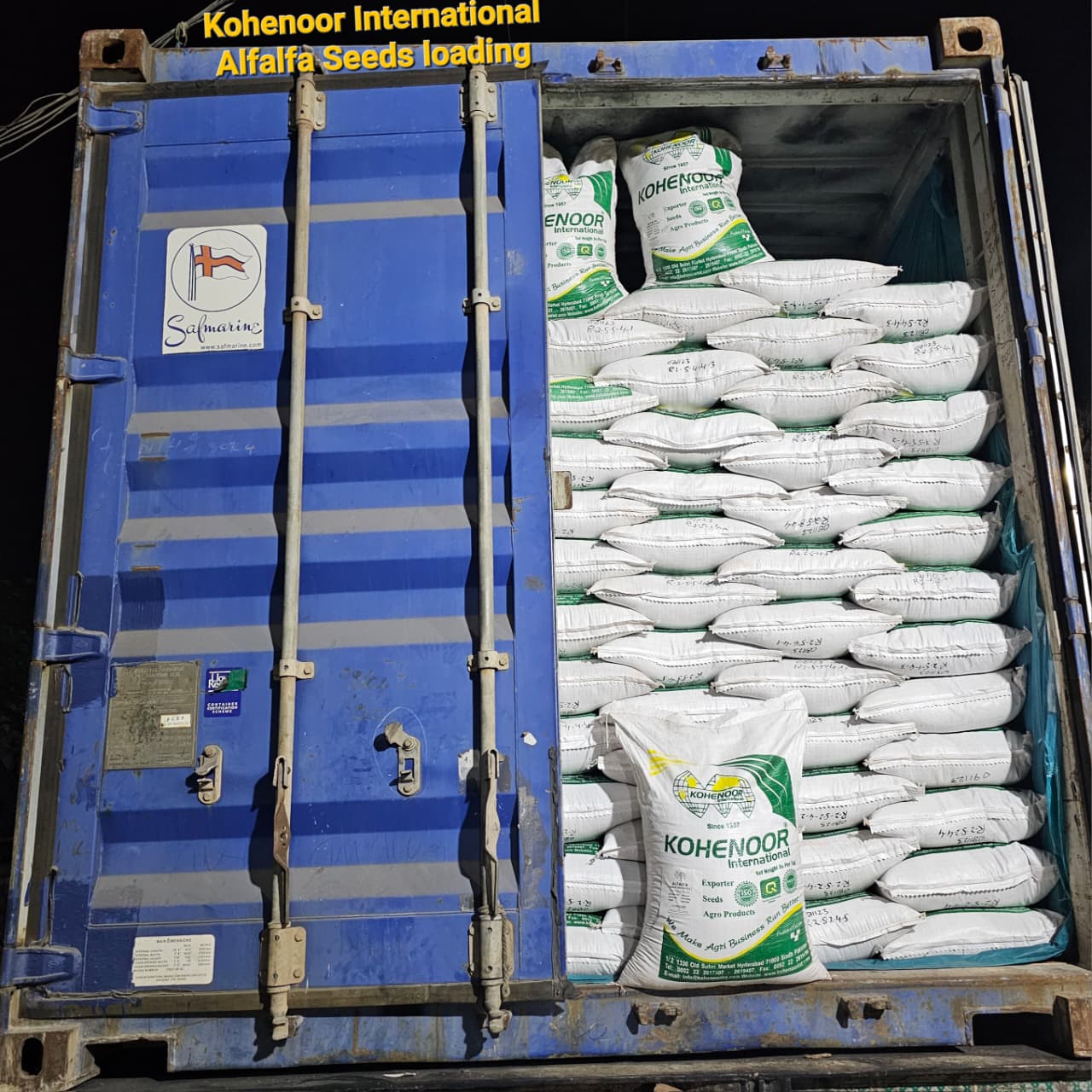
Alfalfa seed bags stacked inside a 20-foot container during loading at Karachi

Convert the farm's need into bags before asking for a quotation. At 25 to 30 kg per hectare, one 25 kg bag sows a little under one hectare, so a 500-hectare project needs around 12.5 to 15 MT, close to one 20-foot container, and a 2,000-hectare project needs three or more containers, phased with sowing. Alfalfa seed keeps its germination for 18 to 24 months in cool, dry storage. The packing and shipping page shows bags, pallets and loading in photographs.

Timeline from enquiry to arrival: planning backwards from the sowing date

The most common reason an alfalfa seed import goes wrong is not a document; it is an order placed too close to sowing. Working backwards from the sowing window, the timeline looks like this, in general terms and subject to carriers and your own authorities.

Enquiry and quotation: 1 to 3 daysSend port, quantity, variety or dormancy class, sowing month and import conditions. Kohenoor replies within 24 hours with specification, ISTA lot certificate and quotation.
Sample and local test: 1 to 3 weeksCourier time plus a germination test in your country. Optional, but recommended for a first order and often required for variety listing.
Import permit: days to several weeksWhere required. Apply as soon as the variety is chosen; the phytosanitary certificate cannot be arranged correctly until the permit conditions are known.
Order confirmation and payment set-up: 2 to 7 daysProforma invoice, contract, letter of credit opening or transfer, depending on the terms agreed.
Loading FOB Karachi: 7 to 12 daysBagging, tagging, phytosanitary inspection, certificate of origin, trucking to Karachi and container stuffing, with photographs sent to you.
Sailing: 1 to 6 weeksRoughly a week to Gulf ports, two to three weeks to East Africa, two to four weeks to South-East Asia, four to six weeks or more to West Africa and South America.
Clearance and quarantine: 2 to 10 daysCustoms, plant-quarantine inspection and sampling, release. Faster when the broker has reviewed scanned documents in advance.
Inland delivery and storage: 1 to 7 daysPort to warehouse or farm; store cool and dry, off the floor, away from fertiliser and fuel.

Added together, a first import from Pakistan realistically takes two to three months from first message to seed in the warehouse; a repeat order with the permit in hand takes four to eight weeks depending on destination. Order for an autumn sowing in the Gulf or North Africa by early summer, and for a spring sowing in Central Asia by the previous autumn. Country-specific timing is on the country pages.
Quality checks on arrival: what alfalfa seed importers should test and keep

The documents tell you what left Karachi. A short set of checks on arrival tells you what reached you and creates the record you need if anything is questioned. Do them before the seed is sown.

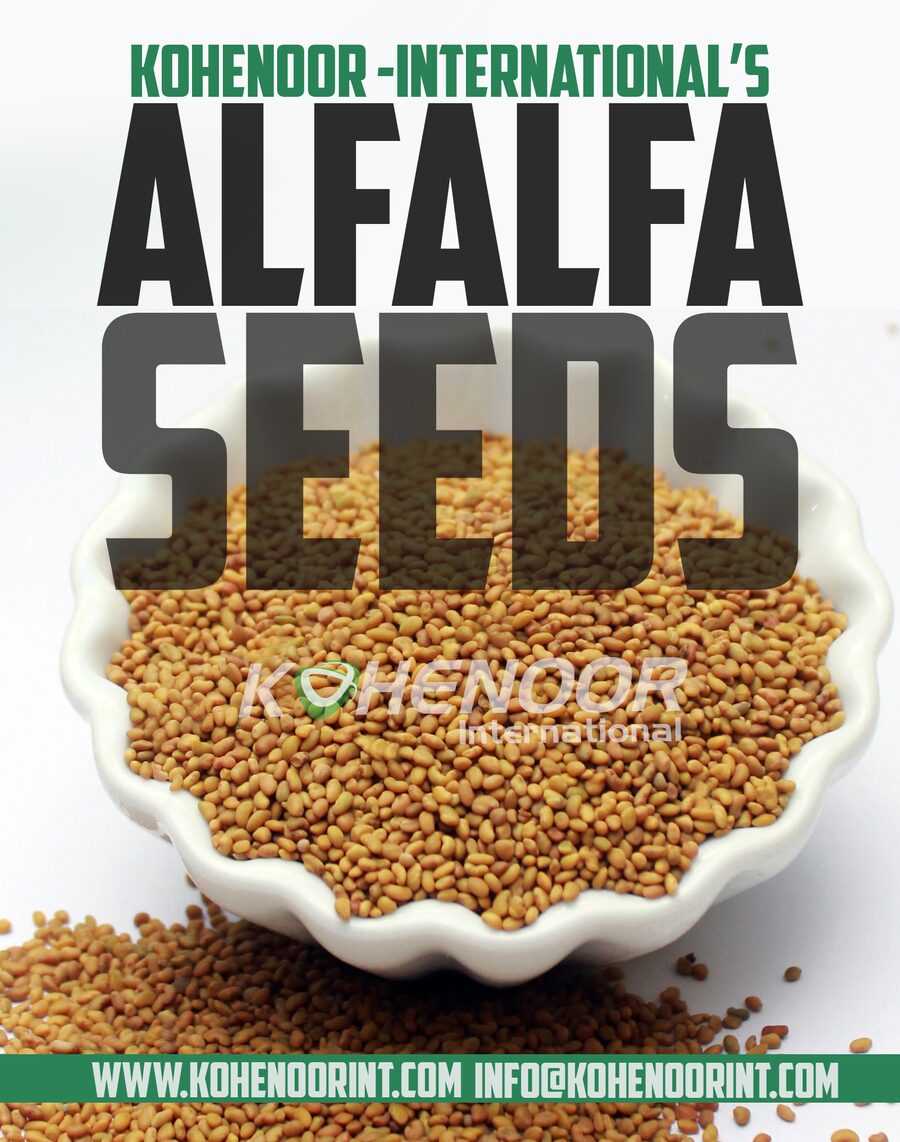
Cleaned alfalfa seed spread for inspection, showing the uniform size and colour an importer should see on arrival

If a result differs materially from the certificate, tell the exporter at once with the sample details and laboratory report. Kohenoor investigates with the lot's own retained sample; the point of buying from an exporter that controls the seed is that one company is responsible for the answer.

The classic mistakes alfalfa seed buyers make, and how to avoid them

Most failed alfalfa seed imports share a handful of causes, all avoidable at the enquiry stage.

Region-specific notes for alfalfa seed importers

Import rules, sailing times and variety fit differ by region. The notes below are general as of 2026 and no substitute for the current conditions published by your own plant-quarantine authority; they tell you which questions to ask first. Country pages such as Saudi Arabia, Kenya and Uzbekistan go into more detail.

RegionTypical documents and quarantine focusLogistics from KarachiVariety fit
Arabian Gulf (Saudi Arabia, UAE, Oman, Kuwait, Qatar, Bahrain)Phytosanitary certificate with dodder-free declaration widely expected; import permits or registration for some buyers; Arabic documents sometimes requestedShort sailings, frequent services, well-developed portsTAIZTAR FD10 for lowland pivots and camel dairies; autumn sowing
East Africa (Kenya, Tanzania, Ethiopia, Uganda)Import permits are common; variety registration often needed for commercial sale; dodder and other weed seed closely inspectedTwo to three weeks to Mombasa or Dar es Salaam; inland transit to Ethiopia and Uganda adds timeTAIZTAR in hot lowlands; KN92 in the highlands
West Africa (Nigeria, Ghana, Senegal, Mali, Niger)Permits and phytosanitary conditions vary widely between countries; francophone countries may require French documentsLonger sailings with transshipment; plan extra weeksTAIZTAR for Sahel irrigation schemes and dairy projects
Central Asia (Uzbekistan, Kazakhstan, Turkmenistan, Tajikistan, Kyrgyzstan)State quarantine permits usual; Russian-language documents often required; variety testing or listing for distributorsSea to a transit port plus rail or road, or overland routes through Pakistan; several weeksKN92 FD9 for most of the region; TAIZTAR only in the mildest southern valleys
South-East Asia (Vietnam, Thailand, Indonesia, Malaysia, Philippines)Import permits common for seed; some countries require pest-risk assessment for a first import of a speciesDirect and transshipment services, two to four weeksNon-dormant TAIZTAR; drainage and soil acidity are the agronomic questions
South America (Peru, Bolivia, Colombia, Ecuador, Chile)Phytosanitary import requirements published per species; Spanish documents; registration for commercial sale in several countriesLong sailings via transshipment hubs; four to six weeks or moreTAIZTAR on hot coasts; KN92 in Andean valleys and highlands

In every region, three actions prevent most problems: obtain the import conditions in writing before ordering, get the exporter's written confirmation, and appoint a customs broker who has cleared seed under heading 12.09 before.

How Kohenoor supports importers: documents, samples and direct supply

Kohenoor has exported alfalfa and other forage seed since 1957, from its head office in Hyderabad, Sindh, with offices in Khanewal, Dubai and Australia, to more than 70 countries; it is ISO 9001 and HACCP certified and a member of the Australian Seed Federation. For an importer that means a desk that has seen most quarantine regimes before.

To start, send your destination port, quantity, variety or dormancy class, sowing month and your country's import conditions by WhatsApp to +92 310 4929292 or email to export@kohenoorint.com. The export desk replies within 24 hours with a quotation for your lot and destination, the current ISTA certificate and a sailing schedule. No figures are published on this page; every quotation is given per lot and destination.

What an importer receives: bags, tags, container and the seed inside

The next pages an importer needs

Export documents
Export documentsEach certificate explained: what it proves, who issues it, and the wording to ask for.
Read about documents →
How to import alfalfa seed
How to import alfalfa seedThe practical sequence for a first shipment, from permit application to customs release.
Read the import steps →
Packing and shipping
Packing and shippingBag specification, palletising, container loading and photographs from the loading bay.
Read more →
Alfalfa seed exporters
Alfalfa seed exportersHow the global trade is structured and how to tell a producer-exporter from a trader.
Read the exporters guide →

Send us your country's import conditions — we will confirm every document before you order

Email or WhatsApp the import permit wording or the plant-quarantine conditions for alfalfa seed in your country. The export desk replies within 24 hours confirming which declarations it can obtain, with a quotation, the current ISTA lot certificate and a sailing schedule — direct from the company, no agent.

export@kohenoorint.com

Frequently asked questions

Who are the main alfalfa seeds importers?

Alfalfa seed importers fall into five groups: dairy and livestock companies that grow their own forage, feed mills and integrators that contract fodder production, seed distributors that resell to farmers, government and development agencies that buy through tenders for fodder programmes, and large private farms, including camel dairies and feedlots. Each group needs the same core documents, but distributors and tender agencies usually face extra requirements for labelling, registration and bag marking.

How do I import alfalfa seed for the first time?

Start with your own plant-quarantine authority: ask whether an import permit is needed and obtain the exact phytosanitary conditions for alfalfa seed. Send those conditions to the exporter and have it confirm in writing that it can meet them. Then agree variety, quantity, Incoterm and payment, receive a sealed sample and certificate of analysis, confirm the order, and appoint a customs broker at your port before the vessel sails. A 1 MT trial lot is a sensible first shipment.

What is the HS code for alfalfa seed?

Alfalfa seed for sowing is classified under HS code 1209.21, lucerne (alfalfa) seed, within heading 12.09, seeds, fruit and spores of a kind used for sowing. The six-digit code is the same in every country that uses the Harmonized System; national tariff lines add further digits. Declaring the correct code matters because seed for sowing is usually treated differently from feed or hay, and misclassification causes delays at customs.

Do I need an import permit for alfalfa seed?

It depends on the country. Many countries require an import permit or phytosanitary import authorisation for seed before shipment, issued by the plant-quarantine authority to the importer; others require only a phytosanitary certificate from the exporting country, and some also require seed registration or variety listing for commercial sale. Confirm the rule with your own authority before ordering, because a shipment that arrives without a required permit can be held, re-exported or destroyed.

What are the alfalfa seed import requirements for the phytosanitary certificate?

The phytosanitary certificate is issued by the exporting country's plant protection authority after inspection and must match your country's import conditions. Typical requirements include a statement that the lot is free from specified quarantine pests, an additional declaration that it is free from dodder (Cuscuta) seed, and sometimes a treatment or fumigation record. Send the exporter your authority's exact wording; Kohenoor arranges the declarations with the inspector before the lot is sealed.

How much alfalfa seed fits in a 20-foot container?

Alfalfa seed is dense, so weight limits, not space, decide the load. A 20-foot container typically carries around 18 to 20 MT of alfalfa seed in 25 kg bags, that is 720 to 800 bags, depending on the road-weight limits at the destination and whether the bags are palletised. A 40-foot container offers more volume but often the same road-weight ceiling. Smaller quantities, including a 1 MT trial, ship as LCL groupage or by air.

How long does it take from order to arrival?

Kohenoor loads stock lots FOB Karachi within 7 to 12 days of order confirmation. Add sailing time: roughly a week to Gulf ports, two to three weeks to East Africa, two to four weeks to South-East Asia, and four to six weeks or more to West Africa and South America, subject to the carrier and transshipment. Allow further days for customs and quarantine release at your port. Plan the order two to three months before sowing to be safe.

Does Kohenoor sell to alfalfa seed buyers through agents?

No. Kohenoor supplies importers directly from the company, with one named contact at the export desk from the first enquiry to arrival at your port. There is no agent or dealer in between. Importers receive the ISTA Orange Certificate, phytosanitary certificate, certificate of origin, invoice, packing list, bill of lading and the written 0% dodder guarantee from the same desk. Write to export@kohenoorint.com or WhatsApp +92 310 4929292.

Related pages

WA