Kharif crop · new-crop offers October to December · machine-cleaned and Sortex-sorted · COA per lot · HS 1207.40 · 25 kg and 50 kg PP bags · FOB Karachi
Pakistan grows one of the whitest, highest-oil sesame crops in the world, and most of it comes off the fields within a two-hour drive of Khanewal in southern Punjab, where Kohenoor International runs its sesame export operation. This page explains how Pakistani sesame seeds are grown, graded, cleaned, packed and documented for export, what a buyer should ask for on the Certificate of Analysis, and how to get a quotation from the export desk for the current or coming crop.
WhatsApp +92 310 4929292 Get a quote in 24h
Sesame (Sesamum indicum) is one of the oldest oilseed crops in the Indus valley, and Pakistan remains one of the world's larger exporters of it. The reason is climate: sesame wants heat, long days, light well-drained soil and a dry ripening period, and the plains of southern Punjab deliver exactly that between June and November. The crop is grown by thousands of smallholders, threshed in the village, and moves through local grain markets to cleaning plants that prepare it for export. Buyers who search for pakistan sesame seeds exporters are, whether they know it or not, looking for companies that sit close to those markets, because control over the lot and knowledge of the season come from being there.
The belt is plain geography. The core districts are Khanewal, Vehari, Lodhran and Bahawalpur in southern Punjab, with substantial acreage in Layyah, Bhakkar and Mianwali along the Indus to the north-west, and a second producing zone in Sindh around Sanghar and Umerkot. In most seasons these districts account for the large majority of the national crop, and the grain markets of Khanewal, Mian Channu, Vehari and Bahawalpur are where the harvest is first sold and bulked into lots. Kohenoor International works from Khanewal, which puts the export desk at the centre of the map rather than at the port, several hundred kilometres from the farmers.
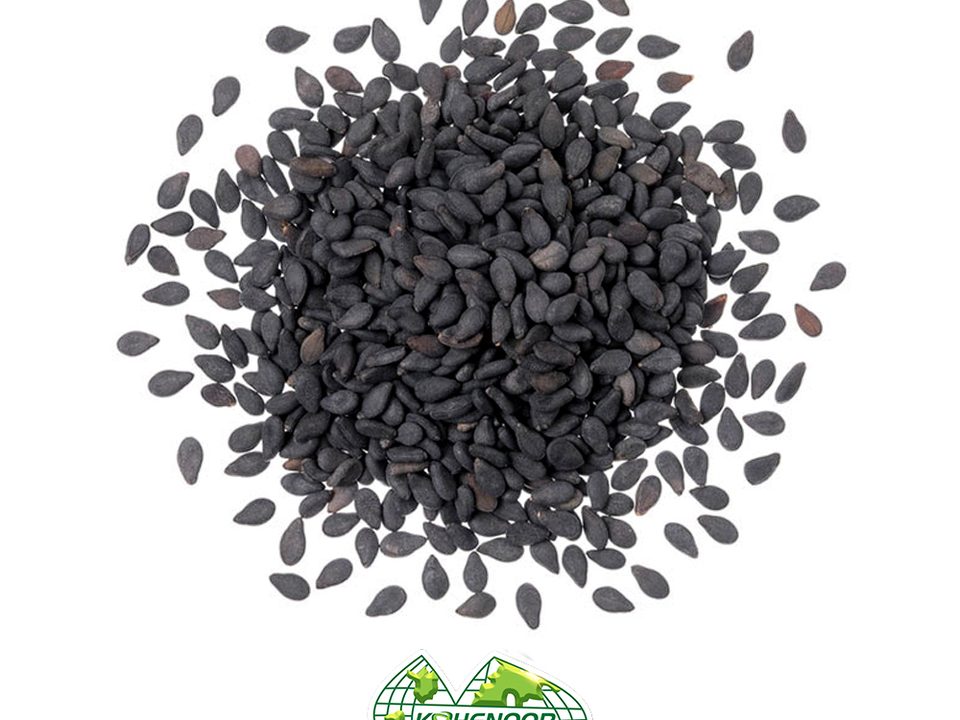
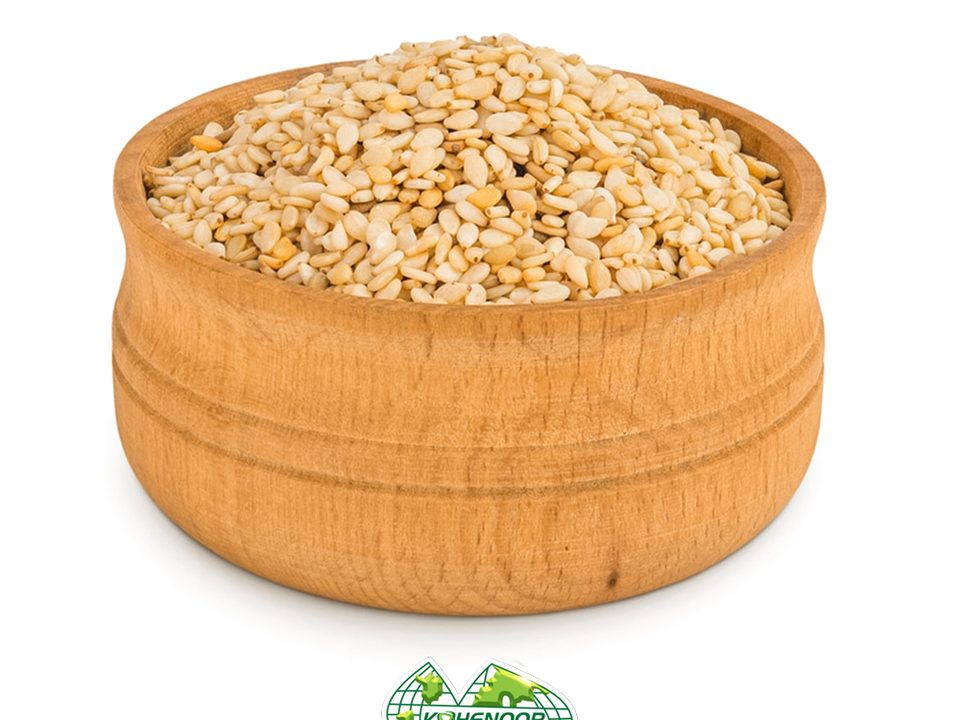
Two broad types of Pakistani sesame reach the export market. Natural white sesame is the premium type: a cream-to-ivory seed with a thin coat, high oil content and the clean, mild flavour that tahini, halva and bakery buyers want. Mixed or natural sesame is the field-run crop with brown and reddish seeds alongside the white, typically bought for oil pressing where colour matters less than oil yield. Black sesame is grown in smaller quantities and is available on request. A good exporter will tell you honestly which type a lot is, because colour sorting can improve a lot but cannot change what the farmer planted.
Oil content is the trait that makes sesame seeds from Pakistan sought after: lots typically run around 48 to 52 percent oil in most seasons, at the upper end of the global range, and the dry ripening period gives low-moisture seed that stores well. These are general observations about the crop, not guarantees for a lot; the figures for the lot you buy are the ones on its Certificate of Analysis.
Sesame is a Kharif (summer) crop in Pakistan. Sowing typically runs from June into July, timed to the onset of the monsoon on rain-fed land and to canal water on irrigated land. The plant flowers through August, sets its capsules in late August and September, and is cut when the lower capsules begin to turn and before they shatter. Harvest therefore runs from late September through October and into November, earlier in Sindh and in the southern districts of Punjab, later in Layyah, Bhakkar and Mianwali. Cut plants are stacked to dry for one to two weeks and then threshed, so seed begins to reach the village markets in October and arrives in volume through November and early December.
For an importer, this is the calendar that matters when asking about the sesame harvest season in Pakistan:
| Period | What is happening in the belt | What it means for buyers |
|---|---|---|
| June – July | Sowing; acreage becomes visible | Early crop-size estimates; indicative talk only |
| August – September | Flowering and capsule set; weather risk highest | Forward enquiries; no firm new-crop lots yet |
| Late September – November | Harvest, drying and threshing; markets fill | First new-crop samples; quotations firm up |
| October – December | Cleaning plants run at full capacity | Main window for new-crop offers and shipments |
| January – May | Trade continues from conditioned stocks | Supply from stored lots; quality depends on storage |
New-crop offers from Kohenoor typically open between October and December, once lots have been cleaned and the first Certificates of Analysis are in hand; this is also when the widest choice of grades is available. From January onward, trade continues from stocks held in dry conditioned warehouses, and the export desk will tell you plainly whether a quotation is for new crop or carried stock.
Weather is the variable. Late monsoon rain at harvest can stain seed and raise moisture, while a dry September produces the bright, clean crop Pakistani sesame is known for. Crop size and quality vary from season to season, so any statement about the coming crop made before October is an estimate, and importers planning a programme should confirm quantities after new-crop samples have been tested.
The first question a sesame seed supplier in Pakistan should ask is what you will do with the seed, because the grade follows the use. The main grades handled by Kohenoor and the uses they typically serve are described below; detailed specifications are agreed per lot and written on the COA.
A simple rule of thumb: if the end use is visible — topping, confectionery, retail packs — specify natural white or hulled; if the end use is oil, mixed/natural is often the economical choice; if the dark colour is wanted in cuisine, specify black. Kohenoor also supplies food-grade white and black sesame for the sprouting and microgreens trade through its sprouting seeds range.
Experienced importers do not buy "sesame"; they buy a specification. Kohenoor writes it into the contract and confirms it on a Certificate of Analysis per lot. The parameters below appear on most sesame contracts, with the ranges Pakistani export lots typically achieve in most seasons. They are indicative, not a promise for a lot you have not yet seen: the binding figures are the ones on the COA for your lot, and tighter limits can be quoted where the lot allows.
| Parameter | Natural white (typical) | Mixed / natural (typical) | Hulled (typical) |
|---|---|---|---|
| Physical purity | 99% or better, machine-cleaned and Sortex-sorted | 99% or better, machine-cleaned | 99.9% or better |
| Admixture / foreign matter | Typically up to 1%; tighter on request | Typically up to 1–2% | Very low; per COA |
| Moisture | Around 6–8% | Around 6–8% | Typically at the lower end, around 5–6% |
| Oil content | Around 48–52% | Around 48–52% | Higher on a kernel basis; per COA |
| Colour | Cream to ivory, uniform | Mixed white, brown, reddish | Bright white kernel |
| Free fatty acid (oil) | Agreed per contract; per COA | Agreed per contract; per COA | Agreed per contract; per COA |
Buyers in regulated food markets often need additional analyses: pesticide-residue screens against the destination's maximum residue limits, aflatoxin and other mycotoxins, heavy metals, Salmonella and other microbiology, and for hulled seed a peroxide value. These are arranged on request through an independent third-party laboratory on a sample drawn from the lot, and the report travels with the lot documents. Tell the export desk at enquiry which tests your market requires, because some take longer than others.
Two practical notes. Moisture governs storage and transit: sesame shipped at around 6 to 8 percent travels well through the tropics, while wetter seed risks heating and off-flavour in the container, so we hold the drying stage until the moisture is right. And purity figures are only as good as the sampling behind them, so our COA states how the sample was drawn, and a retained sample is kept for every lot so that your incoming analysis can be matched against ours.
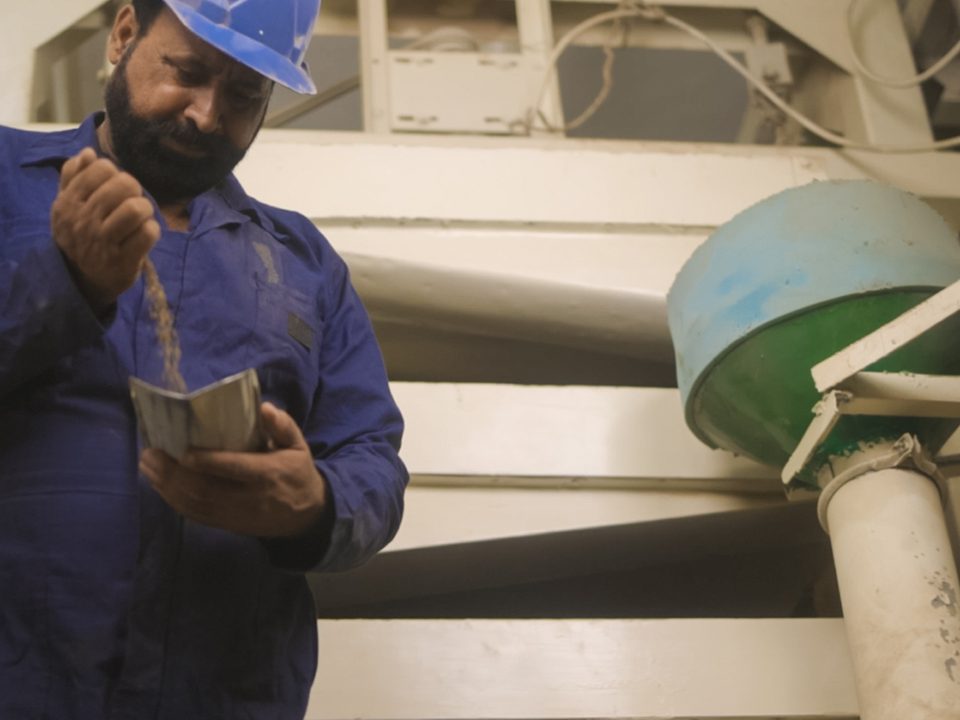
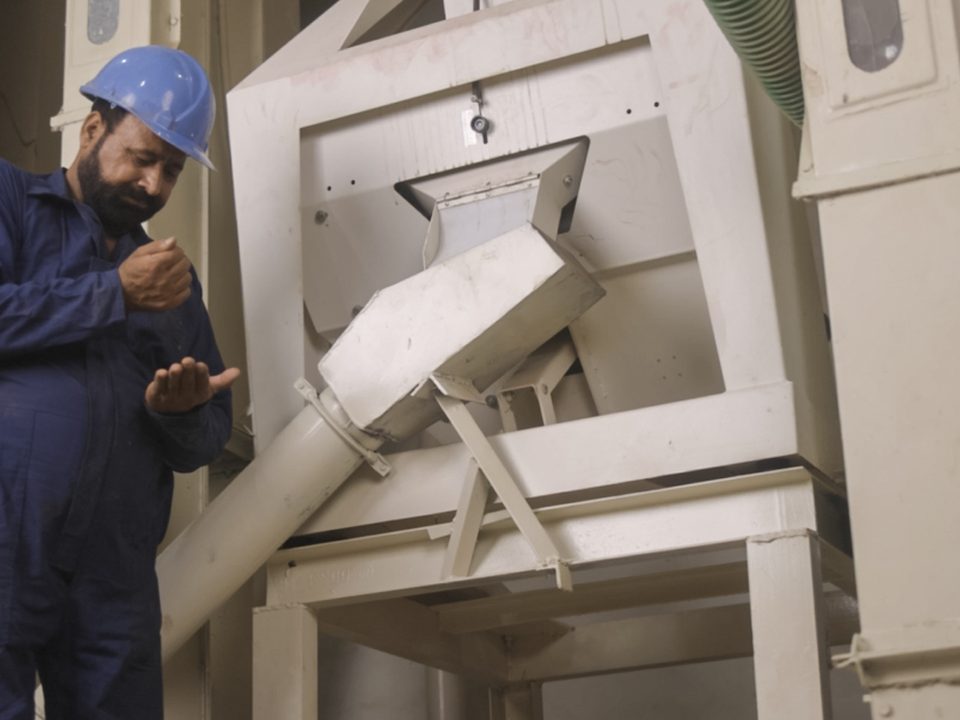
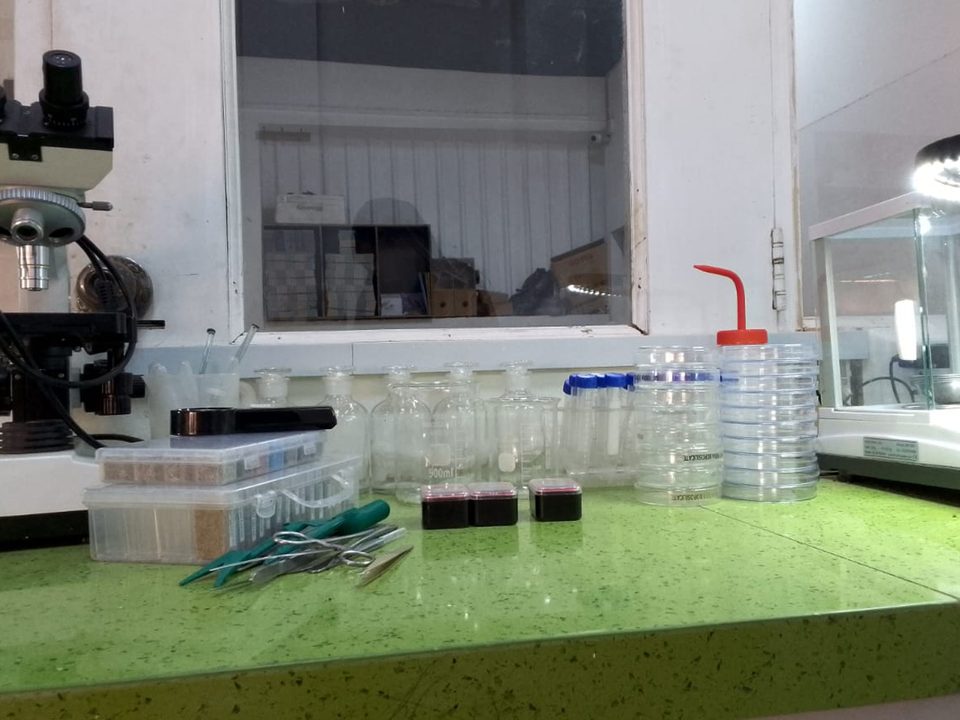
Sesame comes off the threshing floor mixed with stalk fragments, dust, sand, immature seed, weed seed and the occasional stone. The cleaning plant's job is to turn that into a lot a food manufacturer can use without a second cleaning, and the quality of that work separates one sesame seeds exporter in Pakistan from another. The sequence Kohenoor uses is the industry standard for export sesame.
Cleaning capacity in the belt is seasonal: plants run flat out from October to December and more slowly for the rest of the year, which is one reason new-crop offers cluster in that window and one reason to order early for a particular grade in a particular month. Kohenoor's processing line and laboratory are the same ones that prepare the company's forage and sprouting seed lots to the standards on their certificates, so sampling, retained samples and lot identification are already built into how the plant works. Every bag carries a lot identification on its tag, and if a destination laboratory ever raises a question about a container, the export desk can tell you which bags belong to which lot and which retained sample to test, usually within the day.
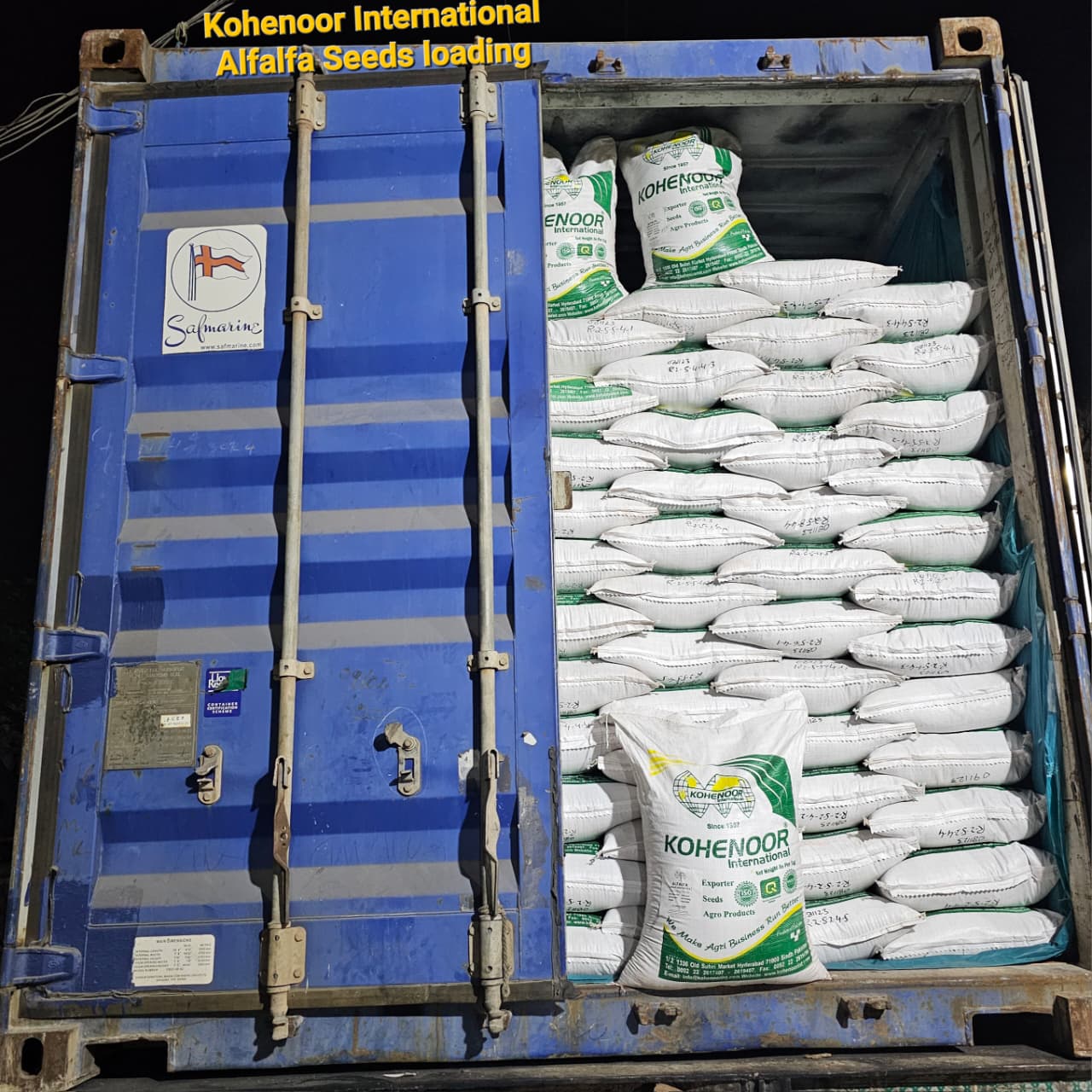
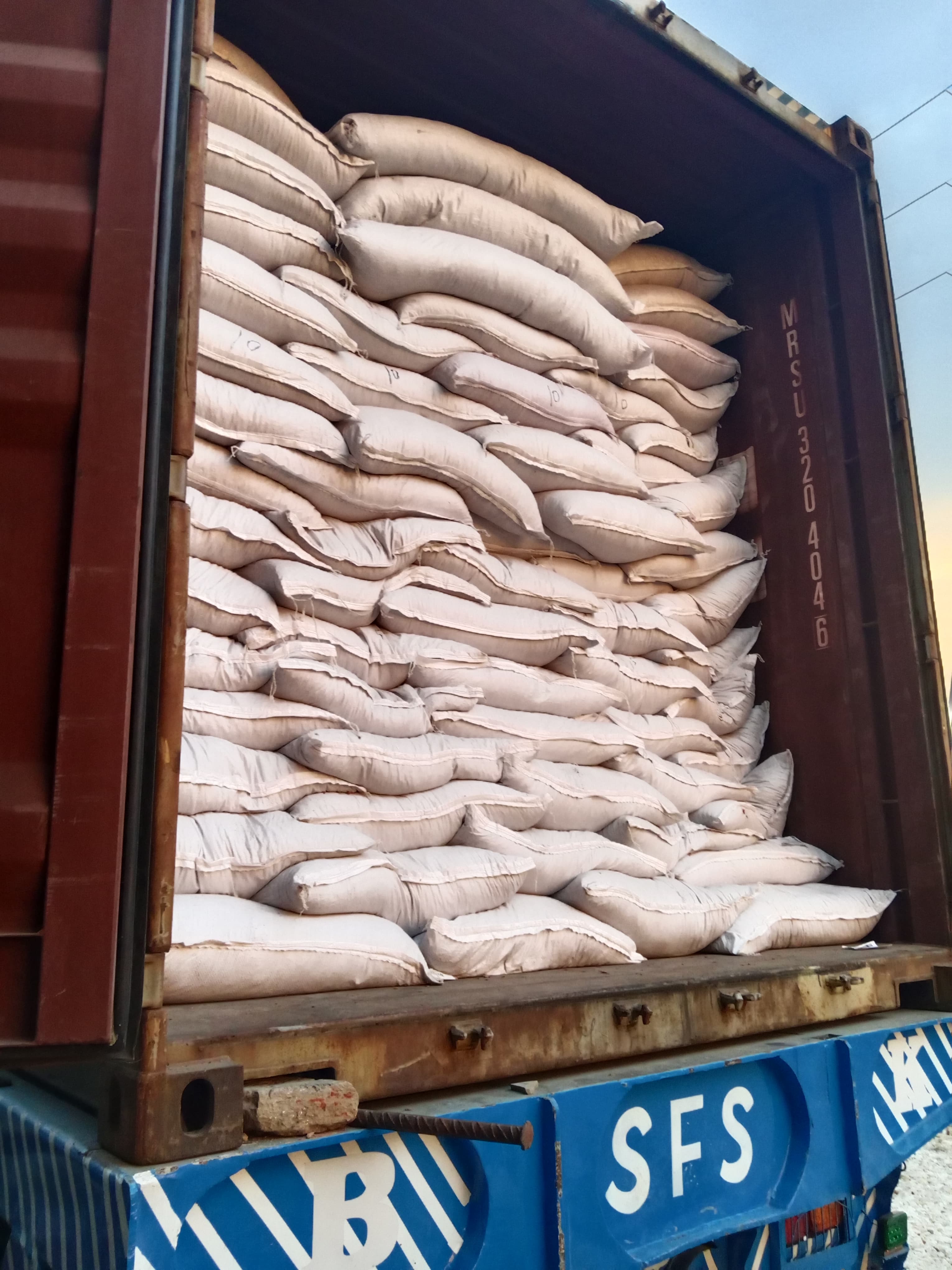
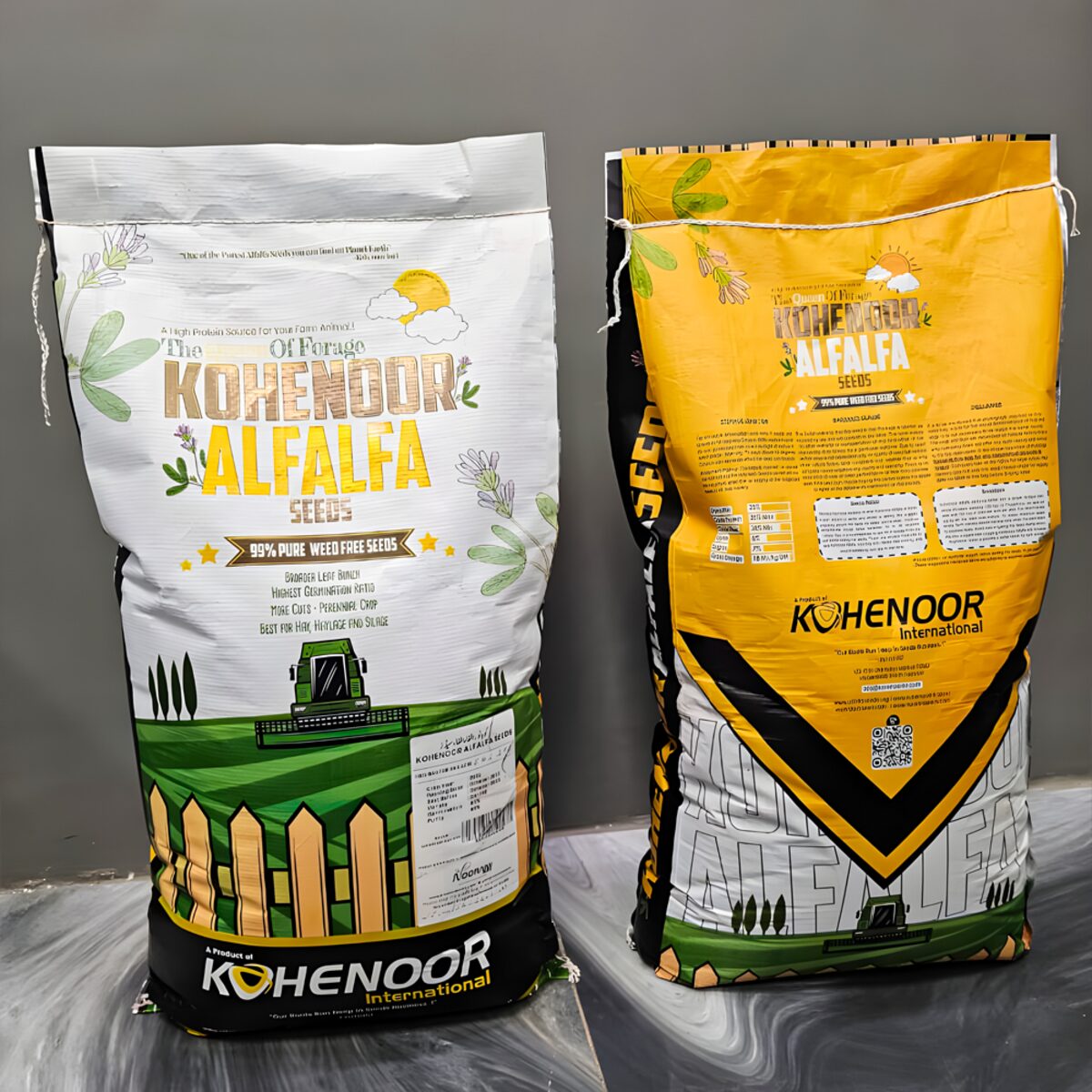
Export sesame from Pakistan is packed almost universally in polypropylene woven bags. Kohenoor's standard packing is 25 kg PP bags, the size most food manufacturers and repackers prefer for manual handling, with 50 kg PP bags available for oil mills and bulk buyers who move seed by forklift and intake hopper. Poly-lined bags, printed bags carrying your own brand and other pack sizes can be arranged on request.
A 20-foot container typically carries around 18 to 19 metric tonnes of bagged sesame depending on bag size and whether the cargo is palletised or loaded loose; 40-foot containers are used where the destination's road weight limits allow. Loose-loaded bags are the norm for sesame into the Gulf, Turkey and East Asia; palletised loads are available where your warehouse requires them, at a small cost in capacity. Containers are lined with kraft paper or a moisture-barrier liner where the voyage calls for it, and desiccant can be added for long transits through humid waters.
Shipments are quoted FOB Karachi, with CFR or CIF to your port on request. Karachi has regular services to the Gulf, the Red Sea, the Mediterranean, East Asia and Europe. Transit times vary with carrier and season — the Gulf is a short hop, Turkey and the Mediterranean typically two to three weeks, East Asia and northern Europe longer — and your forwarder or ours will give the current schedule at order confirmation. Stock lots already cleaned and tested are typically ready for vessel loading within 7 to 12 days of confirmation; lots cleaned to order and hulled lots take longer, and the export desk will give a realistic date rather than an optimistic one.
Sesame absorbs moisture and odours if badly stowed, so the rules are clean dry containers, no shared stow with wet or strongly scented cargo, and bags kept off the floor on humid routes. We inspect every container before loading and photograph the loading so that you can see how your seed was stowed.
Sesame seeds, whether or not broken, are classified in the Harmonized System under heading 1207.40 ("sesamum seeds"), within chapter 12 for oilseeds. Most importing countries subdivide the heading at the national tariff line, for example to separate hulled from natural seed, so the full code on your import entry will have more digits and your customs broker will confirm it. The sesame seed HS code 1207.40 is what appears on our commercial invoice and packing list.
The standard document set that travels with a Kohenoor sesame shipment is as follows. Which of them your destination requires, and in what form, is a matter for your broker; we prepare whatever the entry needs.
Documents are emailed in draft before the vessel sails so that you and your broker can check them against the L/C and the import requirements, and originals are couriered or presented through the bank as the payment terms require. A clean document set is the difference between a container that clears in a day and one that sits in port, so the export desk treats document preparation as part of the product. If you are importing sesame for the first time, say so and we will go through the list with you and your broker before you commit.
Pakistani sesame is exported in volume to a wide spread of markets, and the grade each market wants follows its food industry. The notes below describe the general pattern as of 2026; the export desk quotes each enquiry on its own terms, per lot and destination.
In every case, decide which laboratory tests your regulator or your customer requires and ask for them at enquiry, not after loading. Kohenoor already exports seed to more than seventy countries through its alfalfa and forage seed export desk and the country pages, and the same desk, forwarders and document habits serve the sesame trade.
There are several large sesame-exporting countries, and an importer has a choice. Pakistani sesame earns its place on three grounds that hold in most seasons: a naturally white, thin-coated seed that sorts to a very pale, uniform lot; oil content at the upper end of the global range; and a dry harvest that gives low-moisture seed with good keeping quality. The October-to-December new crop also fits the planning cycle of many northern-hemisphere food manufacturers, who can cover the first half of the following year from it.
Within Pakistan, the question is which exporter. Kohenoor International's case rests on where it sits and how it works. The sesame export operation is based in Khanewal, in the middle of the producing districts, so the people quoting your lot have seen the crop and know the markets it came from. The company has exported seed since 1957, is ISO 9001 and HACCP certified, runs its own cleaning line and seed-testing laboratory, and has offices in Pakistan, Dubai and Australia. It sells direct: one contact at the export desk from enquiry to delivery, no agent layer, and the quotation, the COA and the shipping schedule all come from the same people.
What we will not do is tell you things we cannot stand behind. We do not publish customer names or volumes, we do not quote figures on this page because every lot and destination is different, and we do not describe a lot as natural white if it is mixed. Specifications are written on the COA, independent inspection is available at your option, and retained samples are kept for every lot.
Sesame is one product in a wider seed range. The company's core business is forage seed — alfalfa, Rhodes grass, berseem, sorghum and the rest of the dairy and livestock forage range, also from Kohenoor — along with untreated food-grade seed for the sprouting and microgreen trade, which includes white and black sesame in sprouting grades. Domestic Pakistani buyers can find the local range on the Pakistan pages. One supplier, one document set and one container can cover several lines at once.
Because the grade follows the use, it helps to describe the kinds of buyers the export desk works with. These are types, not named customers; we do not publish customer names.
Tahini and halva manufacturers. The most demanding buyers of natural white sesame, judging a lot by colour uniformity, flavour and admixture, because a single dark or bitter seed shows in the finished paste. They typically buy by the container across the season, fixing a specification once and asking us to match it lot after lot; Sortex sorting is not optional and a pre-shipment sample is standard.
Oil mills and crushers. Buyers of mixed/natural or natural white in bulk, for whom oil content and moisture are decisive and colour is secondary. They buy larger volumes, prefer 50 kg bags, and often want a free fatty acid figure on the COA. China, East Asia and the Gulf are the usual homes of these buyers.
Bakery and food-ingredient suppliers. Companies supplying topping seed to industrial bakeries, burger-bun lines and snack manufacturers: natural white or hulled, with an emphasis on food-safety documentation and consistent appearance from lot to lot. Often in the EU, the UK, the Gulf, Korea and Japan.
Importers and repackers. General food importers who bring in container loads of natural white or hulled sesame and sell on to smaller manufacturers, wholesalers and retail packers. They value a supplier who can hold a specification over a programme and provide documents that clear customs without surprises.
Sprouting and microgreen seed buyers. A small but distinct group who buy food-grade white and black sesame in untreated, lot-tested lots, served through Kohenoor's sprouting seeds range. If you recognise your business in one of these descriptions, tell the export desk which type you are and we will propose the grade, tests and packing that buyers like you normally take.
The export desk works the same way for sesame as it does for the rest of the Kohenoor range. There is no form to fill in and no agent to go through; you write to the people who will actually handle the lot.
Trial quantities are welcome for buyers who want to test a lot in their own plant before committing to a programme, and samples are sent by courier on request. For the current season — crop size, quality and when the first new-crop lots will be ready — ask the desk directly; the honest answer in June is different from the one in November. The desk replies in English and can also correspond in Arabic, Spanish and French. Wherever your port is, the arrangement is the same: direct supply from the company in Khanewal, delivered to your port or your door, one contact from first message to last document.


Send the grade, quantity, destination port and your specification. The export desk in Khanewal replies personally within 24 hours with a quotation for the lot, its Certificate of Analysis and a shipping schedule — direct from the company, no agents.
WhatsApp +92 310 4929292 export@kohenoorint.comPakistan's sesame export trade is concentrated around the producing belt of southern Punjab — Khanewal, Vehari, Lodhran, Bahawalpur, Layyah, Bhakkar and Mianwali — and the Sanghar and Umerkot districts of Sindh, with shipping through Karachi. Kohenoor International runs its sesame export operation from Khanewal, in the middle of that belt, and sells direct to importers with one contact at the export desk from enquiry to delivery.
Sesame is a Kharif crop: sown in June and July, harvested from late September through October and into November, then dried and threshed. New-crop lots reach the markets in October and arrive in volume through November and December, so new-crop offers from Kohenoor typically open between October and December. From January onward, trade continues from conditioned stocks. Pre-harvest statements about the coming crop are estimates.
Natural white sesame has its seed coat intact and is cream to ivory in colour, typically Sortex-sorted for uniformity; it is used for tahini, halva, bakery and confectionery. Mixed or natural sesame is the field-run crop with white and darker seeds together, usually bought for oil pressing. Hulled sesame has had the coat mechanically removed, leaving a very white kernel for premium bakery topping, sushi and high-grade tahini.
Specifications are agreed per contract and written on a Certificate of Analysis for each lot. In most seasons Pakistani export lots typically run 99 percent or better physical purity after machine cleaning and Sortex sorting, moisture around 6 to 8 percent, oil content around 48 to 52 percent, with admixture, colour and free fatty acid agreed per buyer. Residue, mycotoxin and microbiological tests are arranged through an independent laboratory on request.
Sesame seeds, whether or not broken, fall under Harmonized System heading 1207.40 within chapter 12 for oilseeds. Most countries add further digits at the national tariff line, for example to distinguish hulled from natural seed or seed for sowing from seed for other uses, so your customs broker will confirm the full code for your entry. 1207.40 is what appears on Kohenoor's commercial invoice and packing list.
Kohenoor's standard packing is 25 kg polypropylene woven bags, with 50 kg PP bags available for oil mills and bulk buyers; poly-lined and printed bags can be arranged. A 20-foot container typically carries around 18 to 19 metric tonnes of bagged sesame depending on bag size and whether the load is palletised, and 40-foot containers are used where destination road limits allow.
The standard set is a phytosanitary certificate from Pakistan's plant protection authority, a certificate of origin from the chamber of commerce, a fumigation certificate, the Certificate of Analysis for the lot with any third-party laboratory reports requested, the commercial invoice, packing list and bill of lading, and a pre-shipment inspection report from SGS or another independent agency at the buyer's option. Drafts are emailed before the vessel sails.
No agent layer is needed. Kohenoor supplies direct from the company in Khanewal to your port or your door, with one contact at the export desk handling the quotation, the Certificate of Analysis, the documents and the shipping schedule. Write to WhatsApp +92 310 4929292 or export@kohenoorint.com with grade, quantity, destination and specification, and the desk replies within 24 hours in English, Arabic, Spanish or French.