 KOHENOOR
 Lucerne seed in South Africa: getting the foundation right
If you farm in South Africa and you're sourcing lucerne seed, the cheapest bag is rarely the best decision. Poor seed means weak germination, weeds, dodder risk and thin stands — and because lucerne is a perennial that should last several years, a seed mistake follows you for the whole life of the land. Clean, high-germination seed is the foundation of a productive lucerne stand.
Lucerne, alfalfa and Medicago sativa are all the same plant — South Africa simply says "lucerne." It is the country's most important perennial forage legume and the backbone of the baled lucerne hay trade, feeding dairy and beef herds, Karoo sheep flocks and horses alike.
Why lucerne matters in South Africa
From the irrigated lands along the Orange River and Vaalharts in the Northern Cape, to the Karoo and Klein Karoo, the Free State and the Eastern Cape, lucerne is the workhorse forage that turns water and sunshine into high-protein feed. Under good irrigation it cuts many times a year for several years; under dryland conditions it provides resilient grazing and hay where rainfall allows.
With feed and concentrate costs climbing, a perennial legume that fixes its own nitrogen and delivers repeated high-protein cuts from a single establishment is exactly what dairy, feedlot and sheep operations need to protect their margins.
What South African buyers should check before buying lucerne seed
- What is the germination percentage, and is the seed current-season?
- Is the seed tested and certified dodder-free (Cuscuta)?
- What is the purity, and are weed seeds declared?
- What is the cultivar and its dormancy rating for your area?
- Is it suited to dryland or irrigated conditions?
- What quantity, packing and delivery terms are available?
- Is there someone to advise on seeding rate and establishment?
These questions matter far more than a small price difference, because the wrong seed can cost you an entire multi-year stand.
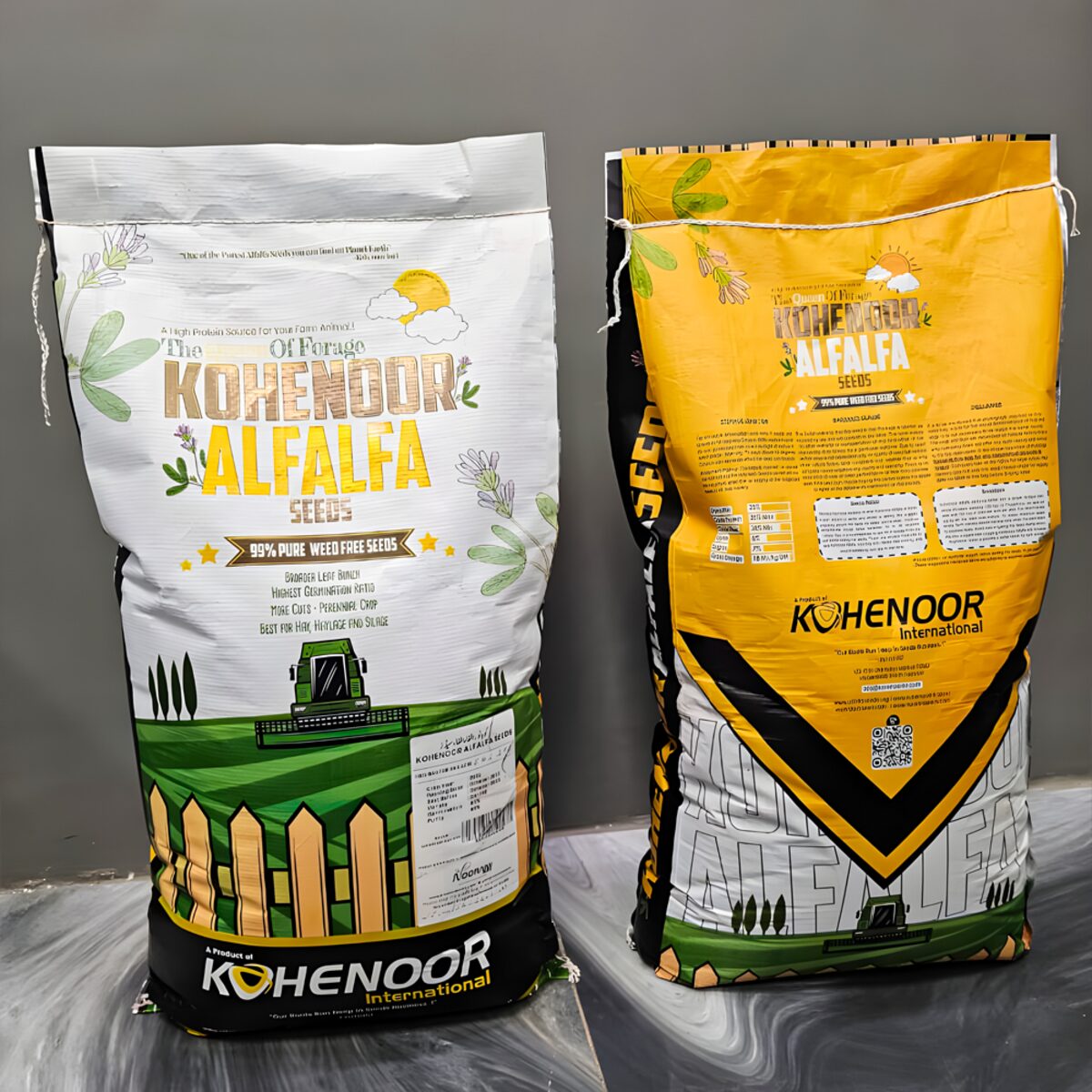
KOHENOOR lucerne (alfalfa) seed for South Africa
KOHENOOR supplies clean, high-germination, dodder-free lucerne seed to South African farmers, co-ops, agri retailers and seed companies. The goal isn't just to sell a bag — it's to give you seed you can build a strong, long-lived stand on from the first season.
- Lucerne seed for dryland and irrigated pastures
- Green forage and high-quality hay for dairy and beef
- Grazing and hay for Karoo sheep flocks
- Lucerne hay for horses and the equine market
- Bulk lucerne seed for agri retailers, co-ops and seed companies
Dryland vs irrigated lucerne — and seeding rate
Your conditions decide both the cultivar and how much seed to sow. As general guidance:
| System | Typical seeding rate | Notes |
|---|---|---|
| Dryland | ~8–15 kg/ha | Lower density to suit limited moisture; choose hardy, persistent types. |
| Irrigated | ~20–30 kg/ha (≈25 common) | Higher density for dense, high-yield stands; needs good water management. |
Use high-germination, high-purity seed and a firm, weed-free seedbed. Never raise the seeding rate to compensate for poor seed — better seed and better land preparation always win.
Lucerne cultivar dormancy explained
Lucerne cultivars are rated by fall/winter dormancy, which describes how much they slow down in cold, short days:
- Dormant / semi-dormant types suit colder, frost-prone areas and rest more in winter.
- Non-dormant types keep growing in mild winters and give more cuts per year under irrigation in warm regions such as the Northern Cape and Karoo.
Matching dormancy to your climate is one of the most important — and most overlooked — choices a lucerne grower makes. Tell us your region and we'll point you to the right fit.
Lucerne for dairy & beef
Lucerne is one of the highest-quality forage legumes available — rich in protein and energy — and is fed as green forage, hay or silage. For dairy and feedlot operations, clean lucerne supports steady production and reduces reliance on costly concentrates, provided the stand starts from clean seed and a weed-free land.
Lucerne for sheep & the Karoo
Across the Karoo, lucerne under irrigation is a cornerstone of sheep production, providing grazing and hay through dry periods. Stand purity and persistence — both downstream of seed quality — determine how many productive years you get from each planting.
Lucerne for horses & the hay market
Lucerne hay is prized by horse owners for its palatability and protein, and clean, weed-free bales command the best prices in the hay trade. That premium starts in the seed bag: clean, dodder-free seed is what lets you cut clean, marketable hay years later.
Why dodder (Cuscuta) is a dealbreaker
Dodder is a parasitic weed and a recognised threat in lucerne. Once it enters a land through contaminated seed, it is extremely difficult and expensive to control and can ruin a stand. The single best protection is to plant tested, dodder-free seed — which is why experienced buyers screen for it before anything else.
Always ask the seller
- Is the seed certified dodder-free?
- What is the germination and purity?
- What season was it produced?
- Which cultivar / dormancy class is it?
How to buy good lucerne seed in South Africa
- Don't buy on a bag photo or social-media post alone.
- Don't buy from anyone who can't state germination and purity.
- Don't buy unnamed seed for a large, multi-year planting.
- Do buy from a supplier who shares cultivar, dormancy, test data and delivery terms.
For agri retailers, co-ops & seed companies
If you run an agri shop, co-op or seed business, lucerne demand is year-round and resilient — driven by dairy, feedlots, sheep and the hay market. KOHENOOR can supply bulk lucerne seed under the terms South African buyers actually search for: certified, dodder-free, high-germination lucerne seed for dryland and irrigated growers.
Request KOHENOOR Lucerne Seed for South Africa
Whether you're a dairy or beef farmer, a Karoo sheep producer, a horse owner, a hay grower or an agri retailer, contact us for availability, cultivar options and bulk supply into South Africa.
KOHENOOR — lucerne (alfalfa) seed for growers who want a clean start, strong germination and a stand that lasts.